

Did you know that authors use structural elements to organize information and ideas and to highlight important parts of the text? That’s why it’s important for readers and writers learn to identify and use a variety of text features, or the elements that can make their writing clearer, add visual appeal, and make their writing more accessible.
IS librarian Aimee Hardy has tied in seasonality to her fourth-grade library students’ lessons. After reading a short piece about Valentine’s Day, they’ve also learned about non-fiction features. In this instance, they’ve been learning about the functions of titles, sidebars, maps, pictures and captions.


The Intermediate School’s Kindness Ambassadors were recently “on the road” to visit the Elementary School’s students! Every year to wrap up Kindness Week, these ambassadors visit the younger students to present a lesson on kindness followed by an activity.
During their recent visit, the ambassadors presented a recorded read aloud of Trudy Ludwig’s “The Power of One.” Her book tells the story that when one child reaches out in friendship to a classmate who seems lonely, she begins a chain reaction of kindness that ripples throughout her school and her community. One kind act begets another, small good deeds make way for bigger ones, and eventually the whole neighborhood comes together to build something much greater than the sum of its parts.
Their recording was made possible through the kindness of Kat Hoolan’s High School “Media Production” students, who took the ambassadors’ recording and created a more polished video of the book for them to use. THANK YOU to everyone who played a role in this visit’s success!
The IS kindness ambassadors are a before-school enrichment program for students who want to spread kindness. Ambassadors are involved in many things throughout the school year, including preparing hygiene kits around the holidays for needy families, creating artwork for the building and serving as liaisons to their classrooms to pass along information regarding the current “Valentines for Veterans” drive as well as sharing information about different holidays.




Harlem Wizard John “Big J” Smith visited the Intermediate and Elementary schools and Otisville Elementary today, Feb. 11 to remind students about the upcoming March 12 Harlem Wizards vs. Minisink Valley Faculty/Staff Basketball game!
“Big J,” who stands 6 feet, 8 inches tall, delighted students with his antics and awesome basketball skills as he reminded students the game is a big fundraiser! He’s been a member of the Harlem Wizards since 2011 and in last six years, has played basketball in 25 countries!
Tickets will be on sale soon for the March 12 game! Basketball aficionados will be treated to great skills, teamwork, slick dribbling, alley-oops and crazy slams. The non-hoop fans attending will find out that this is much more than just a basketball game. The night is funny, theatrical, exciting and spectacular and the gym will reverberate with oohs & aahs, laughter, enthusiasm, and much more!
The Harlem Wizards have been dazzling audiences since 1962 and have played many games with members of our faculty and staff over recent years! Watch for tickets and be sure to come out and support the faculty/staff team!
See more photos on the district's Facebook page: https://www.facebook.com/MinisinkValleyCSD


FROSTY PHYSICAL EDUCATION FUN!
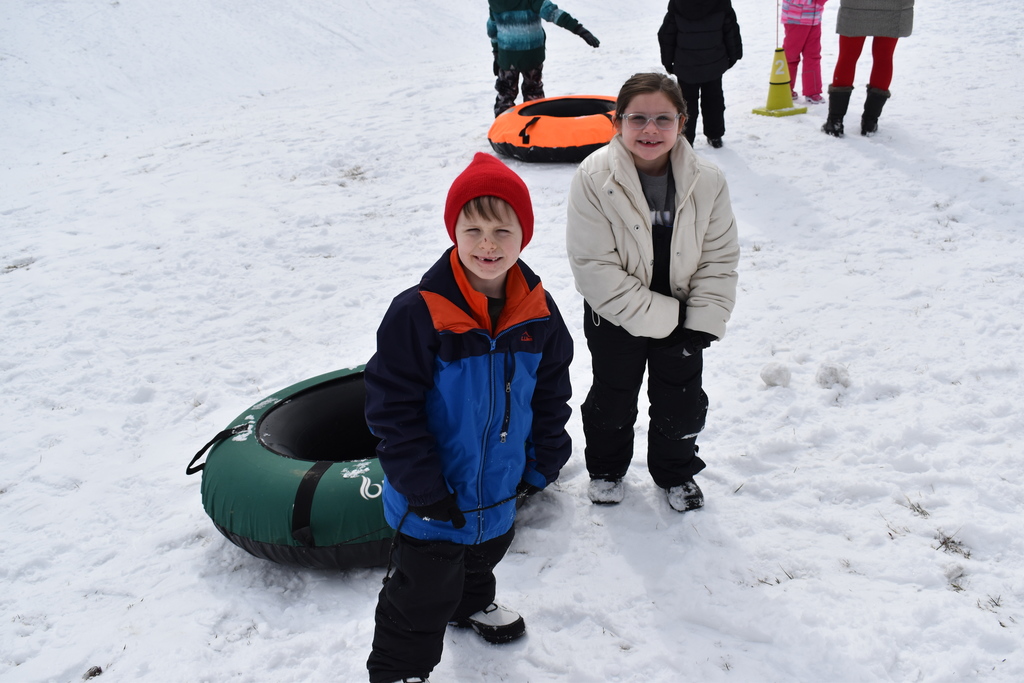
ES/IS Physical Education teachers Leyla Johnson and Ross Potter took their students outdoors for snow tubing for their physical education classes today! Students, who dressed for the weather, had fun rides down the hill....and then they needed to get that tube back up for the next rider's run! It was a great workout! The plan is to offer snow tubing opportunities for as many classes as possible, weather conditions permitting!
•Snow tubing originated in the 1820s in Northern America, when people used inflated tire tubes to get around on snow.
•Snow tubing allows for faster speeds than sledding because of the low friction between the snow and the rubber tube.


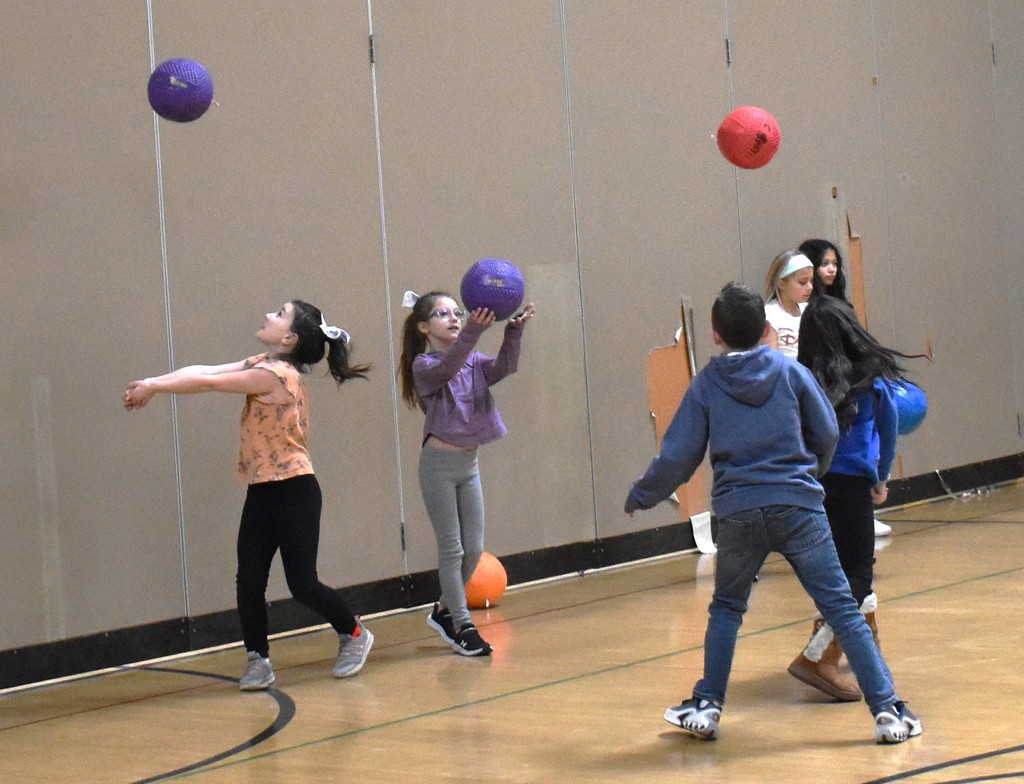
It’s time for volleyball for Anthony Licata’s IS fourth-grade students! They’re not ready to play with a net just yet, as they need to learn the fundamentals of the game first. Take a peek at his students learning how to “bump” the volleyball! They’re picking up this new sport really quickly, too!
The ”bump” is a basic volleyball pass that uses the forearms to move the ball to a teammate or over the net. It's also known as a forearm pass or dig.


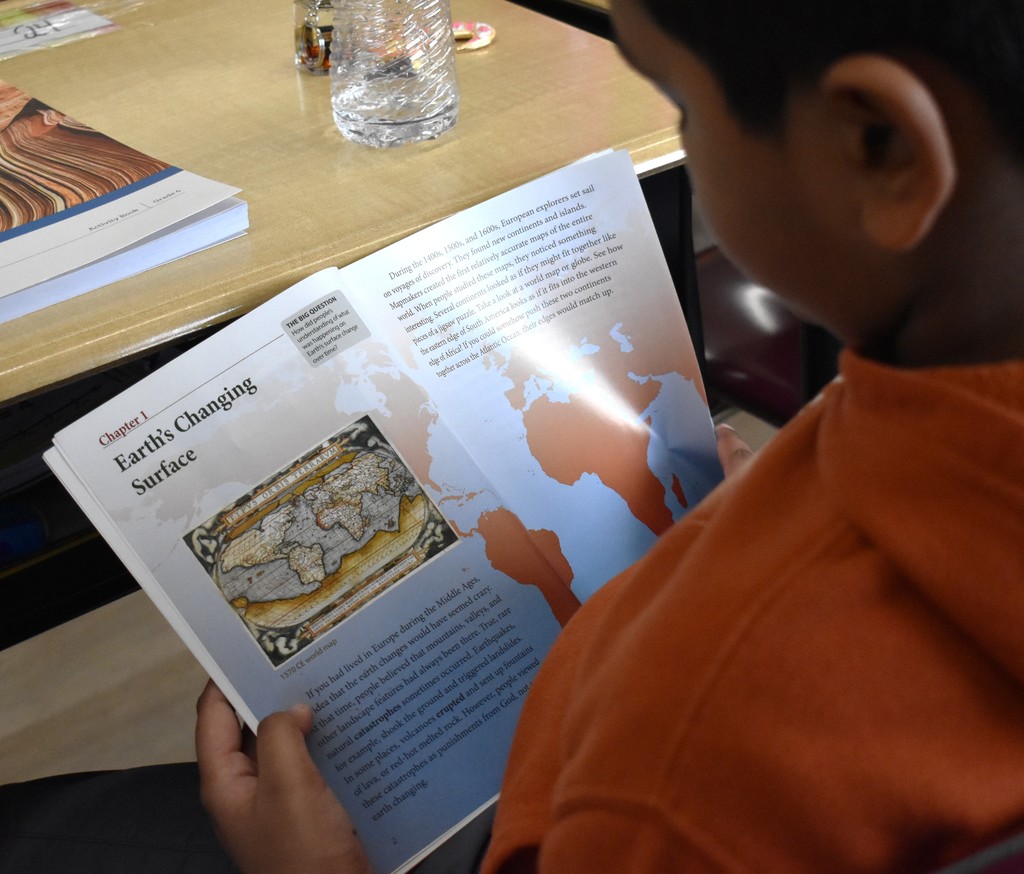
TYING REAL LIFE ADVENTURES CLASSROOM LEARNING
District fourth-graders, like Emma Grunenberg’s IS fourth-graders, are beginning their new CKLA unit about geology.
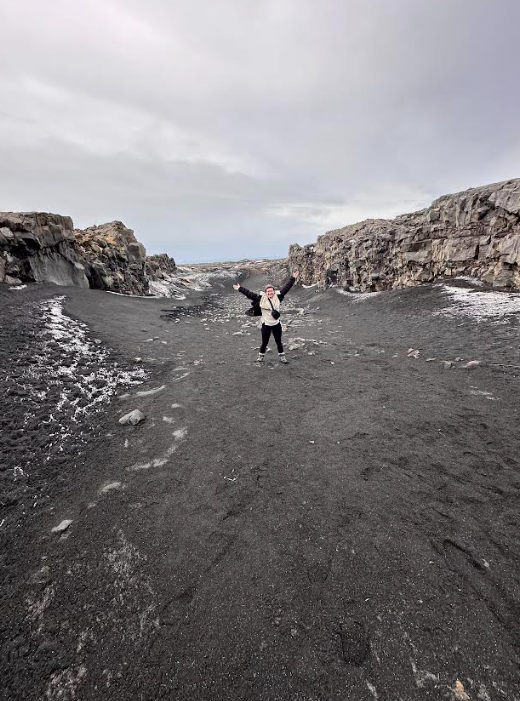
To introduce her students to this topic. Ms. Grunenberg shared photos of her recent trip to Iceland, where she had a chance to visit an Icelandic tectonic plate called “Bridge Between Continents.” This bridge connects the North American plate and the Eurasian Plate! Not too many people get to visit and stand in the middle of a tectonic plate’s cracks, but Ms. Grunenberg did!
After looking at the photos, students began their first read of chapter one using the CLOZE reading strategy.
•The Bridge between Continents (or Miðlína) is a 50-foot footbridge in the Reykjanes Peninsula spanning a gaping rift between the Eurasian and North American tectonic plates. It allows people to walk from North American to Europe in a matter of seconds! The lava-scarred Reykjanes Peninsula lies directly on the Mid Atlantic Ridge. These major tectonic plates drift apart by the Earth’s forces, a few centimeters each year.
•Tectonic plates are large, solid slabs of rock that make up the Earth's crust and move slowly on top of the mantle. The movement of these plates causes earthquakes, volcanic eruptions and the formation of mountains.
•CLOZE reading is a teaching strategy that involves removing words from a passage and having students fill them in using context clues. It's used to help students learn vocabulary, grammar, and reading comprehension.


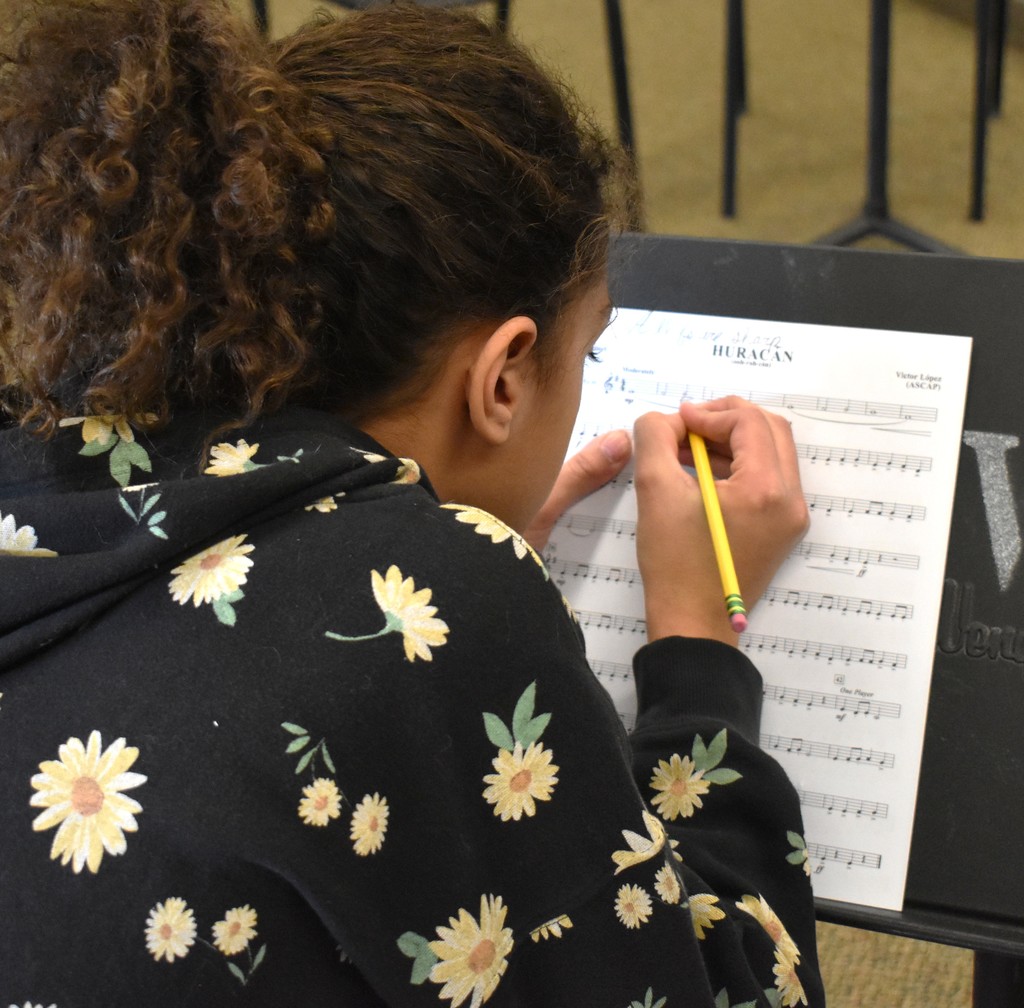
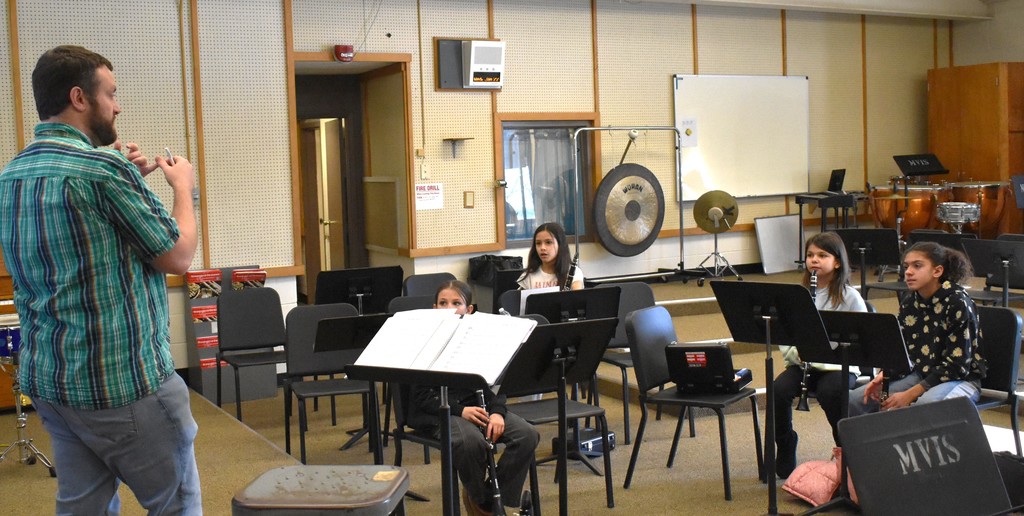
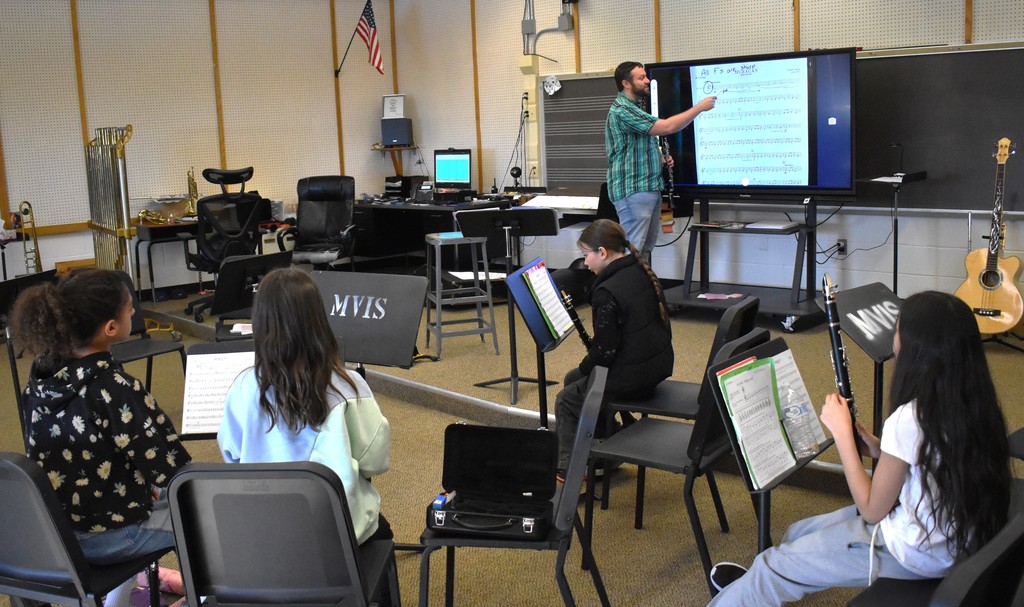
Andrew Hulle’s fifth-grade clarinet students are learning how to expand the range of pitches that they can play on the clarinet. This work is all part of expanding their music and instrument knowledge during lesson and home practice, as each member of the fifth-grade band becomes more knowledgeable and talented when playing their instrument of choice.
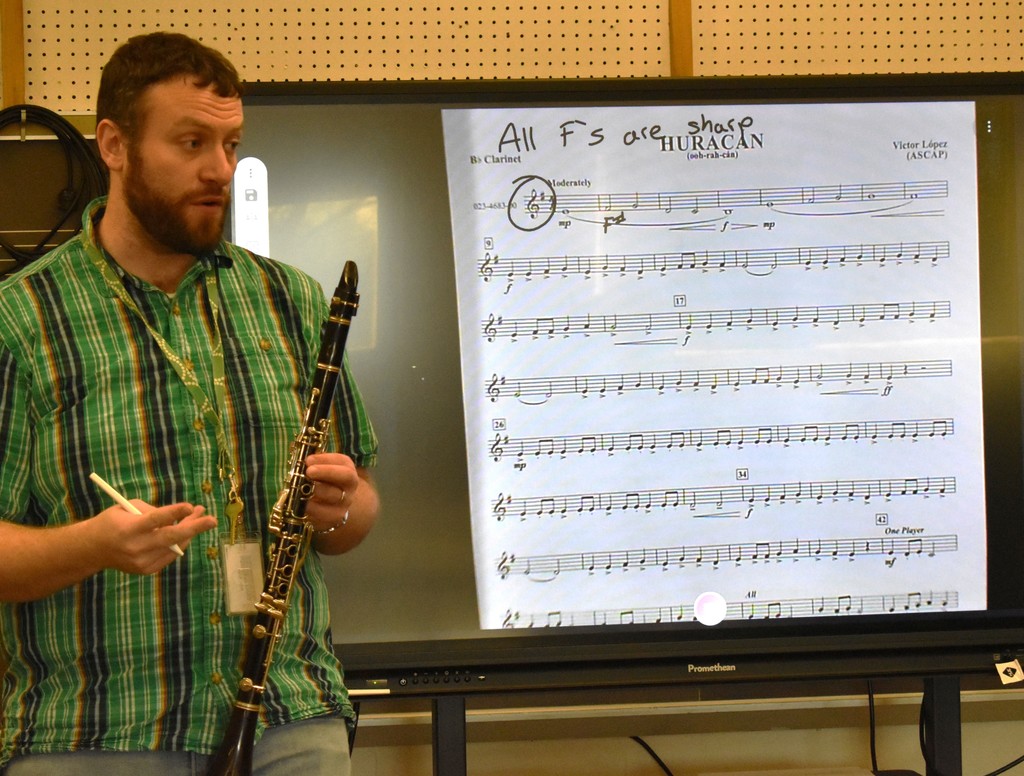
For the Winter Concert, students used only six pitches with their left hands. For the upcoming Spring Concert, these clarinetists will add the use of their right hands, which allows them an additional six pitches. During this recent lesson, students were learning where those pitches are located on the staff and which fingers to press down to play them.
As part of their work, they’re using their knowledge to play Victor Lopez’s “Huracan,” which translates to “hurricane” in English. The piece demonstrates the sounds and feelings of this weather event by utilizing a minor key and the musical range of an entire octave. (Breaking news: This piece will be the first musical work to be played at the Intermediate School Spring Band Concert!)
•The word "clarinet" comes from the Italian word clarino, which means "trumpet".
•The clarinet is a relatively new instrument, invented in the 17th century by Johann Christoph Denner.
•The clarinet has inspired many composers, including Mozart, who wrote several pieces featuring the clarinet.
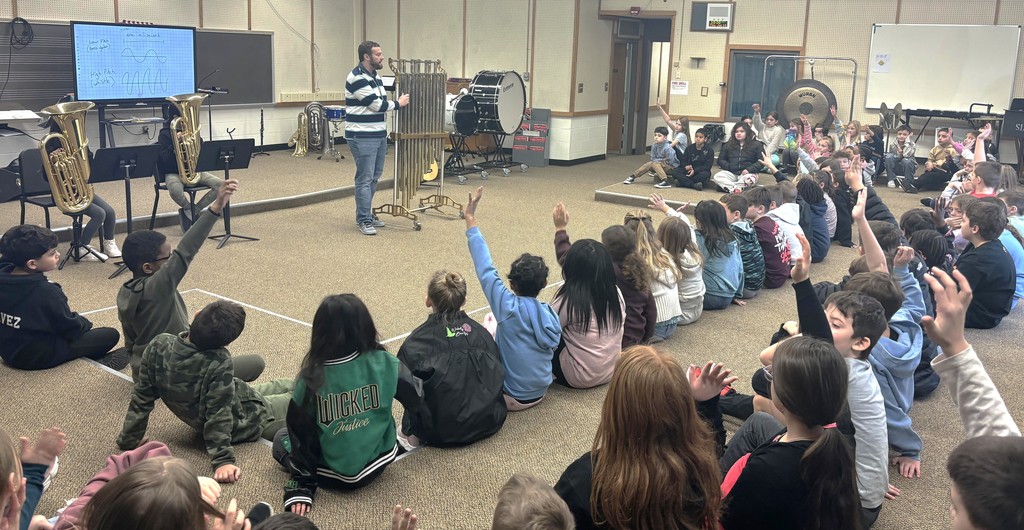
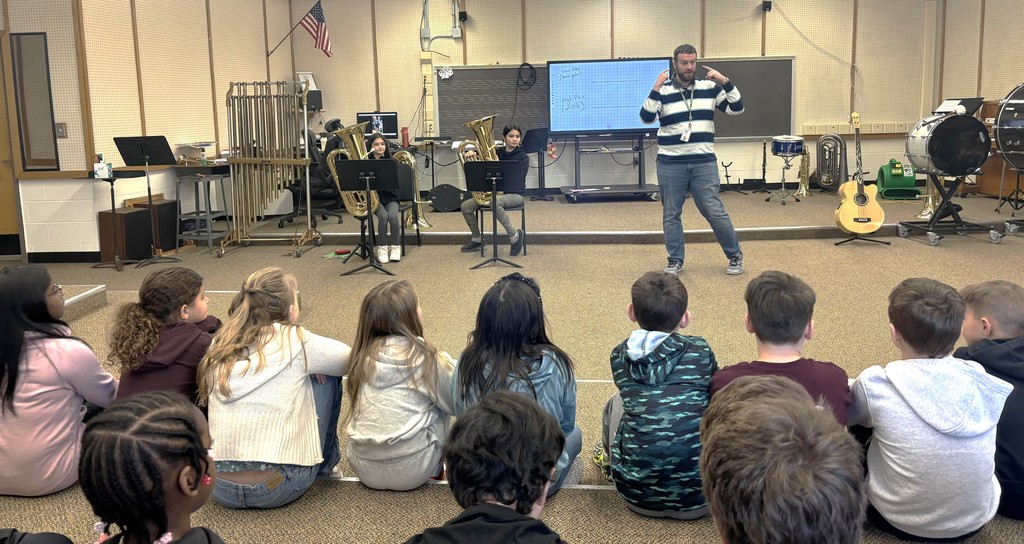
All district third-graders have been recently working on their Reading Unit 5 in Core Knowledge Language Arts (CKLA) Amplify program, which focused on “Light and Sound.” Students learned that sound is energy that travels in waves by using vibrations. They discussed pitch, volume, waves, energy, vibrations and orchestra. Students focused on reading informational text, taking notes, and comparing and contrasting the two forms of energy.
At the Intermediate School third-graders visited Music Teacher/Band Director Andrew Hulle’s music room for a special lesson reinforcing the material in the books!
With the help of some of his Fifth-Grade Band tuba students, Mr. Hulle demonstrated how pitch, volume, sound waves and vibrations work when students play a variety of musical instruments and why that’s important in music. What a great collaborative effort between the Third-Grade faculty and Mr. Hulle!

IS students who attend Joan Giardina’s “extra art” class created a beautiful mural which is now on display near the IS Main Office. The school’s motto is “Be Kind,” and they used that as the mural’s theme with heart art to represent kindness!

Elizabeth Sirico’s and Susan Green’s IS fourth-graders recently presented their Longhouse and Wigwam projects to peers in other fourth-grade classes. After spending weeks learning about Native American cultures, students used the information they learned from class to create their own models of Longhouses and Wigwams. What a great way to share what they learned and showcase their hard work!
A Native American longhouse is a traditional dwelling structure built by many Northeast Indigenous peoples, particularly the Iroquois Nation, which was a long, rectangular building made from a wooden frame covered with bark. It was designed to house multiple families from the same clan, often with a central fire pit for warmth and served as a large communal home for extended family units.
A Native American wigwam is a dome-shaped, semi-permanent dwelling traditionally used by certain Indigenous peoples in North America, primarily the Algonquian tribes, which was constructed with a framework of arched poles covered with bark, mats, or hides, often sourced from birch trees. It’s a type of hut with a rounded roof used for shelter and community gatherings.



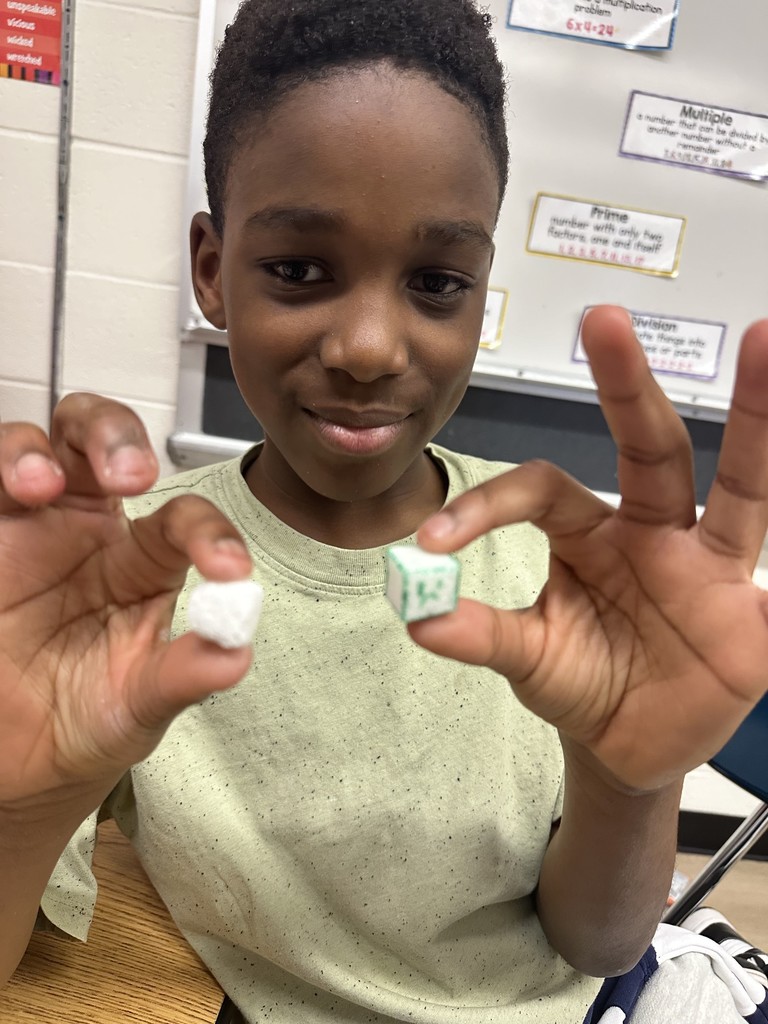
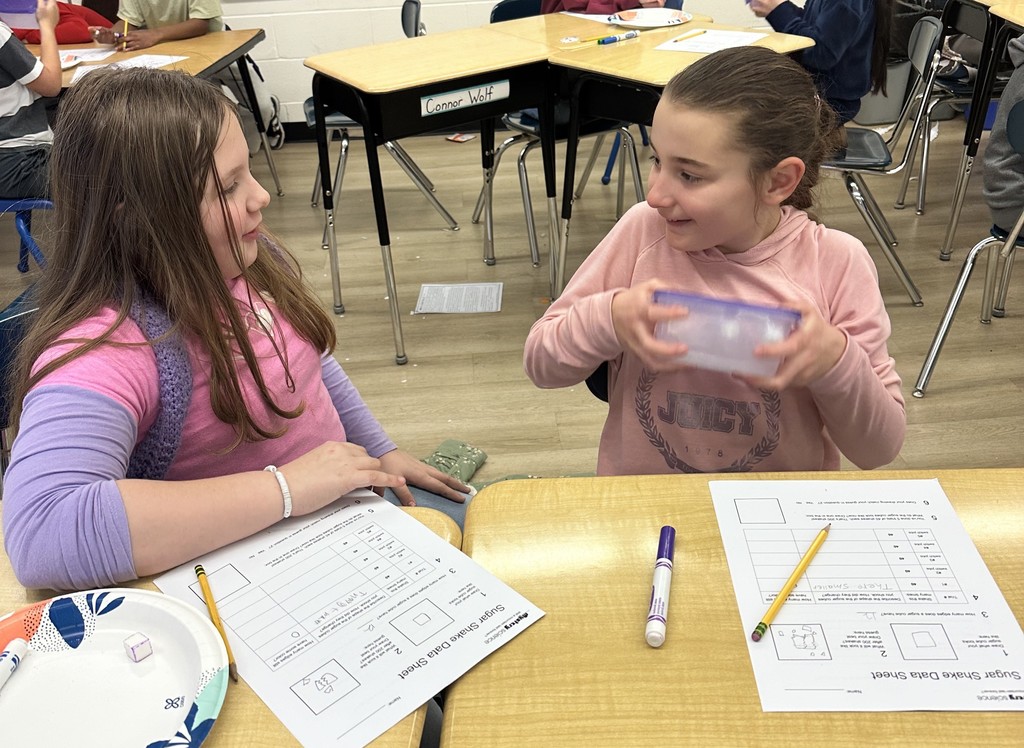
How does weathering and erosion affect rocks? This question was recently investigated by Kim Marasco’s IS fourth-graders!
Students knew that jagged rocks on the top of the mountains roll down. Erosion happens when rocks knock into each other, which breaks off their jagged points and makes them round. At the bottom of a mountain, rocks are no longer jagged but rounded.
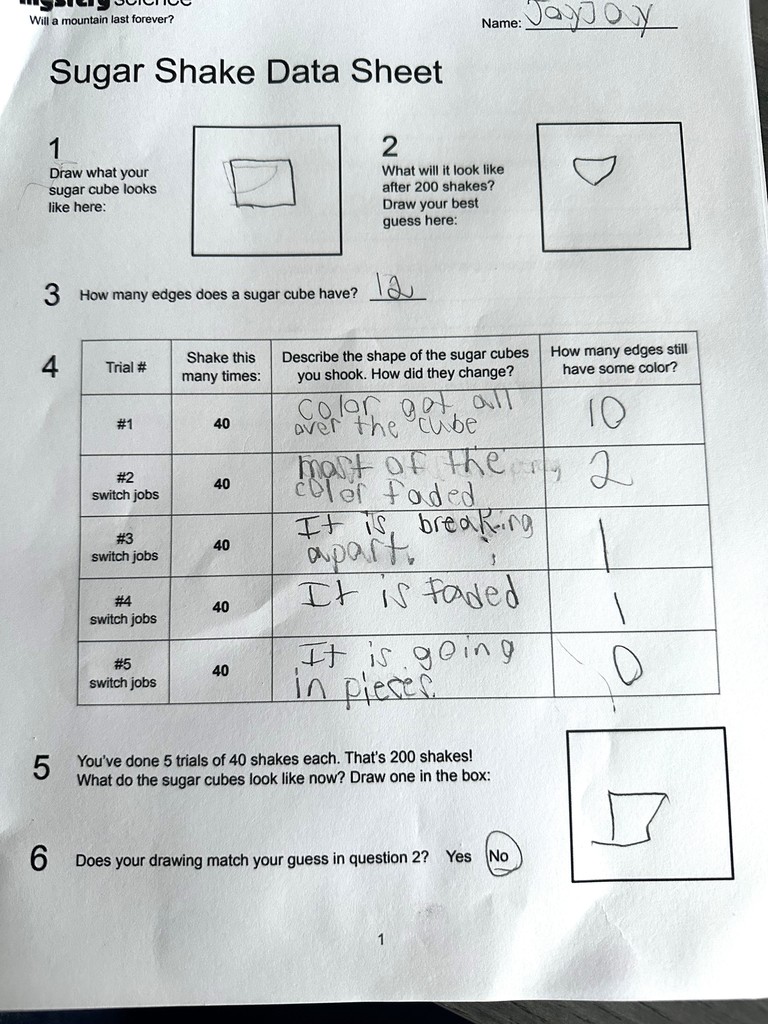
But! To test this, students used sugar cubes. They traced the edges of the sugar cubes shook them 40 times during each trial to see if they changed. These shakes simulated the weathering and erosion process, much like a rock tumbling down a mountain, or how rocks are worn down over time by wind or water, with the shaking representing the movement of the natural elements.
By the end of the five trials, or 200 shakes, there were no original edges visible.
After their science experiment was completed, they learned that most rocks we encounter are smooth because of the weathering and erosion process.



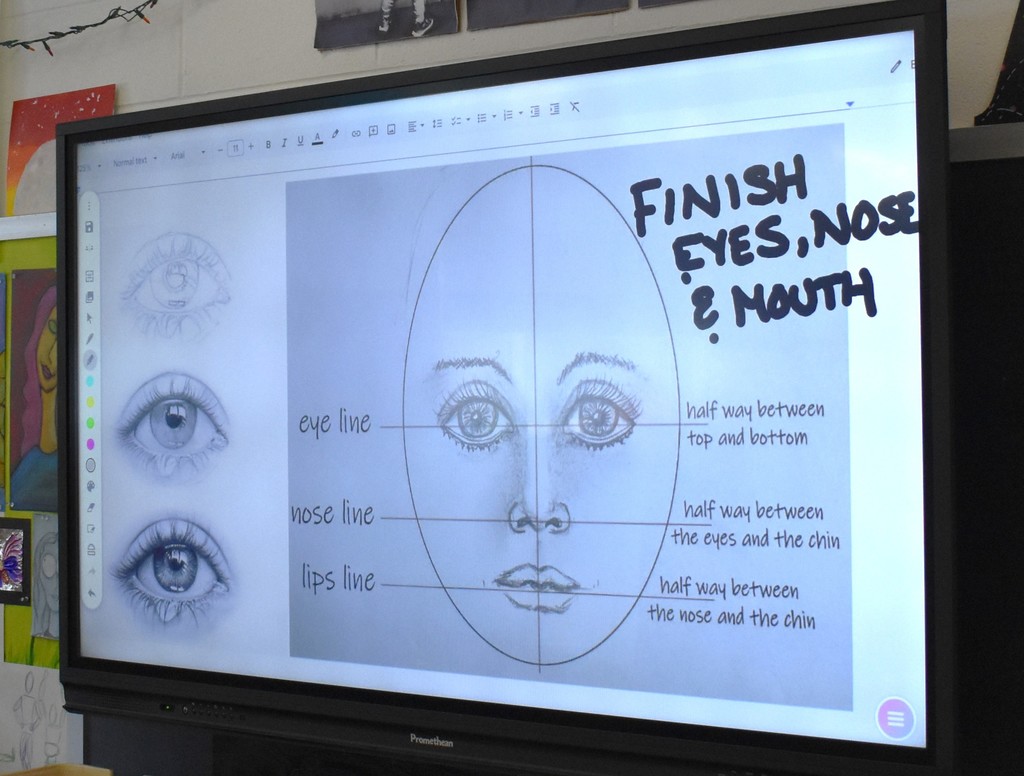
Joan Giardina’s IS fourth-grade art students are learning about self-portraits and the proportions of the face in class!
Students looked at how everyone's face has the same general proportions and that if one knows “the math” behind how the face is divided, drawings will be much more realistic. They looked at examples of faces with the proportions slightly off, had to figure out what was wrong and discussed how if one feature is put in the wrong place it affects everything else. Students are also learning how to use shading, instead of lines, to show the edges of facial features. This technique makes the drawings more realistic as well.
Learning about self-portraits and facial proportions is important in art class because it provides a foundational understanding of human anatomy, allowing students to accurately capture likeness in their drawings, develop observational skills by closely studying their own faces, and serves as a fundamental building block for creating realistic portraits of others, all while providing a personal connection to the artwork through self-expression.


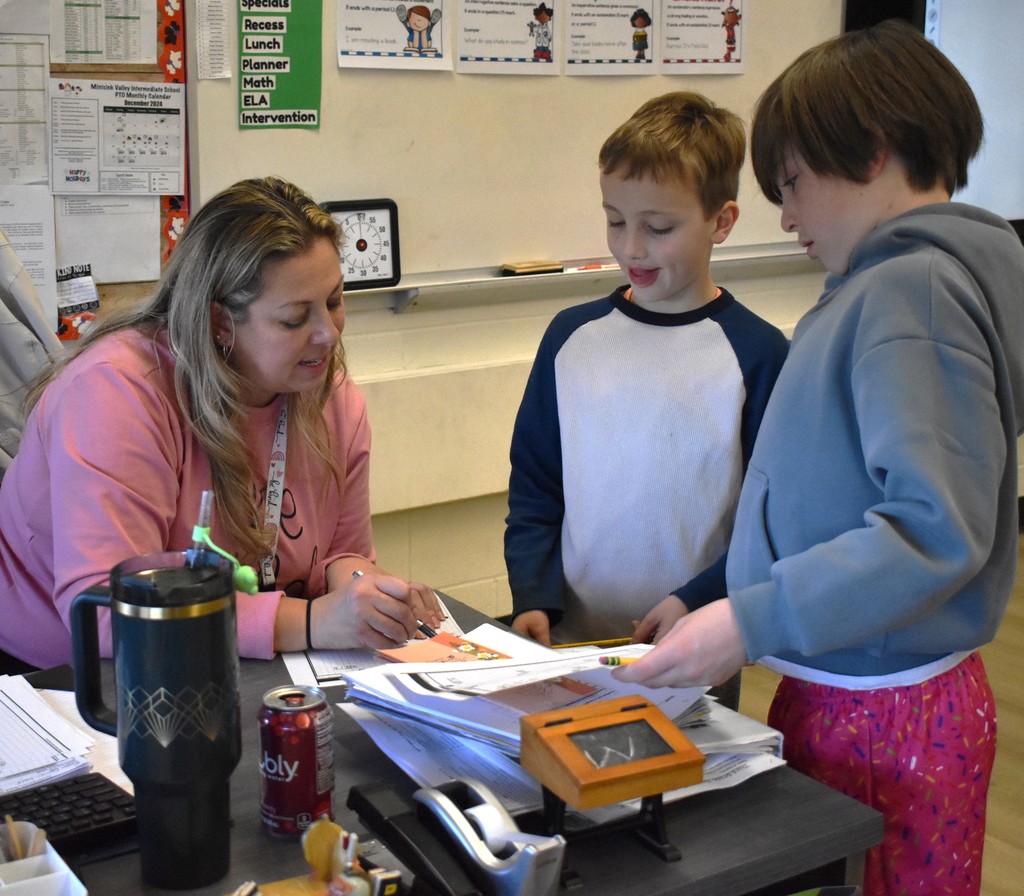
Like all district fourth-graders, Kim Marasco’s IS fourth-graders are spending time during math class perfecting their long division math skills. This is something that probably most of us remember how to do!
Learning long division is important because it teaches students a systematic way to divide larger numbers into smaller parts, which is a foundational math skill that builds upon basic multiplication facts and helps them tackle more complex division problems later on, especially when dealing with larger numbers and decimals. Long division also helps students to develop critical thinking and problem-solving skills through the structured steps involved in the process.



Ross Potter’s IS physical education third-graders are getting really good at playing floor hockey!
Floor hockey is a simplified version of ice hockey played indoors on a flat surface, where players use sticks to hit a plastic puck or ball into a goal, typically with modified rules to suit younger children's abilities and often played in a gym setting as part of physical education classes. Often, the main focus at this level is usually on basic skills like dribbling, passing, and shooting while learning the game's fundamental concepts like positions and scoring


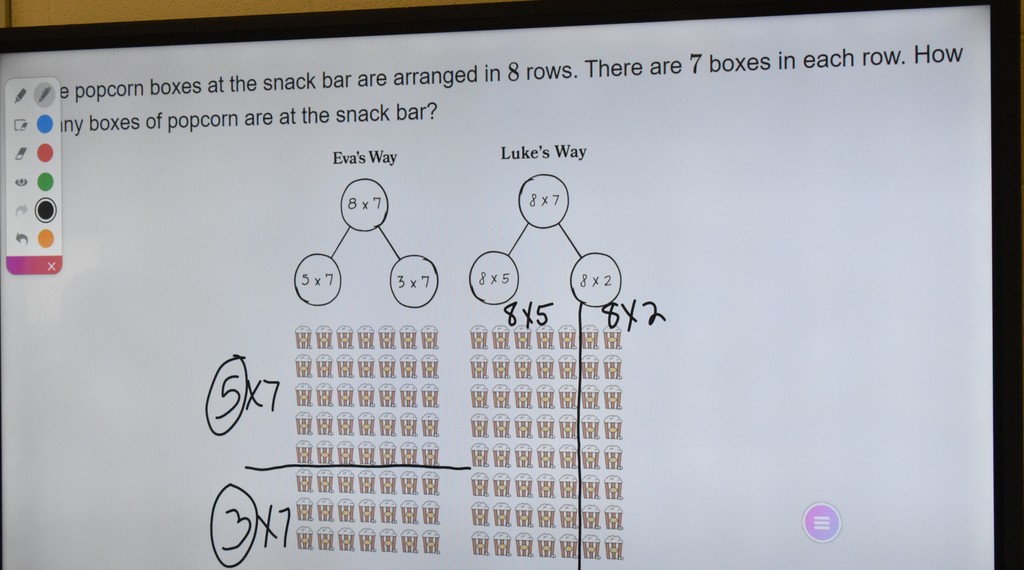
Like all district third-graders, Shari Cannone’s IS third-graders are learning about the distributive property of multiplication during their math lessons.
The distributive property is important because it helps students break down complex multiplication problems into smaller, more manageable parts, allowing them to use basic multiplication facts to solve larger numbers, develop number sense, and build a foundation for more advanced math concepts as they advance to higher grade levels.. This property shows them how to "distribute" a multiplication operation across addition, making calculations easier.


Create --- Sing ---Read
IS Art Teacher Joan Joan Giardina, Music Teacher Deanna Feuerbach and Librarian Aimee Hardy are happy to share these important key words they reinforce to their students every day

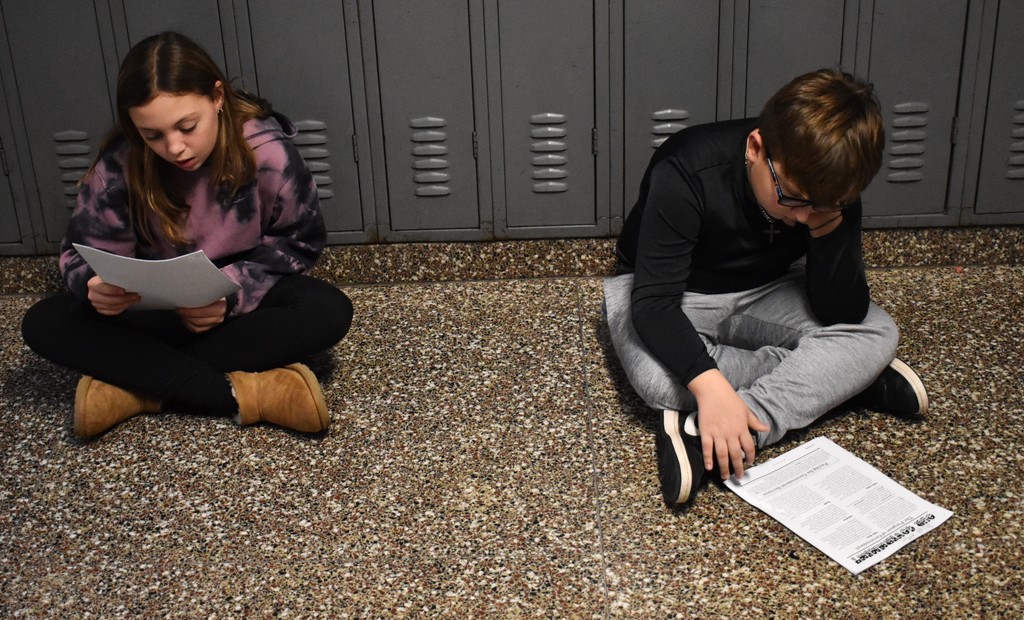
Jennifer Carroll’s IS fifth-graders, like other fifth-grade classes, continue to be involved in partner reading, using materials they’ve been discussing and studying in social studies.
Partner reading allows students to practice reading aloud in a low-pressure environment, build fluency, improve comprehension, develop vocabulary, and gain confidence by supporting each other while reading, while giving teachers an opportunity to monitor individual progress and provide targeted support.



WATCH FOR THESE FANCY PANTS!
Joan Giardina’s IS art students recently submitted their best drawings which showed her the concepts they learned in art class, which included the concepts of detail, value, shading and more!
Winning drawings were chosen and those winning students continue to be in the process of adding their artwork to Mrs. Giardina’s JEANS, which she will proudly wear at the spring District Art Show (and beforehand as well!)
Students visited her art room during extra art time at the end of the day to work on the jeans. WHAT A COOL PROJECT!
But! This is just the beginning, as the contest was open to all students and there’s a wide range of winners in each grade. More drawings will continue to be added until the jeans are completely filled with wonderful art! What a wonderful example of wearable art! Wearable art is pushes the boundaries of creativity, offering the wearer an opportunity to embody art and make a personal statement.
Detail, value, and shading in art are crucial because they collectively create the illusion of depth, form, and realism in a piece by accurately depicting how light interacts with objects, allowing the viewer to perceive three-dimensional shapes and understand the spatial relationships within a scene. See more photos on the district's Facebook page:https://www.facebook.com/MinisinkValleyCSD


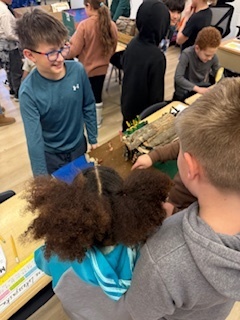
Jenn Kemmerer’s, Cheryl Wilson’s and Jessica Venettozzi's IS fourth-graders recently visited each other’s classrooms to see their outstandingly creative New York State Native American dioramas. Students displayed their work as their peers stopped by their desks to ask questions.
Students were tasked with designing and building either a longhouse or wigwam to show their specific understanding of Iroquois an Algonquian housing. As part of their project work, students were also tasked with writing about their home, who lived in t and other details. While this was a student-centered home project, families were encouraged to also take part!
Building a longhouse or wigwam is much more than just a creative project. This project helps students understand how Native American tribes adapted their housing to their environment and lifestyle, particularly the importance of communal living in a longhouse for large families and the flexibility of a wigwam for nomadic tribes who needed to move frequently depending on food sources. It teaches them about the practical reasons behind different types of shelters based on the needs of the people who built them.


The Intermediate School PTO "elves" have helped many students with their holiday shopping this year at the PTO Holiday Kidz Boutique! Shh....don't give away any surprises!


