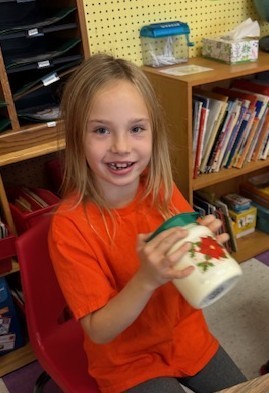

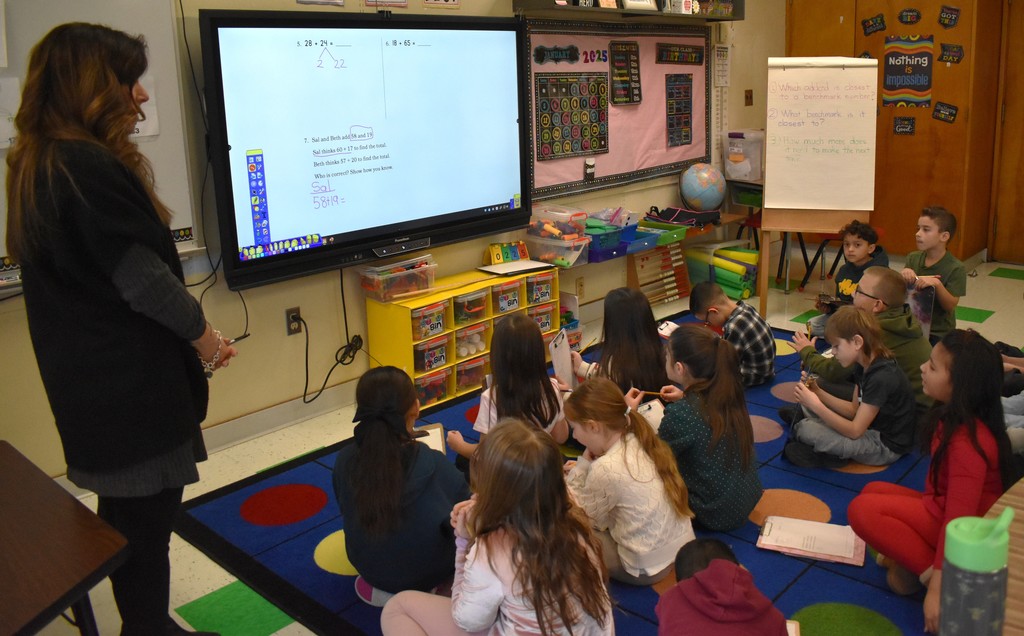
District second-graders, like Jen Levin’s ES second-graders, are learning about how “benchmark numbers” can be a huge help in solving math problems! Ask them about this concept, because they can explain it to you!
Benchmark numbers help solve second-grade math problems by providing easy reference points (like the numbers 5 and 10) that students can use to estimate and mentally calculate answers to addition and subtraction problems, making them easier to solve by rounding numbers to these familiar landmarks. This can help when dealing with larger numbers or comparing quantities. It’s kind of like having a “friendly” number that can help simplify calculations!


In second-grade, district students are introduced to opinion writing as part of the ELA studies.
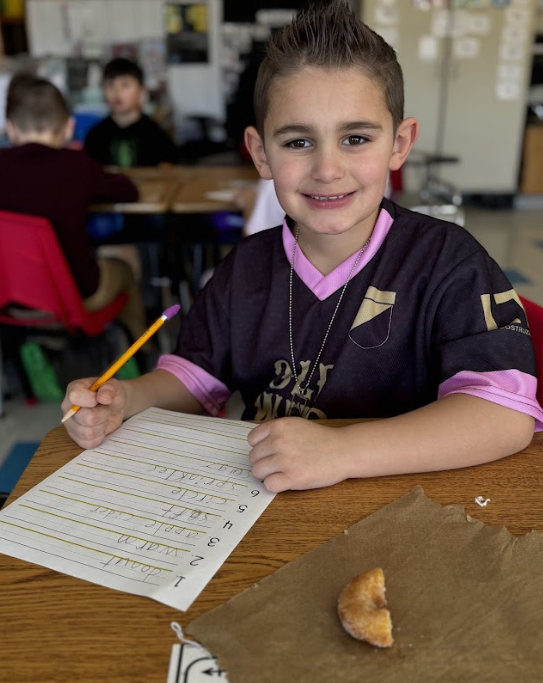
We’d all agree there’s no better way to write an opinion piece about donuts than to have a fresh donut sitting on your desk just waiting for you to eat!
When ES second-grader teacher Gemma Lyon tasked her students with writing an opinion piece about donuts, she shared a fresh batch of cinnamon donuts with them as part of the assignment!
Students used their senses to create a collaborative vocabulary list that they would use in their final writing piece. The students described the donuts as fresh, sugary, sweet and squishy. They enjoyed their donut treats as they explored their sense of taste as they finalized their writing work, which included an introduction, the stating of an opinion, reasons to support their opinion, linking words and a conclusion. WELL DONE!


Today, Jan. 15, is the birthday of The Rev. Dr. Martin Luther King Jr. The third Monday in January is the federal holiday which commemorates the nation's remembrance of Dr. King and his steadfast commitment to fighting for freedom, civil rights and equality for all people. In recent days, district students, in age-appropriate lessons, have been spending talking about Dr. King and his teachings.
That includes Meghan Donahue’s ES first-graders, who are in the process of completing a project focusing on the importance of one’s character. Their projects will soon be on display in the school’s hallway along with other similar projects completed by their peers!


Mia McLean's ES kindergarten library students are thrilled to show off the books they've picked to bring home!
Library class supports what goes on in the classroom by further developing kindergarteners' literacy skills through exposure to a variety of books, encourages a love of reading, provides a space for interactive storytelling, and can foster a sense of community while teaching them basic library skills like selecting books and respecting the space.


Gemma Lyon’s ES second-graders are not only making a creative fashion statement, they’re also having a lot of phonics fun as part of their ELA work by wearing letter vests!
Students incorporated movement and letter sounds as they reviewed beginning, middle and ending sounds, forming real and nonsense words! What a fun and interactive way to reinforce important language skills!
Beginning, middle, and ending sounds" refer to the first sound you hear when saying a word (beginning), the sound in the middle of the word (middle), and the last sound you hear when saying a word (ending); or the different sound positions within a word.
For example, using the word “cat”:
•Beginning sound: This is the initial phoneme (sound) of a word, like the "c" sound in "cat."
•Middle sound: This is the vowel sound usually found in the middle of a word, like the "a" sound in "cat."
•Ending sound: This is the final phoneme (sound) of a word, like the "t" sound in "cat."
The ability to discriminate between the beginning, middle, and ending sounds helps students progress faster in phonics skills.


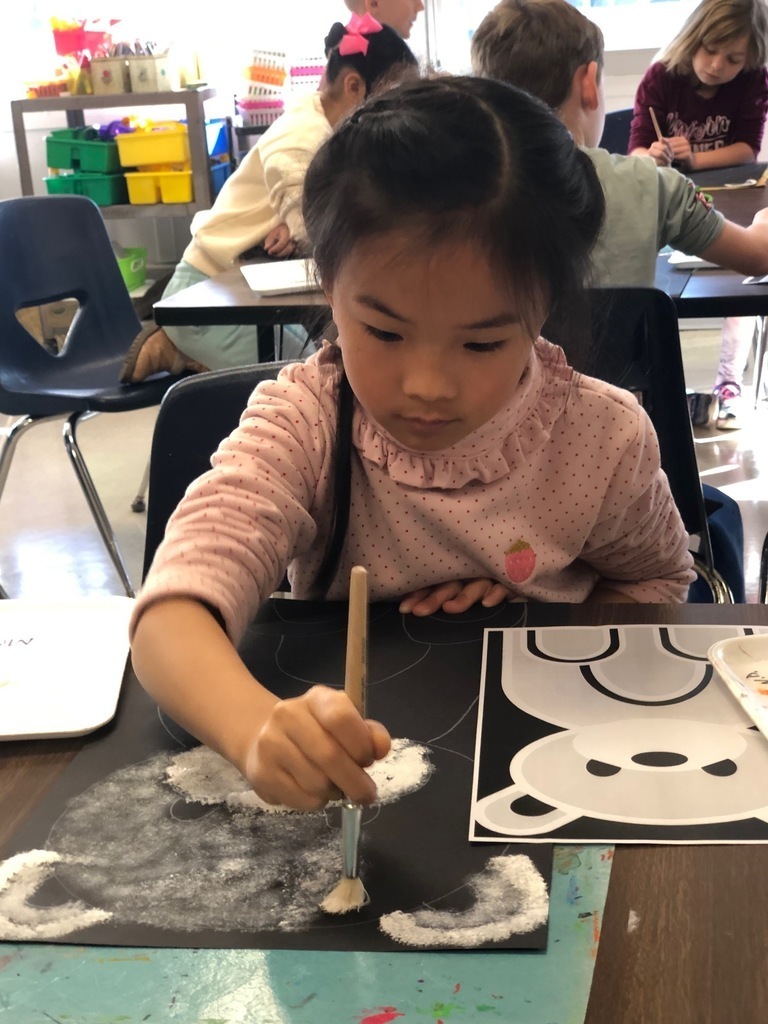
Ilana Kaufman’s ES second-grade art students are exploring how to use value and texture, two elements of art, to paint teddy bears. In this lesson, students experimented with different types of brushes and painting techniques to create fluffy, soft, and fuzzy textures.
In art, "value" means how light or dark a color is, like the difference between a bright yellow and a dark shadow. "Texture" refers to how something feels when you touch it, like the smooth surface of a ball or the rough bark on a tree. This includes how a surface appears to feel to the touch.


Ian Walker’s ES second-graders, like all district second-graders, are beginning their studies on animals. As a prelude to their work, they recently discussed what are “living” and “non-living” things. Clearly, animals are living things! Pencils and books are not! Take a peek!
Studying animals in second-grade helps young students develop a basic understanding of living things, their habitats, and how they adapt to their environment. It’s also intended to foster curiosity about the natural world, teaching them about basic needs like food and shelter, and introducing the concept of animal classification, all while laying the foundation for more complex ecological concepts later on in their academic careers.


Anthony Pascarelli’s ES physical education students are having a fun time playing "Rock-- Paper-- Scissors Tag" in class!
First, students play the rock—paper—scissors game. The winner must tag their partner before reaching the safe zone. Then, the student who didn’t chooses an exercise from the poster. The student who won will roll a dice to determine how many repetitions or seconds they will do the exercise!
Rock-- paper-- scissors is a hand game where players simultaneously form one of three shapes with their hands to determine a winner:
• Rock: A closed fist
• Paper: A flat hand with the palm facing down
• Scissors: A fist with the index and middle fingers extended to form a V
The rules of the game are:
• Rock beats scissors: A rock can break scissors
• Scissors beats paper: Scissors can cut paper
• Paper beats rock: Paper can cover a rock
• Tie: If both players choose the same shape, the game is tied
The game is often played in a best-two-out-of-three format. It can be used to help develop conflict resolution skills and improve communication and critical thinking.


Cliff Loretto’s ES kindergarten music students are having a grand time pretending they're snowflakes while singing the song, “Five Little Snowflakes.”"Five Little Snowflakes" is a song about snowflakes falling from the sky, dancing in the wind, landing on the ground, melting in the sun, and finally going back in the sky.
But! There’s more to this singing session than just being pretend snowflakes: Students are getting practice with a song that has repetitive lyrics, a narrow vocal range, and a melody that moves with step-wise motion!


Erin Chase's ES first-graders had a blast during their recent pajama day, which included being a part of the school's annual sing-along! They also learned about various traditions and holidays from around the world!


Anthony Pascarelli’s ES physical education students are not only having hula hoop fun during class, they’re learning about how to cooperate in groups to achieve different challenges…in this instance it’s with building hula hoop shelters! Students have to discuss how to build a structure that a peer can sit under. Then, that student is tasked with attempting to crawl out of it without the hoops without knocking them down.
His lesson is a great combination of fun, thinking and physical fitness work!
Hula hoops can be used to build structures for a variety of physical education activities, including team building, relays, and games. Hula hooping can also help improve coordination, balance, and flexibility, and engage muscles in the core, arms, and legs.


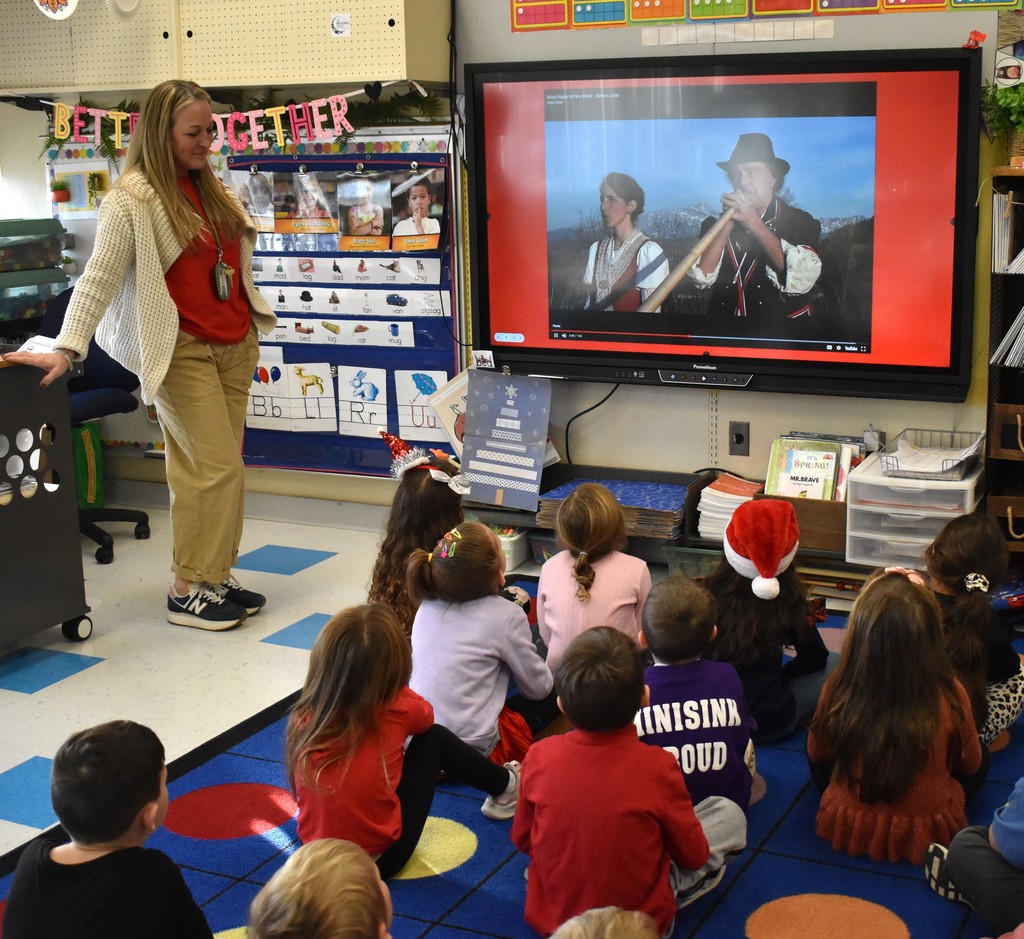
The Elementary School kindergarten team held its annual "Holidays Around the World" program today, Dec. 17, where students visited different classrooms to learn about holidays and customs in Israel, Switzerland, Ireland, Italy, Germany, Australia and Mexico!



Like all district first-graders, Stephanie Hoffman’s ES first-graders have become very proficient in learning how to “make 10” when an addend is five! Ask them!
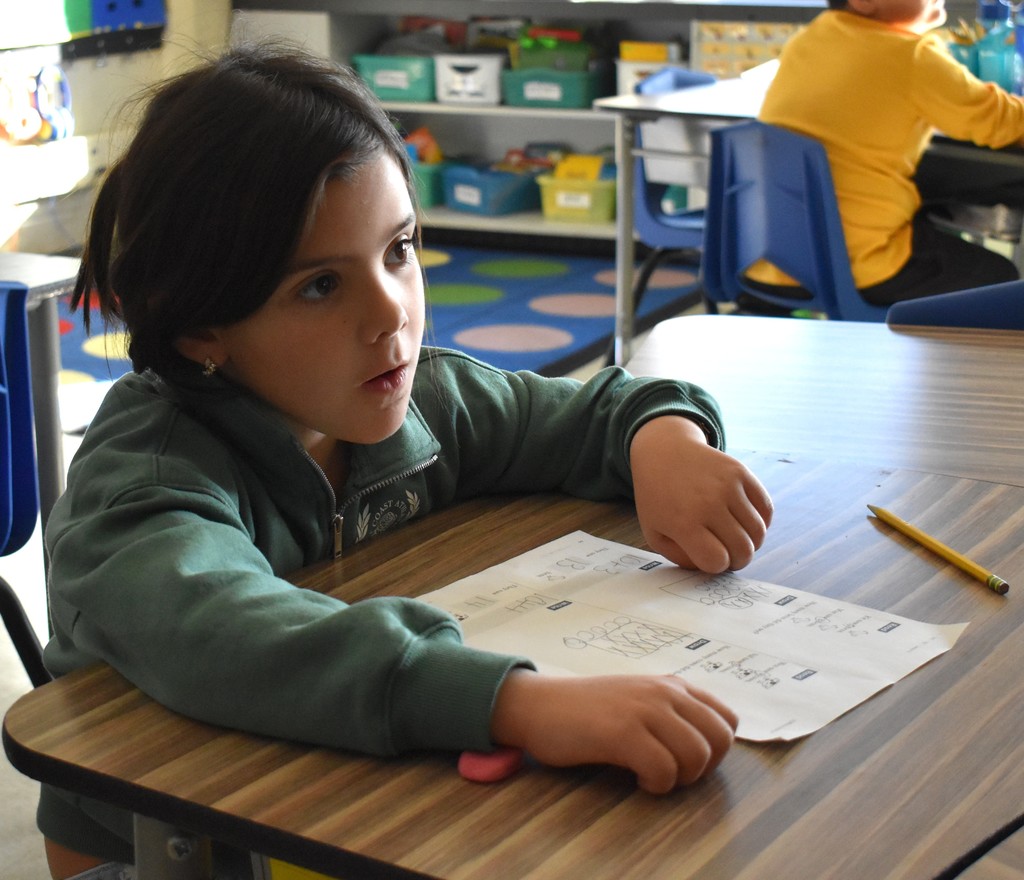
In this lesson, students found the total of two addend expressions by decomposing one addend into two parts to make 10 with the other addend. They rewrote the expression as a number sentence to show how they decomposed the addend and found the total. Then, they used concrete and pictorial models to support their discussion!
An "addend" is simply one of the numbers that you add together to find a sum; it's any number that is being added in an addition problem.
"Decomposing numbers" in 2nd grade means breaking down a number into its smaller parts, usually based on place value. Essentially, it's the process of "taking apart" a number to see its individual components.


LITERACY LESSONS TIED TO SEASONALITY
Like all district kindergarteners, Lindsey McKernan’s ES kindergarteners are learning about “tricky words” and realizing that tricky words are those that do not "play by the rules!" Making candy canes and adding a variety of tricky words to their art work is a fun way to practice reading, writing and remembering those tricksters!


Carmela Sill’s ES kindergarteners are getting some great fine motor skill practice work using cotton balls and clothespins to make “melted snowmen.” Everyone is unique!



CAN YOU HELP? The High School's Youth Against Cancer Club is in the midst of a donation drive through Dec. 16 to collect items to brighten the days of Garnet Medical Center patients. See the flyer for what students are hopeful to collect! Your contributions would be most welcome!

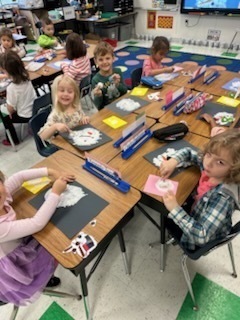
“Directed drawing” is a really cool classroom activity! Take a peek at Stacy Lozupone’s ES kindergarteners, who are using this assignment to refine their skills related to following directions, impulse control and frustration tolerance while have a really fun time….to make awesome yetis! (A yeti looks like a big, fluffy, white snowman with really long, shaggy fur, kind of like a giant, hairy bear that lives in the snowy mountains, and is so big you might only see its big footprints in the snow!)
What made it even more exciting was a special visit by Occupational Therapist Julie Barrett who assisted some students with their occupational therapy work!
"Directed drawing" in kindergarten is a teaching method where a teacher guides students step-by-step through the process of drawing a picture, providing specific instructions on where to place lines and shapes, essentially breaking down the drawing into manageable parts to help young children learn basic drawing skills and follow directions.


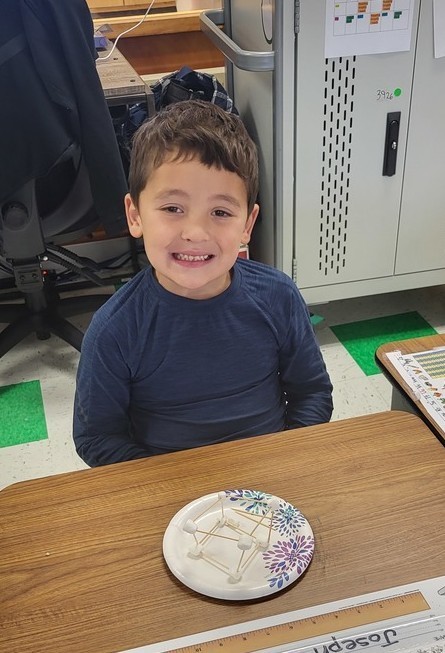
Angela Dombal’s and Bridget Kelly’s ES kindergarteners are learning about two and three-dimensional shapes as part of their module on this topic. They used toothpicks and marshmallows to construct a solid shape from a square base. What a fun STEM lesson!
Why is this important? Teaching two and three-dimensional shapes in kindergarten is important because it helps young children develop foundational spatial reasoning skills, which are crucial for future math concepts. This work also enhances visual perception, aids in recognizing letters and numbers, and provides a basis for understanding the world around them through everyday objects with different shapes; essentially laying the groundwork for more complex geometry work as their academic careers advance.


CAN YOU HELP?
The High School cheerleaders' SOCK, HAT and GLOVE DRIVE runs through Dec. 20. Please see the details and thanks for sharing!

Kimberly McDermott 's ES second-graders had a great time when they recently made butter in class. It's a simple thing to do: Make sure that you have a jar with a lid, some heavy cream and some salt if you want salted butter. Fill the jar half way with the heavy cream. You want to have enough room to shake the cream to make the butter so don’t fill it up too high. Then, it's serious shaking time....maybe 15 minutes or so...to get the liquid to morph into whipped cream, the butter covered in butter milk. Pour off the butter milk, and you're ready to use it however you like!