

Sally Mankoo’s and Katie Bendykowski's ES kindergarteners recently had the unique experience of learning how pickles can be experienced through each of the five senses! They listened to Rachel Isadora’s “I Hear a Pickle” and learned “all the tea”… rather, “all the dill” more about this humble cucumber and what they could hear, taste, smell, touch, and see! Ask them about this! Then, they recorded their sensory observations in their graphic organizers to capture their experiences. What a fun, crunchy lesson!
In kindergarten, graphic organizers can be used to visually support young learners in organizing information, brainstorming ideas, understanding key details in stories, building vocabulary, and even planning their writing by providing a structured framework to capture their thoughts through simple drawings and key words.


Carmella Sill’s ES kindergarteners have been working in groups to complete challenging puzzles! But, their work was more than just seeing what the completed puzzle looked like.
Working together in groups to complete puzzles is important in kindergarten because it helps children develop crucial social skills like communication, cooperation, and problem-solving by requiring them to work together to achieve a common goal, while also enhancing their cognitive abilities through the puzzle itself, and, of course, fine motor skills practice! What a fun way to practice teamwork and critical thinking in a given time frame!


Good morning! Angela Dombal’s and Bridget Kelly’s ES kindergarteners have been practicing learning how to greet each other, which includes learning about eye contact, handshakes, and saying good morning to a friend! This has helped the students learn each other's names and promotes a feeling of community in the classroom.


Support the Class of 2025 and add to your collection of outstanding Minisink Valley attire! The selections are great to wear for any occasion and for any event in any building!

Karen Ruoti's ES kindergarten students are chaining letters to make, blend and read words as part of their ELA work! Her young students are building words with letter cards. This technique improves phonemic awareness as well as decoding (reading) and encoding (writing) skills.
Kindergarten word chaining is a reading practice that helps students learn to decode words with specific spelling patterns. It involves creating a series of words that differ by one phoneme, or sound, at a time. For example, a word chain might start with "bat" and then continue with "cat", "can", "man", and so on.


HAPPY HALLOWEEN!
Marjori Bobish's transitional kindergarteners are brewing up phonemic awareness in their special Halloween attire! By playing words games using a program called "Heggerty," students practice manipulating sounds in words and develop a magical foundation for future reading skills!

HAPPY HALLOWEEN!
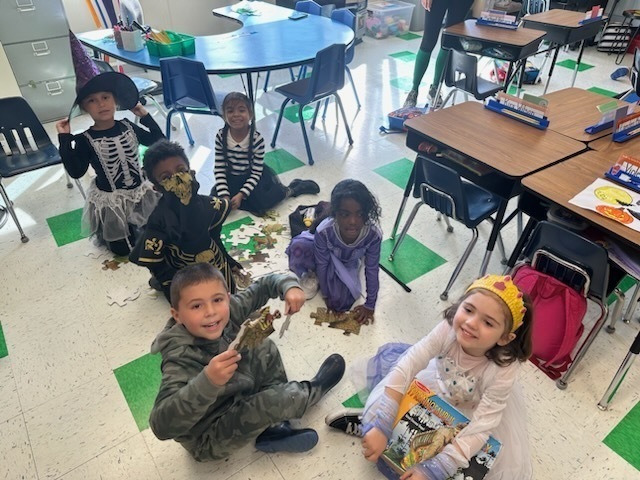
Carmela Sill’s ES kindergarten students had a lot of fun working in complete challenging Halloween puzzles today! They needed to work on delegating tasks, sharing and working as a team in order to complete puzzles together within a specific timeframe.


Yoga is not just for adults! It can give children very important life skills that can help them succeed in the world. Stacy Lozupone’s ES kindergarteners have been having fun learning basic yoga poses and, at the same time, they’re also getting introduced to breathing and self-regulation techniques.
Yoga can be practiced in a variety of settings, including classrooms, play spaces, recess, before and after school programs, and at home. Yoga can help children develop mindfulness and emotional balance and self-awareness and self-management skills. Yoga can also help students to improve focus, memory, self-esteem and academic performance. Other benefits include helping students with improve balance, strength, endurance and aerobic capacity. It can also help children learn about their bodies and the movements they can do.


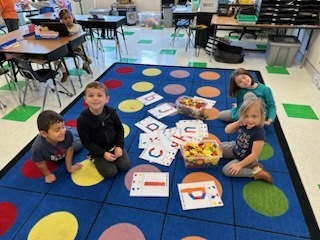
Kindergarten work is always impressive! Take a peek at Carmela Sill’s ES kindergarteners, who are working in their fine motor letter centers and using their Amplify reading software on their Chromebooks! Her little students have been sharpening their ELA skills via Amplify and working on their fine motor skills through the use of manipulatives and dot markers.
Manipulative materials are objects that students interact with to help in the learning process. They can be used to make learning more fun and engaging, and can help children understand different concepts, often times in math.

REMINDER: Tomorrow, Oct. 31, Otisville Elementary and the Elementary School will hold their annual Halloween parades! You're invited to view the parades! It's one of our most memorable days of the year for our elementary students!
CALL FOR PHOTOS: Share a photo of your student's parade costume for a Halloween photo gallery!

Tiffany Guareno/Stephanie Ewanciw’s ES kindergarteners recently completed their Knowledge Unit on the five senses. Students created a book of things they like to see, hear, touch, smell and taste. Part of their learning experience was to take advantage of the beautiful weather to take a nature walk to find some leaves to observe using their five senses!


The ES faculty recently took some time to have their own Apple Fest though their “Better Together Club!” Members were treated to four different kinds of apples donated by Soons Orchards in New Hampton. The Apple Bar featured bananas, yogurt, granola, sauces and toppings!


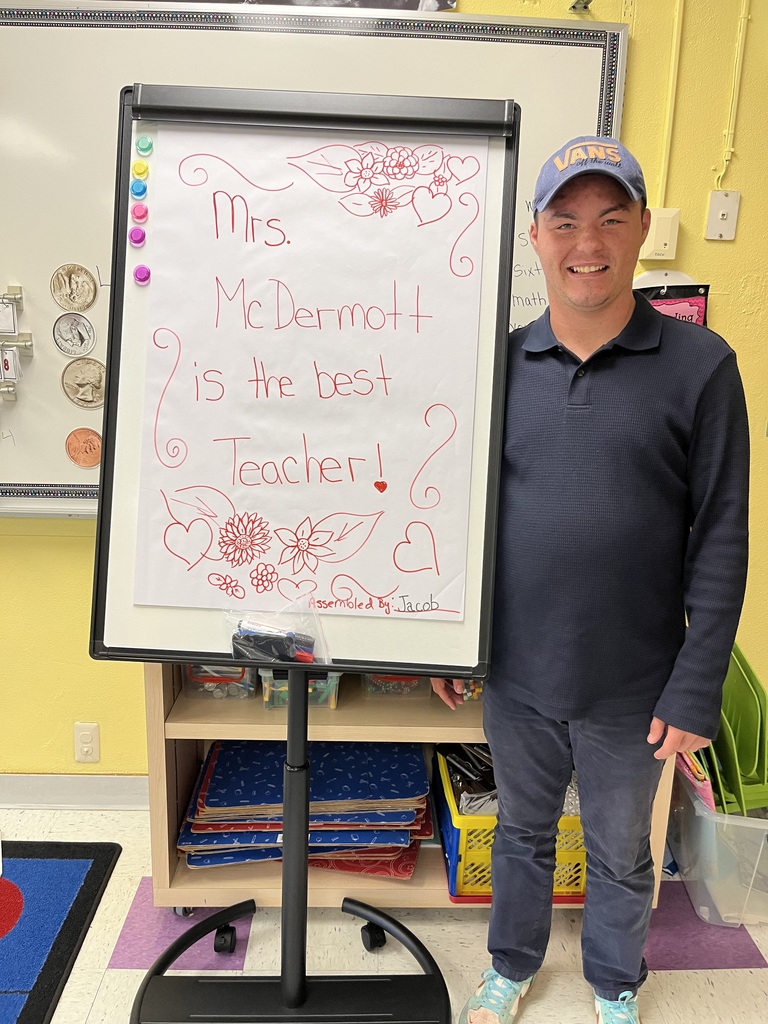
Cheers to members of the High School’s Career Achievement Program (CAP), who can be found at the Elementary School assisting staff in a variety of ways, such as with School Security Aide Kevin Murphy; basketball court painting for Physical Education Teachers Ross Potter’s Leyla Johnson’s students; and in the classroom, such as their recent assistance to assemble an easel for second-grade teacher Kimberly McDermott.


A baseball rivalry steeped in tradition begins tonight when the New York Yankees take on the Los Angeles Dodgers in the 2024 World Series! The last time the teams met in World Series competition was in 1981, and the last time the Yankees won a World Series was in 2009…so fans are very ready for victory!
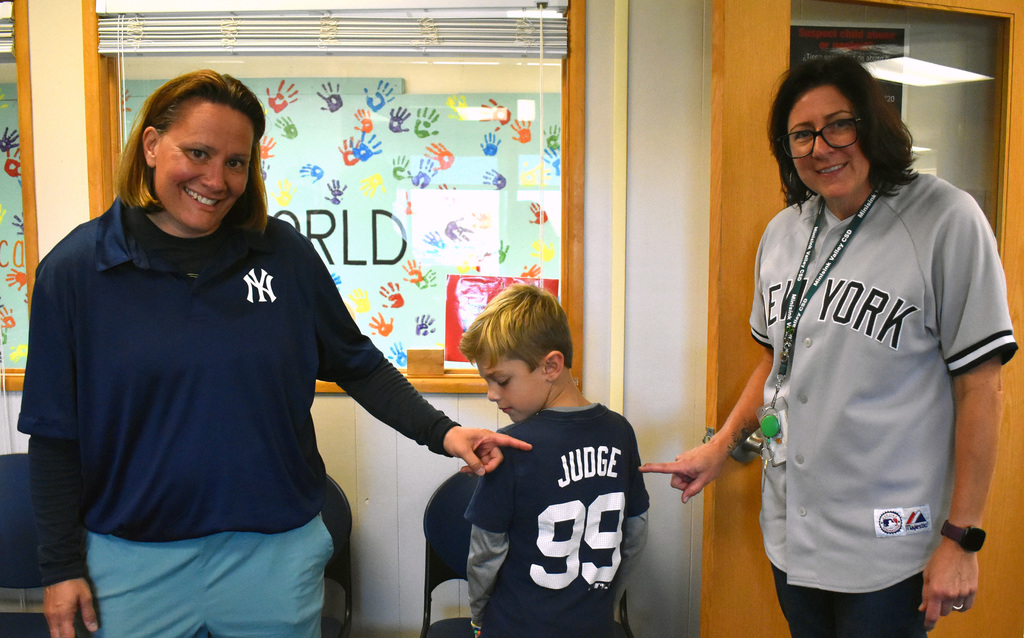
Given the World Series excitement in the district, Elementary School Principal Deborah Gallant felt it was the perfect day to present first-grader Everett Camia with his Aaron Judge ALL RISE Summer Reading Program certificate that she received earlier in the week. It was a surprise presentation to Everett, who was coincidentally wearing his Aaron Judge Yankees t-shirt to school, like others who were sporting Yankees attire today!
The Aaron Judge ALL RISE Foundation is a nonprofit that aims to inspire children and youth to become responsible citizens. Its summer reading program is a literacy initiative that encourages children and youth to read. This past summer, Minisink Valley invited all students to participate in this summer reading initiative, organized by Physical Education Teacher Theresa Uhelsky.


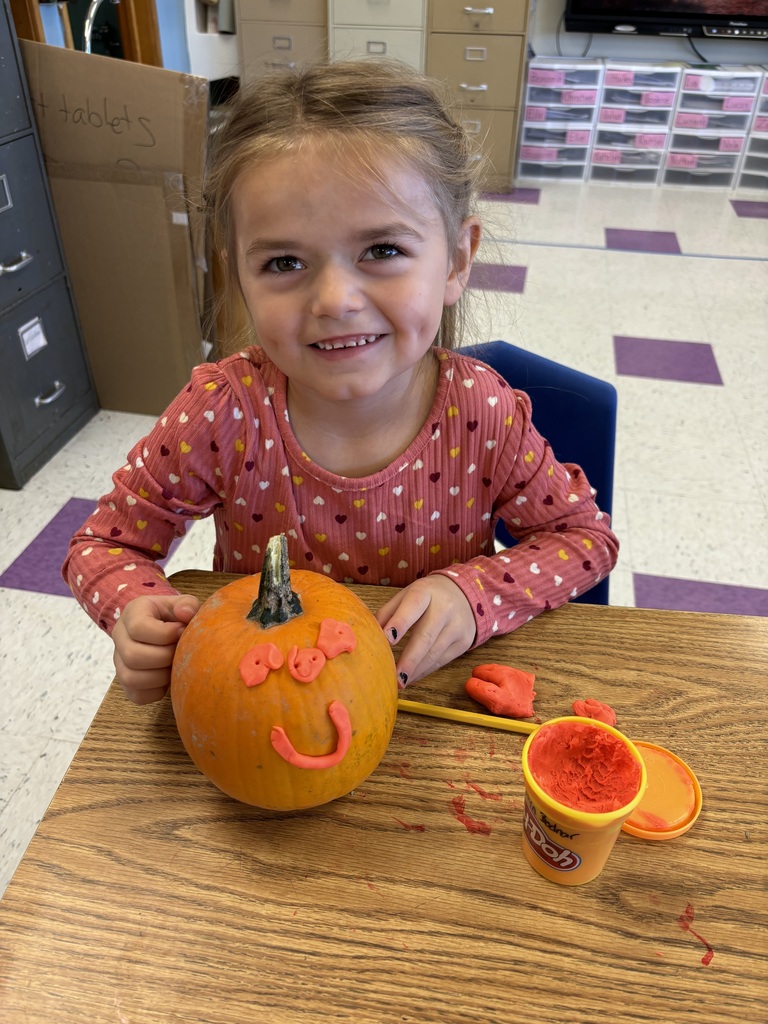
Pumpkins and Playdoh! Those are great “letter P” words!
Karen Ruoti’s ES kindergarteners used Playdoh to decorate the pumpkins they picked at the Elementary School’s Oct. 24 Fall Festival! These pumpkin faces are adorable! Plus: Her little students had a chance to work on their fine motor skills. Fine motor skills are crucial in a child's development because they enable small, precise movements with the hands and fingers, which are essential for everyday tasks like eating, dressing, writing, and manipulating objects, contributing to a child's independence and self-care abilities, as well as supporting academic learning and overall cognitive development.



The Elementary School's Oct. 24 Fall Fest was spectacular! Pumpkins! Tractor rides! Games! Cider and donuts! And, lots of fun with friends on a beautiful and brisk sunny fall day! Thank you to the ES PTO for all their work to make this a memorable day for our youngest students!


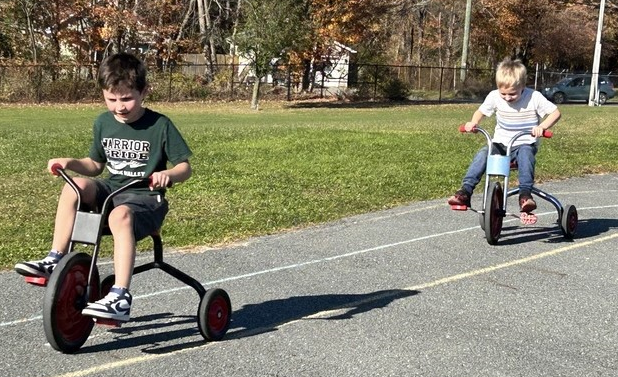
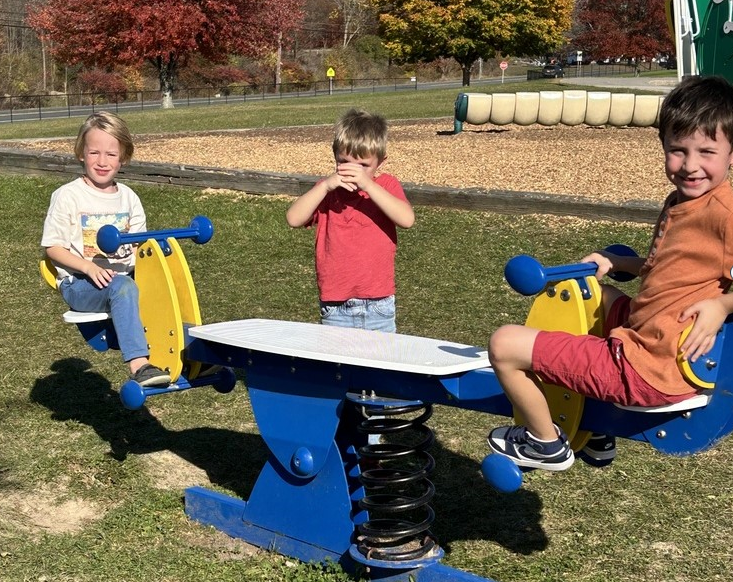
This gorgeous weather means outdoor recess is even more fun! Shawne Demberg's ES kindergarteners are loving some extra time to be outside and enjoy the fresh air and sunshine!



It’s always wonderful when alumni return to the district to visit and share what’s going in their lives! That’s what happened yesterday, Oct. 23, when Coast Guard Seaman E3 Luke Greiner, a Class of 2024 alumnus, visited Jennifer DiSimone’s ES first-graders!
Luke is currently on serving 15 days of “Hometown Recruiting,” where he will be visiting local high schools (including Minisink Valley) to talk about the Coast Guard and what a Coast Guard career entails. After that, he will report back to his unit at Small Boat Station Wrightsville Beach, N.C. Luke is working toward specific qualifications before he goes to his A-School to study ME-Maritime Enforcement.
While visiting these little students, Luke talked about his work, answering a wide range of questions from students. Did you know that Luke has never saved a baby whale, or fallen overboard?
Luke brought John Fitzgerald’s “U. S. Coast Guard A B Seas” to class and challenged students to pick the Coast Guard word used in the book which aligns with an alphabet letter. Students did pretty good with their guesses!
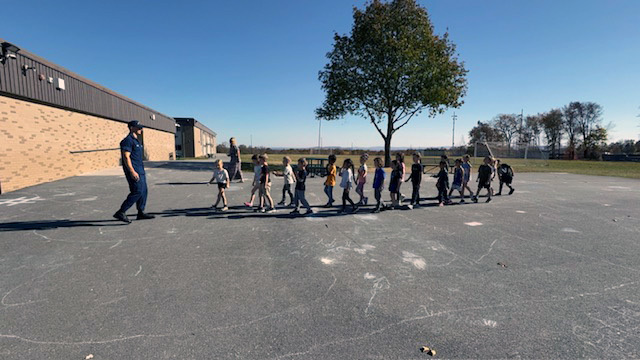
After that, Luke wanted them to experience what every active-duty service member does in all service branches: MARCHING! Luke spoke to them about the importance of marching as a unit, because marching teaches the important lessons of. discipline, professionalism, teamwork, good posture, and pride. Thanks for visiting, Luke, and thank you for your service!



Otisville Elementary's and the Elementary School's annual Halloween parades is just one week away! And you're invited to view the parades! It's one of our most memorable days of the year for our elementary students!
CALL FOR PHOTOS: Share a photo of your student's parade costume for a Halloween photo gallery!

Nora Fitzgerald and Erin McCawley’s ES first-graders are using their recently read story, “The Trip Back,” as part of their ELA work which will include rereading the story using buddy reading. Buddy reading builds reading fluency, comprehension and vocabulary.
