
HOPPY FRACTIONS!
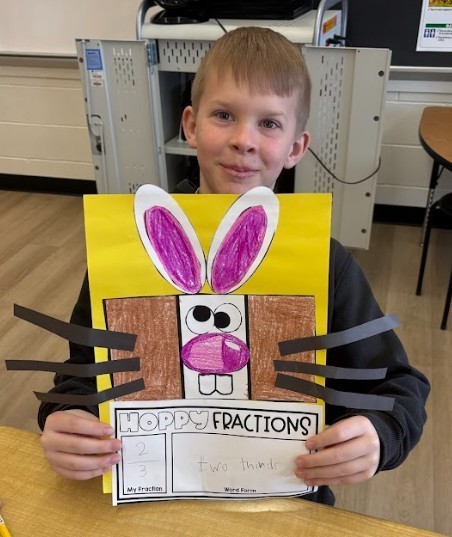
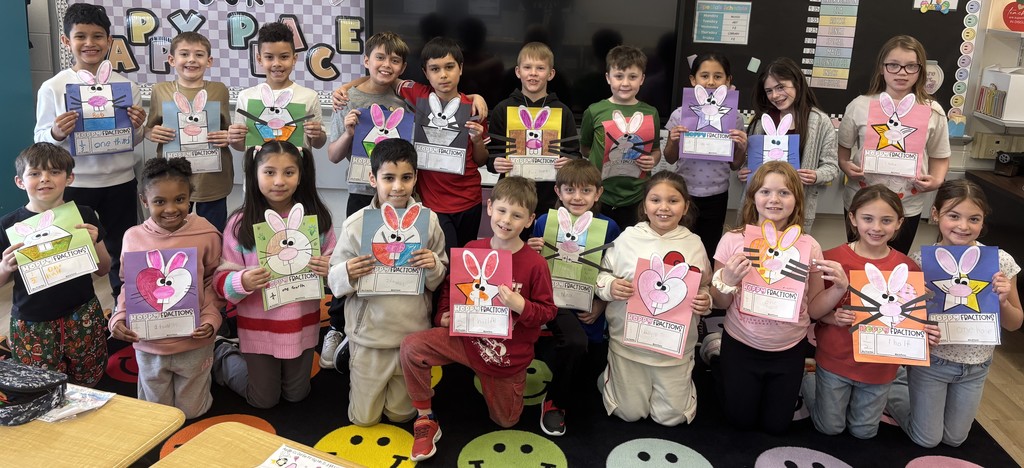
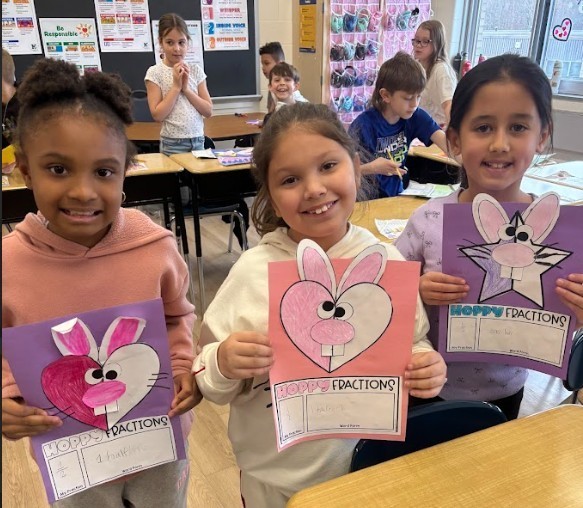
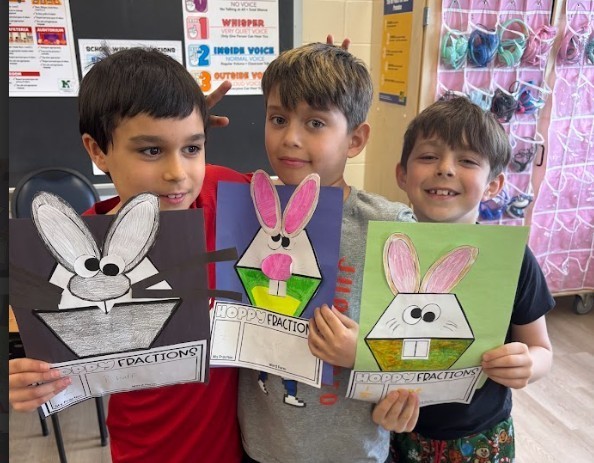
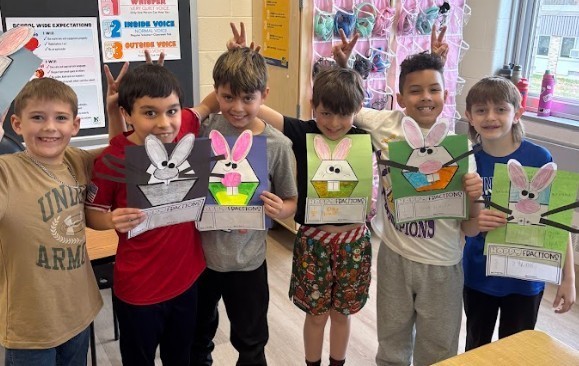
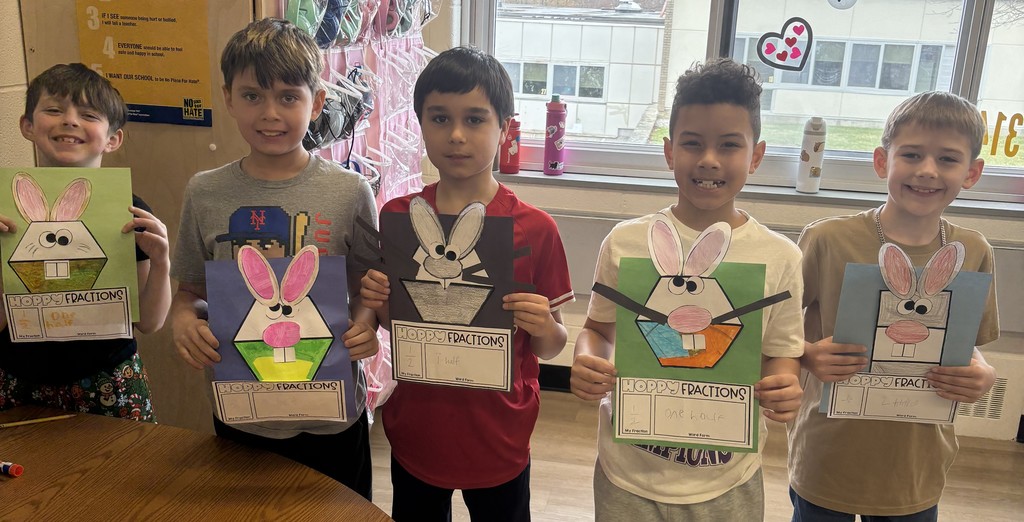
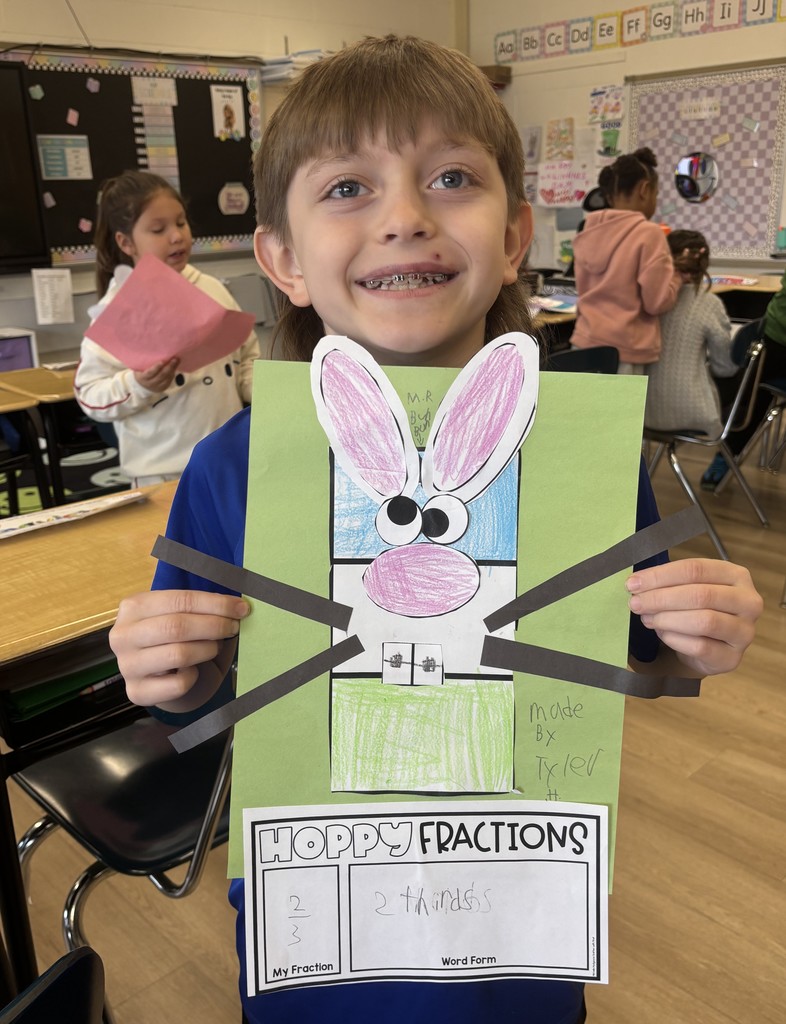
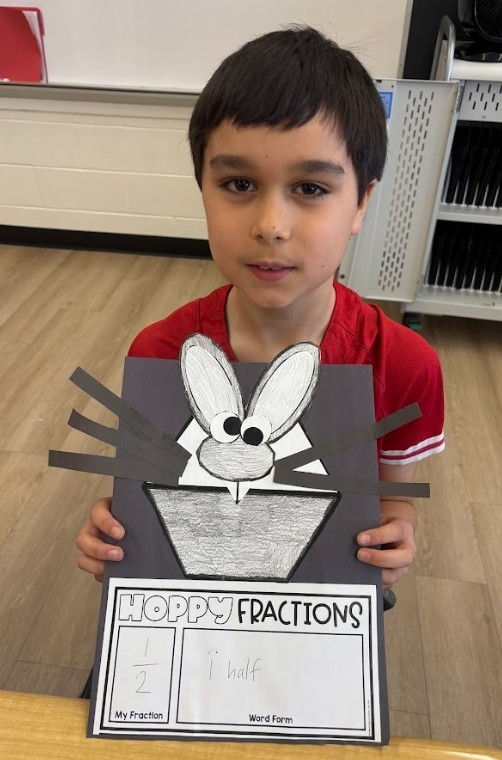
Before the break, McKayla Murphy’s IS third-graders hopped into spring by creating the most adorable fraction bunnies! Each student designed a cheerful bunny that showed off their growing confidence with fractions—right down to writing each fraction in word form. These creations were not only cute but also a fun way to show what they’ve learned!
• A fraction shows how many parts of a whole you have.
• The top number (numerator) tells how many parts you’re talking about.
• The bottom number (denominator) tells how many equal parts the whole is split into.
• 1/2 means the whole is split into two equal parts, and you have one of them.
• Fractions can be written in words, like “one-third” or “three-fourths.”
• Fractions don’t always come from circles—shapes, sets of objects, and even number lines can all show fractions!
• If two fractions look different but cover the same amount of space, they are equivalent fractions (like 1/2 and 2/4).
Before the break, McKayla Murphy’s IS third-graders hopped into spring by creating the most adorable fraction bunnies! Each student designed a cheerful bunny that showed off their growing confidence with fractions—right down to writing each fraction in word form. These creations were not only cute but also a fun way to show what they’ve learned!
• A fraction shows how many parts of a whole you have.
• The top number (numerator) tells how many parts you’re talking about.
• The bottom number (denominator) tells how many equal parts the whole is split into.
• 1/2 means the whole is split into two equal parts, and you have one of them.
• Fractions can be written in words, like “one-third” or “three-fourths.”
• Fractions don’t always come from circles—shapes, sets of objects, and even number lines can all show fractions!
• If two fractions look different but cover the same amount of space, they are equivalent fractions (like 1/2 and 2/4).
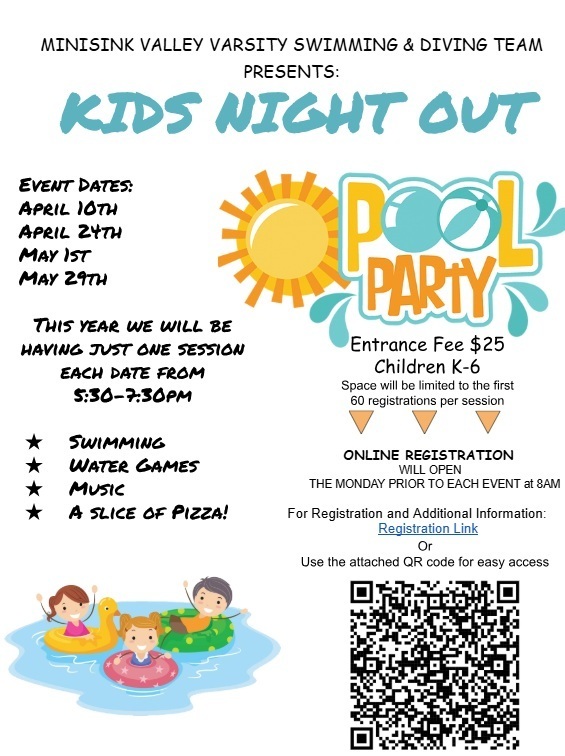
MARK YOUR CALENDAR NOW! Registration opens Monday, April 6 for the hugely popular KIDS NIGHT OUT, hosted by the Varsity Swimming and Diving team!
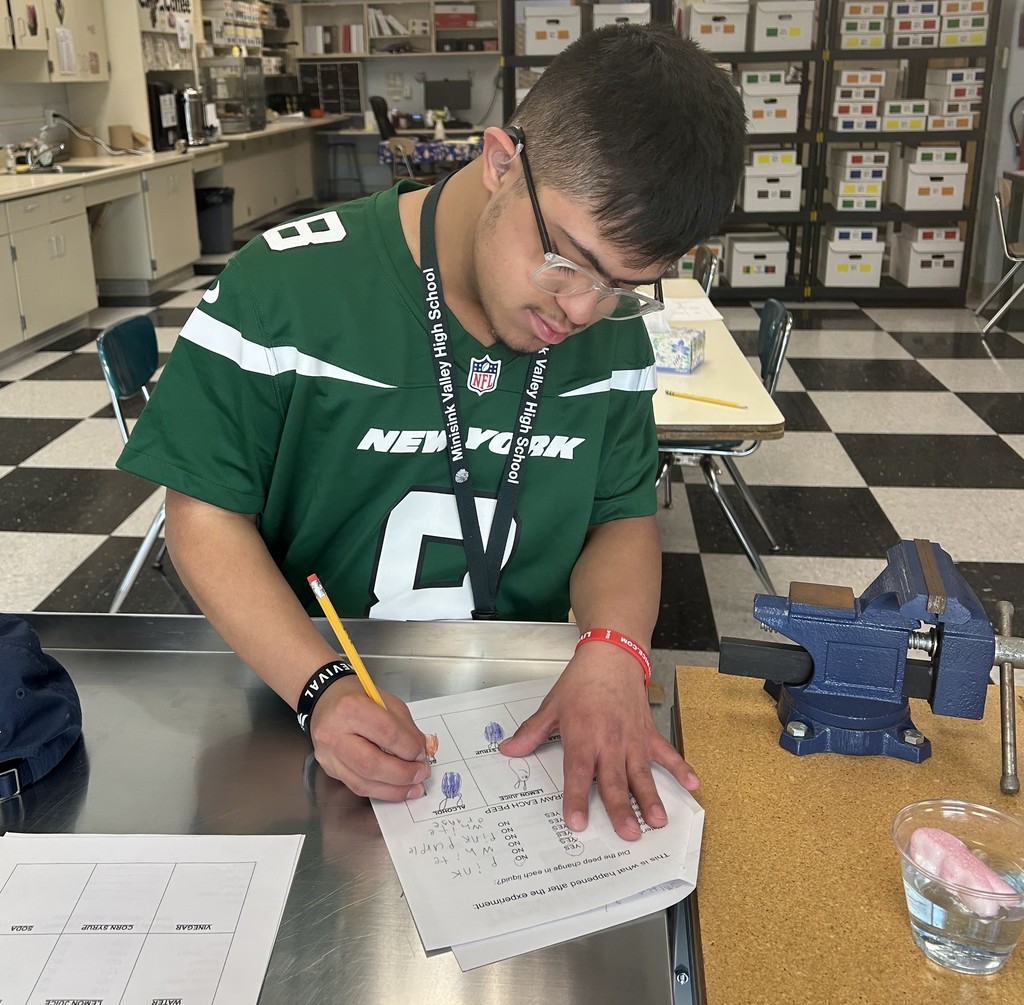
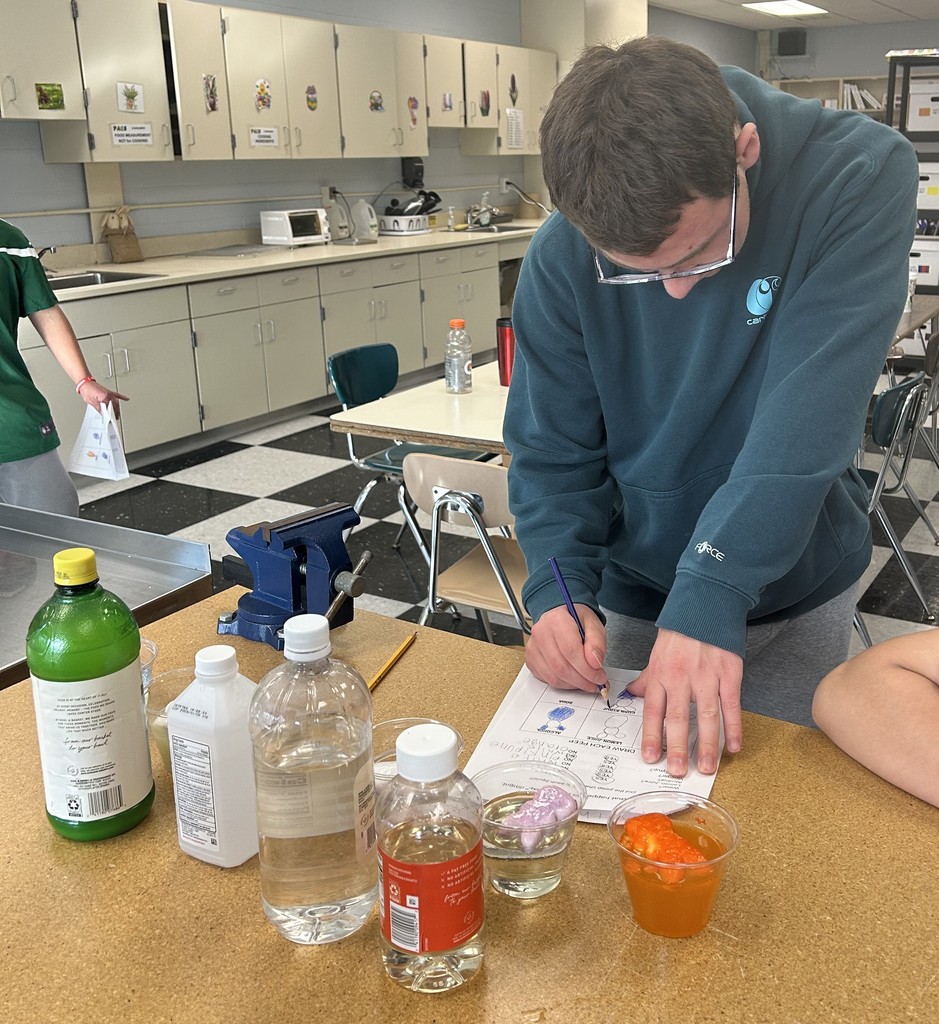
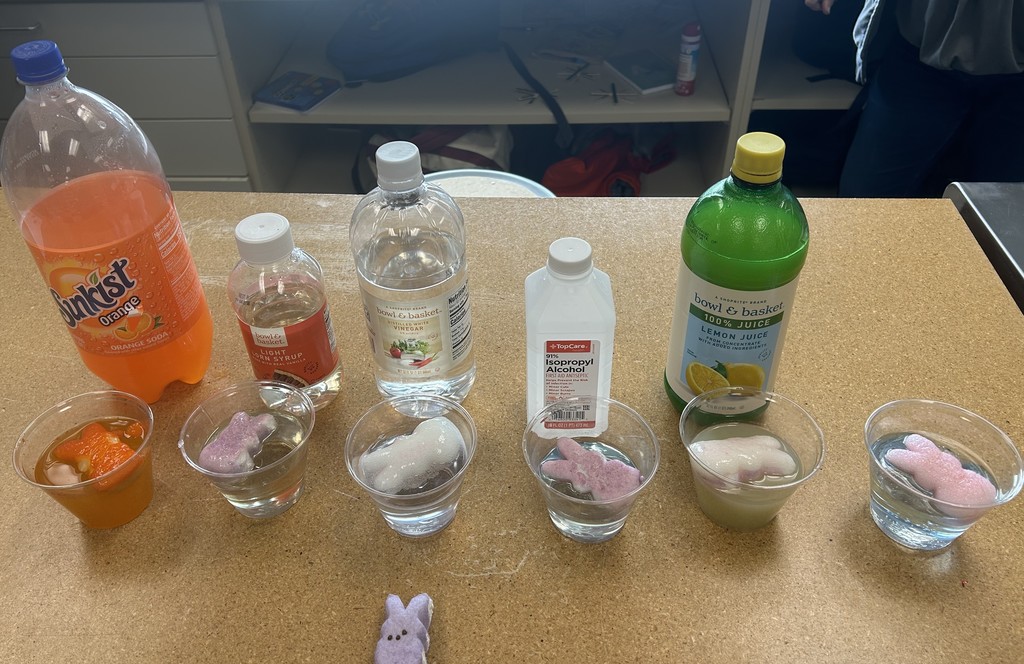
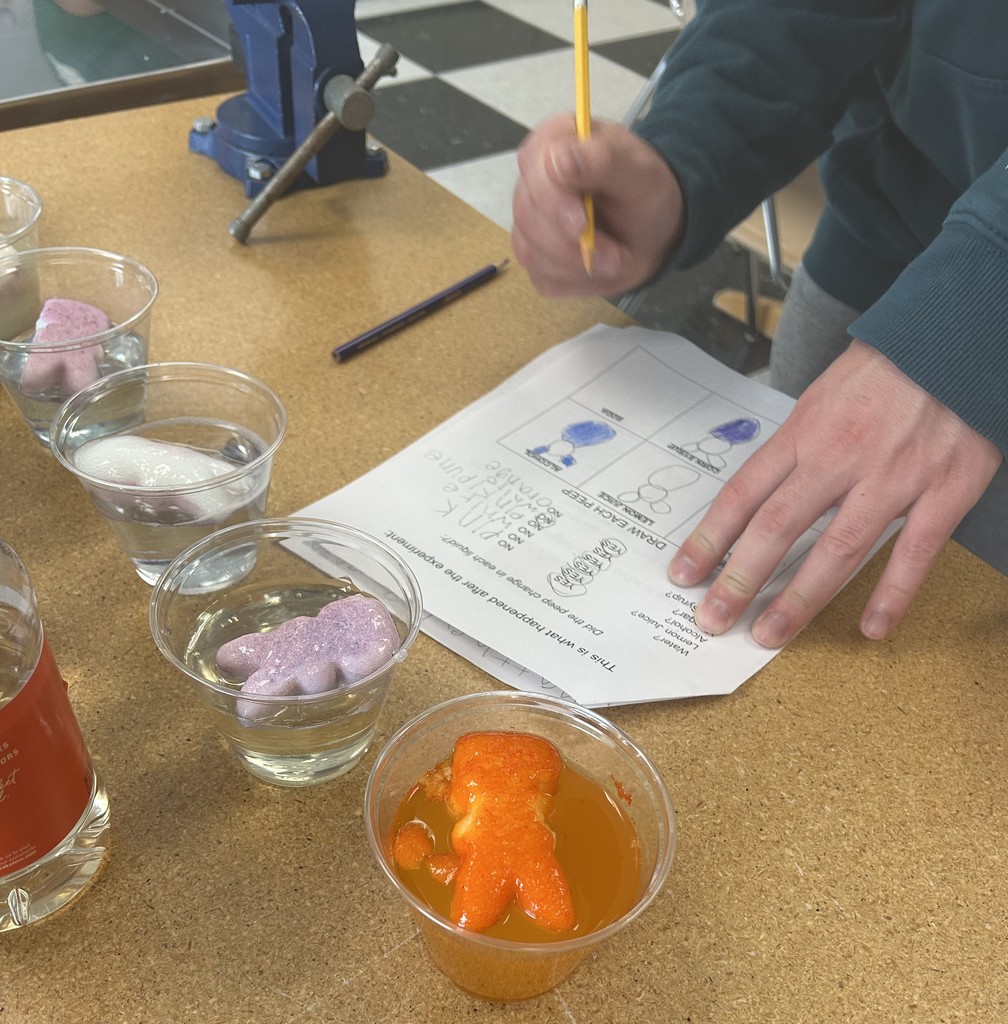
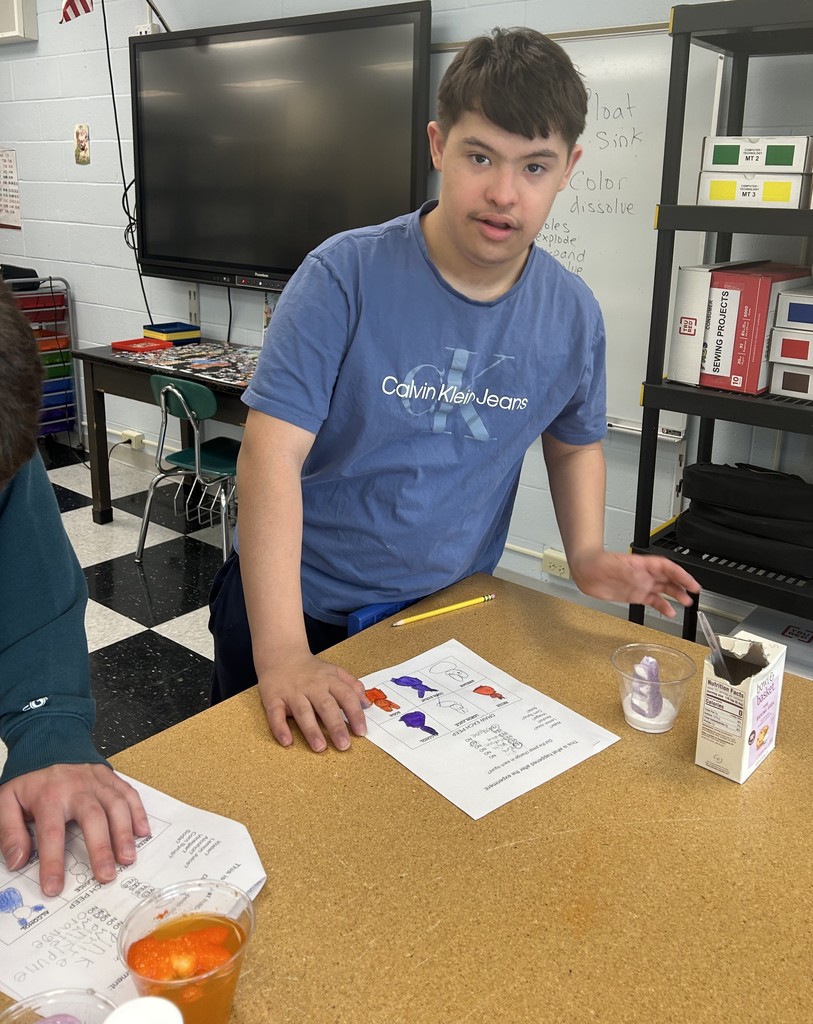
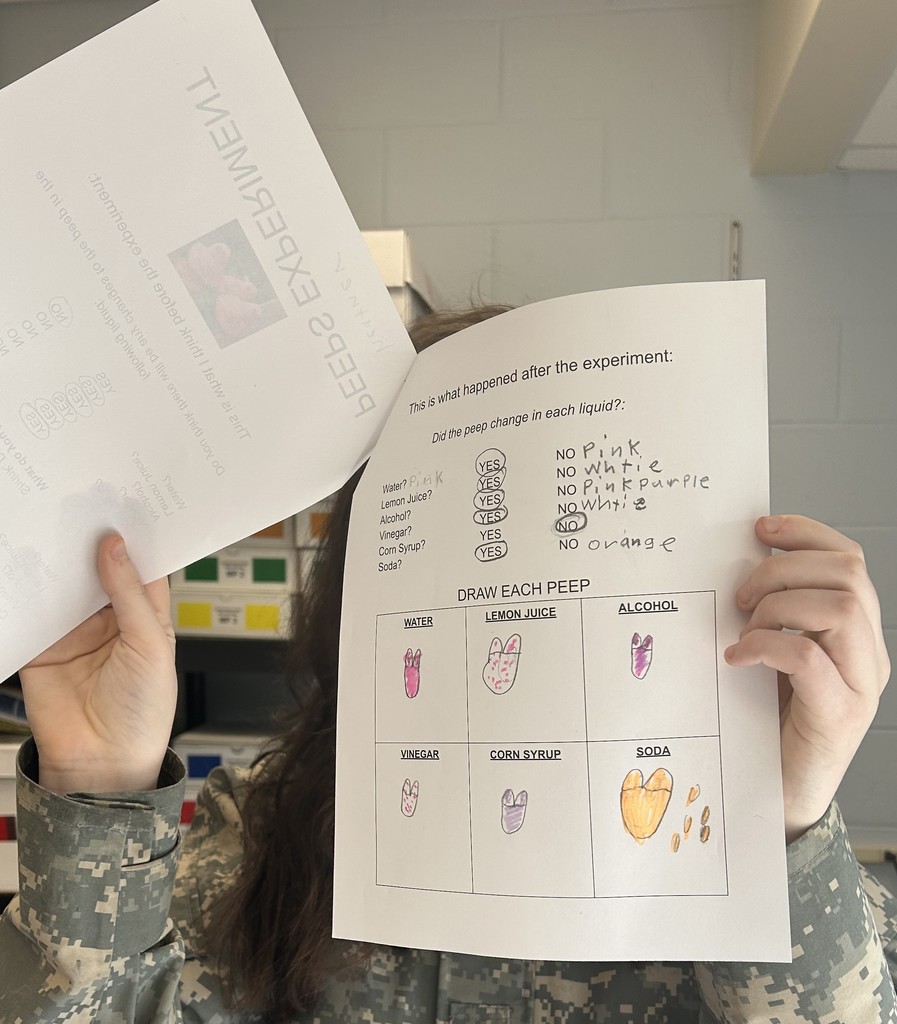
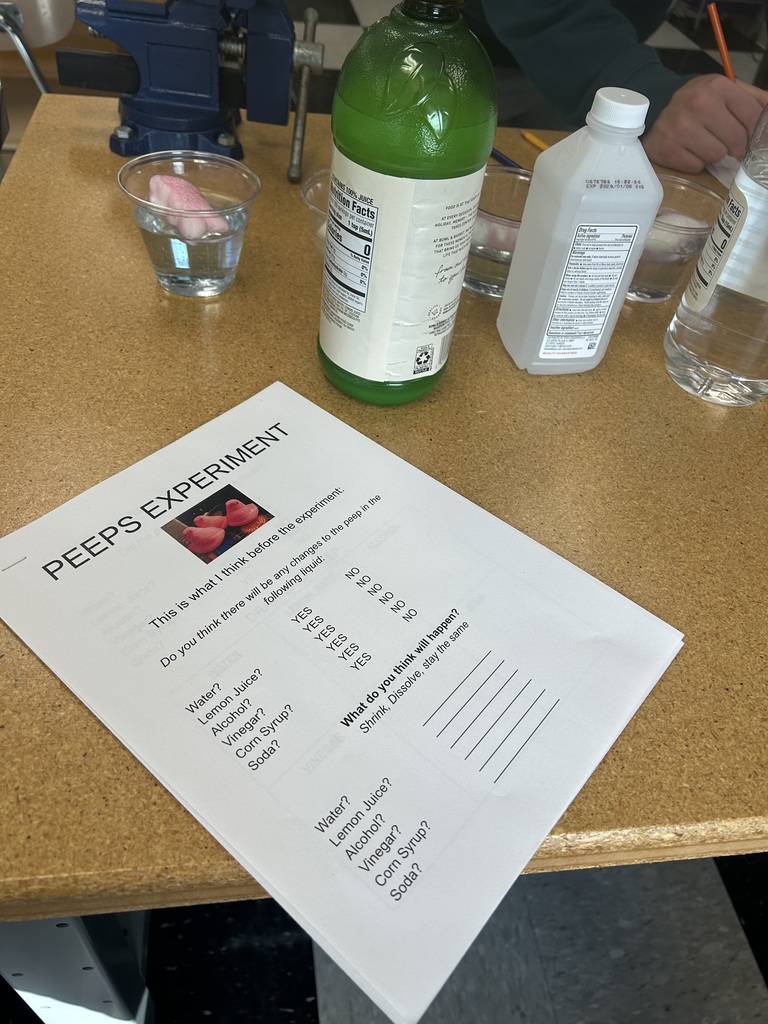
Christine Ertola’s and classroom aide Deborah Burger’s High School Career Achievement Program (CAP) recently completed a fun, hands-on PEEPS Liquid Science experiment!
The PEEPS Liquid Science Experiment explores how different liquids affect marshmallow Peeps. By placing PEEPS in liquids like water, vinegar, soda and lemon juice, students observed changes in size, shape, and texture over time. This experiment helps demonstrate how substances dissolve, react, and interact with sugar-based materials, making it an enjoyable and engaging way to learn about basic chemistry concepts!
•The PEEPS Liquid Science Experiment is a highly useful and seasonal chemistry lab because it uses accessible, vibrant Easter-themed candy to visually demonstrate complex scientific principles like solubility, polarity and chemical reactions. It's ideal for spring, providing a hands-on, edible STEM experience that allows students to observe how sugary, gelatin-based treats interact with different household liquids (water, vinegar, soda, oil) over time.
•PEEPS candy began in the early 1950s when Russian immigrant Sam Born’s company, Just Born Quality Confections, acquired the Rodda Candy Company, which made hand-piped marshmallow chicks. What once took hours to create by hand was soon transformed by automation, allowing PEEPS to be mass-produced. Over time, the seasonal Easter treat expanded into a year-round icon with new shapes, colors, and flavors.
•During the peak spring Easter season --- Just Born Quality Confections — ramps up production of its iconic treats: on average about 5.5 million PEEPS are produced every day, which adds up to roughly 2 billion PEEPS annually. Most of those are made and sold around Easter time when demand is highest
The PEEPS Liquid Science Experiment explores how different liquids affect marshmallow Peeps. By placing PEEPS in liquids like water, vinegar, soda and lemon juice, students observed changes in size, shape, and texture over time. This experiment helps demonstrate how substances dissolve, react, and interact with sugar-based materials, making it an enjoyable and engaging way to learn about basic chemistry concepts!
•The PEEPS Liquid Science Experiment is a highly useful and seasonal chemistry lab because it uses accessible, vibrant Easter-themed candy to visually demonstrate complex scientific principles like solubility, polarity and chemical reactions. It's ideal for spring, providing a hands-on, edible STEM experience that allows students to observe how sugary, gelatin-based treats interact with different household liquids (water, vinegar, soda, oil) over time.
•PEEPS candy began in the early 1950s when Russian immigrant Sam Born’s company, Just Born Quality Confections, acquired the Rodda Candy Company, which made hand-piped marshmallow chicks. What once took hours to create by hand was soon transformed by automation, allowing PEEPS to be mass-produced. Over time, the seasonal Easter treat expanded into a year-round icon with new shapes, colors, and flavors.
•During the peak spring Easter season --- Just Born Quality Confections — ramps up production of its iconic treats: on average about 5.5 million PEEPS are produced every day, which adds up to roughly 2 billion PEEPS annually. Most of those are made and sold around Easter time when demand is highest
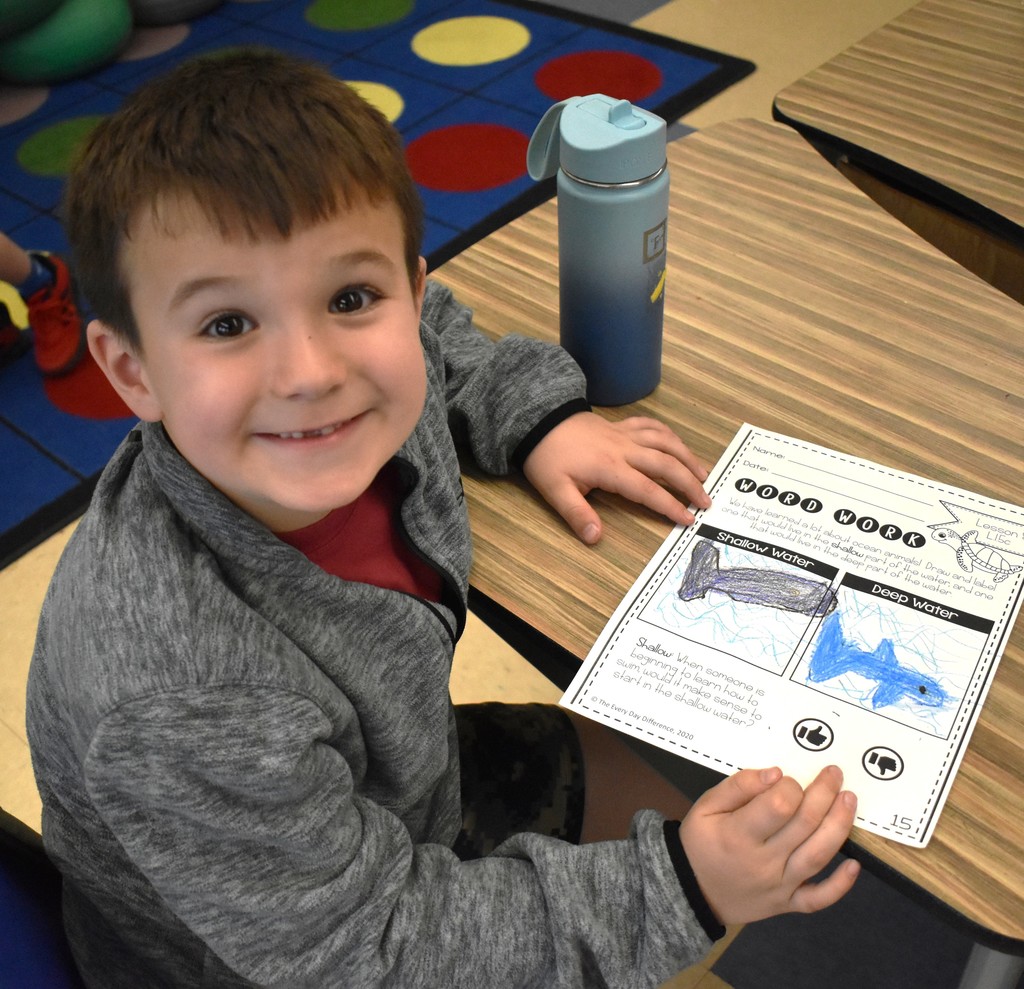
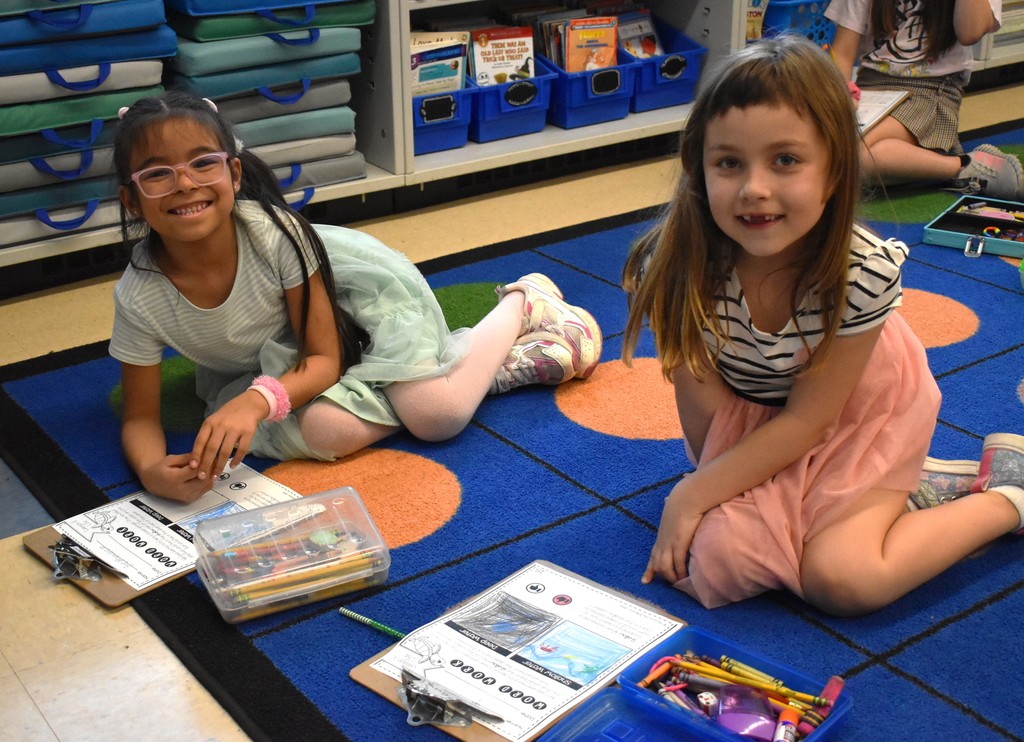
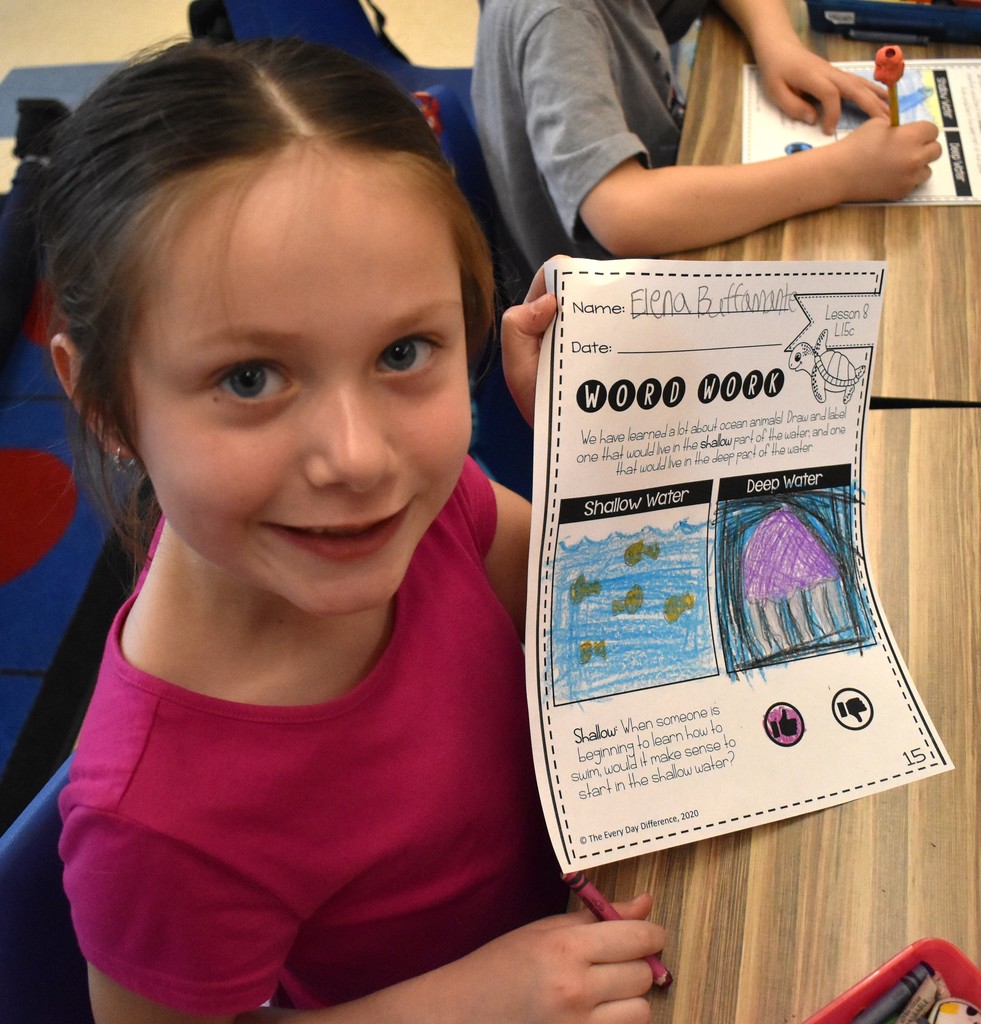
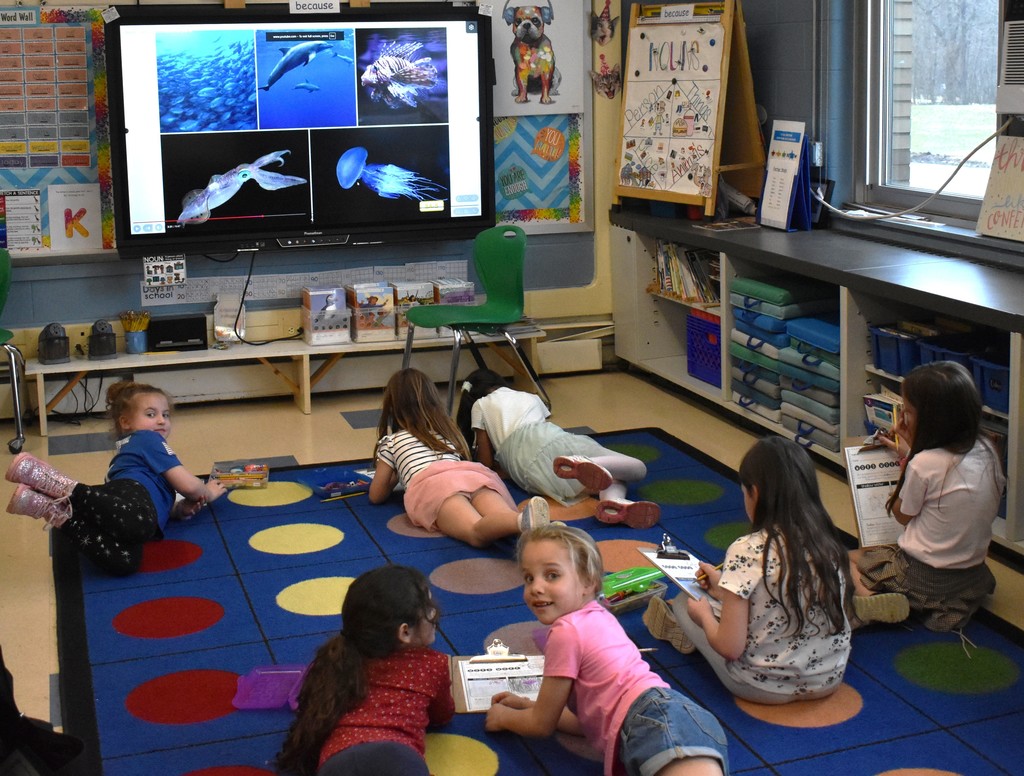
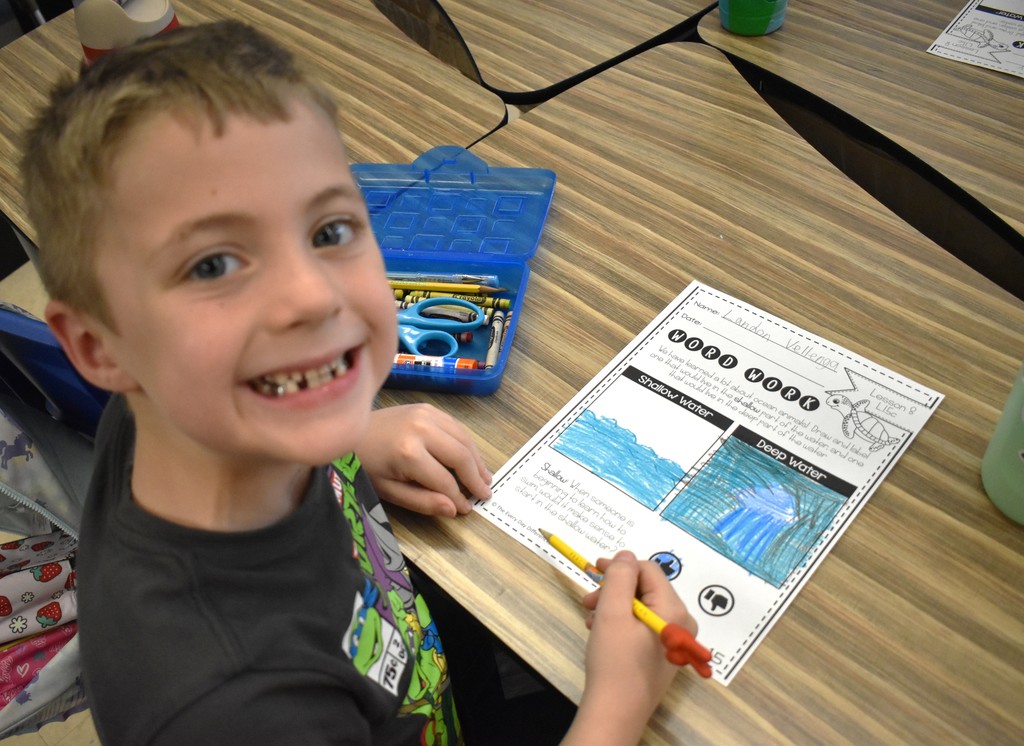
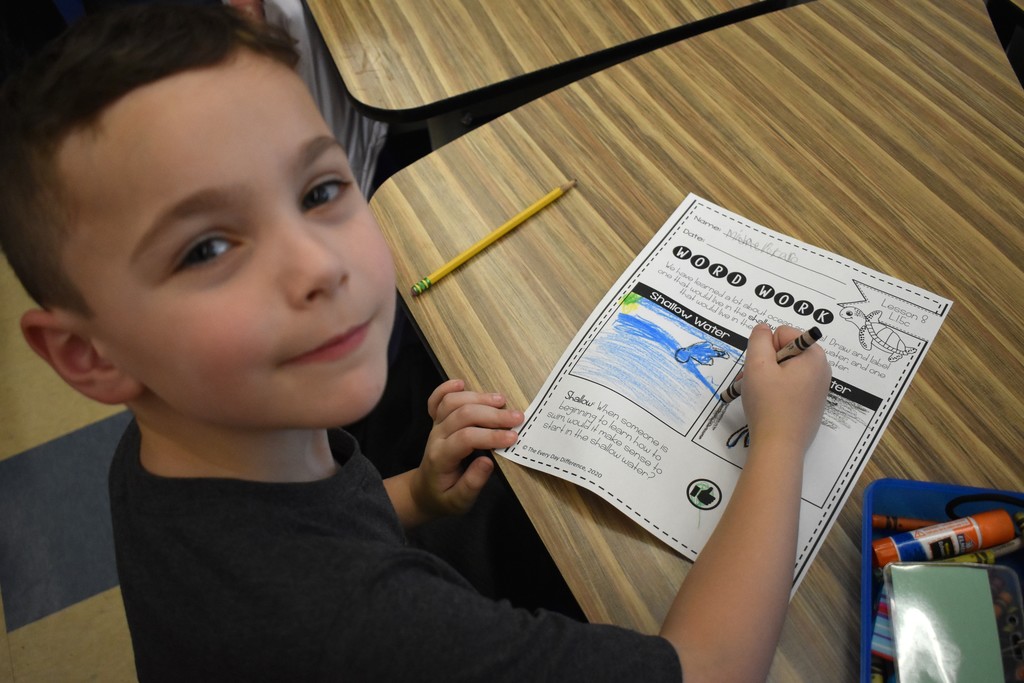
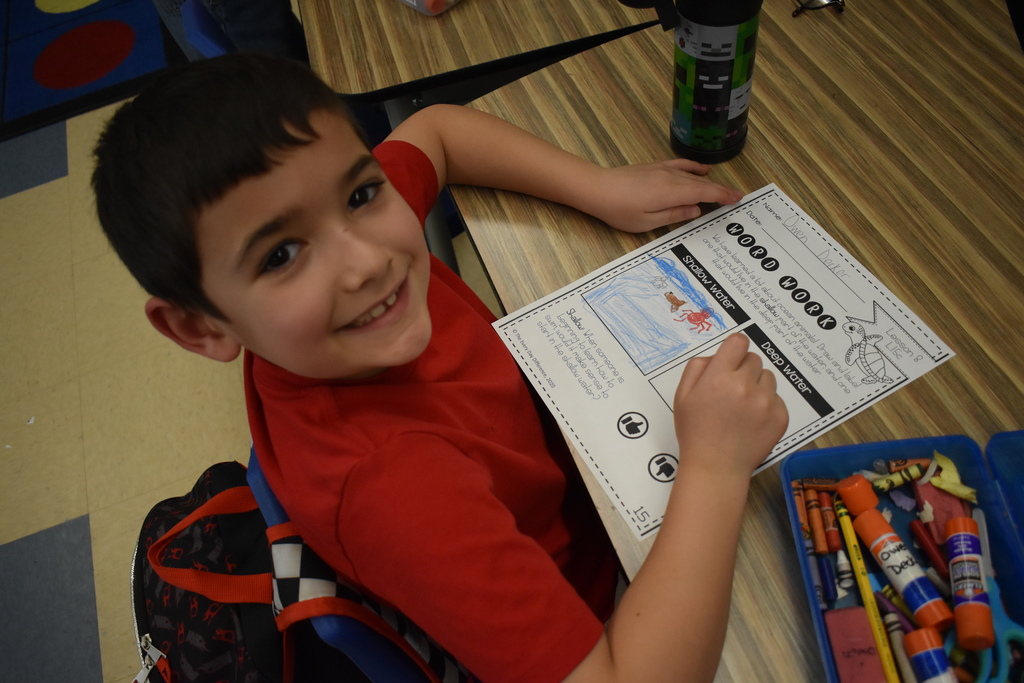
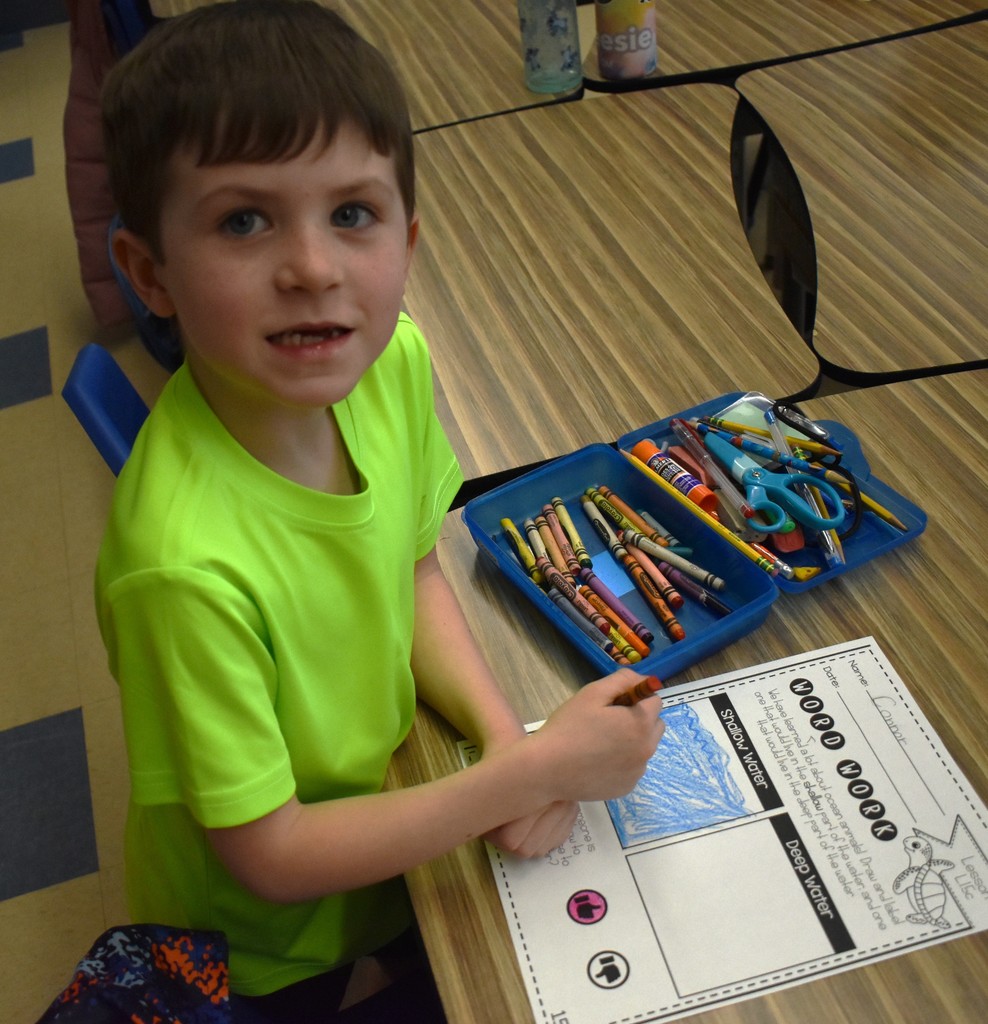
As part of their science lessons, district first-graders, like Jen DeSimone’s ES first-graders, learn about shallow versus deep ocean animals to understand basic animal adaptations and habitat differences. This study introduces how creatures survive in different environments—such as needing light and warmth in the shallows versus coping with extreme pressure, cold, and darkness in the deep ocean.
And, of course, it’s always fun to have a drawing and coloring component to their studies. Take a peek at these students and their drawing of their selected shallow versus deep water ocean animals. Their artwork is terrific!
And, of course, it’s always fun to have a drawing and coloring component to their studies. Take a peek at these students and their drawing of their selected shallow versus deep water ocean animals. Their artwork is terrific!
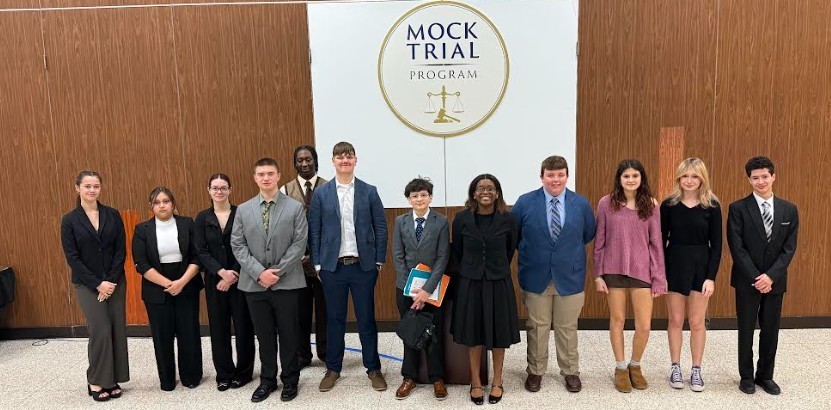
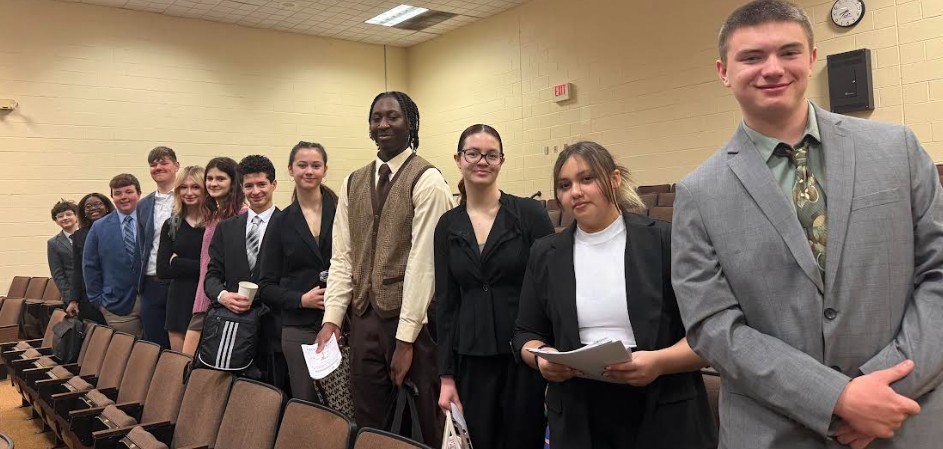
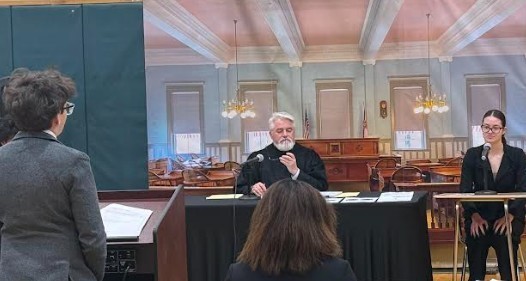
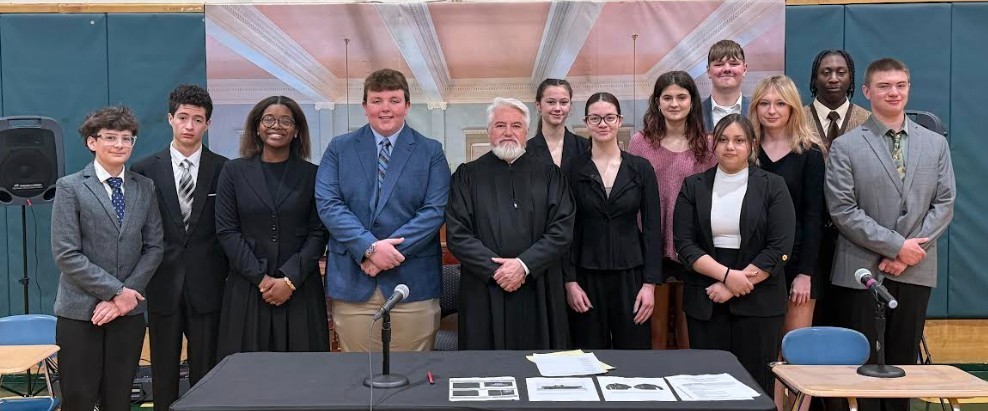
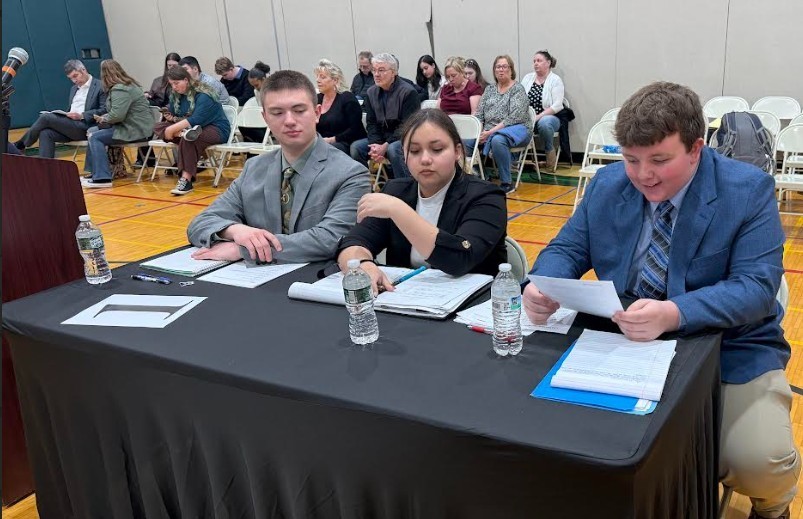
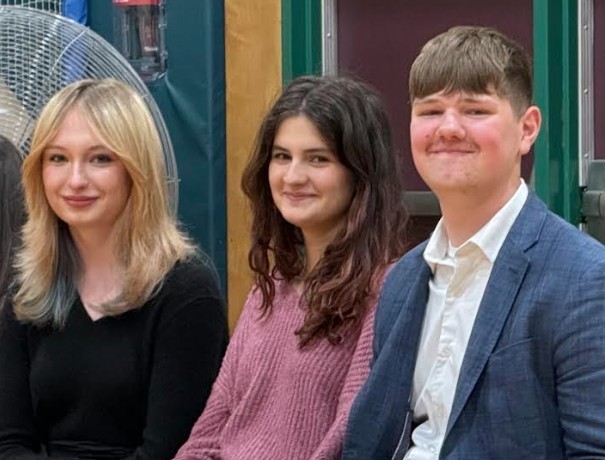
Congratulations and well-done to members of the High School’s Mock Trial team for their hard work, dedication and strong showing at the March 21 Orange-Ulster BOCES Mock Trial Tournament!
This year’s New York State Mock Trial case was People v. A. Carmen Erickson & Carson Blocker. In this case, Erickson and Blocker were charged with petit larceny for allegedly stealing used cooking oil from the Big Burns Bar B Que Pit in Butler, NY, on Aug. 31, 2025. During their arrest outside a local saloon, Erickson is also accused of resisting arrest while Blocker attempts to flee and later suffers a serious injury. The defendants maintain an alibi that they were online playing a video game together the night of the incident, and the case centers on whether the prosecution can prove their involvement beyond a reasonable doubt.
The Mock Trial experience challenged students to step into the roles of attorneys and witnesses in a realistic courtroom competition. Team members spent weeks studying the case materials, analyzing evidence, preparing opening and closing statements, practicing direct and cross-examinations, and learning courtroom procedure and objections. Their preparation required not only legal reasoning, but also confidence, teamwork and countless hours of practice.
While the team is not further advancing in competition, they are to be commended for their commitment, courage, preparation and effort brought to the courtroom. Please join us in congratulating Sean Bellew, Brandon Bonet, Lucia Garcia, Noah Haley, Sara Melendez, Malunga Kinzonzi, Julia Meyer, Ryen Mitchell, Landon Ordway, Morgan Varian, Evan Washalski and Josephine Witherow!
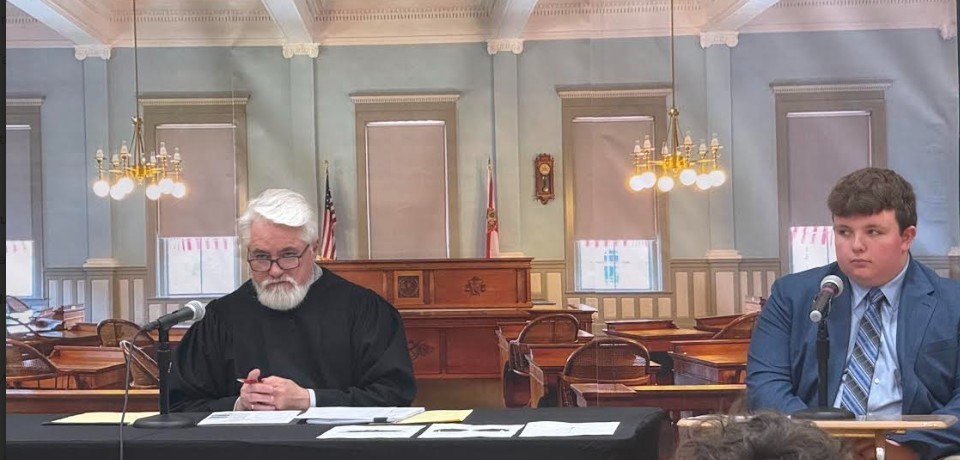
Mock Trial is a unique academic competition in which students compete against other schools by presenting a full trial in a courtroom setting before a real judge. Students must think on their feet, speak persuasively and work together as a team while responding to the arguments and witnesses presented by the opposing side. It is an incredible hands-on experience that builds skills in public speaking, critical thinking, collaboration, and professionalism.
This year’s New York State Mock Trial case was People v. A. Carmen Erickson & Carson Blocker. In this case, Erickson and Blocker were charged with petit larceny for allegedly stealing used cooking oil from the Big Burns Bar B Que Pit in Butler, NY, on Aug. 31, 2025. During their arrest outside a local saloon, Erickson is also accused of resisting arrest while Blocker attempts to flee and later suffers a serious injury. The defendants maintain an alibi that they were online playing a video game together the night of the incident, and the case centers on whether the prosecution can prove their involvement beyond a reasonable doubt.
The Mock Trial experience challenged students to step into the roles of attorneys and witnesses in a realistic courtroom competition. Team members spent weeks studying the case materials, analyzing evidence, preparing opening and closing statements, practicing direct and cross-examinations, and learning courtroom procedure and objections. Their preparation required not only legal reasoning, but also confidence, teamwork and countless hours of practice.
While the team is not further advancing in competition, they are to be commended for their commitment, courage, preparation and effort brought to the courtroom. Please join us in congratulating Sean Bellew, Brandon Bonet, Lucia Garcia, Noah Haley, Sara Melendez, Malunga Kinzonzi, Julia Meyer, Ryen Mitchell, Landon Ordway, Morgan Varian, Evan Washalski and Josephine Witherow!
Mock Trial is a unique academic competition in which students compete against other schools by presenting a full trial in a courtroom setting before a real judge. Students must think on their feet, speak persuasively and work together as a team while responding to the arguments and witnesses presented by the opposing side. It is an incredible hands-on experience that builds skills in public speaking, critical thinking, collaboration, and professionalism.
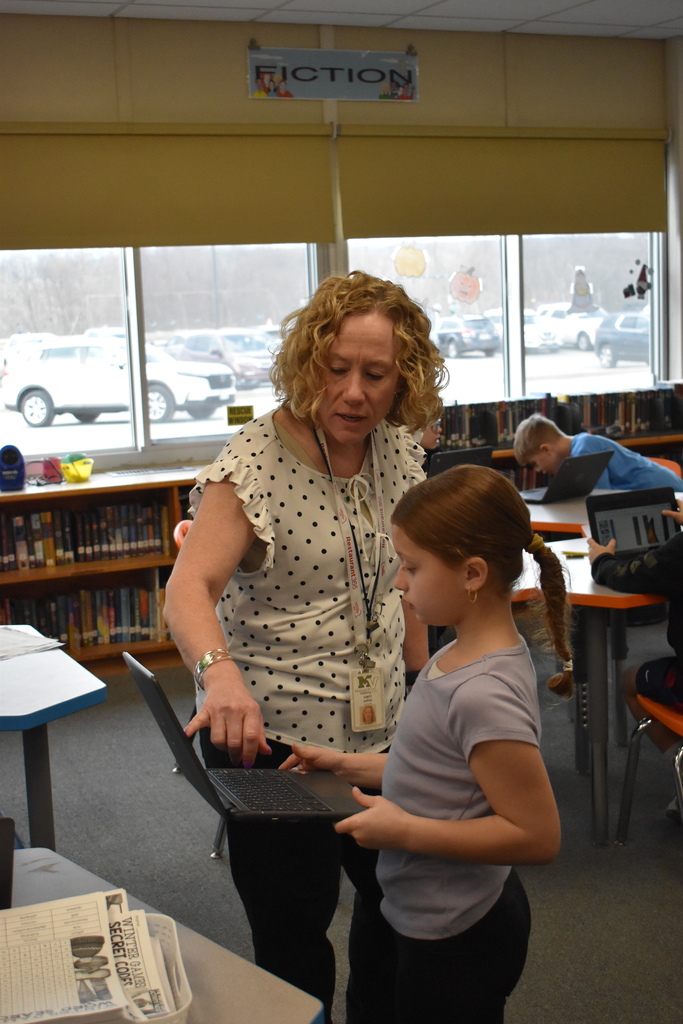
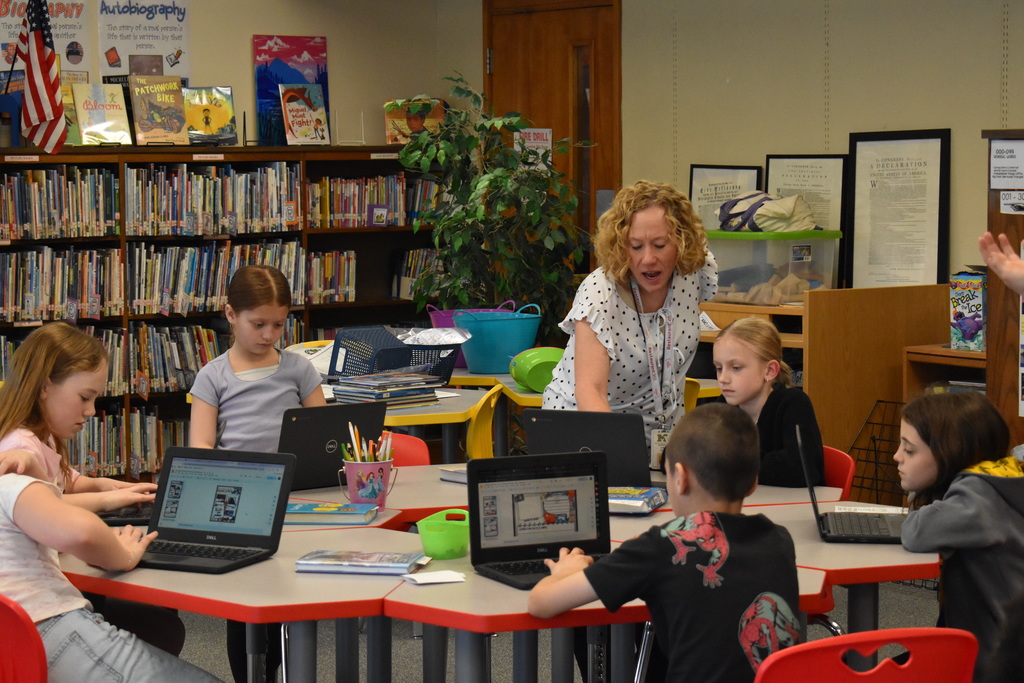
Library classes offer so much more than just an opportunity to borrow a book to read at home!
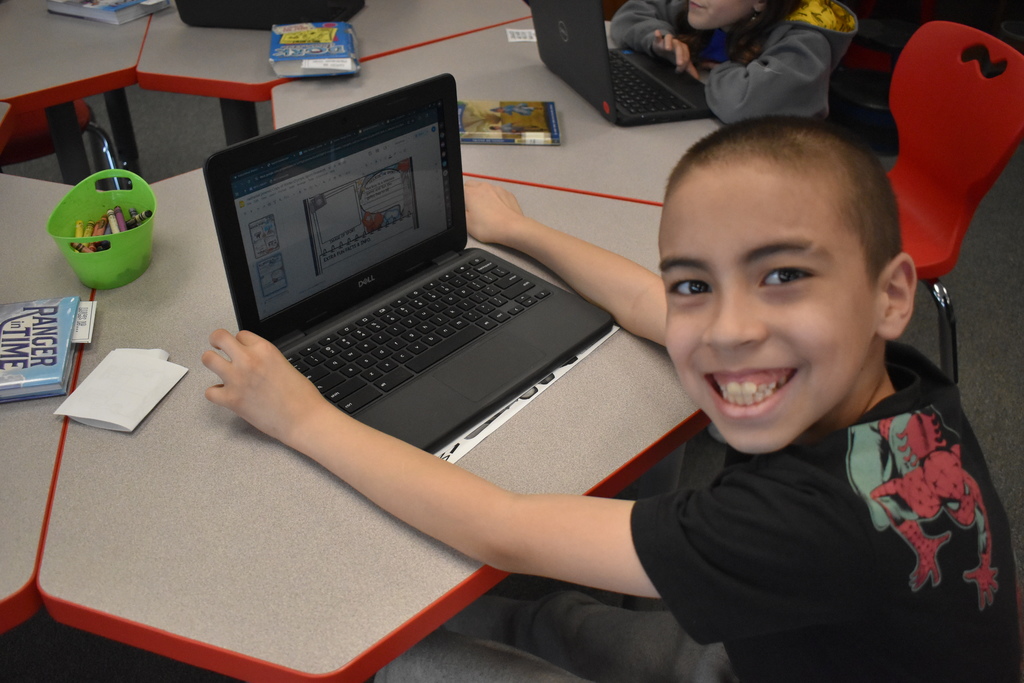
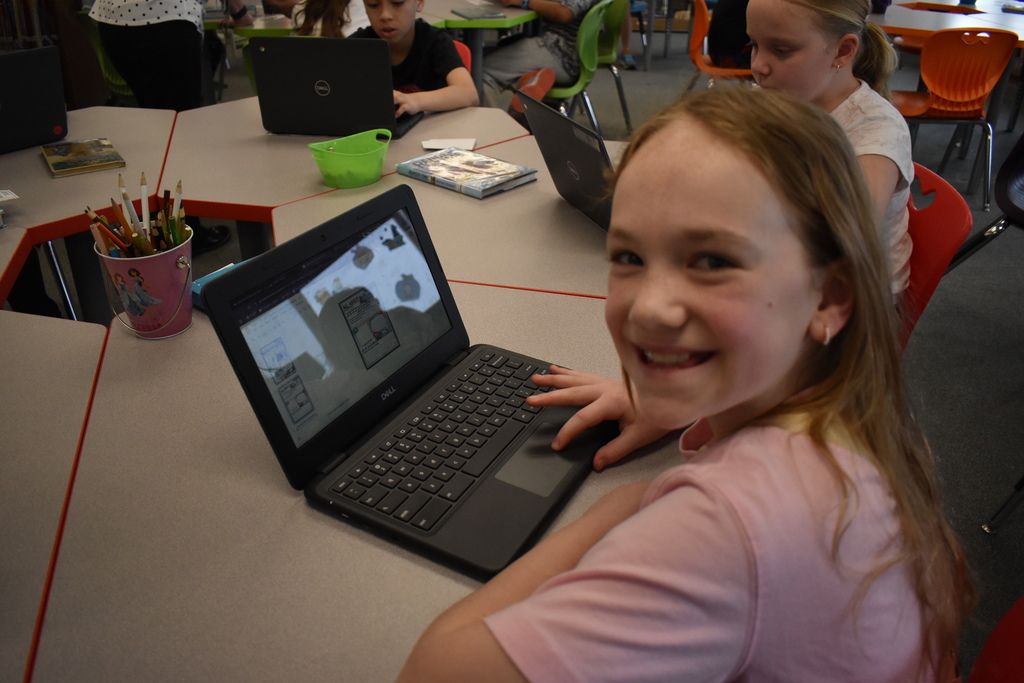
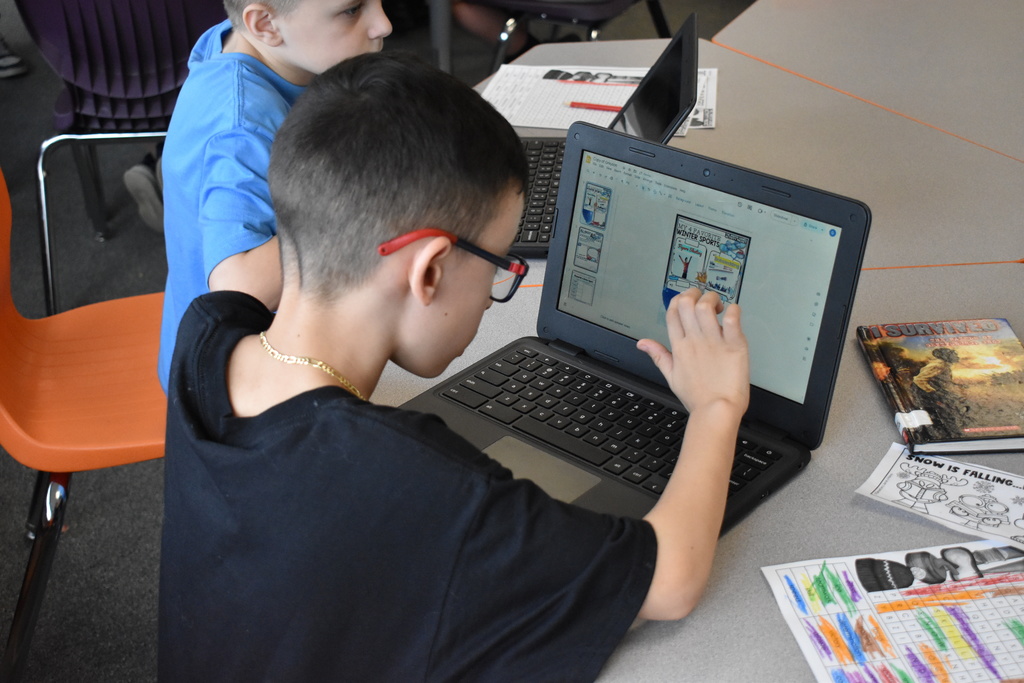
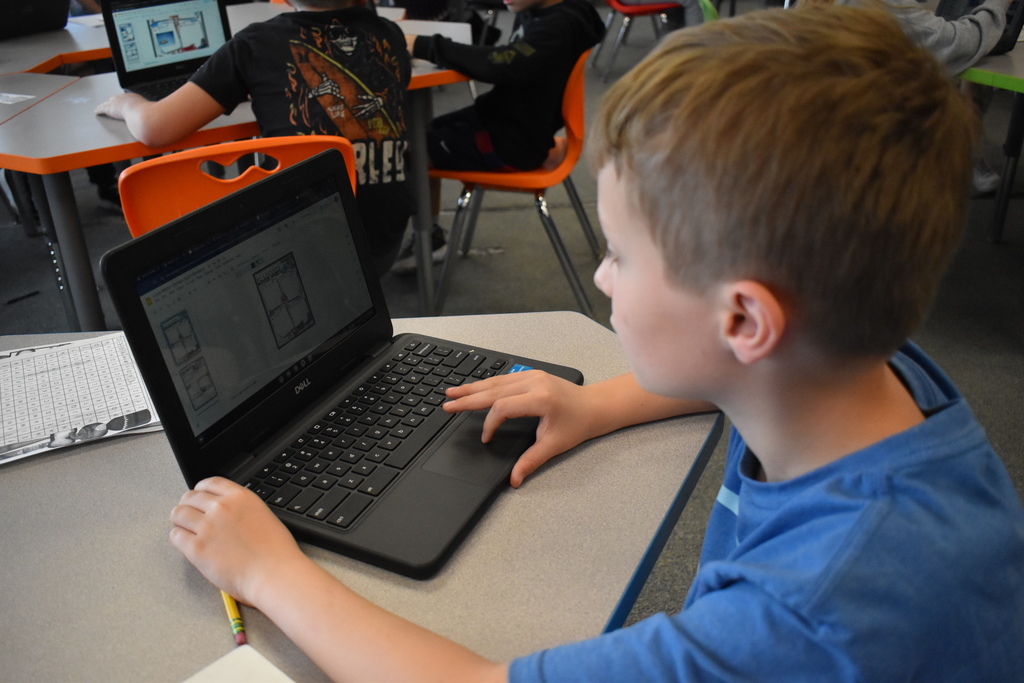
Aimee Hardy’s IS third-grade library students are continuing to develop library and computer skills that are essential for everyday learning and research. For example, they’ve been learning how to access school databases and locate information using online encyclopedias. Students are also discovering that online encyclopedias function differently from search engines like Google. Instead of typing full questions, they are practicing how to use keywords and specific topics to find relevant information.
In addition, library students are building important and practical digital skills. They are learning how to copy and paste images, search for and summarize information, and properly cite their sources. Students are also practicing basic document editing skills, such as editing images, changing fonts, and typing their responses clearly. These activities help strengthen both their research abilities and their overall computer literacy—skills that are critically important as they progress into higher grade levels.
Aimee Hardy’s IS third-grade library students are continuing to develop library and computer skills that are essential for everyday learning and research. For example, they’ve been learning how to access school databases and locate information using online encyclopedias. Students are also discovering that online encyclopedias function differently from search engines like Google. Instead of typing full questions, they are practicing how to use keywords and specific topics to find relevant information.
In addition, library students are building important and practical digital skills. They are learning how to copy and paste images, search for and summarize information, and properly cite their sources. Students are also practicing basic document editing skills, such as editing images, changing fonts, and typing their responses clearly. These activities help strengthen both their research abilities and their overall computer literacy—skills that are critically important as they progress into higher grade levels.
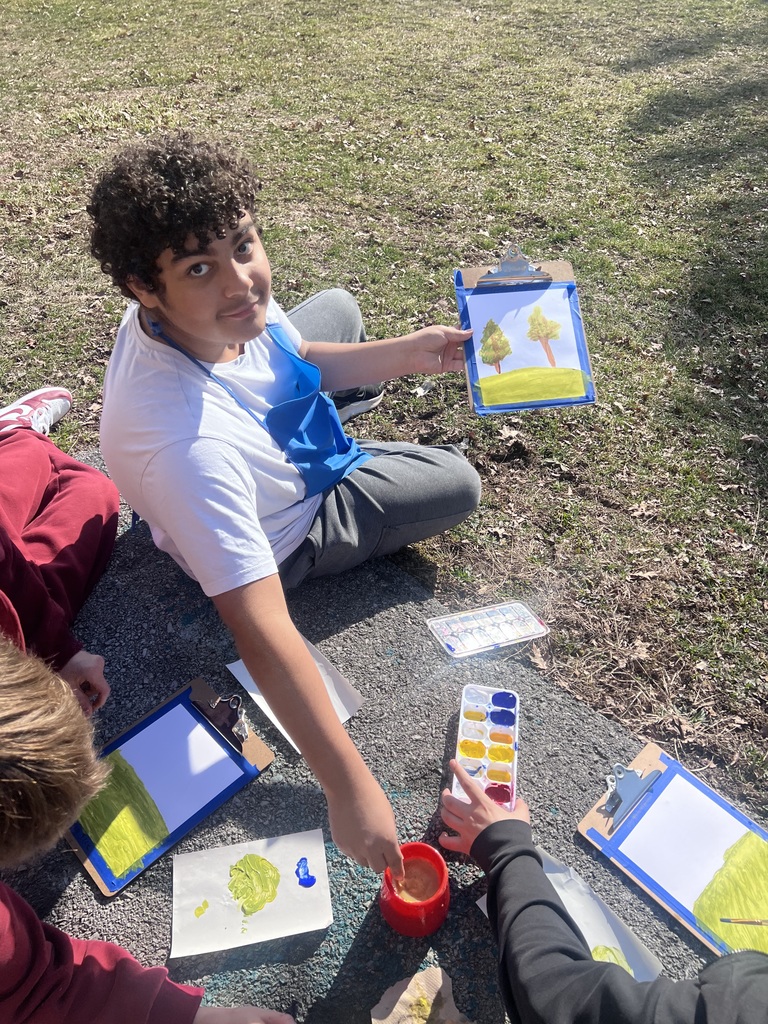
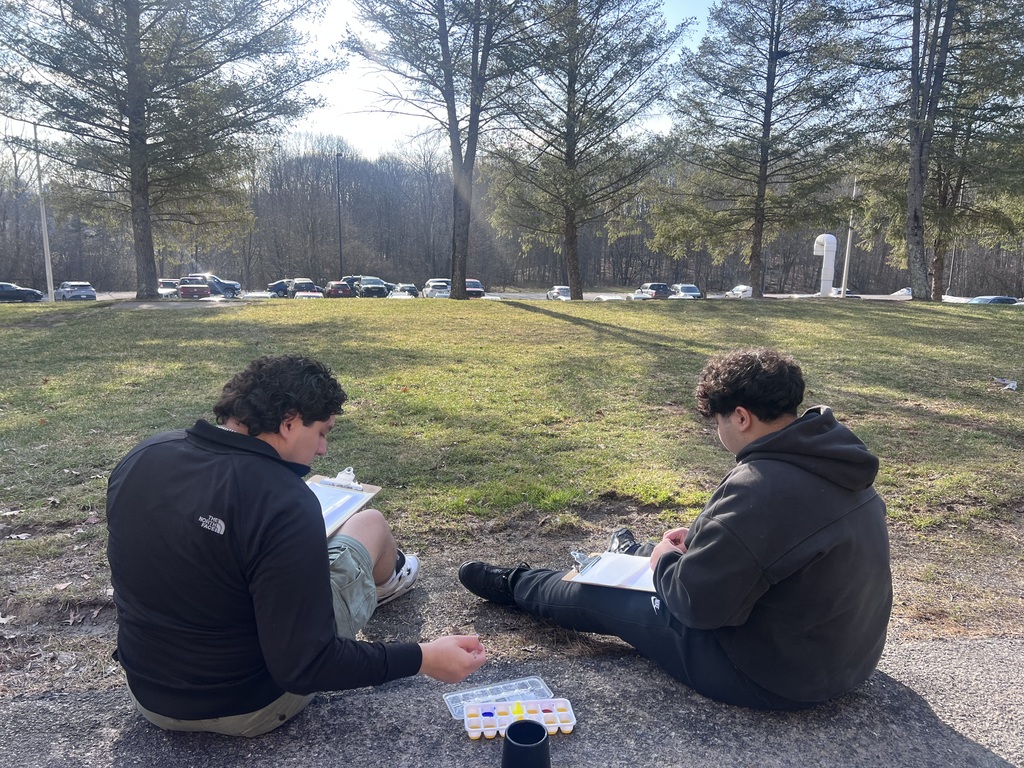
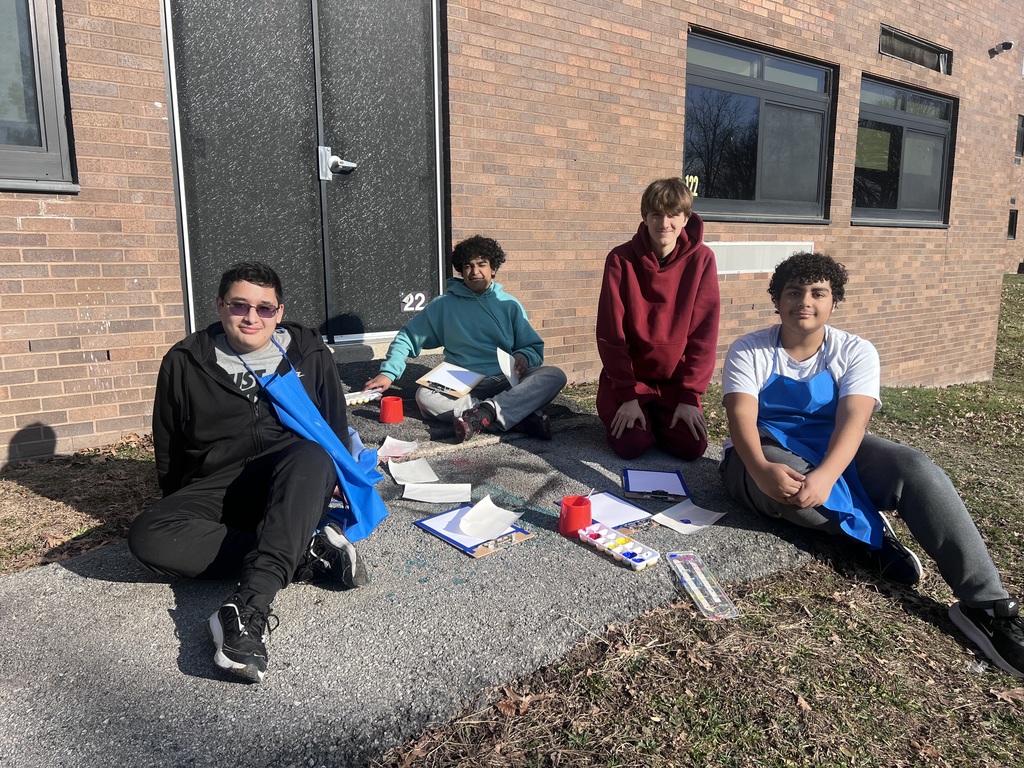
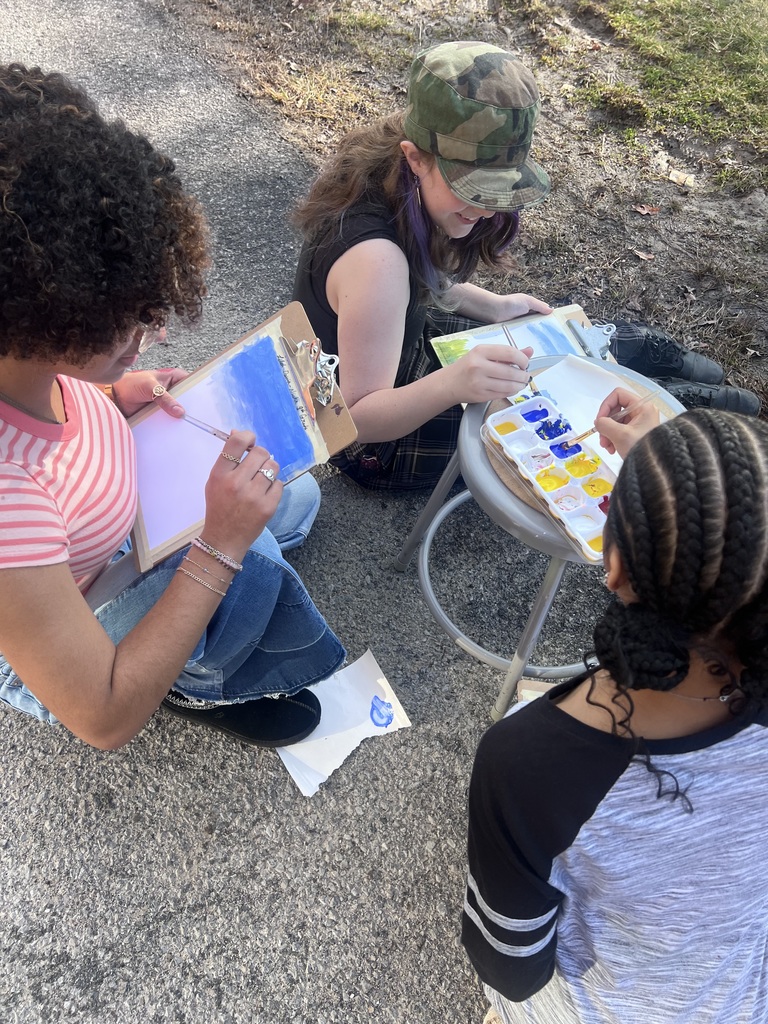
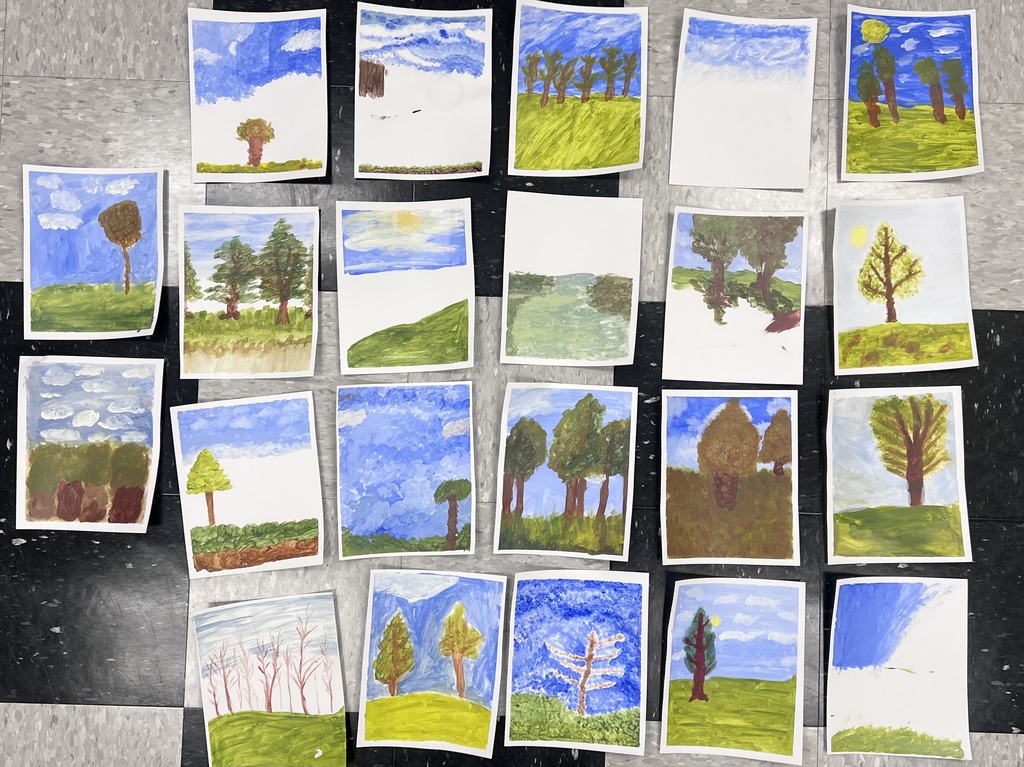
Cayla Tangney’s High School Art History students are studying impressionism, a movement that focuses on light and its quick-changing qualities.
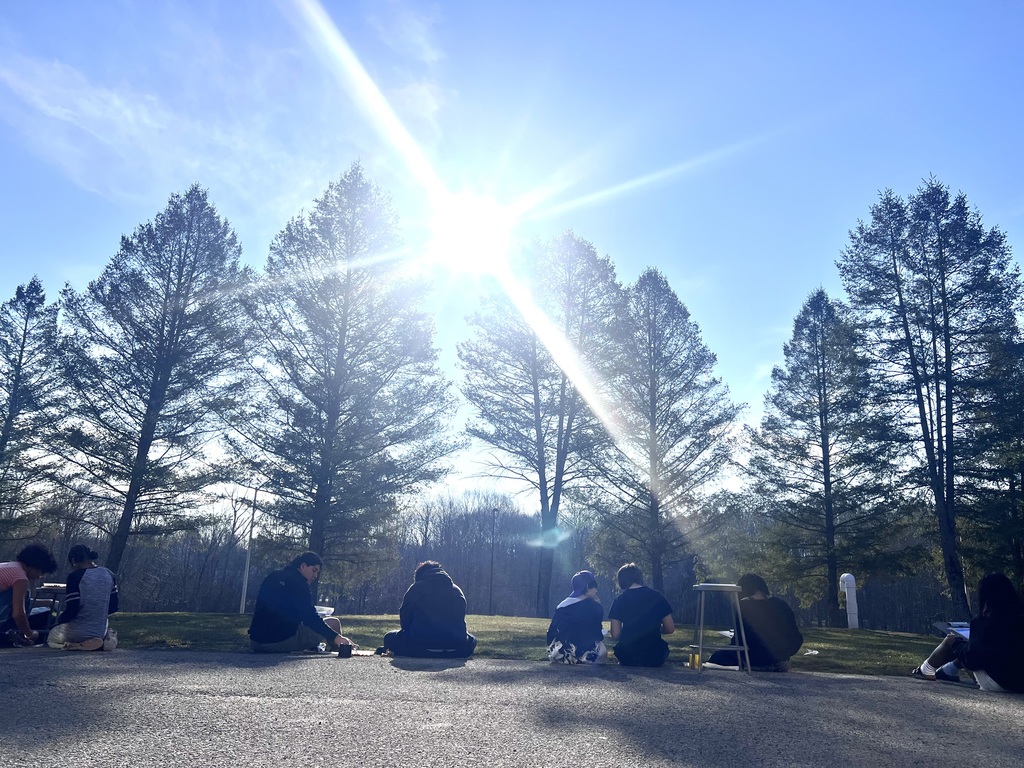
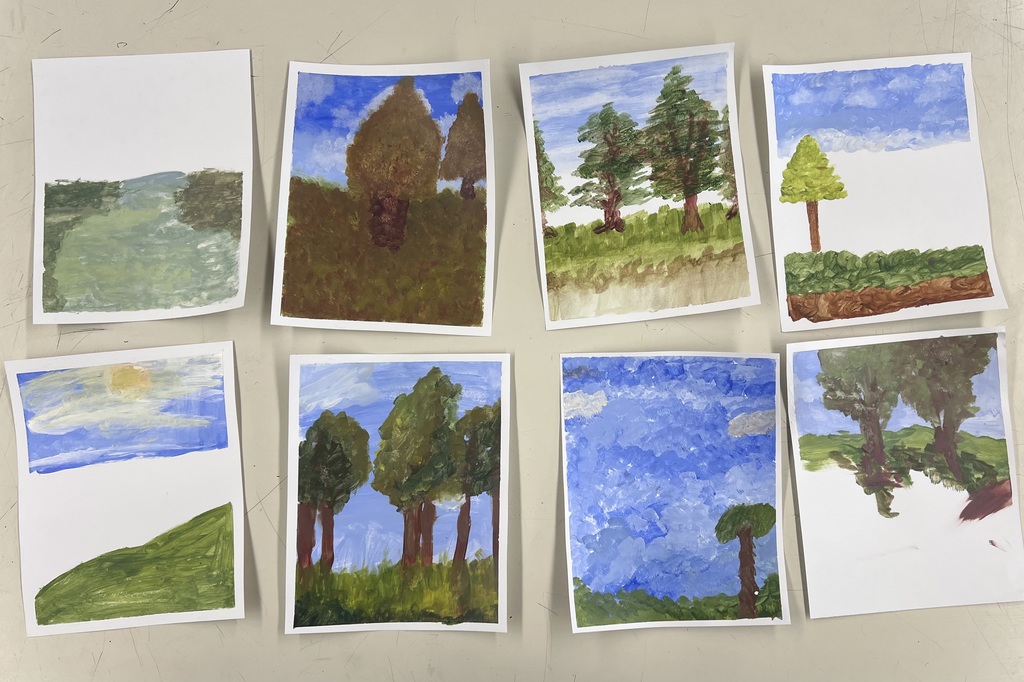
Students looked at the work of Claude Monet, Edgar Degas and Mary Cassatt, who are among the world’s great impressionist painters, as a prelude for when they went outdoors to paint as if they were impressionists! They had 25 minutes on a recent gorgeous day to draw the landscape behind the high school building and were reminded not to blend their colors, as visible brushstrokes were a key characteristic of the movement.
It was a challenging assignment for many students, who were used to perfecting every mark made on their paper.
“They did an incredible job,” said Ms. Cagney. “I emphasized that even if they didn't finish, that was okay. It was more about mimicking the style and subject of the painting.”
The next day, students did a gallery walk around the classroom and placed awards next to the paintings they thought "best emulated the Impressionist style" and "most accurately depicted the landscape. WELL-DONE, everyone!
•Impressionism (1870s–1880s) revolutionized art by capturing fleeting moments, light, and modern life using quick, visible brushstrokes rather than realistic detail. Led by Monet and Renoir, these painters left studios to work en plein air (outdoors), made possible by the invention of portable tube paints.
•While Monet focused on landscape light and Degas on movement, Cassatt brought a unique perspective, highlighting the private lives of women.
•In the late 19th century, impressionists were battling with the invention of photography and its new ability to capture moments quickly while paintings took days, months, or years to complete. Artists like Claude Monet had several series of works where he painted the same landscape in different seasons, times of day, and weather conditions to show how much light and movement could shift from one variable to the next. Impressionist artists painted quickly with visible brushstrokes so that they could record the moment before the light or weather changed.
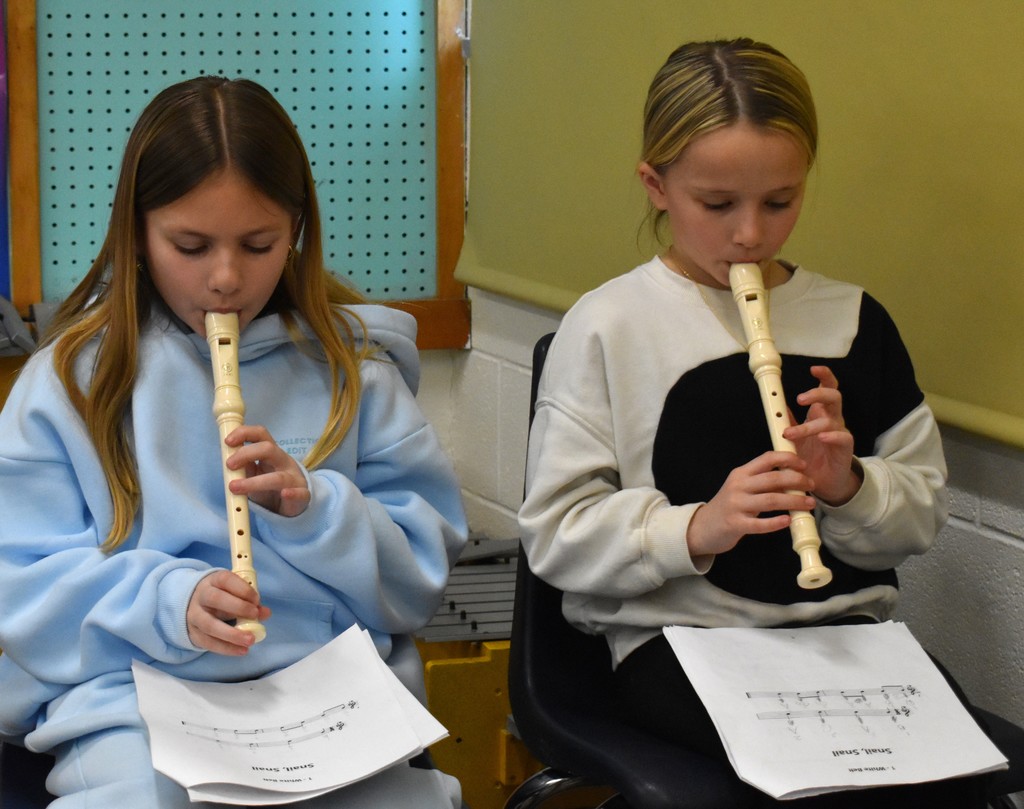
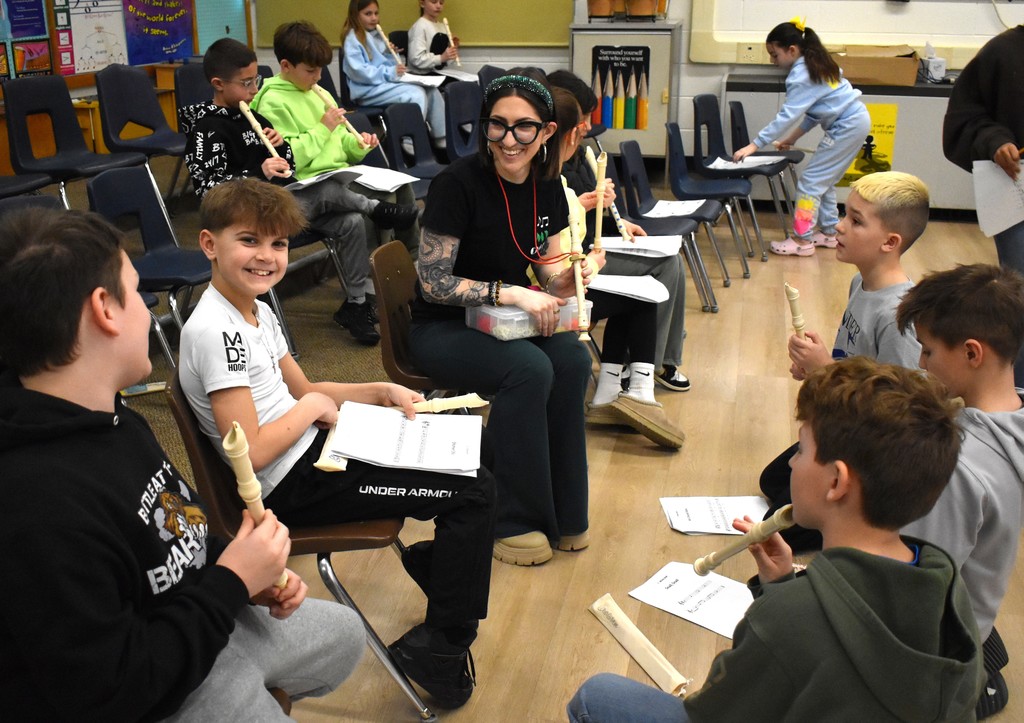
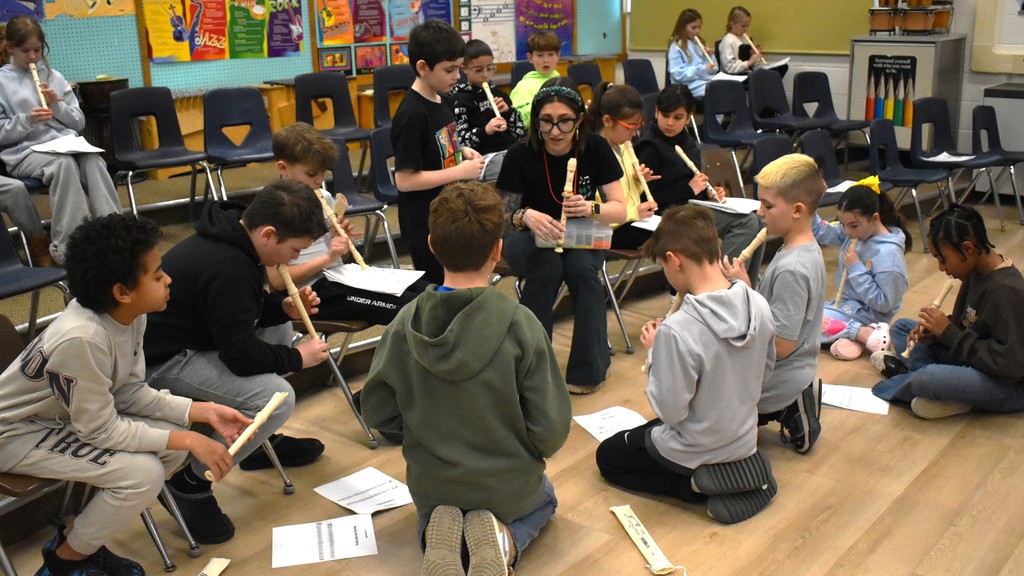
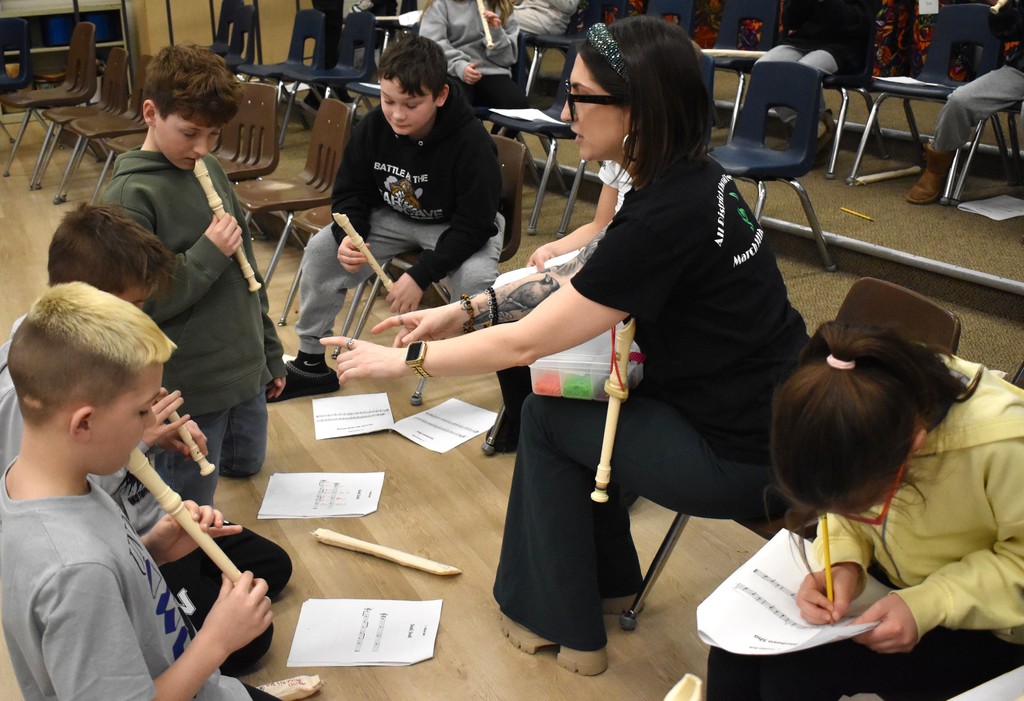
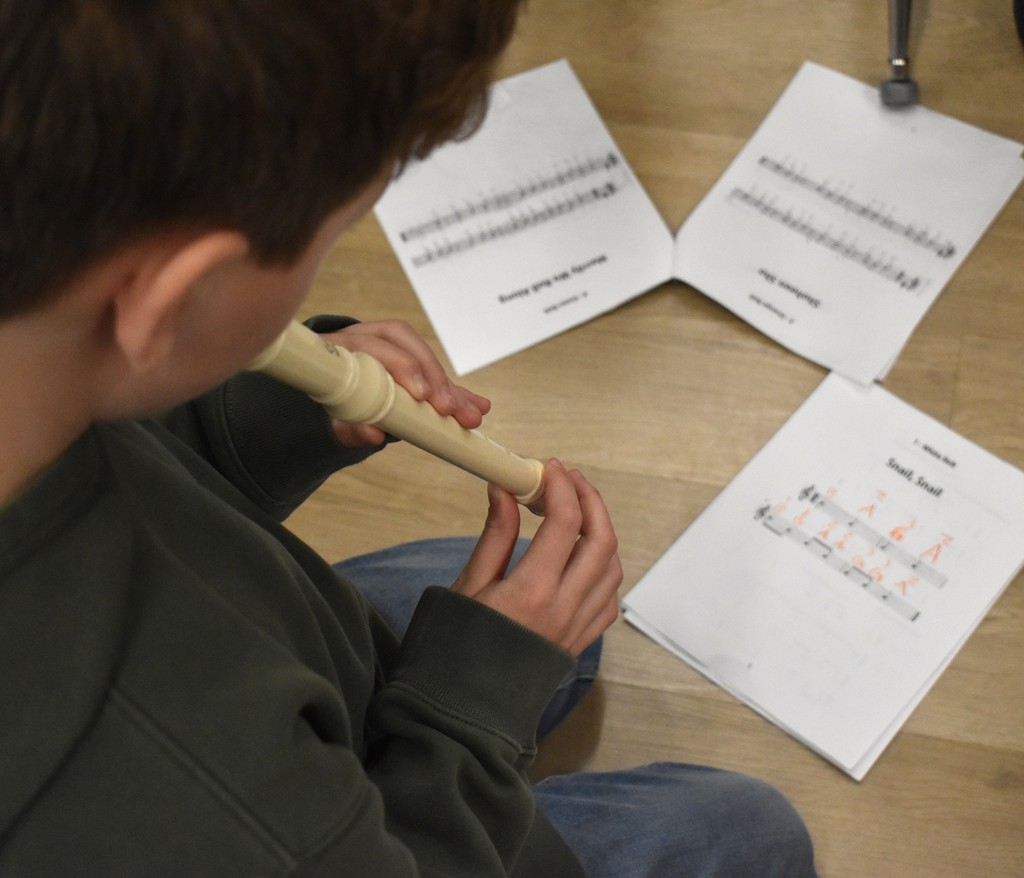
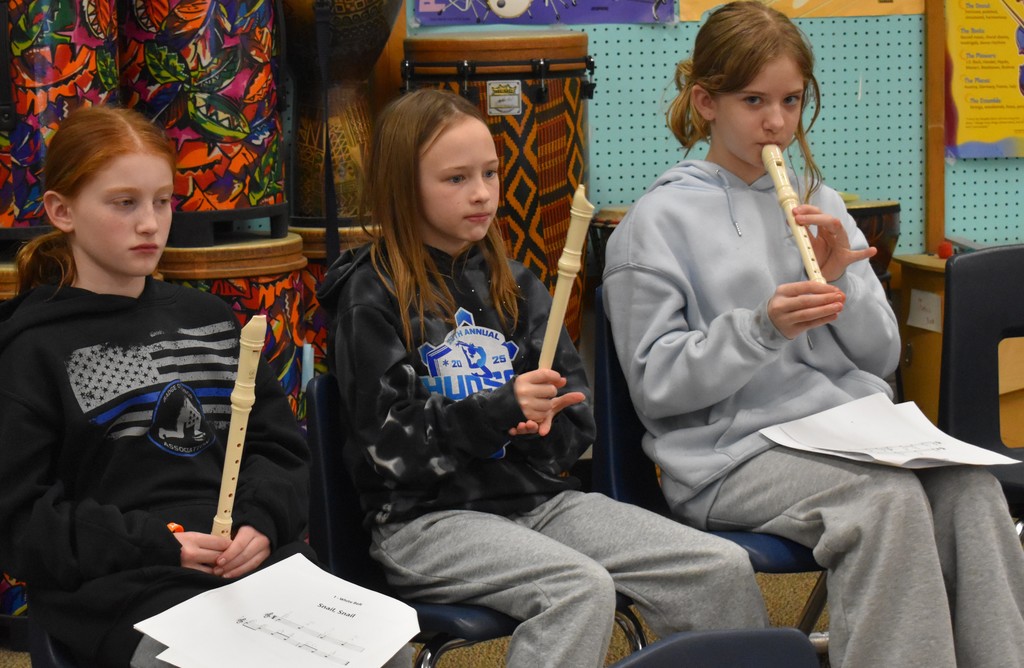
Deanna Feuerbach’s IS fourth-grade music students are having a blast learning how to play the recorder! We’ve all played this instrument! Who remembers “Hot Cross Buns?”
Recorders are great starter instruments because unlike brass or other woodwind instruments, the recorder produces a clear, pleasant sound with simple, light breath control. The fingering system is intuitive, with notes roughly corresponding to ascending steps, making it easy to learn songs quickly. It’s great for helping to develop hand-eye coordination, fine motor skills and breath control. And, they serve as an excellent introduction to reading music and playing other wind instruments, such as the flute.
The recorder is an ancient internal duct flute that originated in Europe, with surviving examples dating to the 14th century. It flourished during the Renaissance and Baroque periods, was largely replaced by the transverse flute in the 18th century, and was revived in the early 20th century for education and early music.
Recorders are great starter instruments because unlike brass or other woodwind instruments, the recorder produces a clear, pleasant sound with simple, light breath control. The fingering system is intuitive, with notes roughly corresponding to ascending steps, making it easy to learn songs quickly. It’s great for helping to develop hand-eye coordination, fine motor skills and breath control. And, they serve as an excellent introduction to reading music and playing other wind instruments, such as the flute.
The recorder is an ancient internal duct flute that originated in Europe, with surviving examples dating to the 14th century. It flourished during the Renaissance and Baroque periods, was largely replaced by the transverse flute in the 18th century, and was revived in the early 20th century for education and early music.
Please join us in congratulating Middle School Assistant Principal Thomas Rickard, a member of the SUNY Orange Class of 1992, who was recently named the recipient of the Orange Foundation & Alumni Engagement Distinguished Alumni Leadership Award. His award will be presented to him at the 2026 SUNY Orange Foundation & Alumni Engagement Leadership Awards in April, which honors graduates whose impact reflects the spirit of SUNY Orange.
In addition to serving as a busy middle school principal, Mr. Rickard is also a SUNY Orange associate professor of mathematics and head men’s basketball coach. With his family, he helped establish the Paul Rickard Memorial Scholarship Fund in honor of his father, a SUNY Orange professor and coach, whose legacy continues to support students pursuing education, nursing, mathematics and athletics.
As head men’s basketball coach, Mr. Rickard has built one of the region’s most successful programs, leading the Colts to multiple conference titles and a national semifinal appearance while fostering teamwork, discipline, and character among his student-athletes!
In addition to serving as a busy middle school principal, Mr. Rickard is also a SUNY Orange associate professor of mathematics and head men’s basketball coach. With his family, he helped establish the Paul Rickard Memorial Scholarship Fund in honor of his father, a SUNY Orange professor and coach, whose legacy continues to support students pursuing education, nursing, mathematics and athletics.
As head men’s basketball coach, Mr. Rickard has built one of the region’s most successful programs, leading the Colts to multiple conference titles and a national semifinal appearance while fostering teamwork, discipline, and character among his student-athletes!

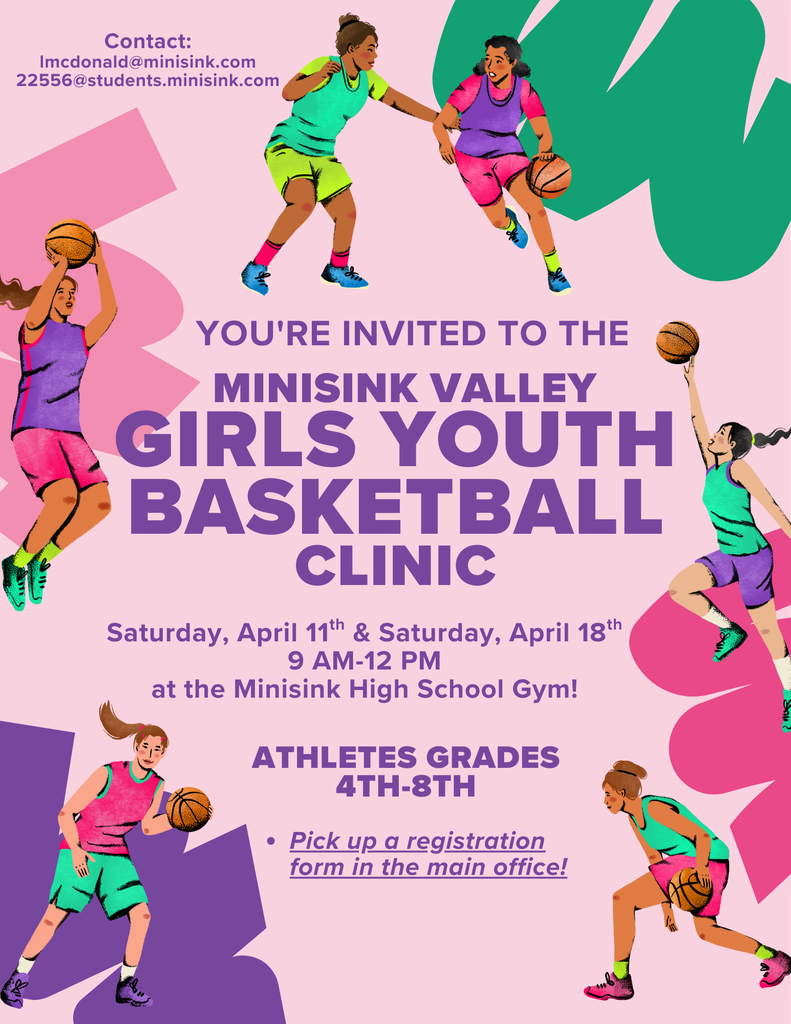
FREE GIRLS BASKETBALL SPRING INSTRUCTIONAL CLINICS!
While brackets are busting and buzzer-beaters are dropping this March Madness season, give your own future star a shot — sign your 4th through 8th grader up for our FREE Girls Basketball Spring Instructional Clinic!
• Open to all district girls in 4th through 8th grades
• DATES: Saturday, April 11 and Saturday, April 18
• 9 a.m. to 12 noon in the High School Gym
The clinics will be directed by Coach McDonald with assistance from players in the Minisink Valley Girls Basketball program. The camp’s goal is to provide quality instruction and inspiration for young district athletes. The camp is free of charge, though donations towards the Girls Basketball Program are optional, but welcome. Activities include individual skill instruction and competitive team play. The players may be separated into two levels according to their age and ability. Participants will be expected to wear sneakers and dress appropriately.
Here's the registration link: https://docs.google.com/.../1FAIpQLScQbIcAlyC6xV.../viewform
While brackets are busting and buzzer-beaters are dropping this March Madness season, give your own future star a shot — sign your 4th through 8th grader up for our FREE Girls Basketball Spring Instructional Clinic!
• Open to all district girls in 4th through 8th grades
• DATES: Saturday, April 11 and Saturday, April 18
• 9 a.m. to 12 noon in the High School Gym
The clinics will be directed by Coach McDonald with assistance from players in the Minisink Valley Girls Basketball program. The camp’s goal is to provide quality instruction and inspiration for young district athletes. The camp is free of charge, though donations towards the Girls Basketball Program are optional, but welcome. Activities include individual skill instruction and competitive team play. The players may be separated into two levels according to their age and ability. Participants will be expected to wear sneakers and dress appropriately.
Here's the registration link: https://docs.google.com/.../1FAIpQLScQbIcAlyC6xV.../viewform
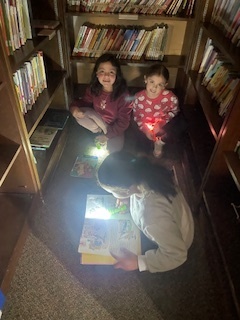
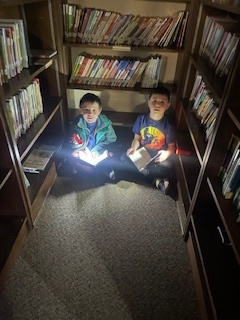
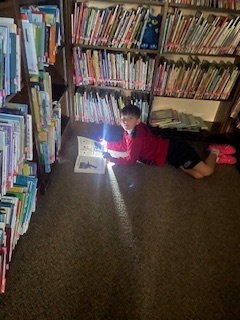
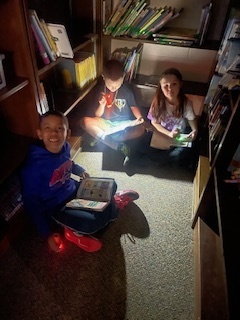
Mia McLean’s ES first and second-grade library students have been having a blast with “flashlight reading” during their recent library classes. Flashlight reading is engaging for young students because it turns reading into a cozy, magical and multisensory adventure! The lowered lights create a focused, intimate atmosphere, while the flashlight adds an interactive element that boosts motivation and another way of sparking a love for stories!
An OUT OF THIS WORLD CLASS TRIP!
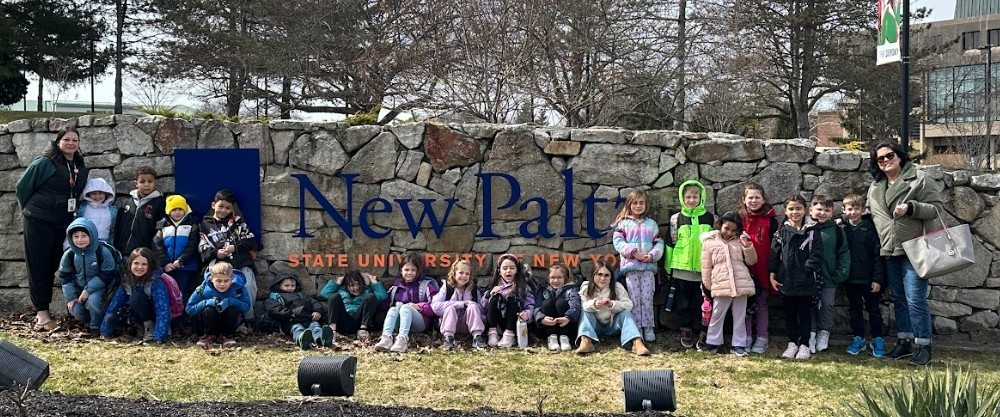
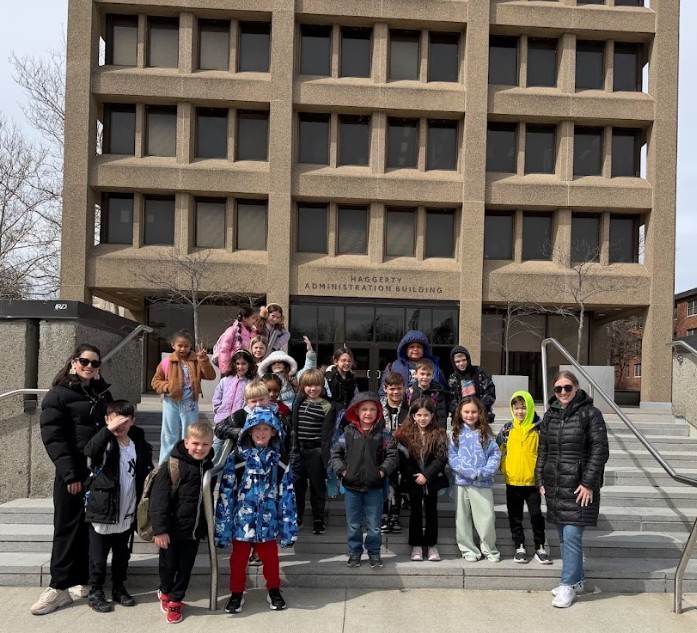
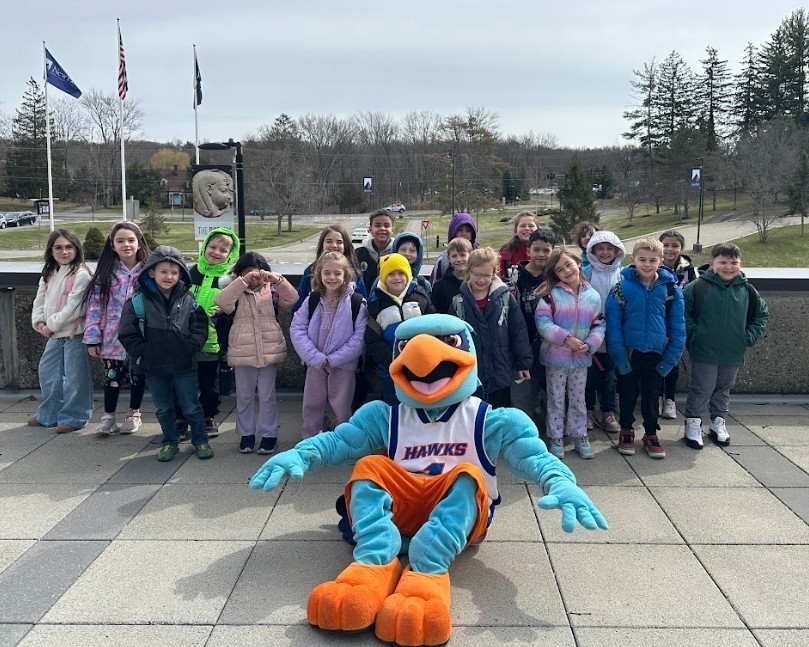
Melissa Manganello's and Nicole Martinez's/Victoria Uhrig's Otisville first-graders had a wonderful, recent class trip to the John R. Kirk Planetarium at SUNY New Paltz!
Their visit connected what they’re learning in the classroom about the universe and objects that can be found in it Students also saw a movie about some of the different moons in the universe!
The John R. Kirk Planetarium, located in the Coykendall Science Building, is a well-regarded astronomy facility. It’s especially known for its educational focus and intimate, immersive shows. The indoor domed theater is designed for sky simulations and astronomy presentations.
Shows often include: Guided tours of constellations and planets, simulations of events like eclipses or meteor showers with creative programs blending astronomy, music, and storytelling!
Melissa Manganello's and Nicole Martinez's/Victoria Uhrig's Otisville first-graders had a wonderful, recent class trip to the John R. Kirk Planetarium at SUNY New Paltz!
Their visit connected what they’re learning in the classroom about the universe and objects that can be found in it Students also saw a movie about some of the different moons in the universe!
The John R. Kirk Planetarium, located in the Coykendall Science Building, is a well-regarded astronomy facility. It’s especially known for its educational focus and intimate, immersive shows. The indoor domed theater is designed for sky simulations and astronomy presentations.
Shows often include: Guided tours of constellations and planets, simulations of events like eclipses or meteor showers with creative programs blending astronomy, music, and storytelling!
POP CULTURE–INSPIRED ART!
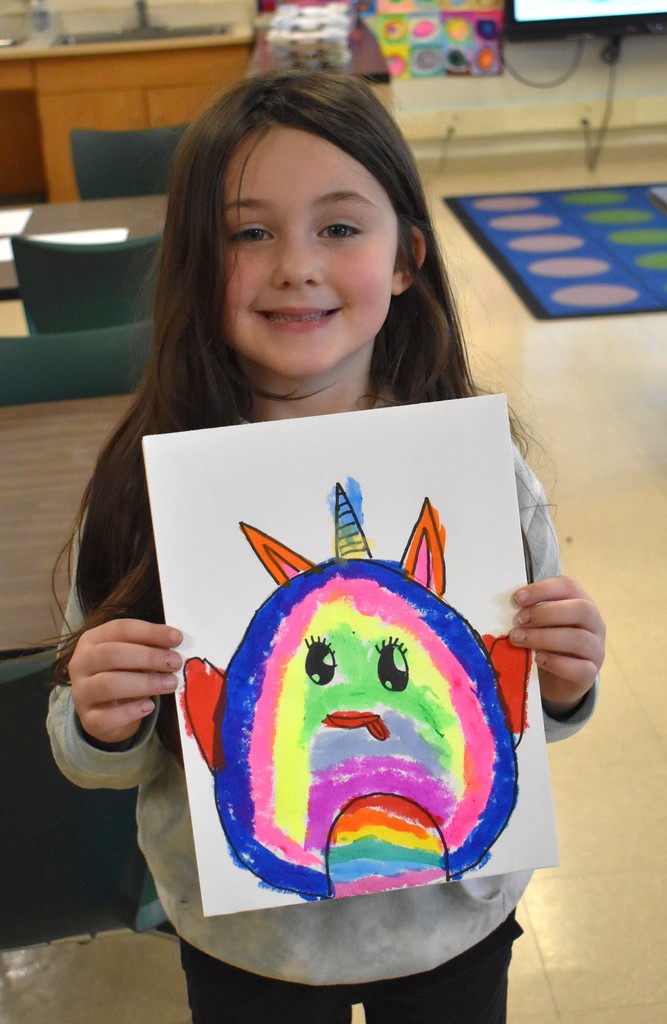
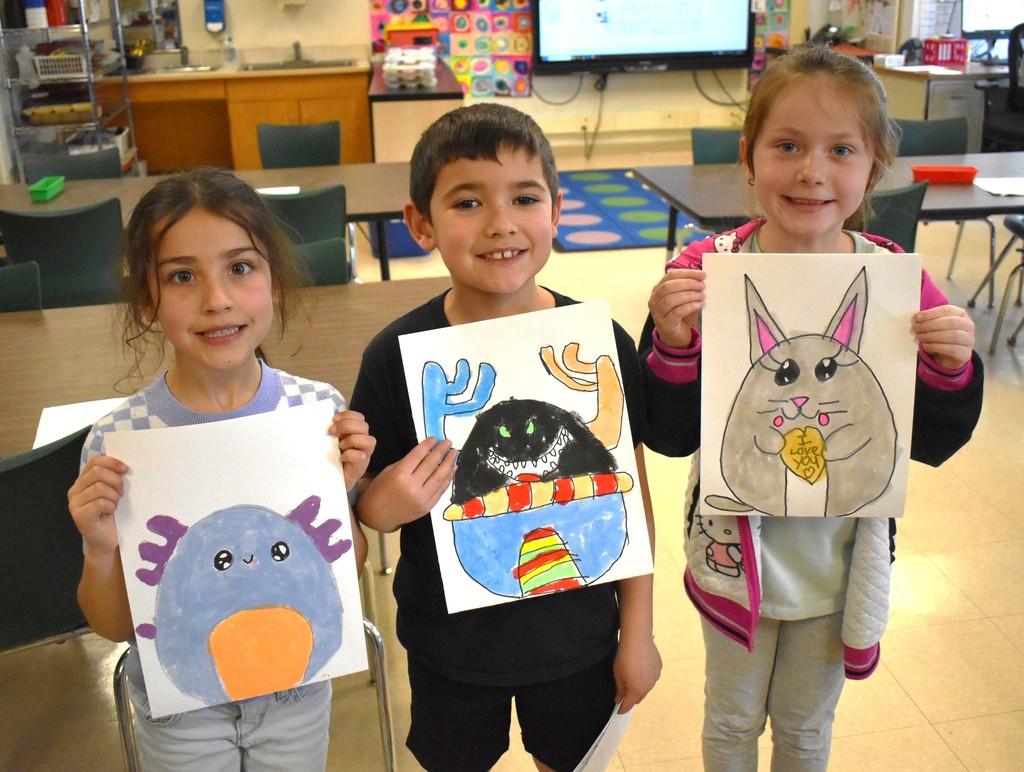
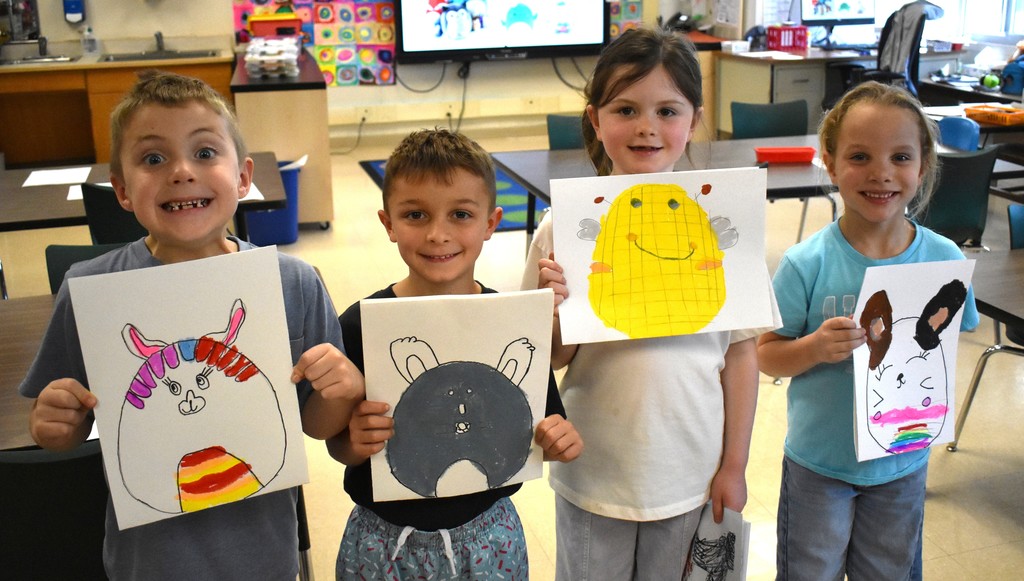
Ilana Kaufman’s ES first-grader art students have been busy bringing their imaginations to life! Each student created a bright, colorful drawing of their favorite Squishmallow—or designed a totally unique one they wish existed. Who knows… maybe their idea will be the next must-have Squishmallow!
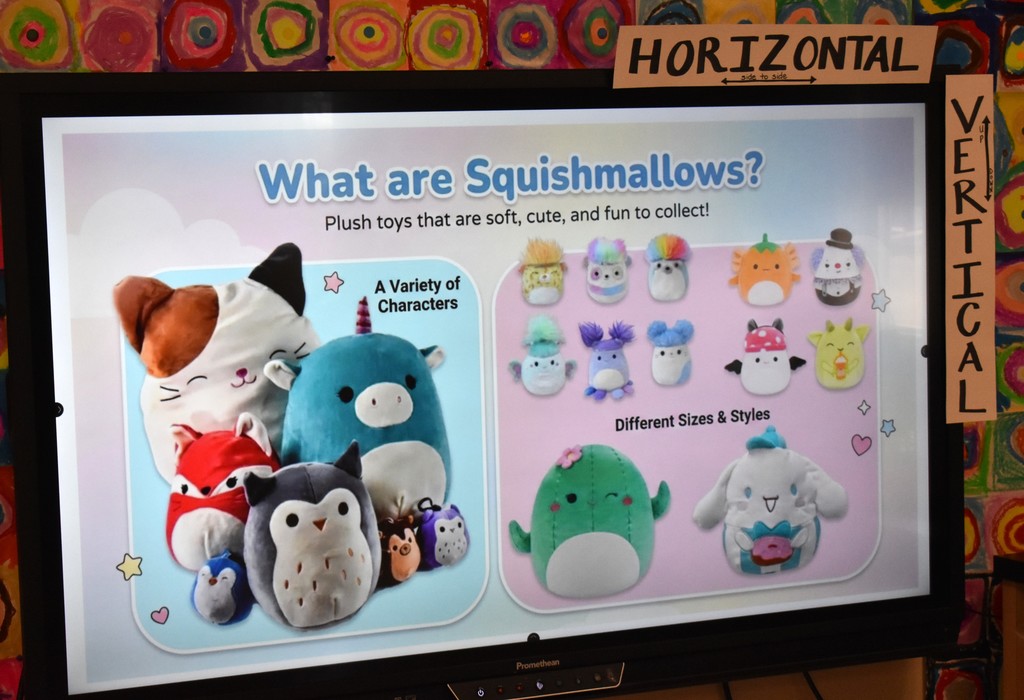
We’re guessing most homes have at least one of these cuddly characters around. Squishmallows are beloved for their ultra-soft, marshmallow-like feel, simple adorable designs, and perfectly huggable shape. They can be pillows, toys, comfort buddies and even collectible treasures.
Since launching in 2017, Squishmallows have become wildly popular — especially during the 2020 pandemic, when people of all ages turned to them for a little extra comfort and stress relief. Each character even has its own fun “bio,” and with rare ones to find, collecting them has become a delightful “thrill of the hunt!”
Take a look at our students’ creative Squishmallow-inspired masterpieces—you might just spot the next fan favorite!
Ilana Kaufman’s ES first-grader art students have been busy bringing their imaginations to life! Each student created a bright, colorful drawing of their favorite Squishmallow—or designed a totally unique one they wish existed. Who knows… maybe their idea will be the next must-have Squishmallow!
We’re guessing most homes have at least one of these cuddly characters around. Squishmallows are beloved for their ultra-soft, marshmallow-like feel, simple adorable designs, and perfectly huggable shape. They can be pillows, toys, comfort buddies and even collectible treasures.
Since launching in 2017, Squishmallows have become wildly popular — especially during the 2020 pandemic, when people of all ages turned to them for a little extra comfort and stress relief. Each character even has its own fun “bio,” and with rare ones to find, collecting them has become a delightful “thrill of the hunt!”
Take a look at our students’ creative Squishmallow-inspired masterpieces—you might just spot the next fan favorite!
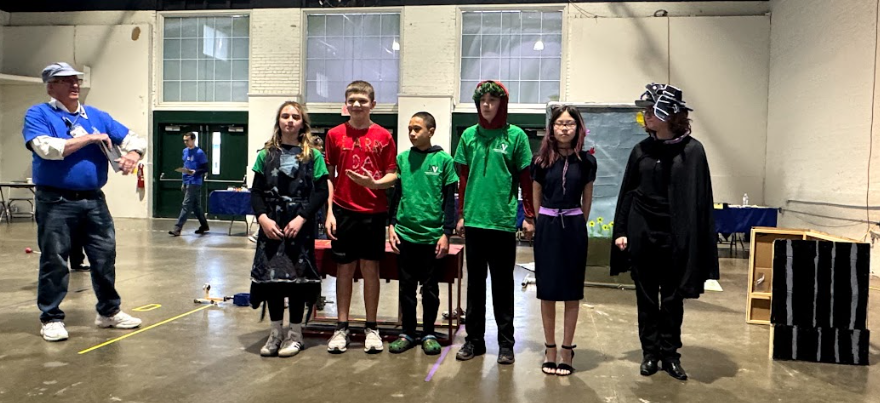
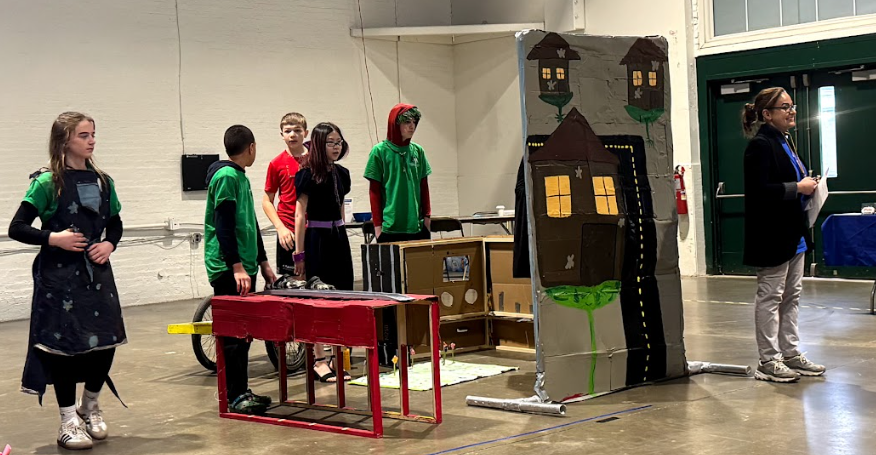
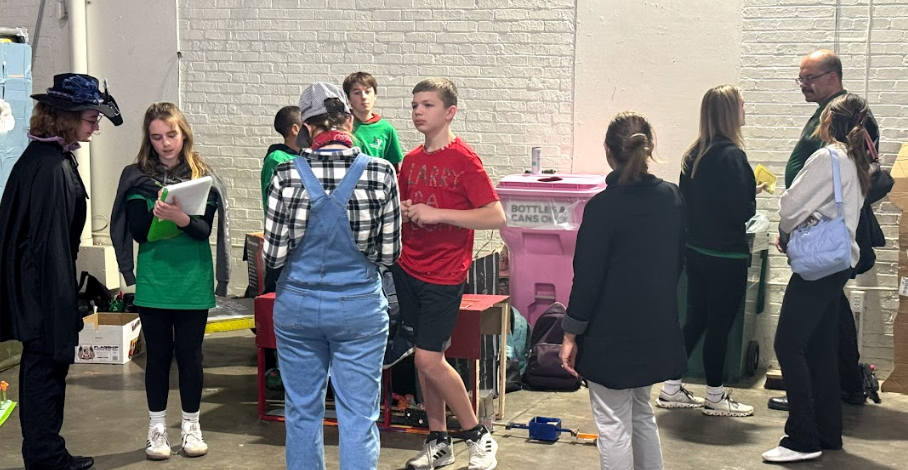
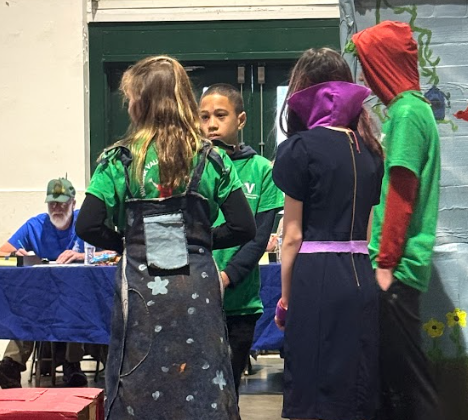
We are beyond proud of our Middle School Odyssey of the Mind team! Their journey to the New York State Odyssey of the Mind Competition this past Saturday at the New York State Fairgrounds is a massive accomplishment—one that only a select group of teams ever achieve! Making it to states in Odyssey of the Mind is no small feat; it represents months of dedication, bold thinking and next-level creativity.
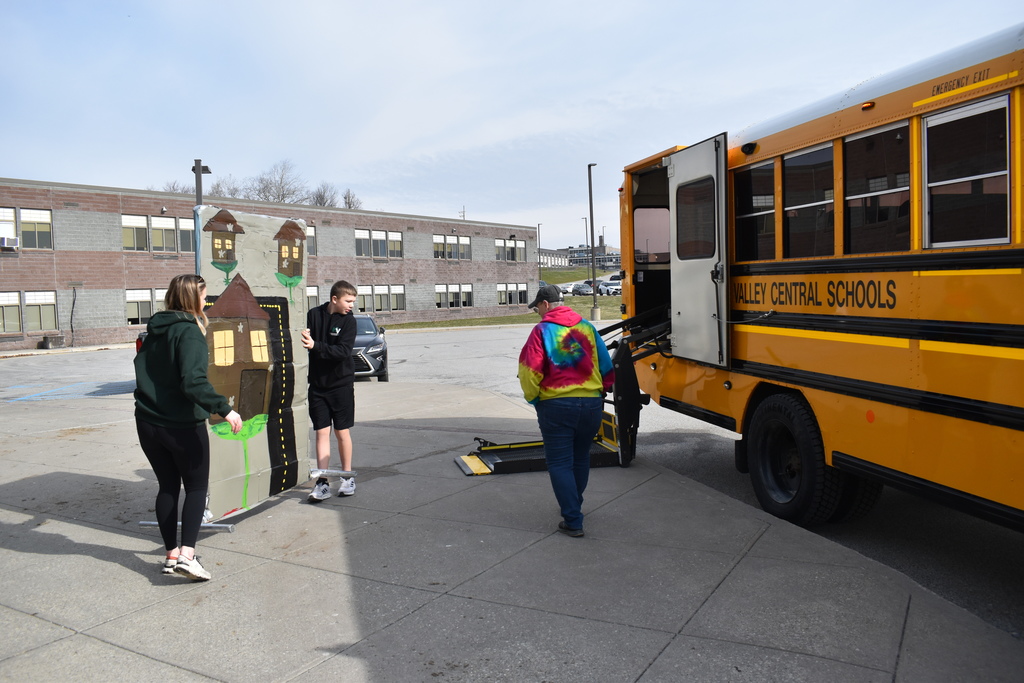
And they didn’t just show up—they delivered! With grit, determination, and incredible imagination, our team rose to the challenge of designing original solutions to the question posed to them! They earned an impressive 8th place finish in their division for Problem 1/“Off the Rails.” That’s huge!
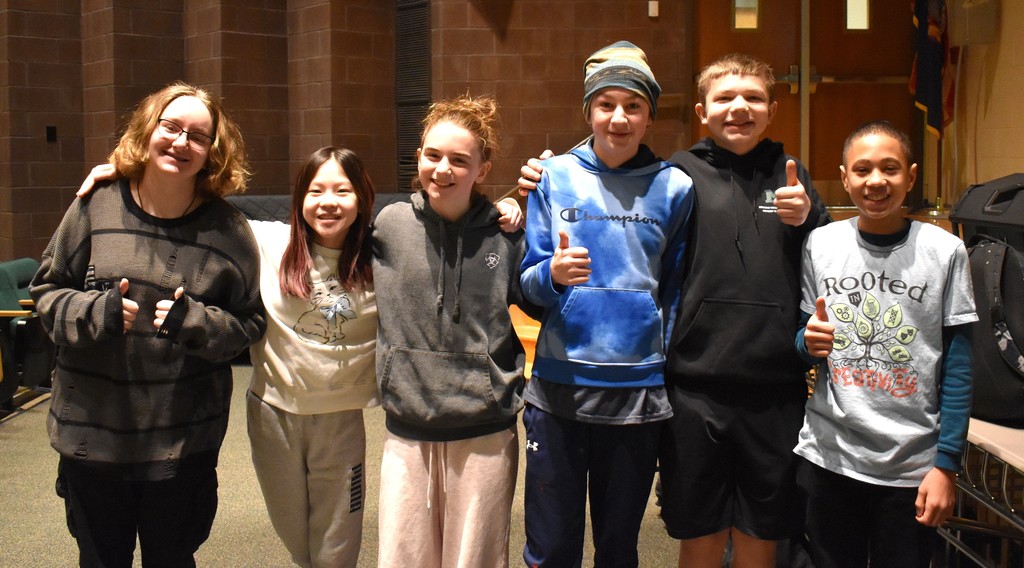
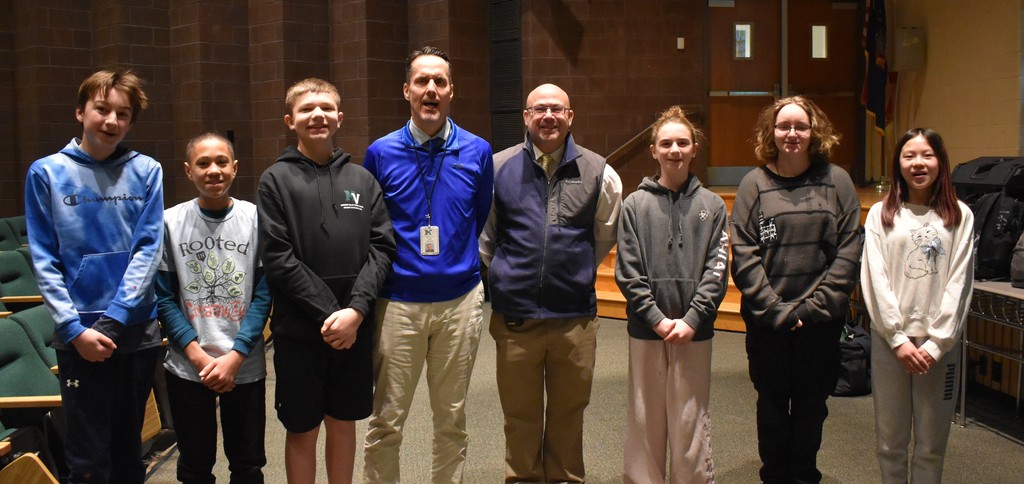
Please join us in congratulating Ashton Gibbs, Christian Hines, Jemma Marsala, Quinn Murphy, Victoria Papp, and Alicia Suen for their hard work, infectious enthusiasm, and imaginative spirit. They represented Minisink Valley with pride, honor, and distinction—and inspired us all along the way!
And they didn’t just show up—they delivered! With grit, determination, and incredible imagination, our team rose to the challenge of designing original solutions to the question posed to them! They earned an impressive 8th place finish in their division for Problem 1/“Off the Rails.” That’s huge!
Please join us in congratulating Ashton Gibbs, Christian Hines, Jemma Marsala, Quinn Murphy, Victoria Papp, and Alicia Suen for their hard work, infectious enthusiasm, and imaginative spirit. They represented Minisink Valley with pride, honor, and distinction—and inspired us all along the way!
A BREAKFAST FIT FOR STATE COMPETITORS!
They’re fueled, fired up and ready to shine!
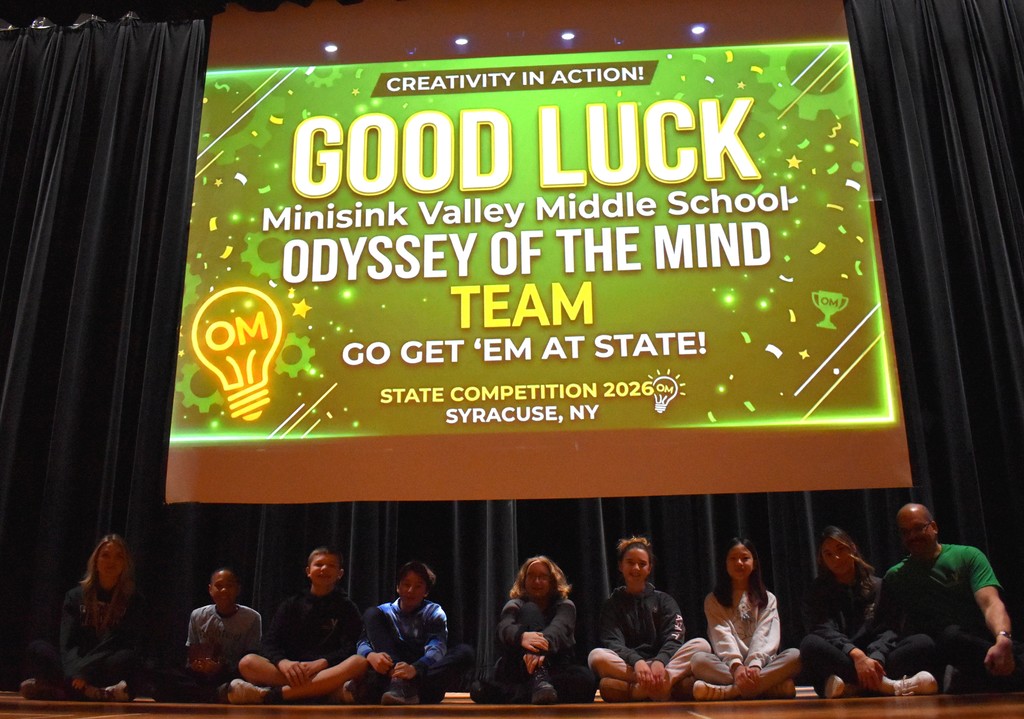
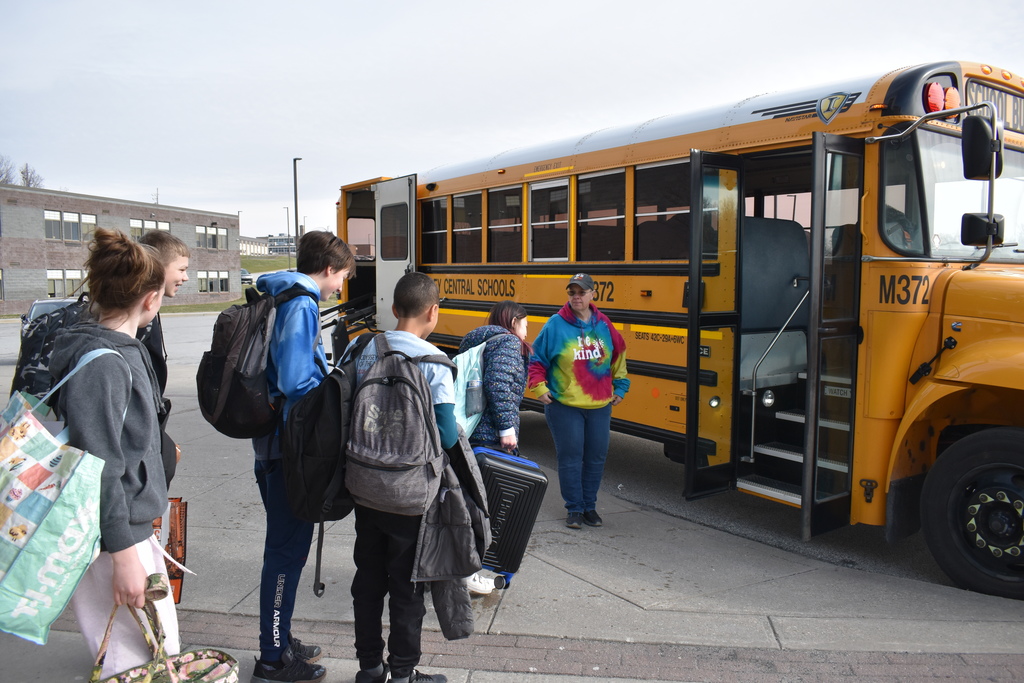
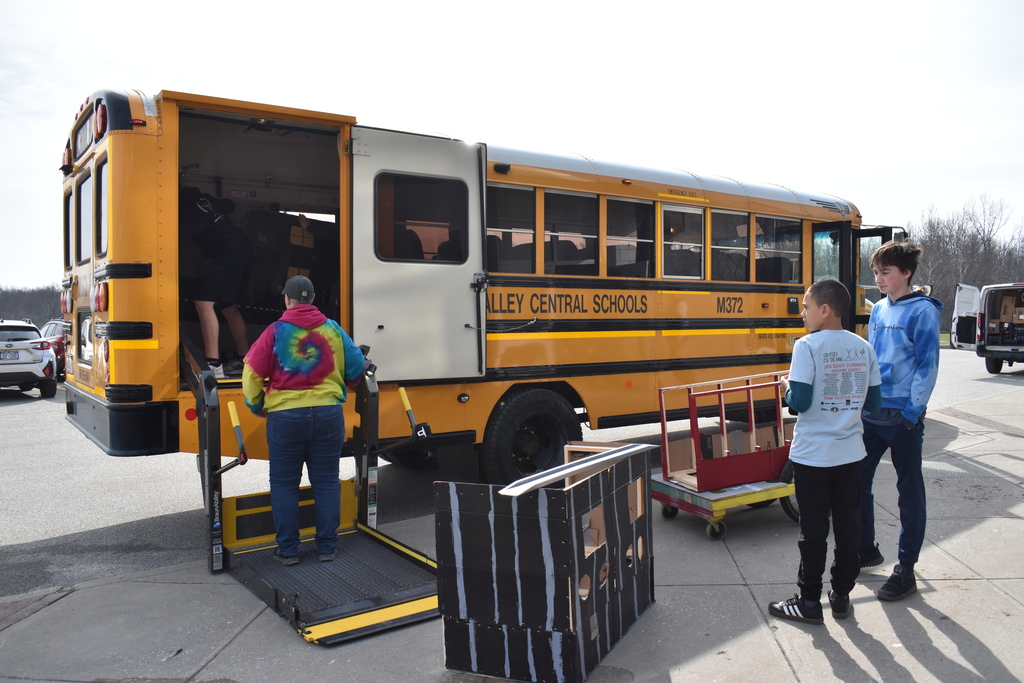
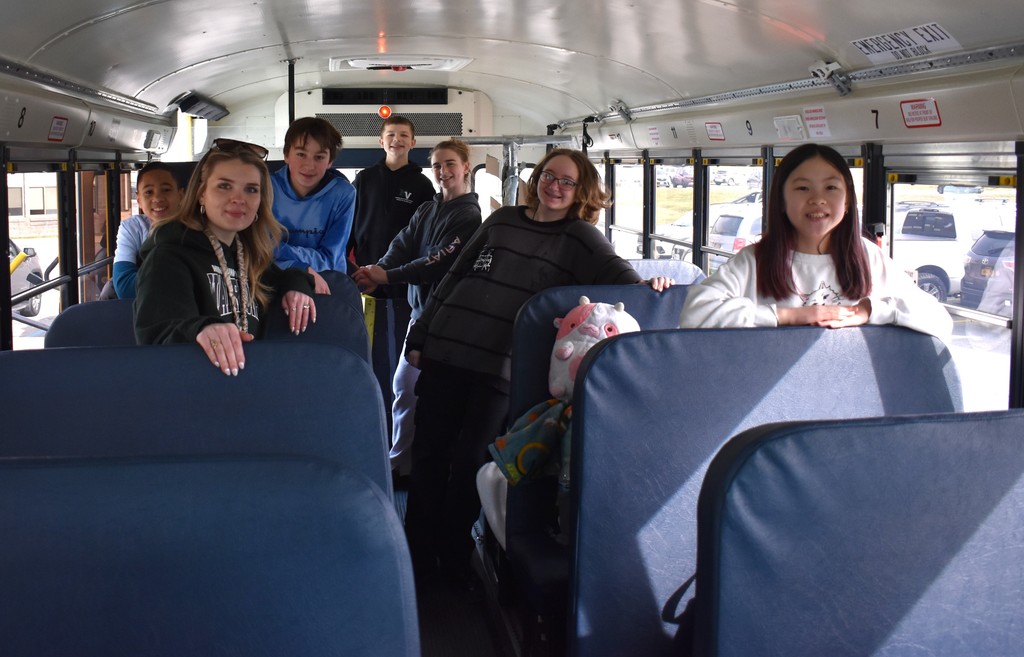
This morning, our Middle School Odyssey of the Mind team kicked off their journey to Syracuse with a special bagel and donut breakfast, hosted by Principal Michael Larsen. With full stomachs and even fuller spirits, they’re officially on their way to the New York State Odyssey of the Mind competition at the New York State Fairgrounds!
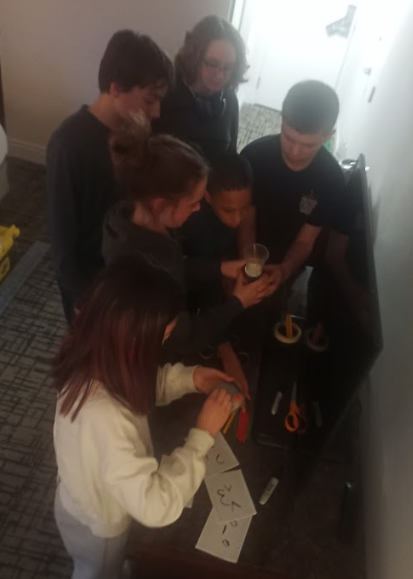
For those who may not know, Odyssey of the Mind is all about creativity, teamwork, and out-of-the-box problem solving. Teams spend months designing original solutions to long-term challenges — often building elaborate props, engineering clever devices and performing skits that blend humor, storytelling and innovation. And here’s the twist: part of the competition includes a “spontaneous” challenge, where students must think on their feet and solve a problem in real time. No pressure, right? But, we know they got this!!!
It’s been many years since a team from our district has advanced to the state level, making this achievement even more exciting. These students have already proven their imagination, dedication and resilience — and now they’re ready to take the “state stage” and represent us all!
Break a leg, team! We’re cheering you on every step of the way and can’t wait to see the magic you bring to the competition!
They’re fueled, fired up and ready to shine!
This morning, our Middle School Odyssey of the Mind team kicked off their journey to Syracuse with a special bagel and donut breakfast, hosted by Principal Michael Larsen. With full stomachs and even fuller spirits, they’re officially on their way to the New York State Odyssey of the Mind competition at the New York State Fairgrounds!
For those who may not know, Odyssey of the Mind is all about creativity, teamwork, and out-of-the-box problem solving. Teams spend months designing original solutions to long-term challenges — often building elaborate props, engineering clever devices and performing skits that blend humor, storytelling and innovation. And here’s the twist: part of the competition includes a “spontaneous” challenge, where students must think on their feet and solve a problem in real time. No pressure, right? But, we know they got this!!!
It’s been many years since a team from our district has advanced to the state level, making this achievement even more exciting. These students have already proven their imagination, dedication and resilience — and now they’re ready to take the “state stage” and represent us all!
Break a leg, team! We’re cheering you on every step of the way and can’t wait to see the magic you bring to the competition!
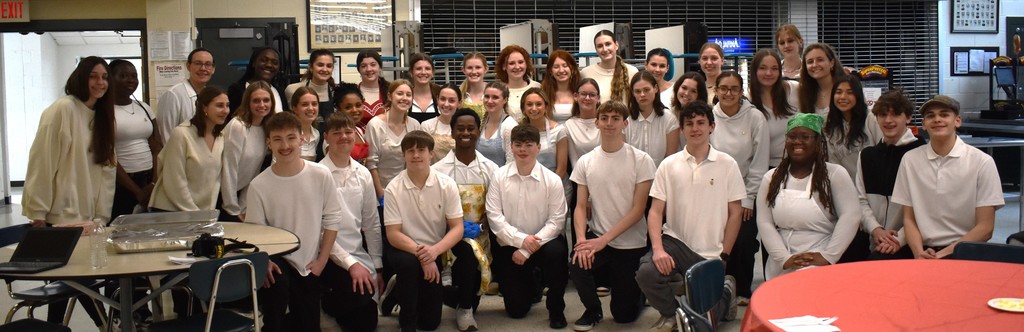
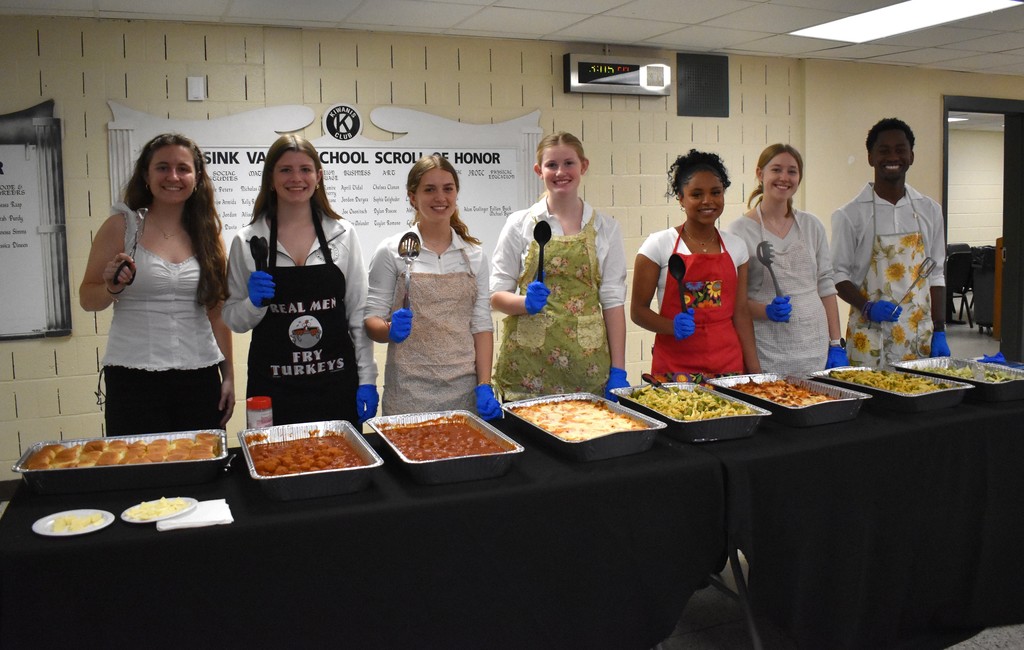
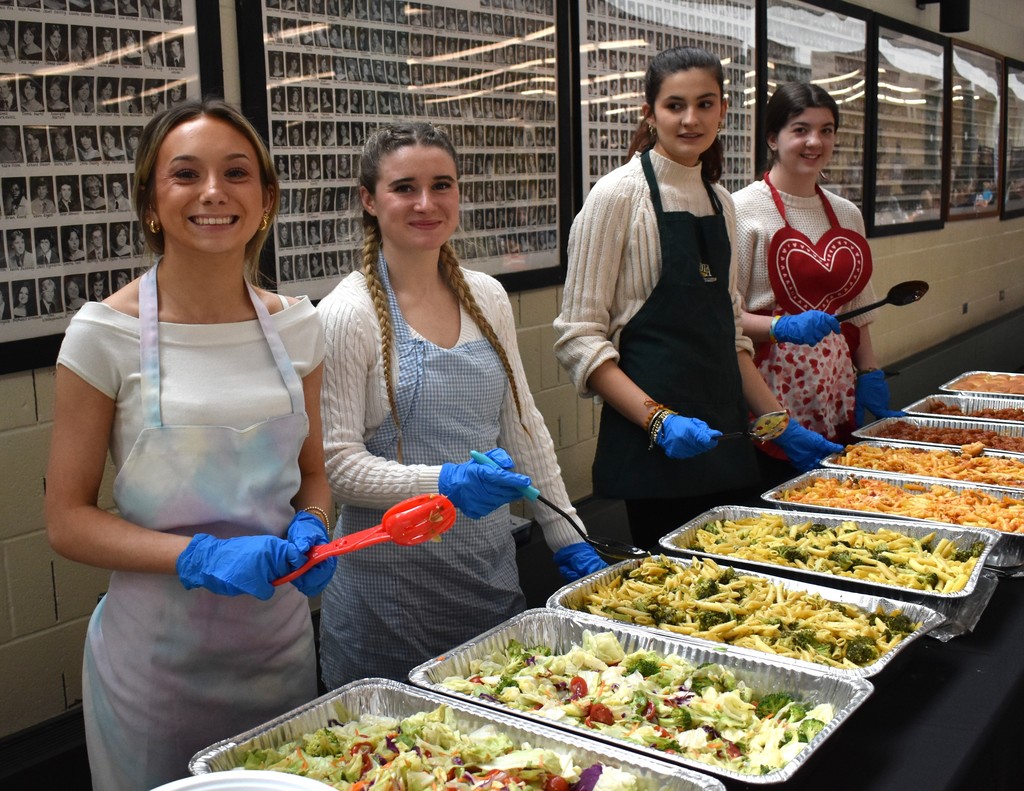
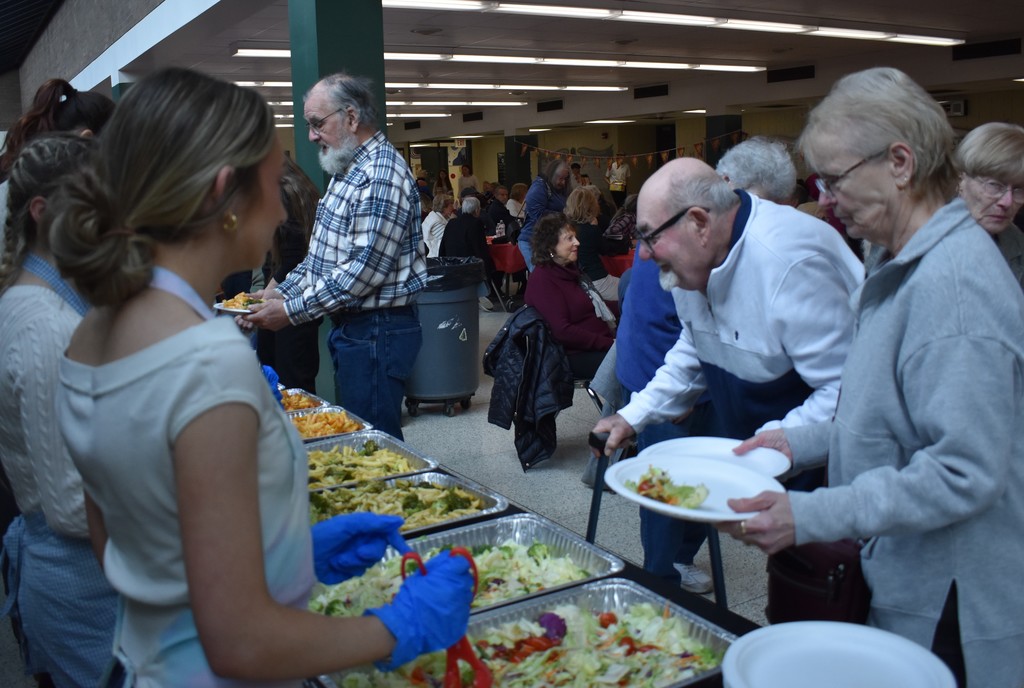
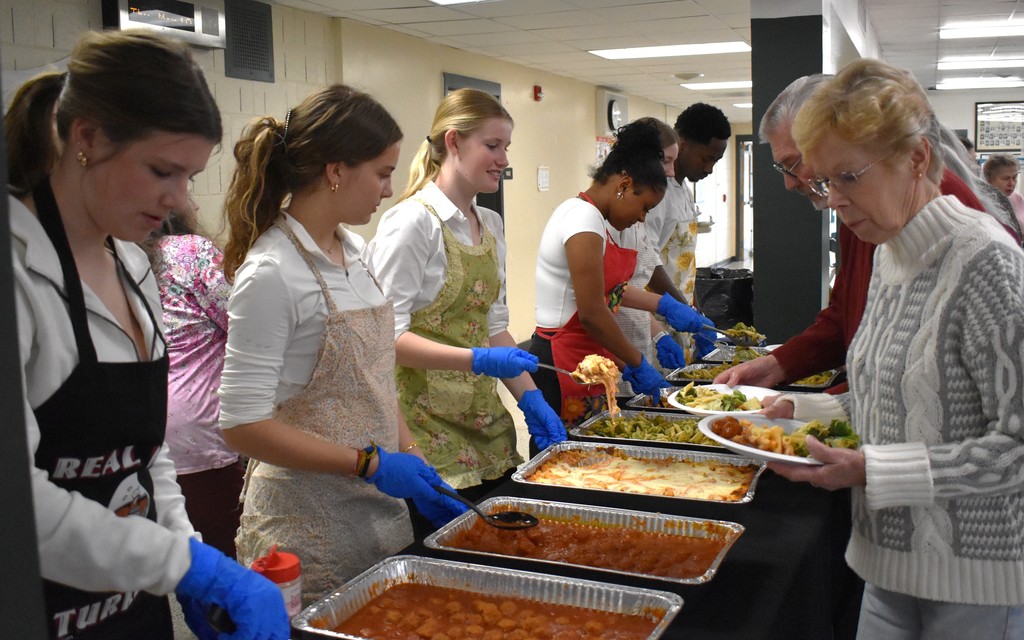
Yesterday, March 19, the gallant knights of the High School’s chapter of the National Honor Society successfully undertook a quest of tremendous proportion: To host the most grand banquet for our most honored and noble community seniors!!
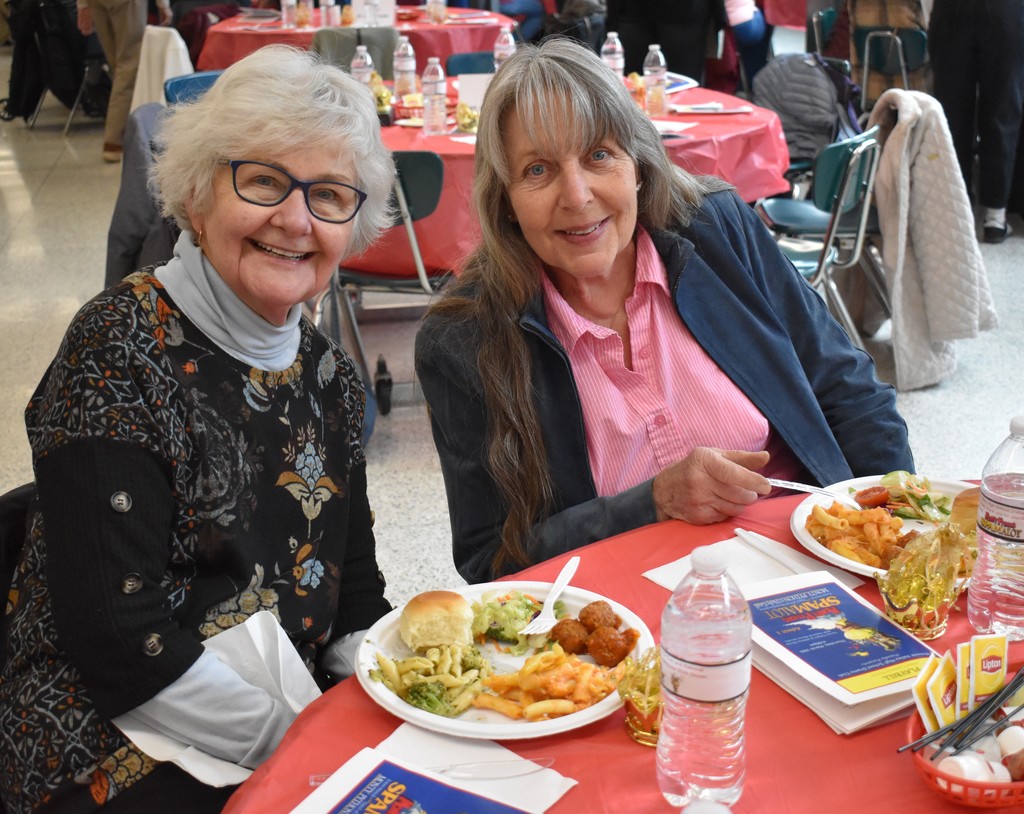
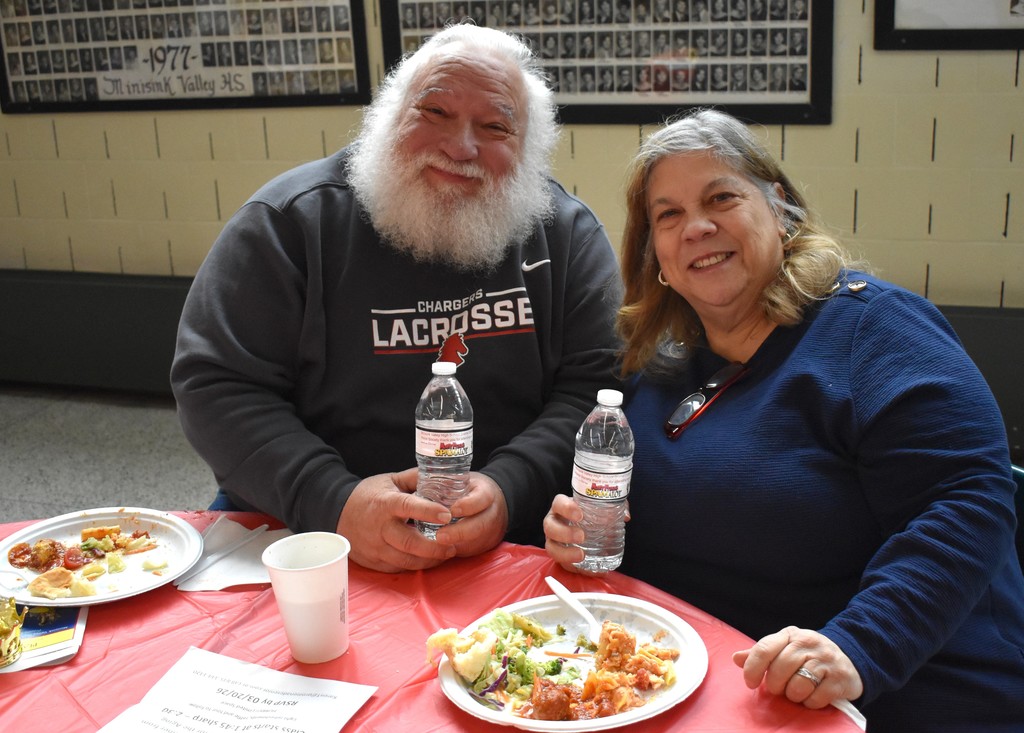
Our distinguished seniors – over 180 --- wise and wonderful as any council of elders in Camelot, were treated like royalty for a banquet featuring voluminous amounts of pasta!
With the precision of a well-experienced royal court, NHS members spent days preparing—summoning centerpieces into existence, crafting desserts of deliciousness and ensuring the feast was worthy of legend! And lo, it was! Our seniors arrived not as mere guests, but as the true royalty of the realm—greeted with warmth and laughter!
The hall rang with cheerful conversation and merriment, as students and seniors shared in a celebration that readied them for the High School Drama Club’s triumphant performance of Spamalot! With flair, fanfare and just the right amount of chaos, they brought the tale to life—complete with bold knights, questionable bravery, shrubbery and enthusiasm that could only be described as “Sir Lancelot-level.”
A resounding thank you to the NHS members for their tireless efforts, to the Drama Club for their spectacular show, and to our wonderful seniors, whose presence made the entire quest worthwhile. Truly, this was not just an event—it was a legendary gathering of community, kindness and comedy!
It was an afternoon filled with laughter, connection, and a perfectly measured dose of Spamalot absurdity. Have a look at our merry band of guests—and remember: Tickets to Monty Python’s Spamalot are still available (and highly recommended for those seeking further nonsense!).
See more photos on the district's Facebook page! https://www.facebook.com/MinisinkValleyCSD/posts/pfbid0HQ5nHRHo9NkFWJgbomU5Up3Rm4HNBNRTcNypFHpsx8XHyPZiz8SSVfpHSSJk5fQal?__cft__[0]=AZZZoX3azef4qSaboIoNmTrtxD4ErlGQnJbpnIXtuSEbOEjIYuBx7dgwoW7FrpwRhyupTvY8G3Q19pX_IWoUeKGoit3BwlZ0R7tGDSxtyhSQGPPQQrcA8Akk0CZtkfU0V7DhyTivSFK8BoNr0t29P5xDH3hHAH2ABnlDAXEFVm0tU5Y6o_pdrmMZlcSqXJJUgR8&__tn__=%2CO%2CP-R
Our distinguished seniors – over 180 --- wise and wonderful as any council of elders in Camelot, were treated like royalty for a banquet featuring voluminous amounts of pasta!
With the precision of a well-experienced royal court, NHS members spent days preparing—summoning centerpieces into existence, crafting desserts of deliciousness and ensuring the feast was worthy of legend! And lo, it was! Our seniors arrived not as mere guests, but as the true royalty of the realm—greeted with warmth and laughter!
The hall rang with cheerful conversation and merriment, as students and seniors shared in a celebration that readied them for the High School Drama Club’s triumphant performance of Spamalot! With flair, fanfare and just the right amount of chaos, they brought the tale to life—complete with bold knights, questionable bravery, shrubbery and enthusiasm that could only be described as “Sir Lancelot-level.”
A resounding thank you to the NHS members for their tireless efforts, to the Drama Club for their spectacular show, and to our wonderful seniors, whose presence made the entire quest worthwhile. Truly, this was not just an event—it was a legendary gathering of community, kindness and comedy!
It was an afternoon filled with laughter, connection, and a perfectly measured dose of Spamalot absurdity. Have a look at our merry band of guests—and remember: Tickets to Monty Python’s Spamalot are still available (and highly recommended for those seeking further nonsense!).
See more photos on the district's Facebook page! https://www.facebook.com/MinisinkValleyCSD/posts/pfbid0HQ5nHRHo9NkFWJgbomU5Up3Rm4HNBNRTcNypFHpsx8XHyPZiz8SSVfpHSSJk5fQal?__cft__[0]=AZZZoX3azef4qSaboIoNmTrtxD4ErlGQnJbpnIXtuSEbOEjIYuBx7dgwoW7FrpwRhyupTvY8G3Q19pX_IWoUeKGoit3BwlZ0R7tGDSxtyhSQGPPQQrcA8Akk0CZtkfU0V7DhyTivSFK8BoNr0t29P5xDH3hHAH2ABnlDAXEFVm0tU5Y6o_pdrmMZlcSqXJJUgR8&__tn__=%2CO%2CP-R
"POP” Choral reading! Which group is next?
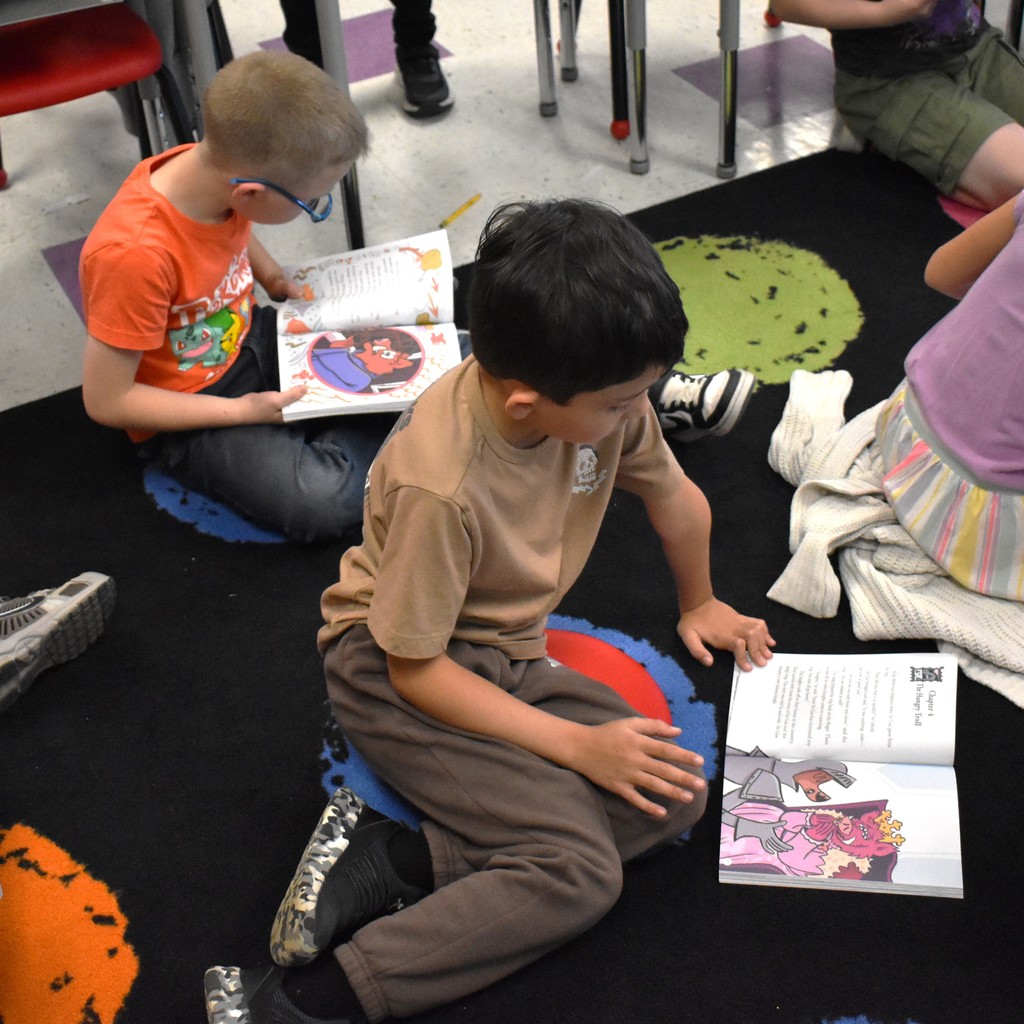
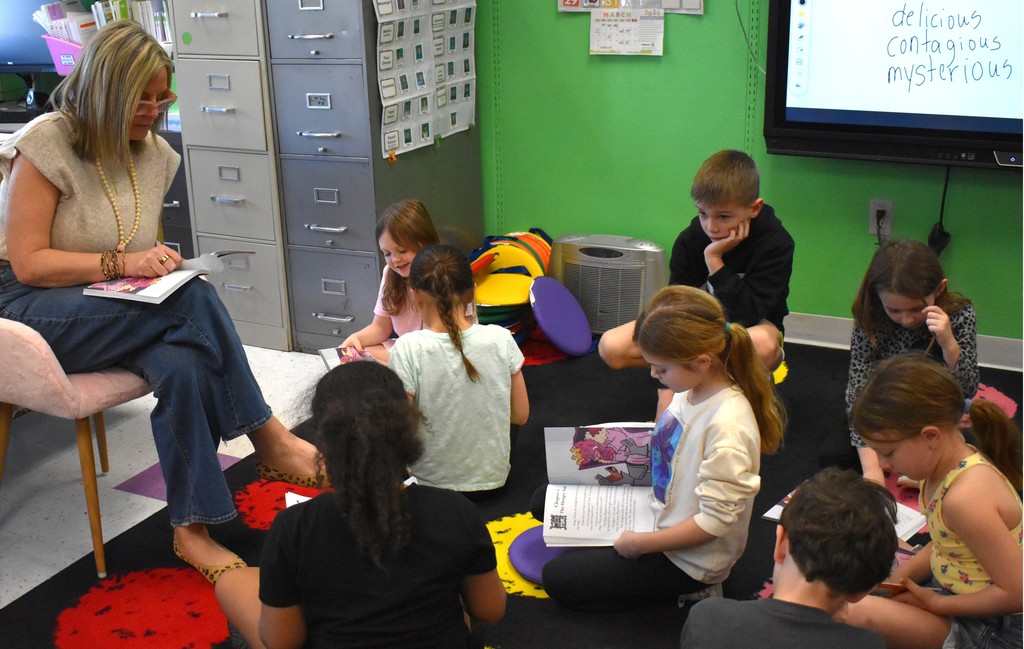
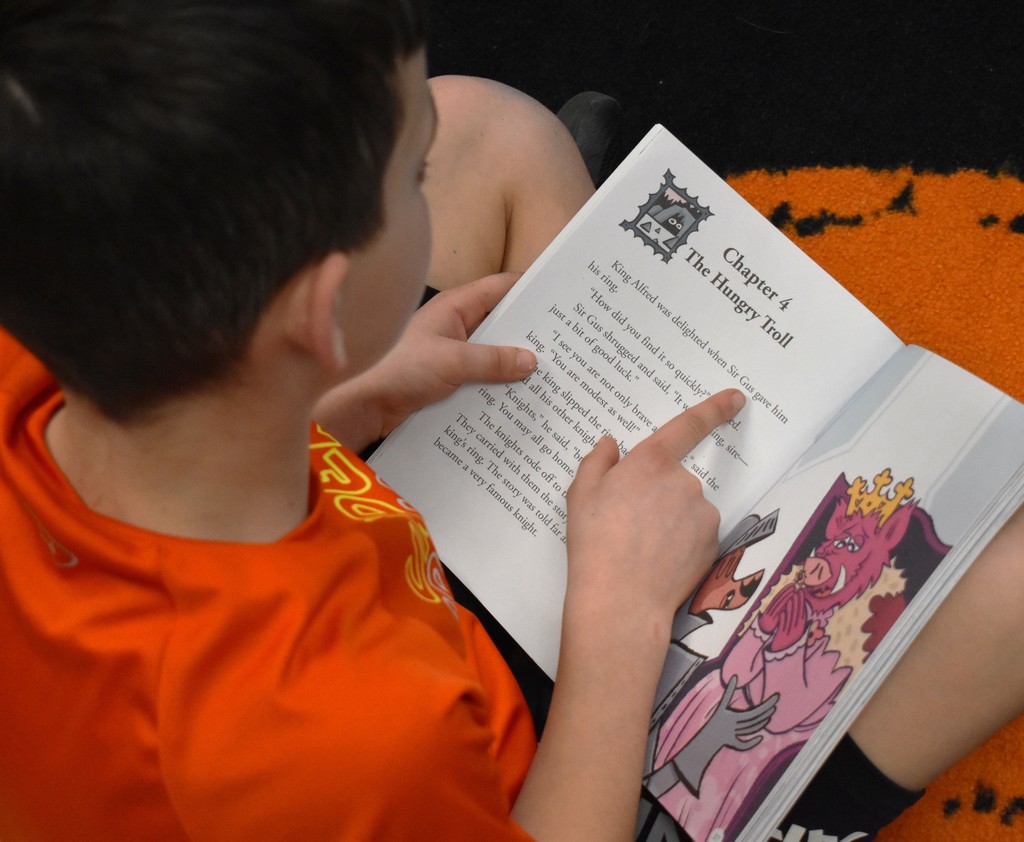
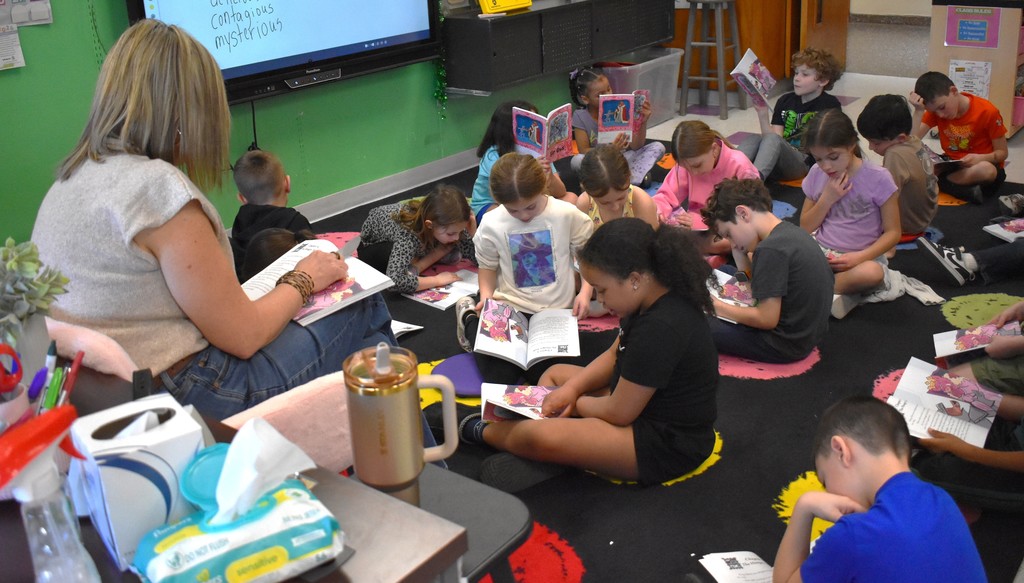
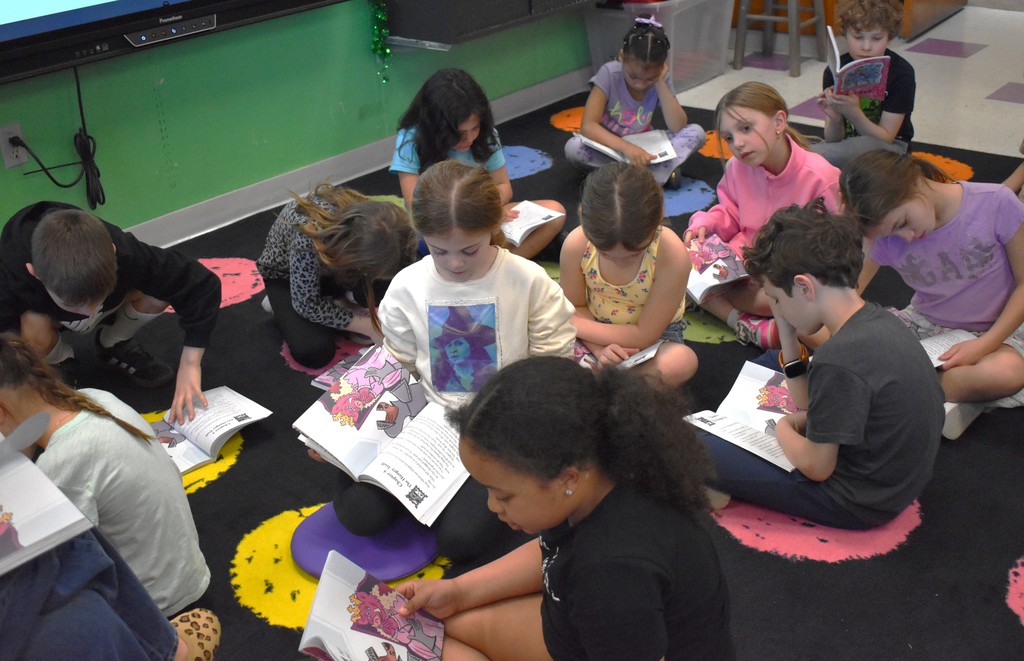
Tracey Salinardi’s ES second-graders have been doing choral reading as part of their ongoing ELA work. It’s an instructional strategy where a teacher and students (or groups of students) read a text aloud in unison. Choral reading helps build fluency, self-confidence and motivation for young readers.
In this instance, groups of students needed to be spontaneously prepared for their choral reading assignment. Who would she pick? They all needed to be ready! First, it was students who were at Table 4, then Table 5, then all the girls in the class...and then all the boys.
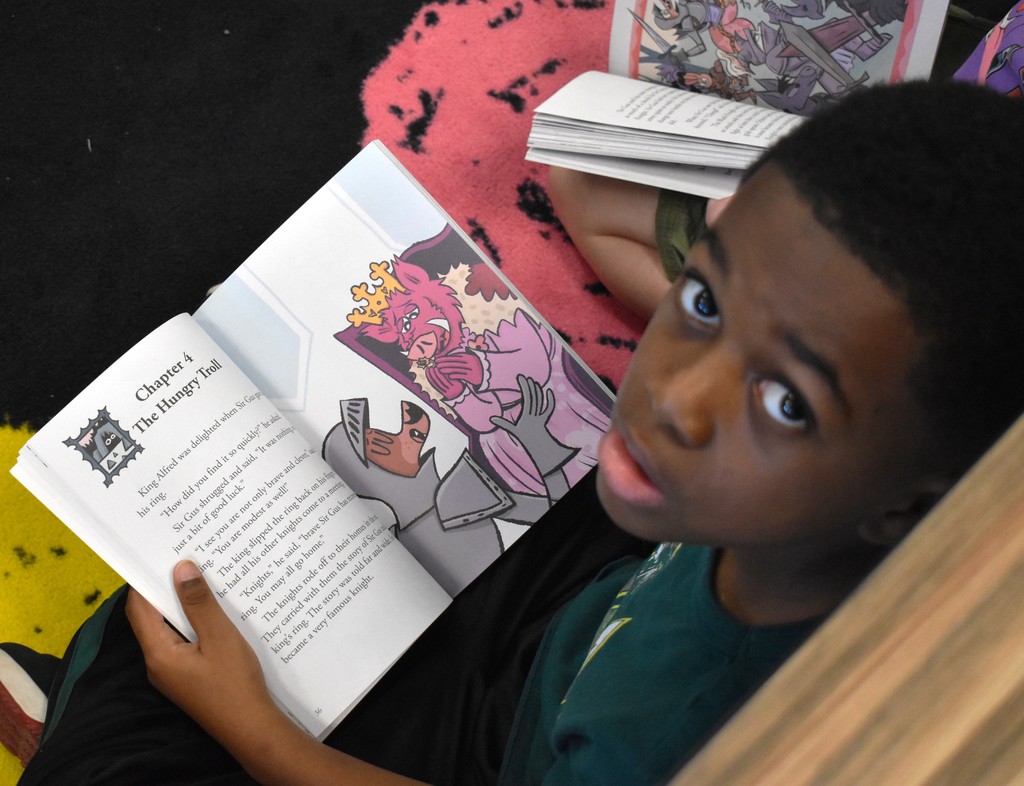
Their choral reading came from Chapter 4 of a story called “The Hungry Troll.” It’s about a cowardly, but lucky knight, named Sir Gus, who faces a hungry troll to retrieve King Alfred's stolen ring. Despite his fear and ridiculous antics, Gus's "good luck" prevails, allowing him to recover the ring and impress the king, who praises him as brave and clever.
BADMINTON MARCH BIRDIE MADNESS!
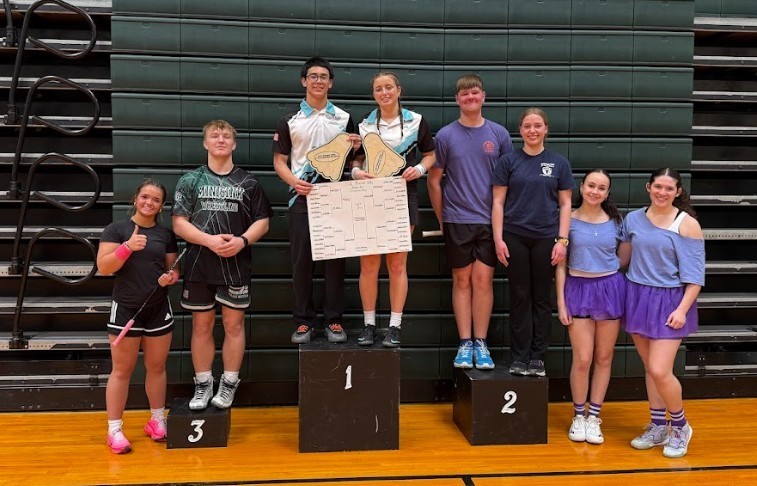
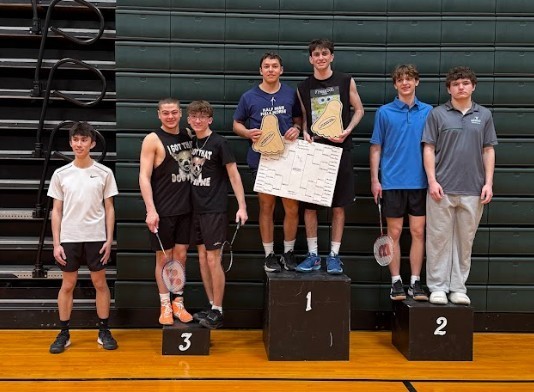
Move over brackets and buzzer-beaters—it was time for Birdie Madness to take center court!
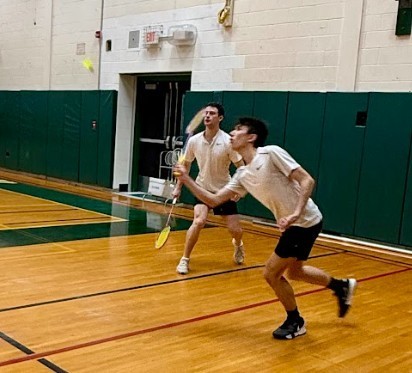
Yesterday, March 18, the High School Physical Education Department served up its annual Badminton Tournament, and the energy was nothing short of championship-level excitement!
From lightning-fast volleys to clutch last-second saves, students battled it out like true March Madness contenders—only this time, the “ball” was a blur of shuttlecock feathers! Did you know that the badminton shuttlecock is actually the fastest object in racket sports?
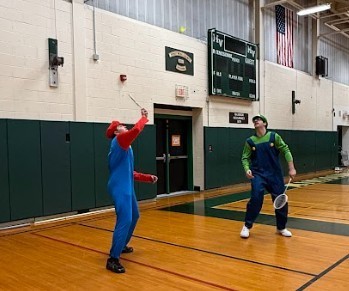
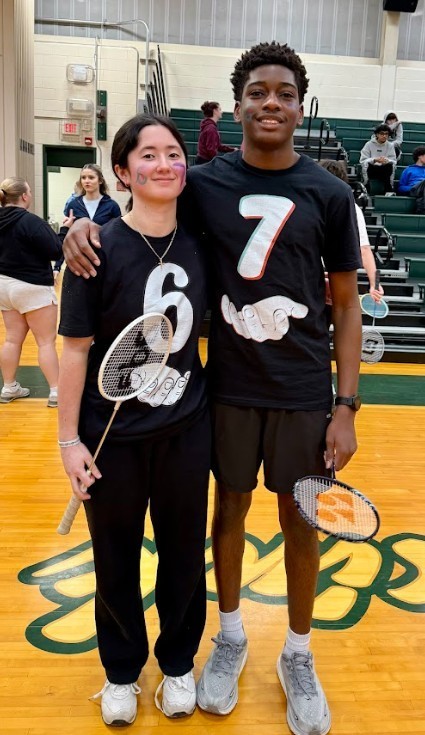
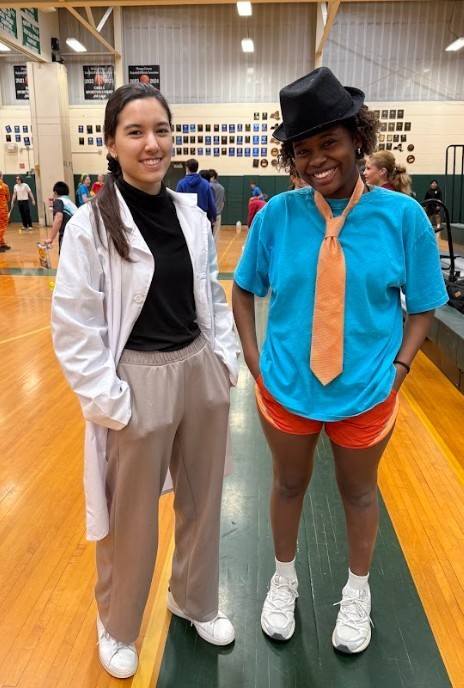
The gym was alive with cheers, friendly rivalries, awesome outfits and bracket-busting surprises. Just like this month’s NCAA tournament, every match counted—and every swing had the crowd rooting for their favorites!
It was a fabulous day of fitness, fun, and fierce (but friendly!) competition. Whether pairs were considered a top seed or a Cinderella story, everyone brought their A-game!
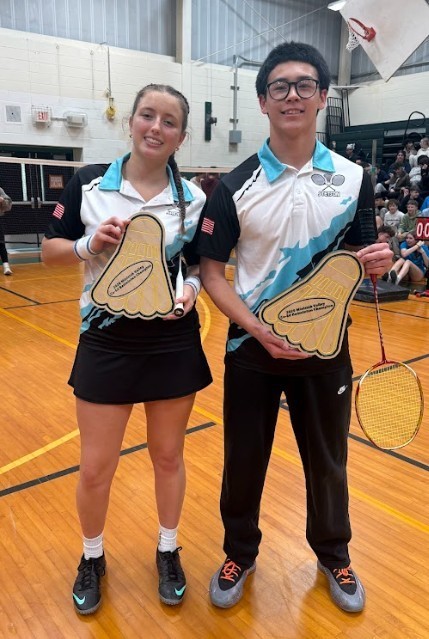
WINNERS: Co-Ed Division:
1st: Jaida Macaluso / Stetson Terpak
2nd: Hannah Wieboldt / Landon Ordway
3rd: Kate O'Neill / Zach Filip
4th: Hannah Ringus / Sophia Escobar
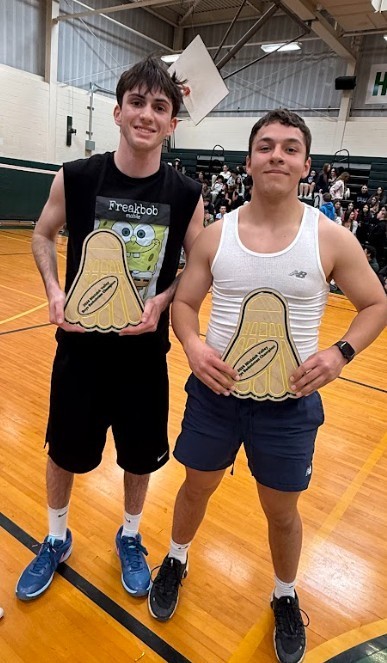
WINNERS: Boys Division:
1st: James Arias / Ethan Rodriguez
2nd: RJ Sosler / Roman Gangi
3rd: Joseph Uhrig / Will Burretto
4th: Rogan Lynch / Luciano Palacios
Special thanks to Technology Teacher Christopher Tuthill and his students for making the championship badminton plaques and Senior Gavin McGinnis for singing the National Anthem prior to the tournament's start!
See more photos on the district's Facebook page: https://www.facebook.com/MinisinkValleyCSD/posts/pfbid02MYTC4ZeHY4MysP4TqavvZZsTWuCon6TZp5sbUoBLixpbwtGWYZiYUF2V51aeNp9zl?__cft__[0]=AZanG623JYq2hmFhPXVhlpXWM0BimDT4mdtjjQC7Z7k4vrIKjGLFpF62cfcA5Yh7gf8pilZertdteRUD2LQhihvKkP8vDlnhyfUuKk-eQga6Lp2NKmbQKs7LWdEWkLRjv9kSPFrs6DoVTZl_uRRqHjRw2dVZH5ne-IMcG1TxsS7Y3khuwUUTvaczPp9uU4vHpjc&__tn__=%2CO%2CP-R
•A badminton shuttlecock has 16 feathers—precision matters!
•Smashes in badminton can travel faster than a tennis serve.
•It’s one of the most popular sports in the world, especially in Asia and Europe.
Move over brackets and buzzer-beaters—it was time for Birdie Madness to take center court!
Yesterday, March 18, the High School Physical Education Department served up its annual Badminton Tournament, and the energy was nothing short of championship-level excitement!
From lightning-fast volleys to clutch last-second saves, students battled it out like true March Madness contenders—only this time, the “ball” was a blur of shuttlecock feathers! Did you know that the badminton shuttlecock is actually the fastest object in racket sports?
The gym was alive with cheers, friendly rivalries, awesome outfits and bracket-busting surprises. Just like this month’s NCAA tournament, every match counted—and every swing had the crowd rooting for their favorites!
It was a fabulous day of fitness, fun, and fierce (but friendly!) competition. Whether pairs were considered a top seed or a Cinderella story, everyone brought their A-game!
WINNERS: Co-Ed Division:
1st: Jaida Macaluso / Stetson Terpak
2nd: Hannah Wieboldt / Landon Ordway
3rd: Kate O'Neill / Zach Filip
4th: Hannah Ringus / Sophia Escobar
WINNERS: Boys Division:
1st: James Arias / Ethan Rodriguez
2nd: RJ Sosler / Roman Gangi
3rd: Joseph Uhrig / Will Burretto
4th: Rogan Lynch / Luciano Palacios
Special thanks to Technology Teacher Christopher Tuthill and his students for making the championship badminton plaques and Senior Gavin McGinnis for singing the National Anthem prior to the tournament's start!
See more photos on the district's Facebook page: https://www.facebook.com/MinisinkValleyCSD/posts/pfbid02MYTC4ZeHY4MysP4TqavvZZsTWuCon6TZp5sbUoBLixpbwtGWYZiYUF2V51aeNp9zl?__cft__[0]=AZanG623JYq2hmFhPXVhlpXWM0BimDT4mdtjjQC7Z7k4vrIKjGLFpF62cfcA5Yh7gf8pilZertdteRUD2LQhihvKkP8vDlnhyfUuKk-eQga6Lp2NKmbQKs7LWdEWkLRjv9kSPFrs6DoVTZl_uRRqHjRw2dVZH5ne-IMcG1TxsS7Y3khuwUUTvaczPp9uU4vHpjc&__tn__=%2CO%2CP-R
•A badminton shuttlecock has 16 feathers—precision matters!
•Smashes in badminton can travel faster than a tennis serve.
•It’s one of the most popular sports in the world, especially in Asia and Europe.
SYRACUSE BOUND!
YOU GOT THIS, MIDDLE SCHOOL ODYSSEY OF THE MIND TEAM!
The Middle School’s Odyssey of the Mind team has completed the final touches on the refinements for its performance at the New York State Odyssey of the Mind Tournament at the New York State Fairgrounds in Syracuse this Saturday, March 21! The team leaves tomorrow, March 20!
Team members are Ashton Gibbs, Christian Hines, Jemma Marsala, Quinn Murphy, Victoria Papp and Alicia Suen with Coach Madison Wyman.
The team will present Problem 1/“Off the Rails.”
• For this problem, the team becomes conductors and engineers as they continue to design, build and operate a train vehicle.
• As the train travels the course it will have a new car attached at each stop.
• Along the route, it will encounter challenges that make the train travel in different ways.
• After all of its cargo is picked up, the items will be unloaded and assembled into a work of art.
• The performance will also include the use of Arm & Hammer Baking Soda, a humorous conductor character and a villain character that tries to prevent the train from getting to its destination.
YOU GOT THIS, MIDDLE SCHOOL ODYSSEY OF THE MIND TEAM!
The Middle School’s Odyssey of the Mind team has completed the final touches on the refinements for its performance at the New York State Odyssey of the Mind Tournament at the New York State Fairgrounds in Syracuse this Saturday, March 21! The team leaves tomorrow, March 20!
Team members are Ashton Gibbs, Christian Hines, Jemma Marsala, Quinn Murphy, Victoria Papp and Alicia Suen with Coach Madison Wyman.
The team will present Problem 1/“Off the Rails.”
• For this problem, the team becomes conductors and engineers as they continue to design, build and operate a train vehicle.
• As the train travels the course it will have a new car attached at each stop.
• Along the route, it will encounter challenges that make the train travel in different ways.
• After all of its cargo is picked up, the items will be unloaded and assembled into a work of art.
• The performance will also include the use of Arm & Hammer Baking Soda, a humorous conductor character and a villain character that tries to prevent the train from getting to its destination.
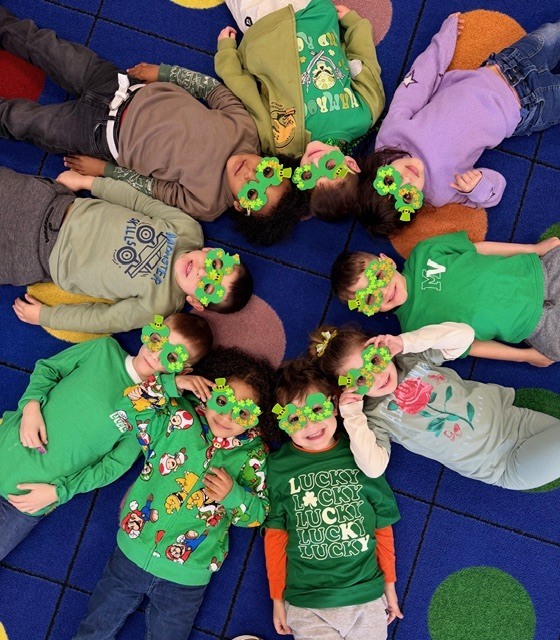
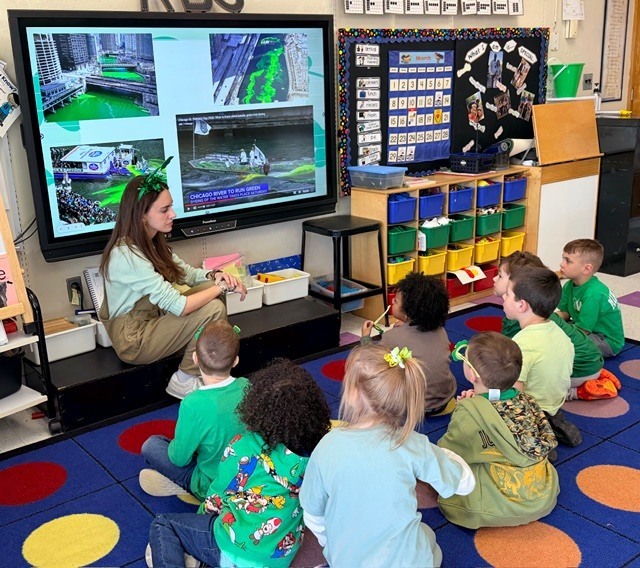
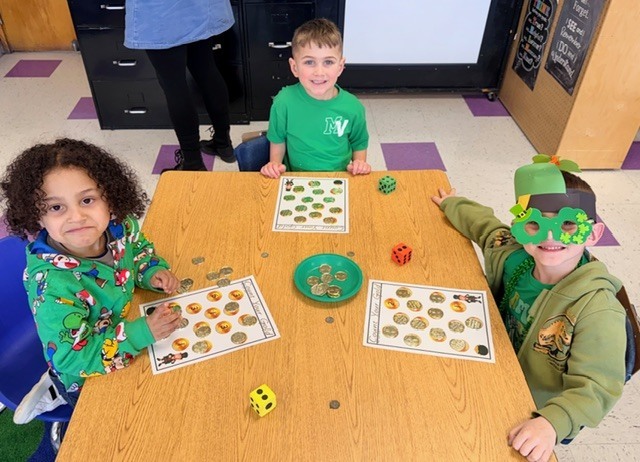
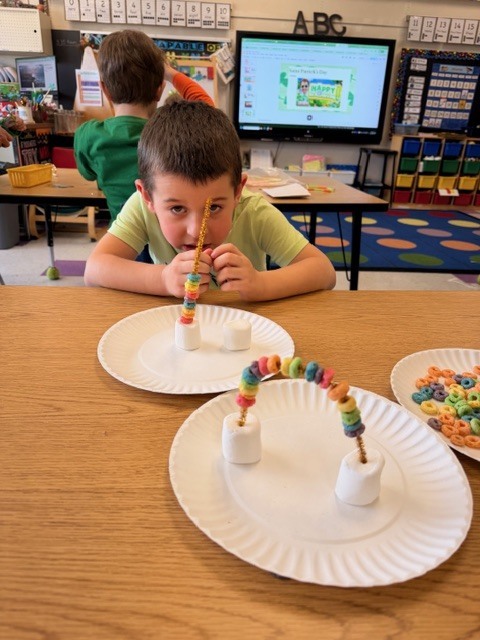
Marjori Bobish’s ES transitional kindergarteners had a wee bit of Irish magic in their day as they celebrated St. Patrick's Day yesterday! They explored festive traditions from far-off places like Chicago, where the river runs bright green on March 17, tried their luck with a “Count Your Gold” game and whipped up edible rainbows worthy of a mischievous leprechaun using Fruit Loops cereal and marshmallows! What a fun day of learning!