
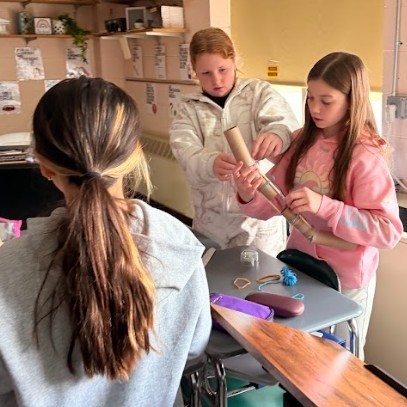
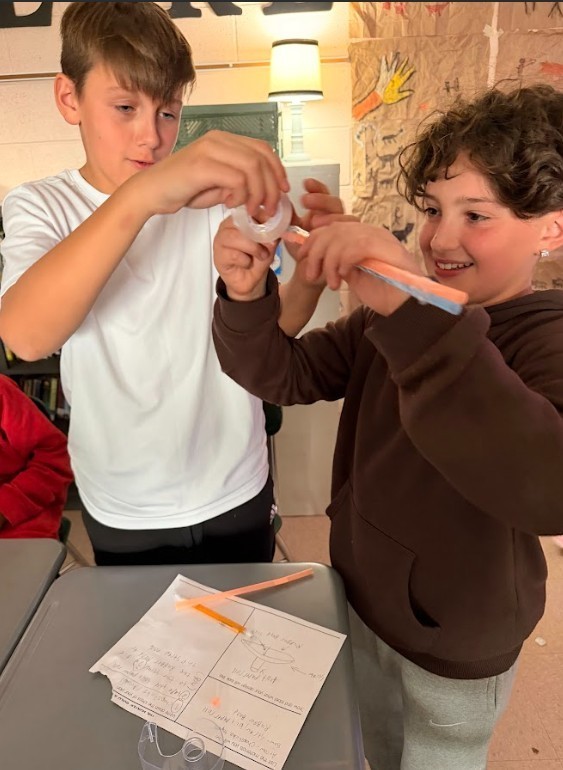
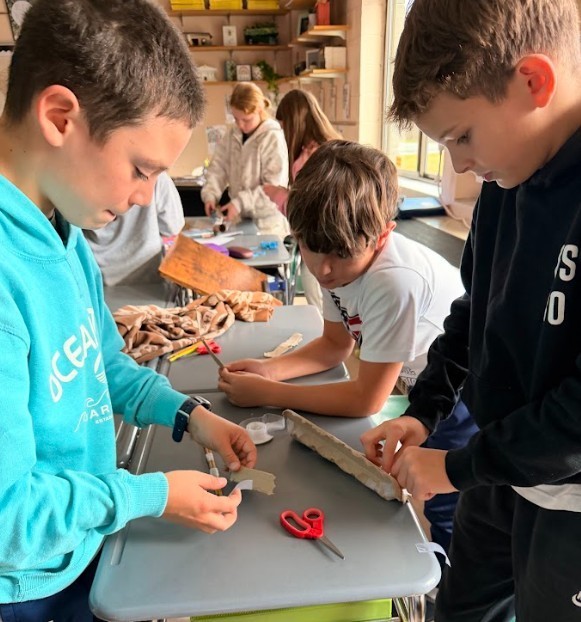
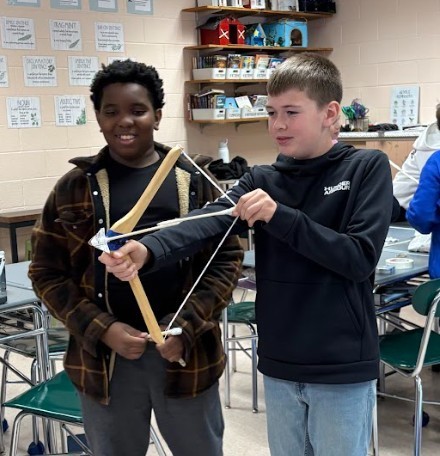
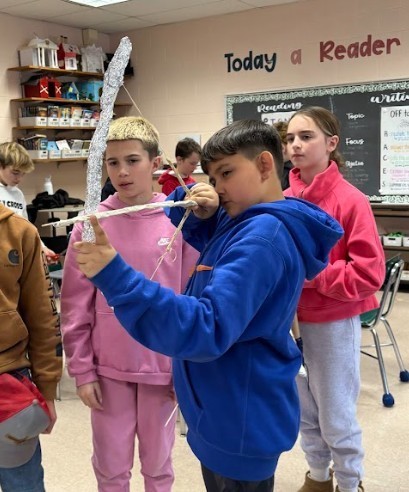
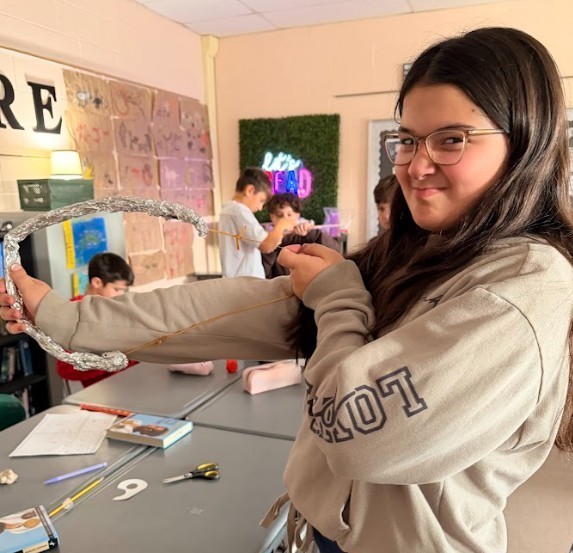
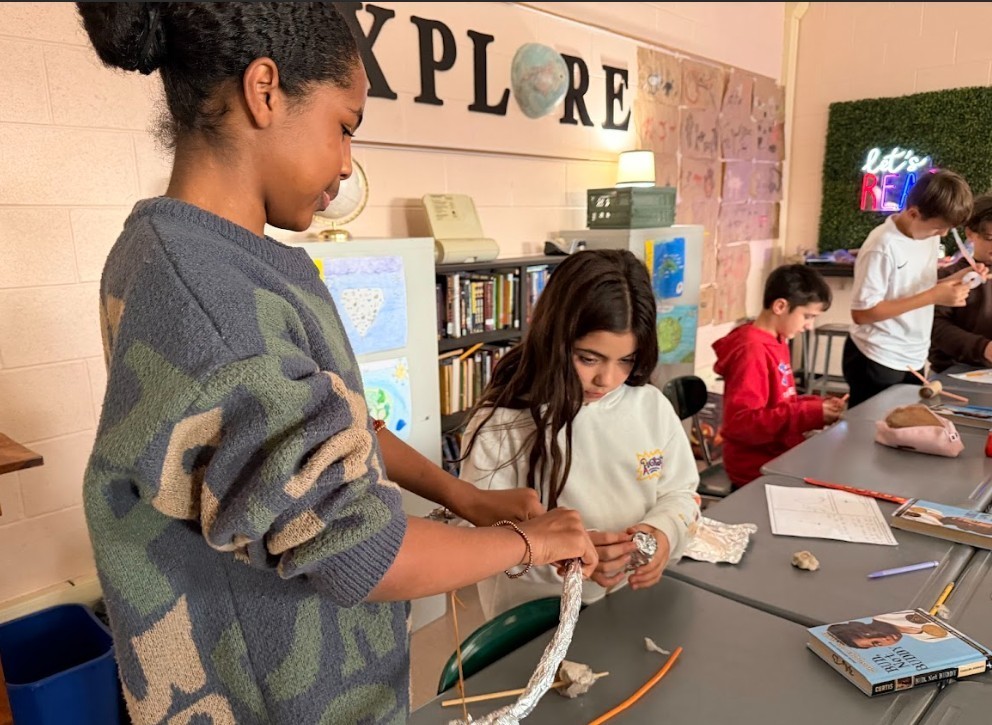
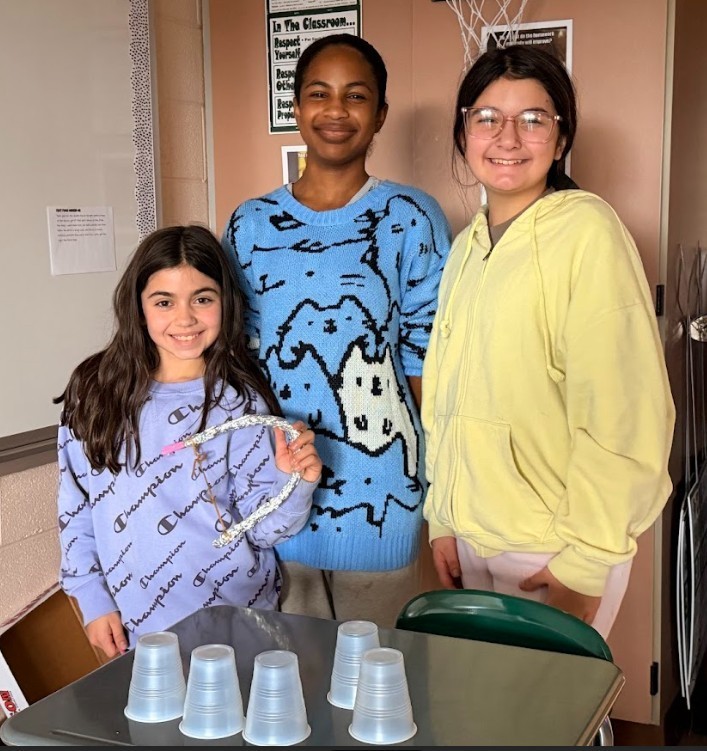
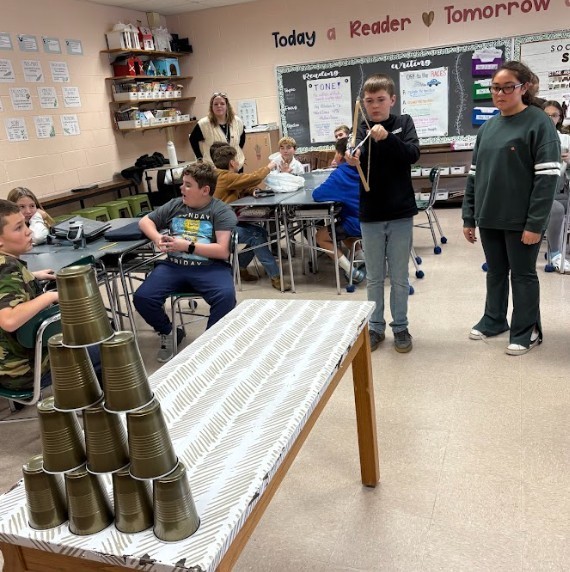
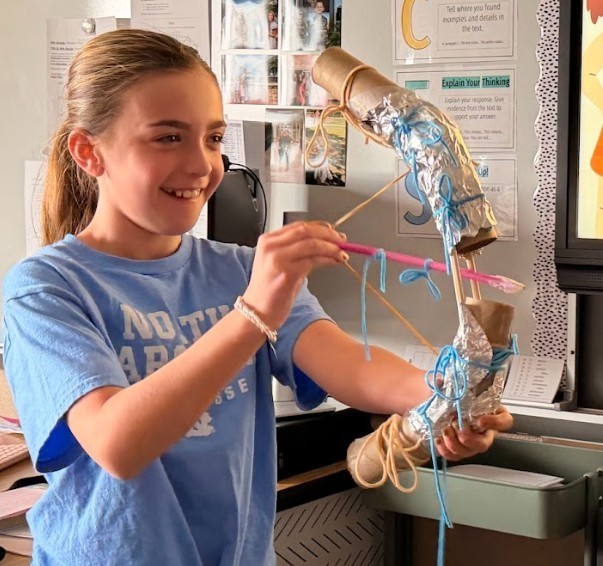
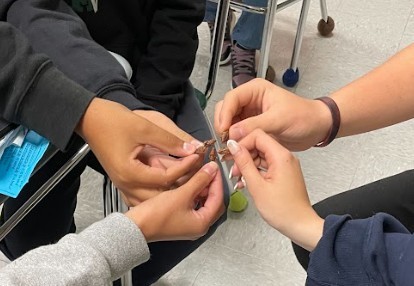
As part of their work, students were faced with the challenge of creating a bow and arrow with limited resources. They had to create the technology while making sure it functioned. Each group created its own variation of a bow and arrow and tested it by trying to knock down cups.
The group with the best results would be most likely to survive during the Paleolithic Period, which is the earliest and longest phase of human prehistory, lasting from about 2.6 million years ago to roughly 10,000 BCE.
Bows and arrows were important in the Paleolithic Period because they made hunting more efficient and safer. Hunters could then attack from a distance, reducing the risk of injury or death. Hunting success also increased because of the ability to aim and strike animals quickly, which meant more reliable food supplies and better survival for groups. Arrows were perfect for catching animals that were hard to catch with spears. Bow and arrows were not only lightweight and portable, they also represented a major innovation, which also demonstrated growing intelligence, planning, tool-making skill, and the understanding of physics.
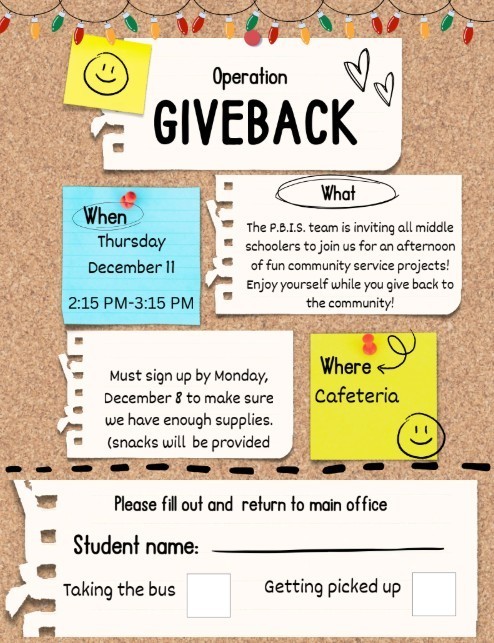
MIDDLE SCHOOL FAMILIES:
MAKE A DIFFERENCE! Be sure to sign up your student for the Middle School's Operation Giveback afternoon, to be held Thursday, Dec. 11 after school. Registration deadline is Monday, Dec. 8!
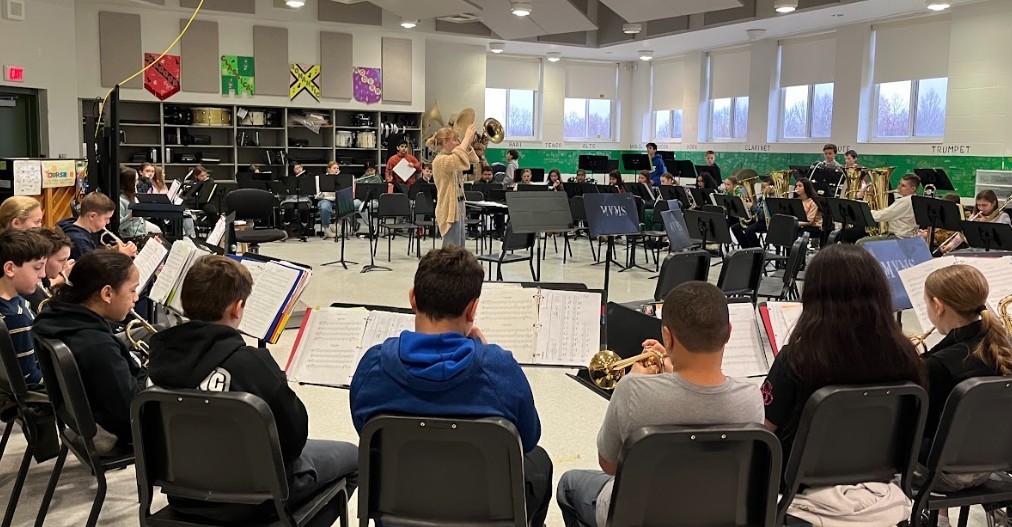
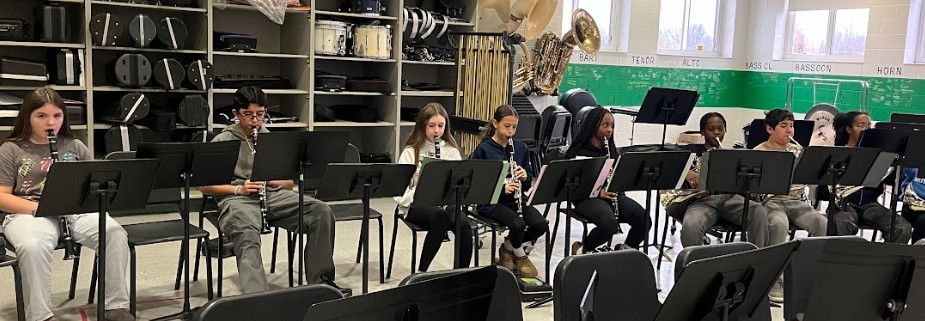
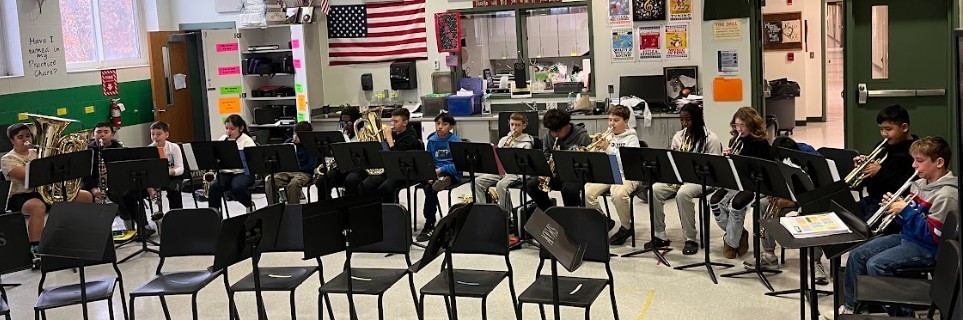
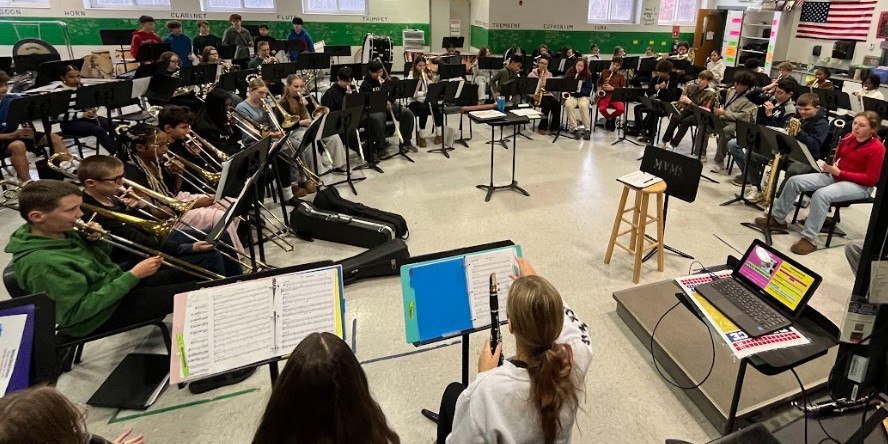
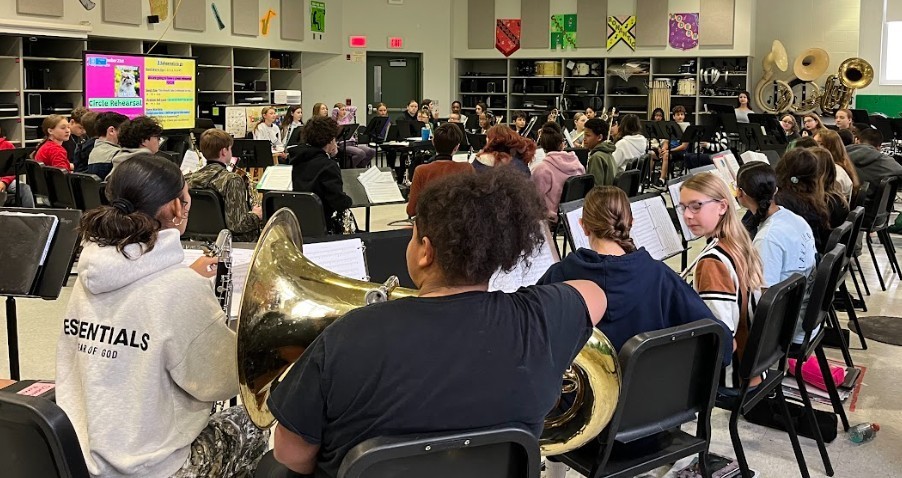
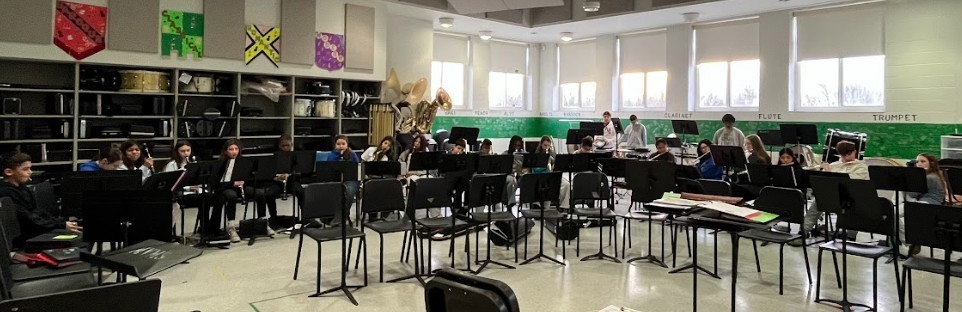
Laura Hulle's 7th and 8th grade band students and Danielle MacKenzie's 6th grade band students are putting the finishing touches on their music for the upcoming Middle School Winter Concert on Dec. 8...one week from tonight! The bands have been practicing using the circle rehearsal format.
A band circle rehearsal is a non-traditional setup where a band sits in a circle to improve listening skills, musical independence, and communication. This method changes the usual dynamic by breaking up standard sections, forcing members to listen to a wider variety of instruments and their neighbors, and creating a more interactive and focused rehearsal. It is especially useful for developing musical independence and is often used for workshops or as a creative exercise.
Be sure your calendars are marked for this upcoming, wonderful musical evening!
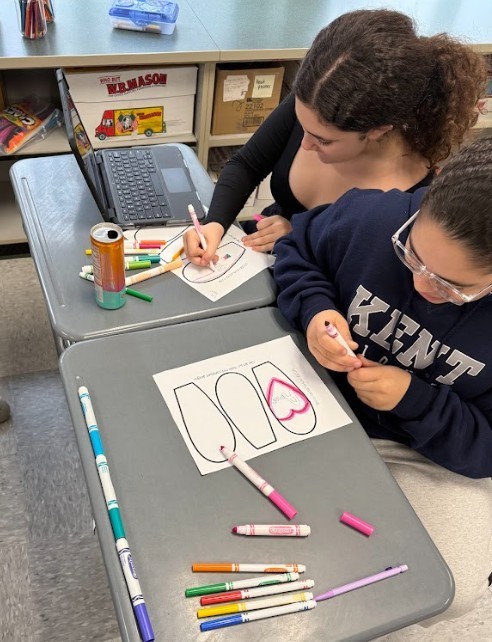
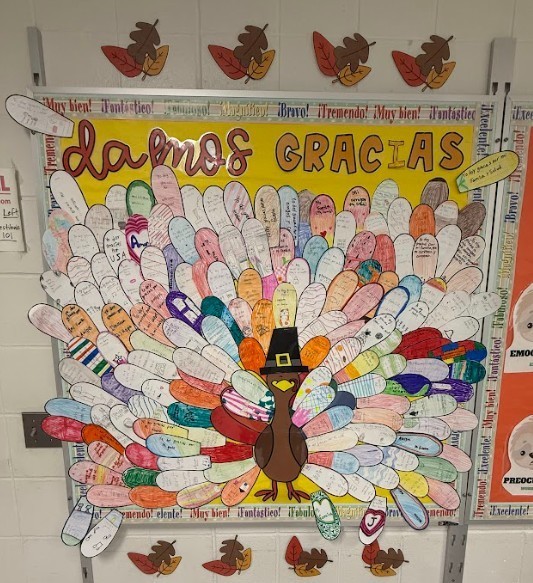
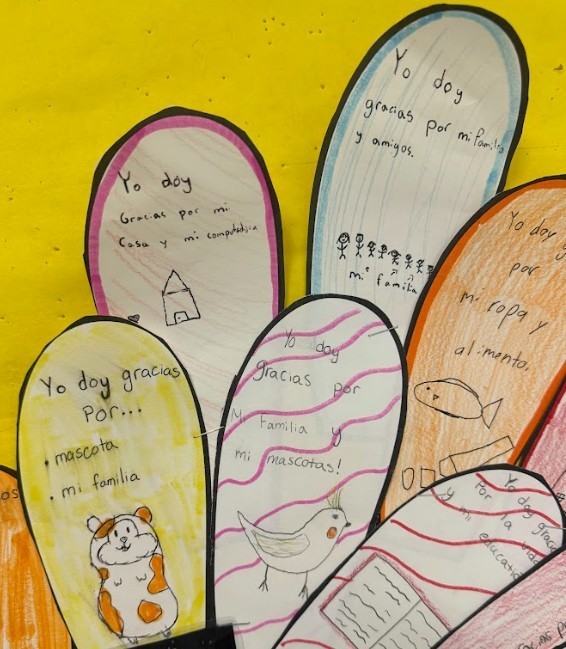
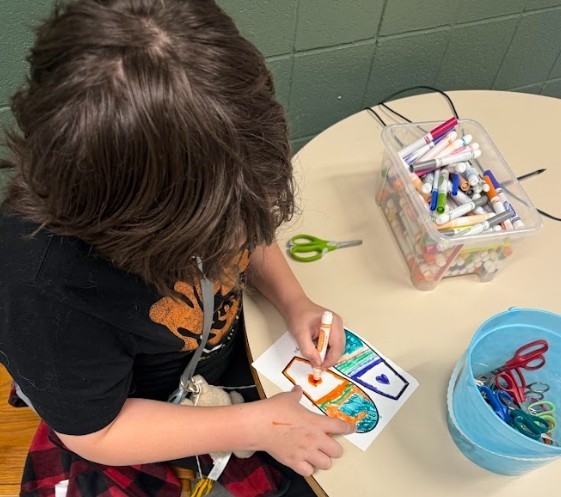
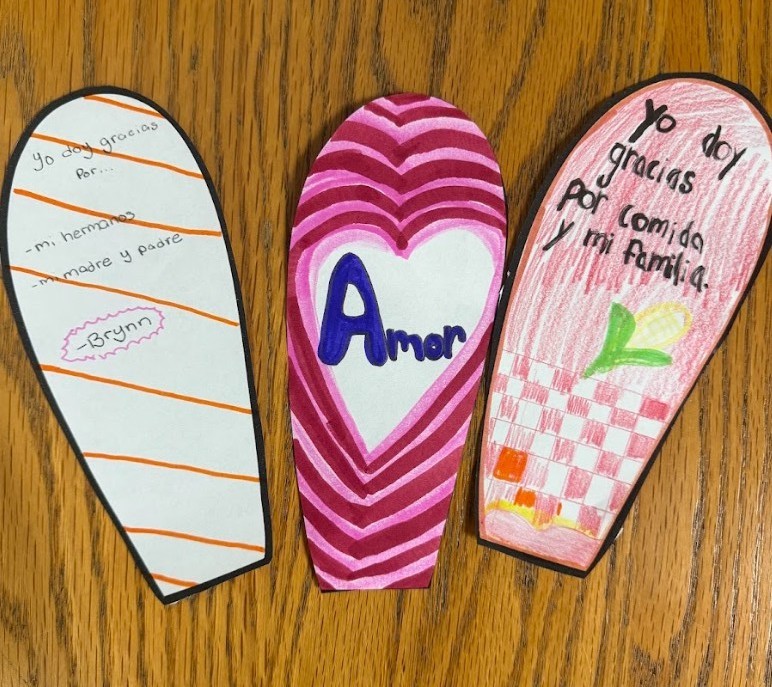
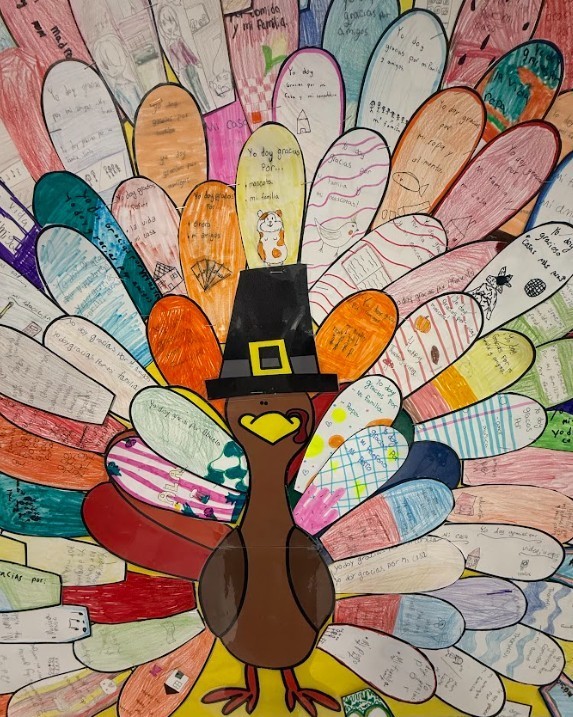
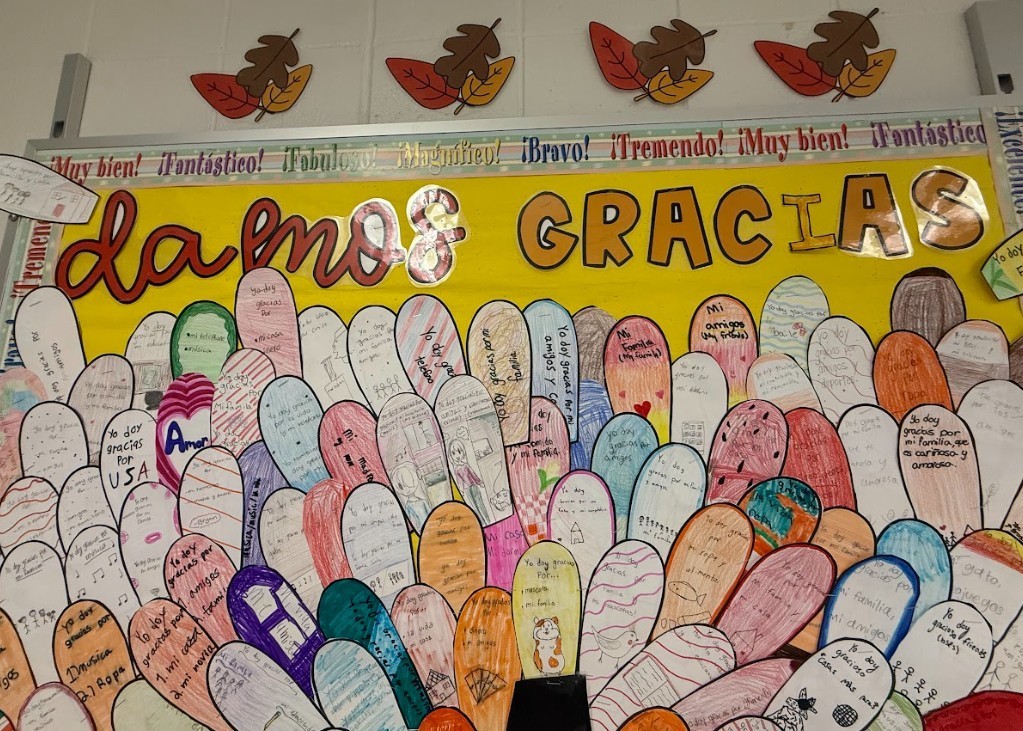
Each student wrote a sentence "Yo doy gracias por..." (I give thanks for...) on a paper feather and wrote in Spanish what they’re thankful for along with illustrations. Some common words were: familia (family), amigos (friends), casa (house), madre y padre (mom & dad), mascotas (pets).
¡Qué gran idea vincular a los estudiantes de español con la estacionalidad!
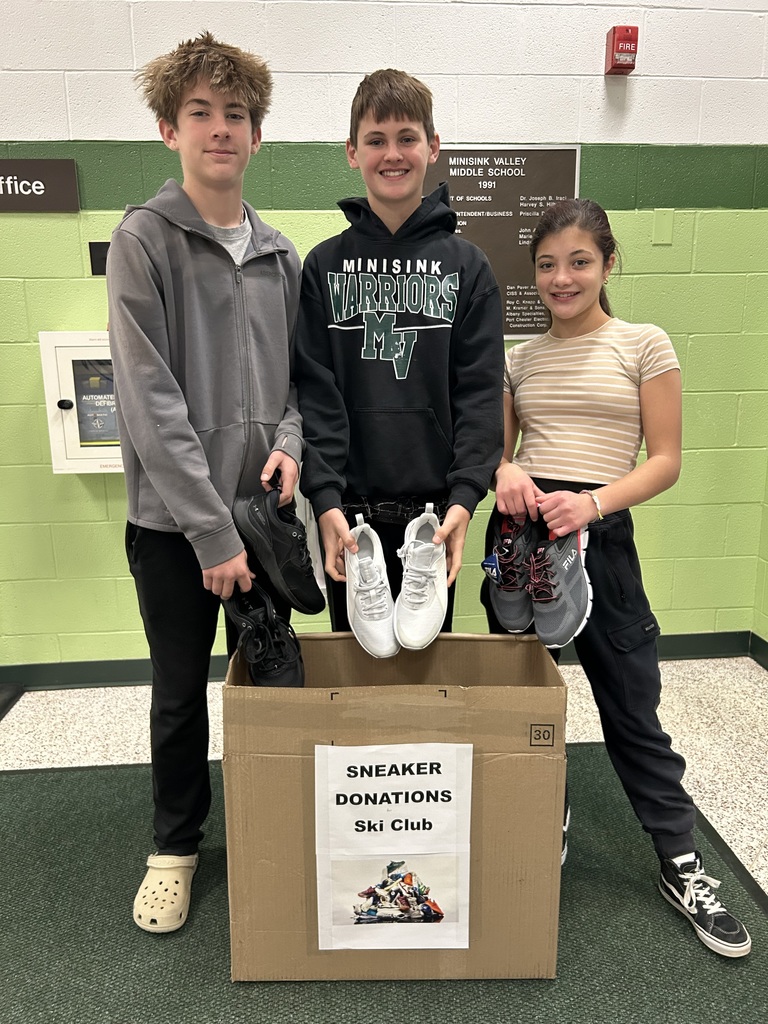
The Middle School’s Ski Club is holding an athletic shoe drive fundraiser through Friday, Dec. 19th to raise money for transportation costs. The Ski Club will earn funds based on the total quantity of gently worn, used, and new sneakers collected.
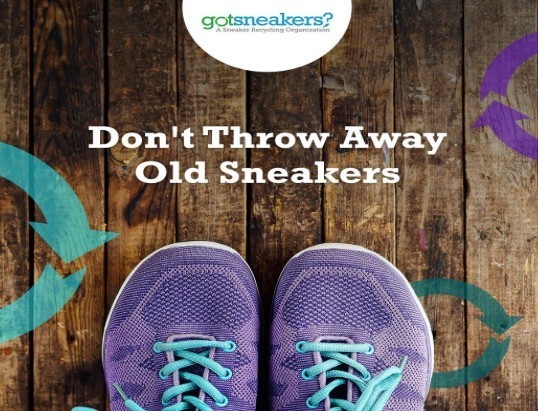
Can you help out the club? Please take a look in your closets and consider donating your gently worn, used, and new sneakers. The sneaker recycling program helps keep sneakers out of landfills, which has harmful effects on the environment, and helps organizations like the Ski Club raise much needed funds. Email advisors JoAnn Westby at jwestby@minisink.com or Michele Semco or msemco@minisink.com with any questions. Thanks for sharing!
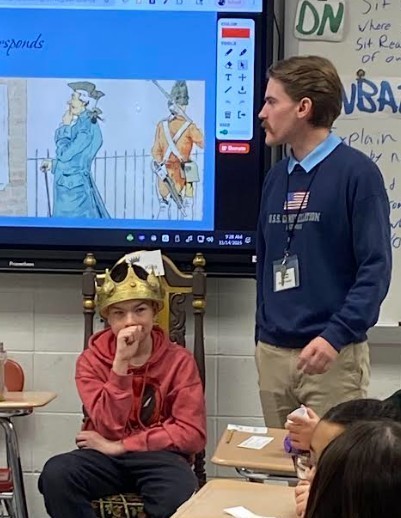
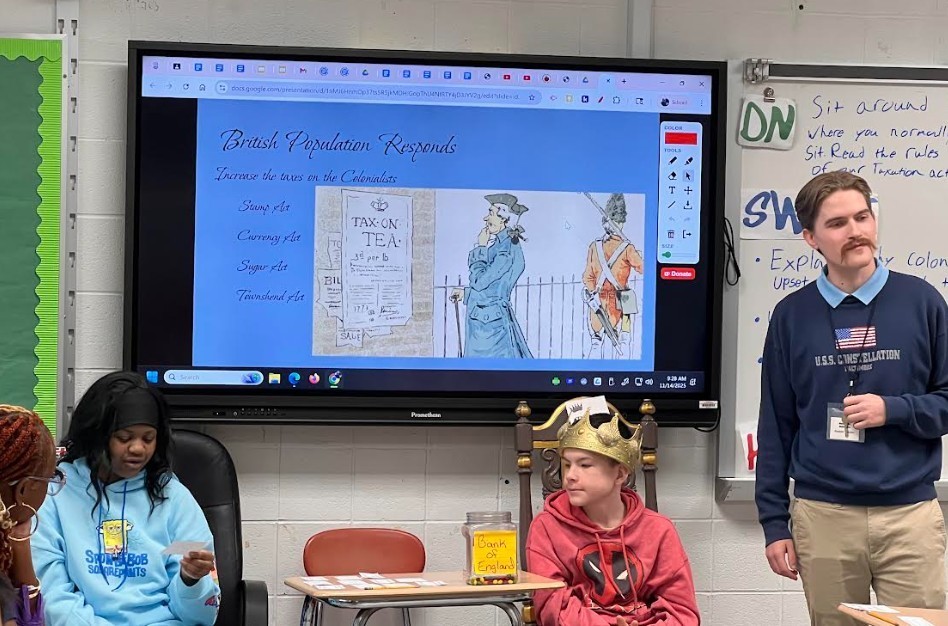
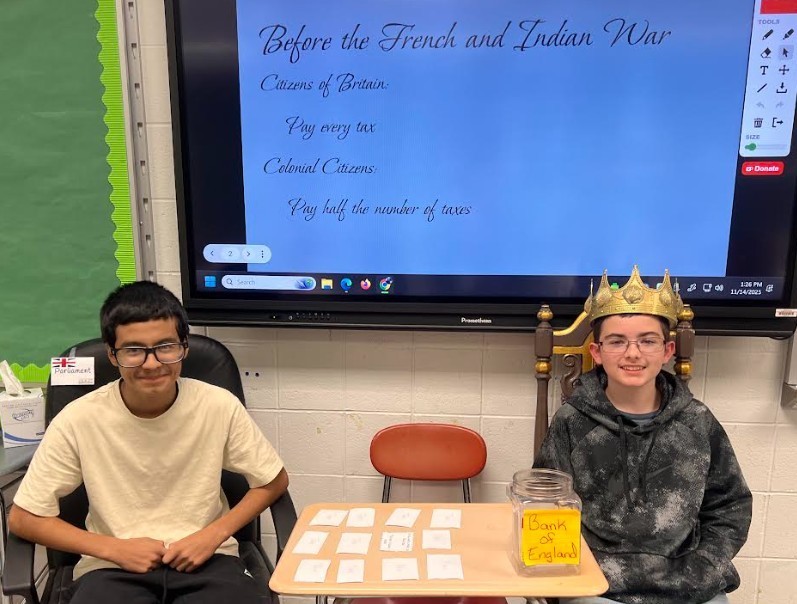
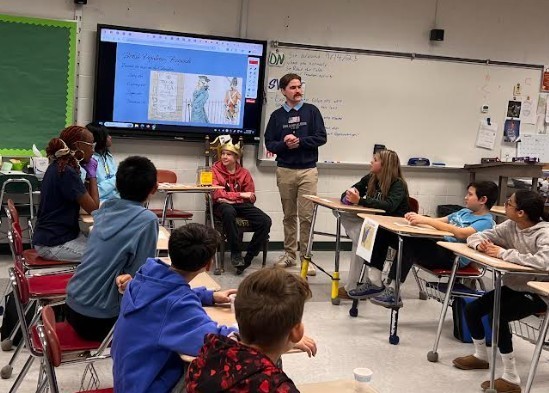
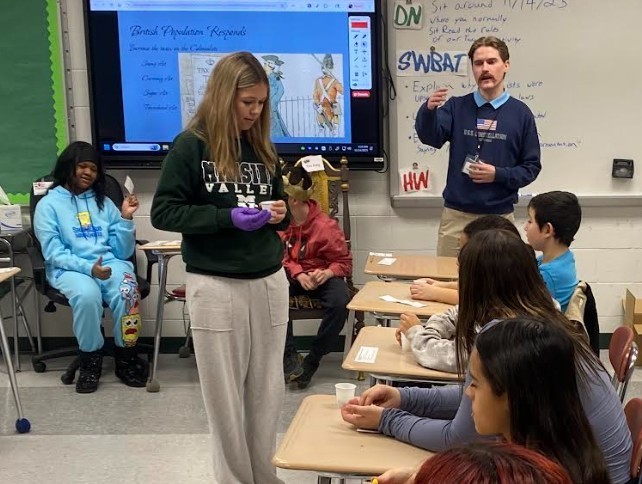
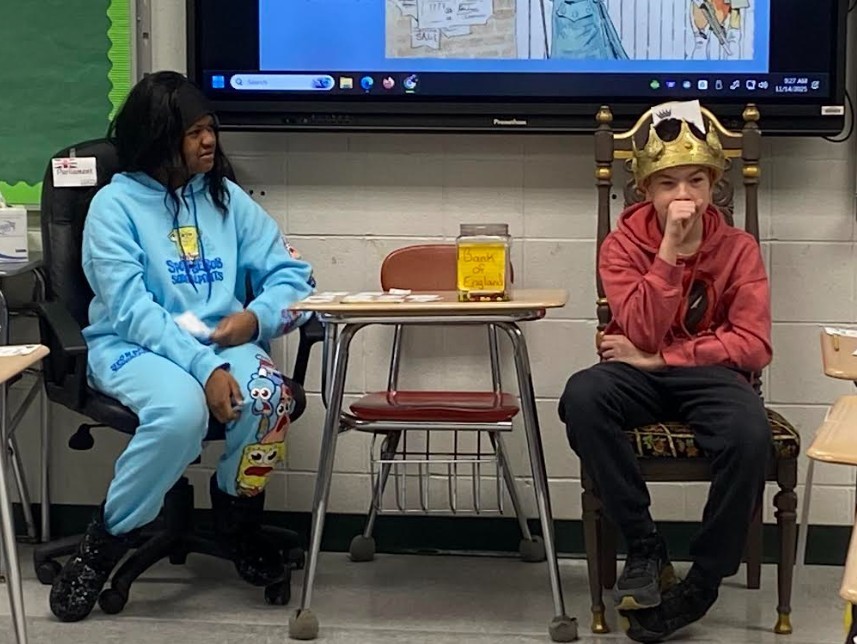
Their seventh-grade students participated in an engaging “Candy Tax Simulation” where they were assigned the roles of British citizens, American colonists, tax collectors, Parliament, and the King. Throughout the activity, the King and Parliament imposed various “taxes” on both the British citizens and the colonists, requiring students to pay their debt using Skittles.
Taxes were levied for everyday situations — such as having a sibling or even wearing socks with Crocs — which helped students understand how arbitrary and frustrating many of the real British taxes felt to the colonists. This hands-on experience clearly demonstrated why the colonists viewed the taxes as unfair and how the lack of representation in British government became a major point of conflict. As students knew, issues like these ultimately contributed to the colonists’ decision to declare independence on July 4, 1776.
This lesson served as an important introduction to their “Road to the Revolution” and “Revolutionary War” units, which are particularly timely as the nation approached its 250th Declaration of Independence anniversary.
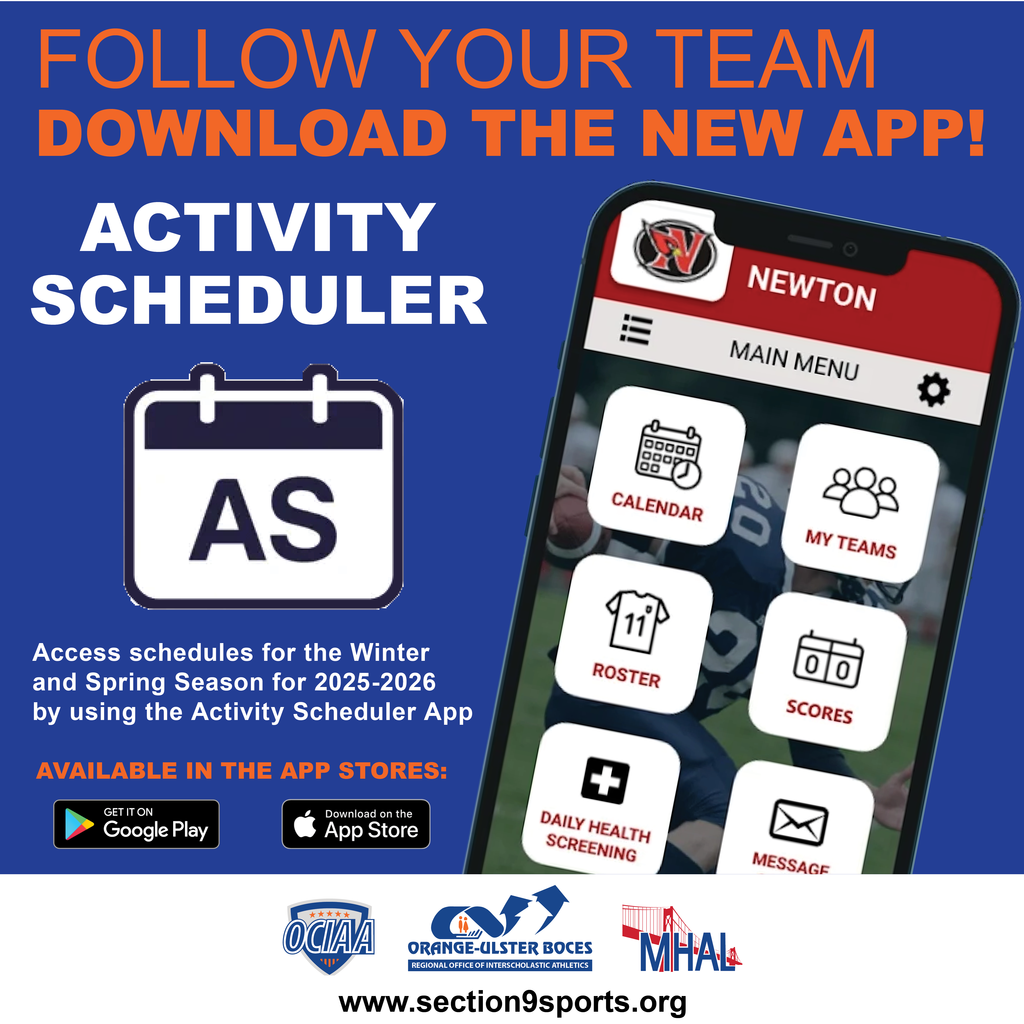
Why you'll love it:
--- Instant access to the latest schedules
--- Game locations and maps
--- Receive notifications for schedule changes or cancellations
--- Never miss a game!
--- Download the app today!
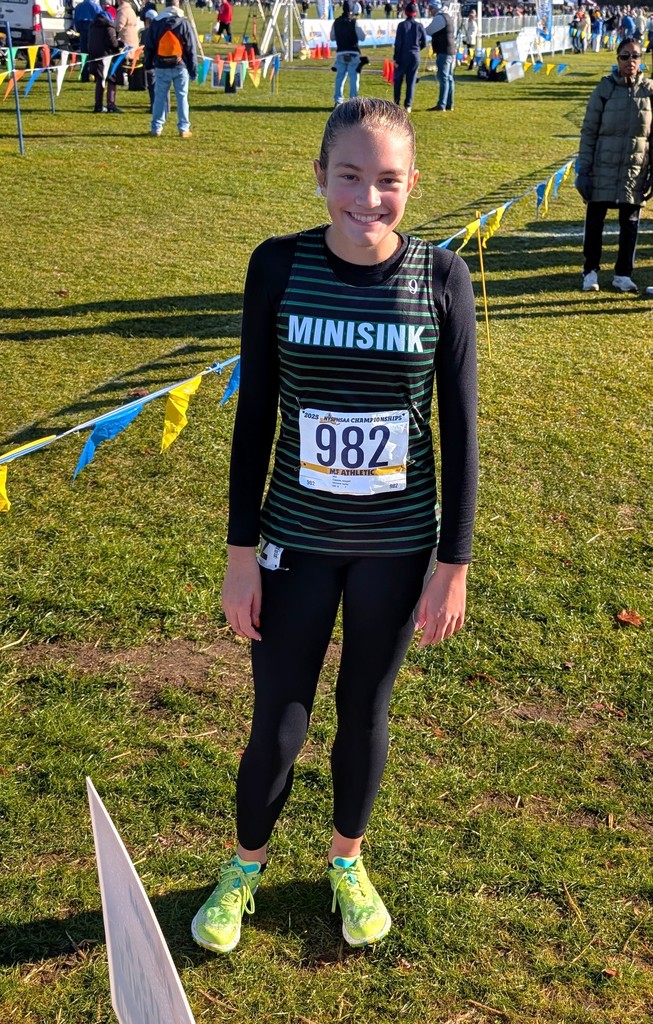
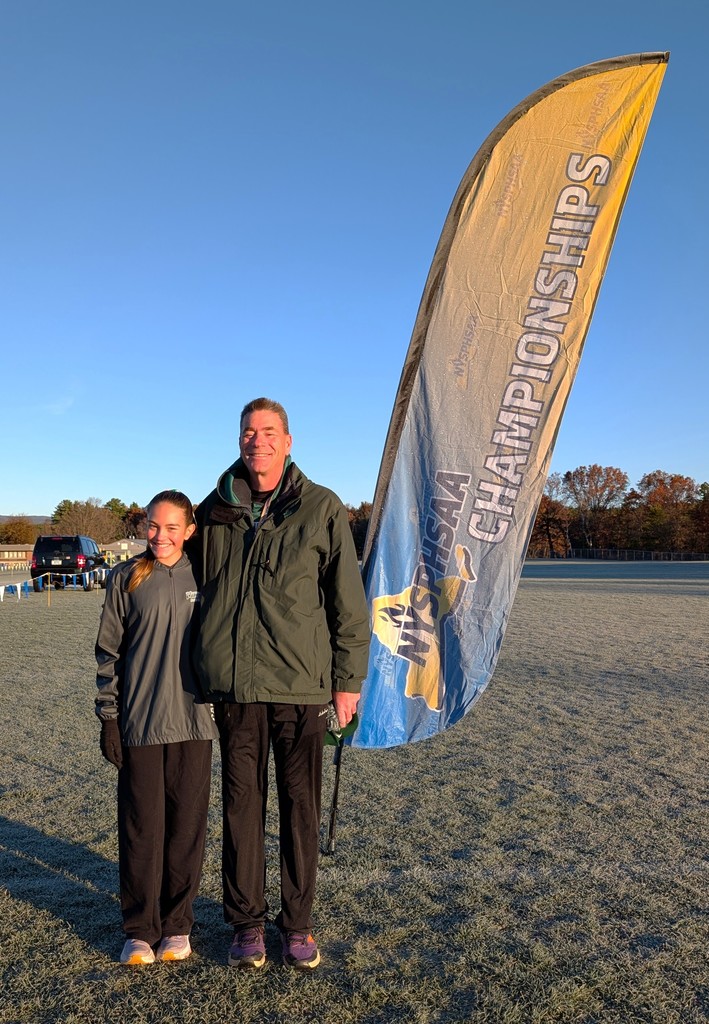
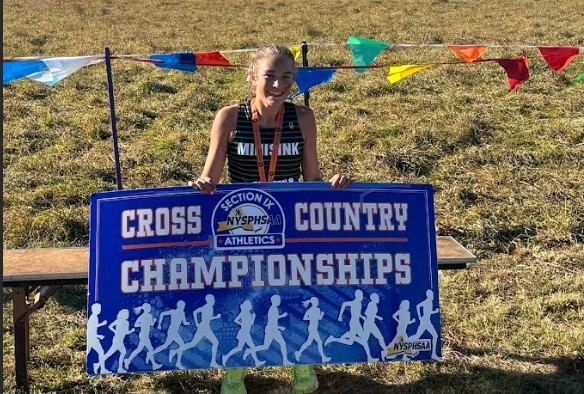
"Abby had an amazing season that the whole coaching staff is proud of, said Head Coach Ed Sucich. “She has a work ethic and a competitive spirit that has led her to the top of the Section as just an eighth-grader. Congratulations to Abby and her parents."
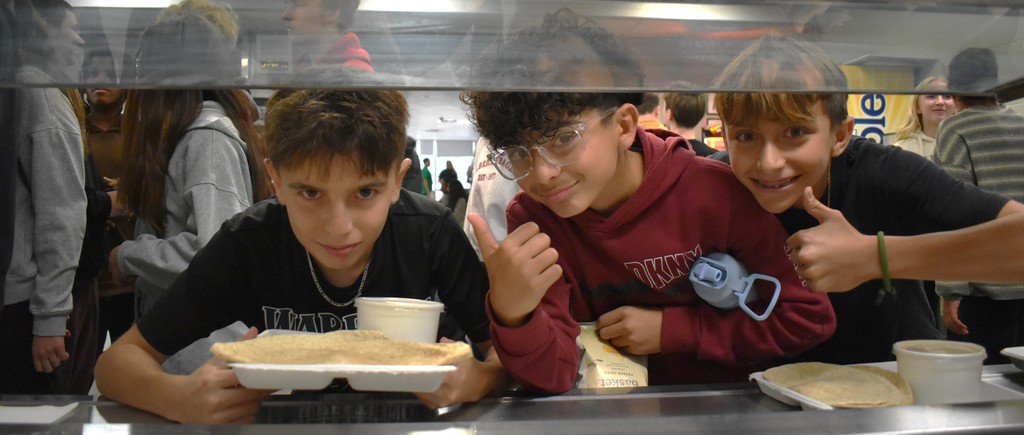
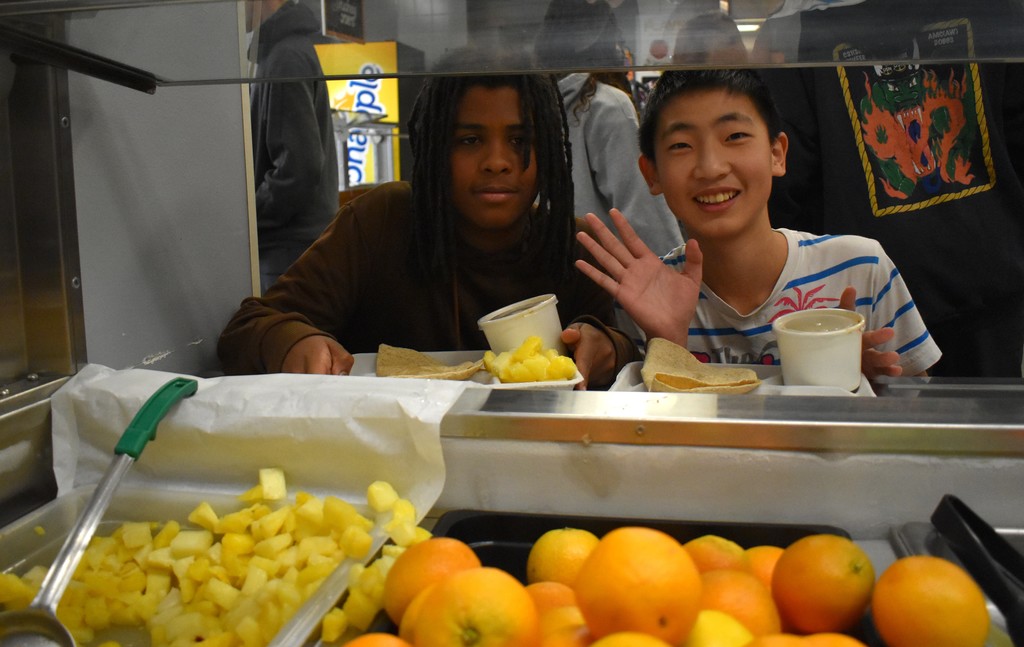
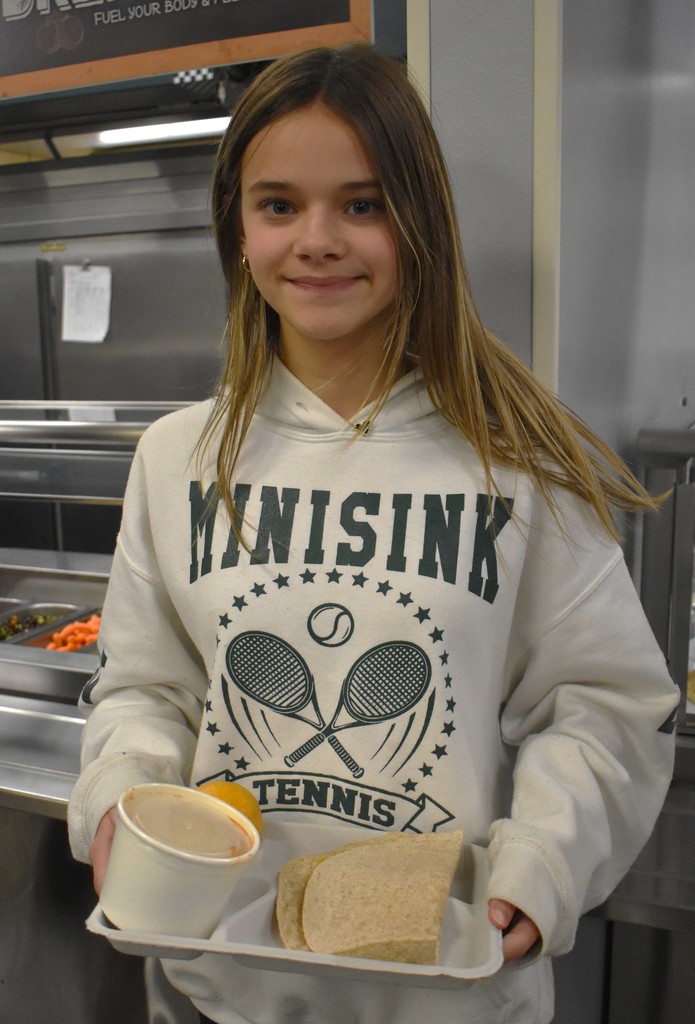
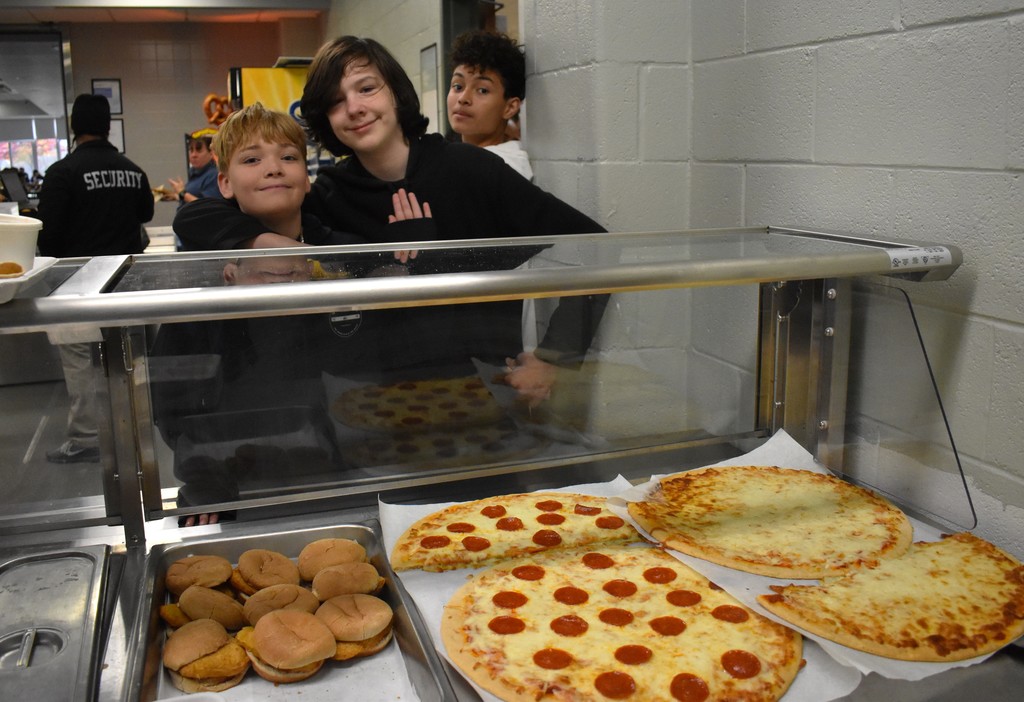
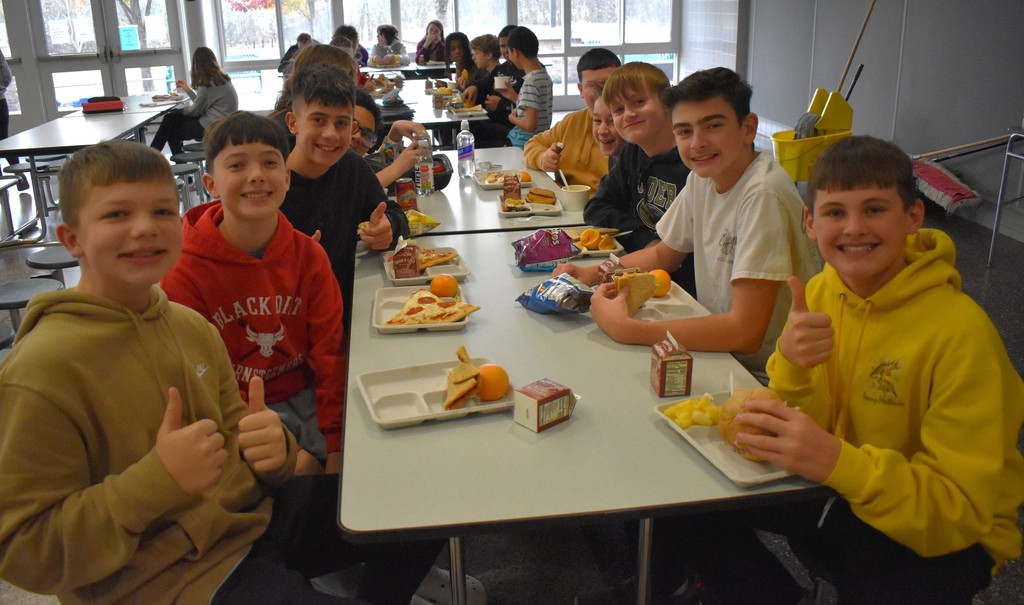
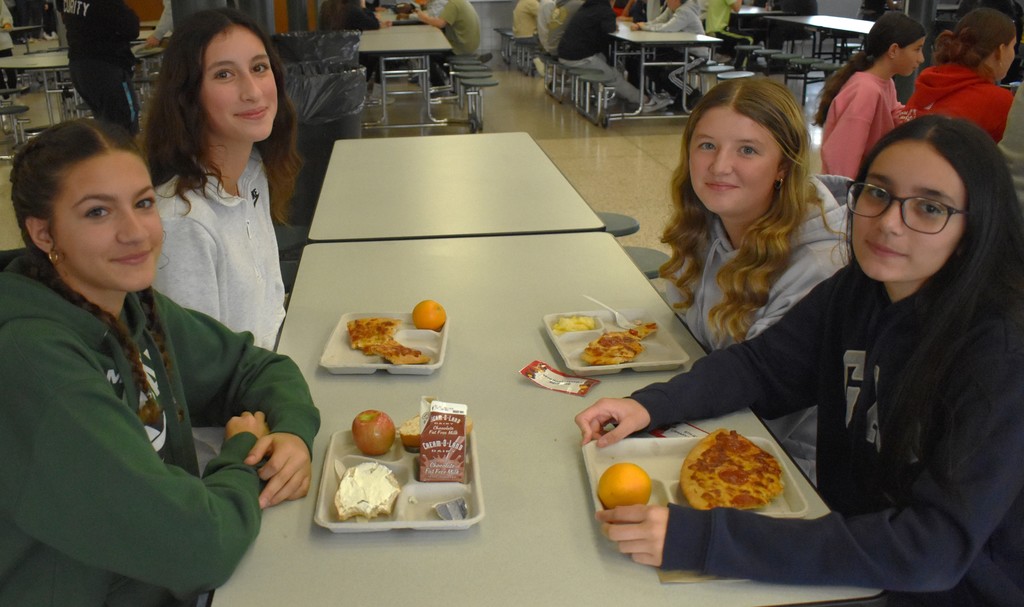
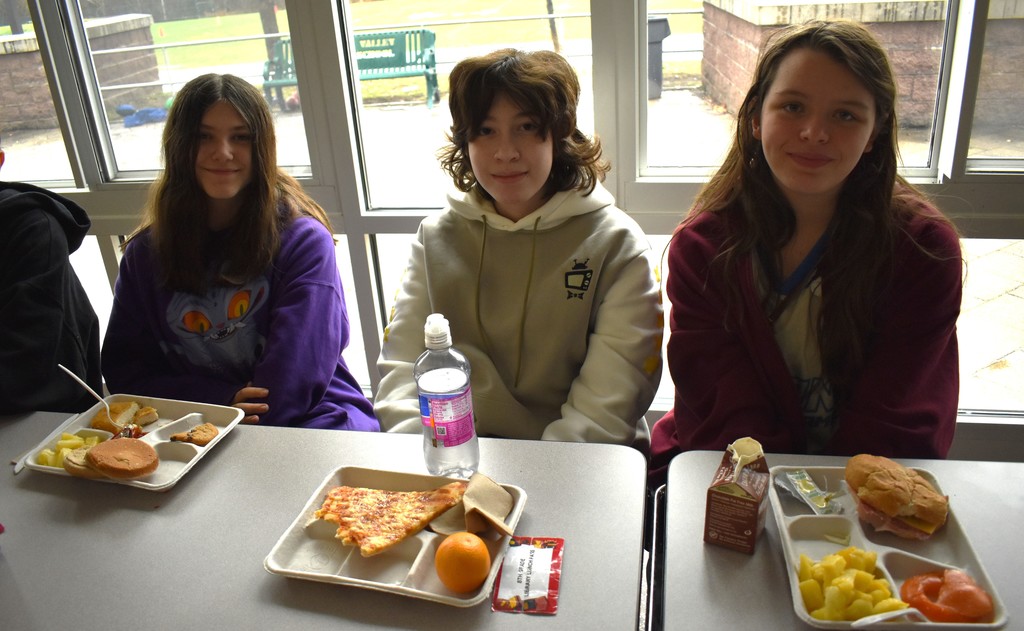
Did you know Minisink Valley’s Facebook page features thousands of great photos and information which show what’s going on at Otisville Elementary, Minisink Valley Elementary, Minisink Valley Intermediate School, Minisink Valley Middle School and Minisink Valley High School?
Over 8,400 people (and growing!) in the greater Minisink Valley area “follow” the district’s page. Join them! It’s a great source of information!
Visit the district's Facebook page and be sure to “like” us: https://www.facebook.com/MinisinkValleyCSD

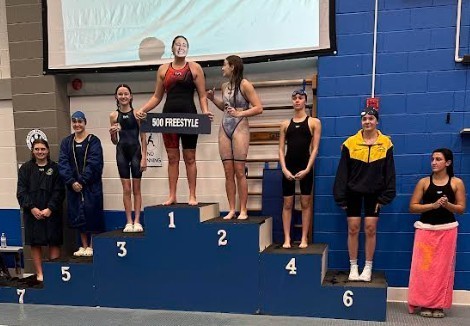
•Eighth-grader Natalie Wargo placed sixth in the 200-yard freestyle and third in the 500-yard freestyle.
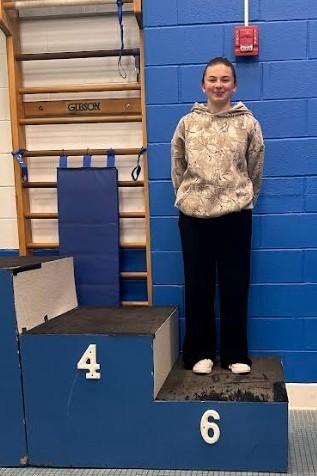
•Freshman Madyson Thorpe placed sixth in diving
•Treven Costello placed 15th in the 100 breaststroke
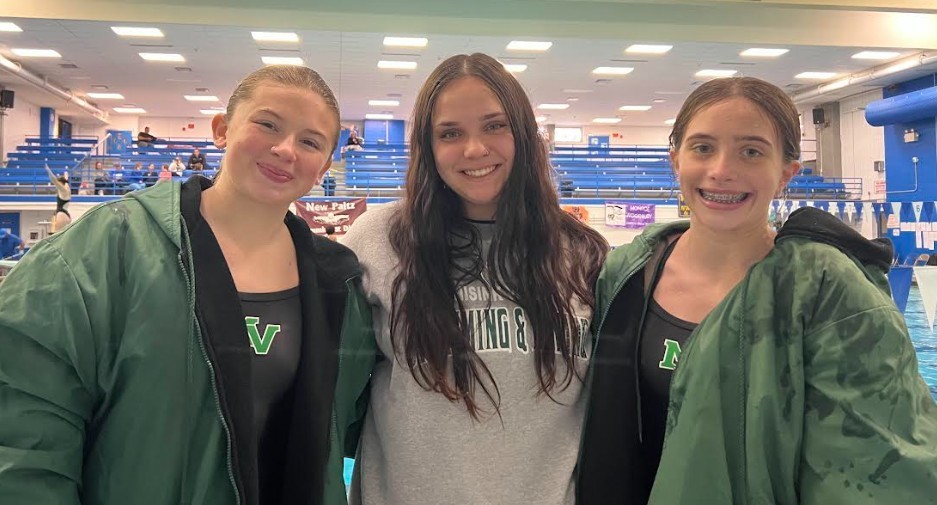
•Madison Jennings placed 12th in Diving
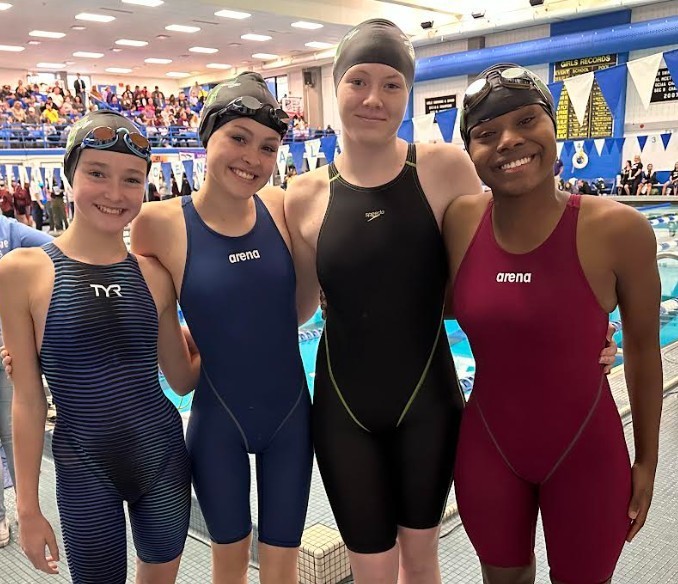
•Malunga Kinzonzi, Olivia Bohr, Madyson Thorpe, Natalie Wargo and Treven Costello also participated in the relays. The medley relay placed 14th, the 200-yard free relay placed 15th, and the 400-yeard free relay placed 14th.

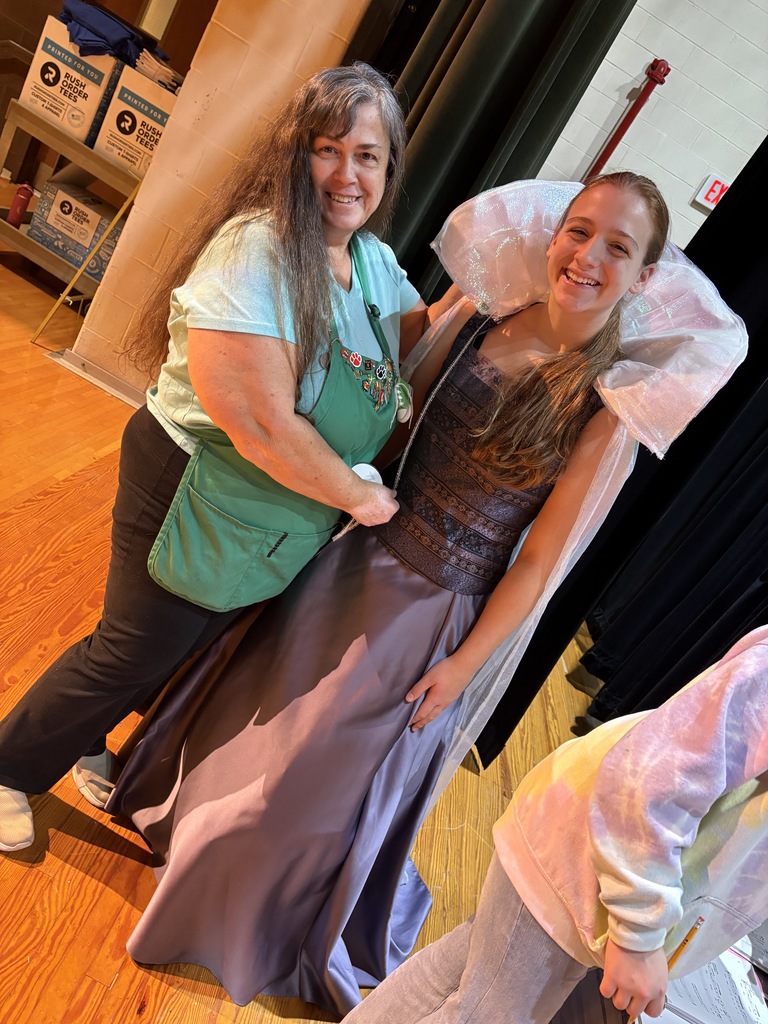
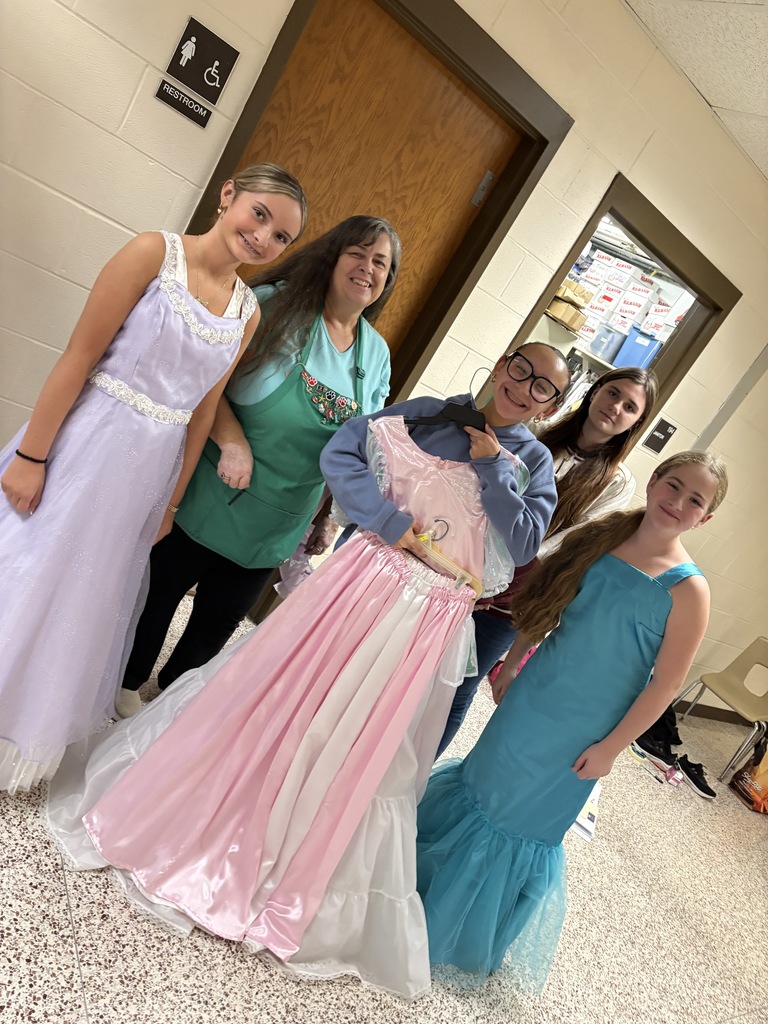
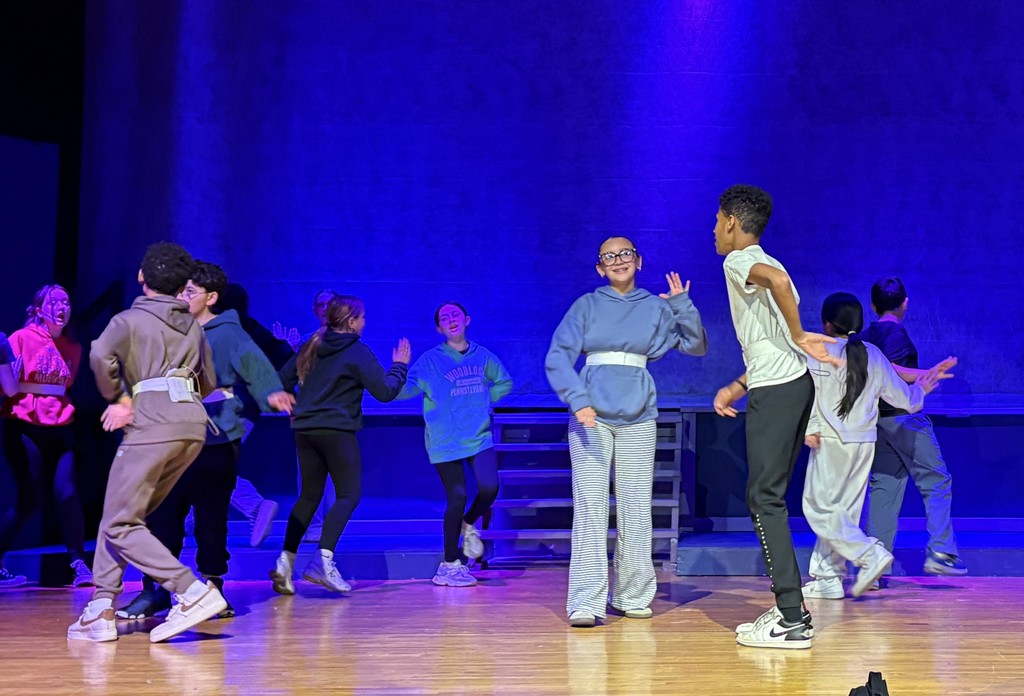
https://onthestage.tickets/show/mvms-drama-club/68edb34676bdd5748882d65f/tickets?fbclid=IwY2xjawN7LlxleHRuA2FlbQIxMABicmlkETFFc1pXNE9PazVGUnBhbUZMc3J0YwZhcHBfaWQQMjIyMDM5MTc4ODIwMDg5MgABHmZ2fK3TxJfIaekFdir5jWs1z8FWY6dLHjUnwcaa8BoetcHJCdF1xSZMrzaC_aem_FJ20xrtpxN_RN7veT_oHeA#/productions-view
"Abby is a coach's dream,” said Cross Country Coach Ed Sucich. “She listens to what she is told, works extremely hard, and proved to be cool under the pressure of a championship race. It’s rare that an eighth-grader makes it all the way to states. She should be very proud of her accomplishment.”
The Girls and Boys varsity teams each finished in third place and should be proud of their accomplishments, too!
“In the girl's race, Allison Fritsch, Dempsey DePuy, and Catharine Sullivan finished within about 15 seconds of each other,” said Coach Sucich. “They had excellent races considering the windy conditions. Allson finished 26th, Dempsey 29th, and Catharine 33rd. The third place finish was our best of the season. For comparison, the Girls' team finished 10th at the County Championships. It was a big improvement.”
Coach Sucich added: “In the boys race, the key was really good races by Luciano Palacios, (who almost ran his best time, and Dan Oenga. They finished 18th and 26th respectively. The team finished ahead of Goshen which had beaten us the week before in the County Championships.”
The Paleolithic period, or "Old Stone Age," lasted from approximately 2.6 million years ago to around 10,000 BCE and is characterized by the use of stone tools, human evolution, and a nomadic hunter-gatherer lifestyle. It is divided into three main phases: the Lower Paleolithic, Middle Paleolithic, and Upper Paleolithic. During this vast time, humans developed language, art, and early religious beliefs, and spread across the globe.
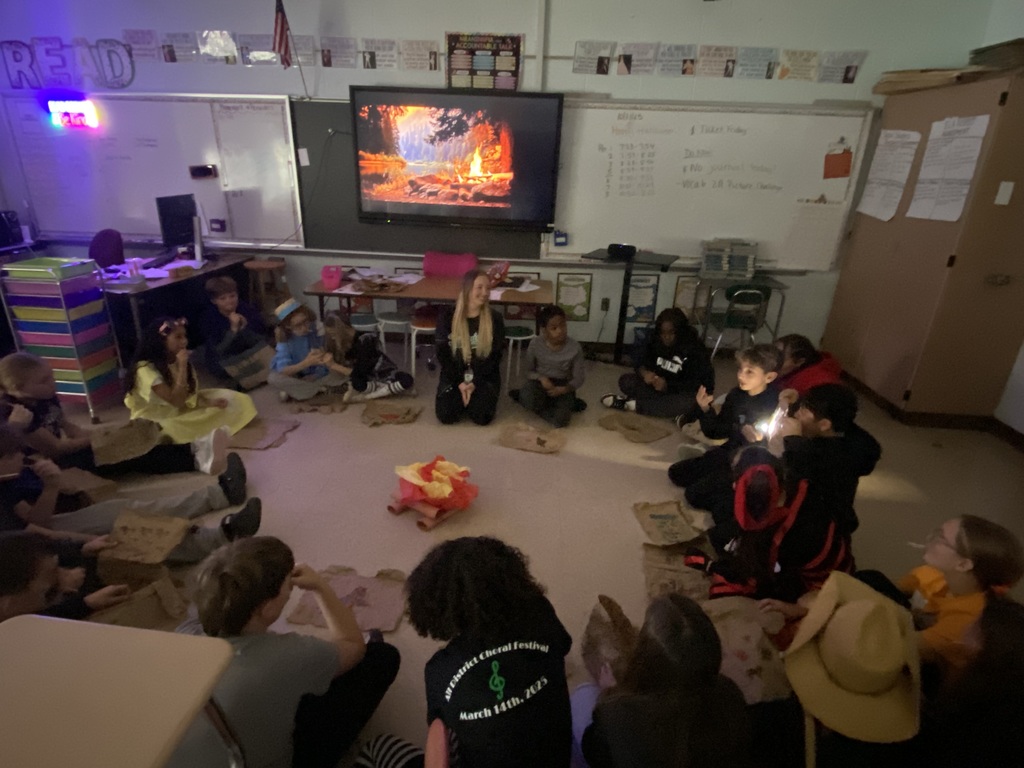
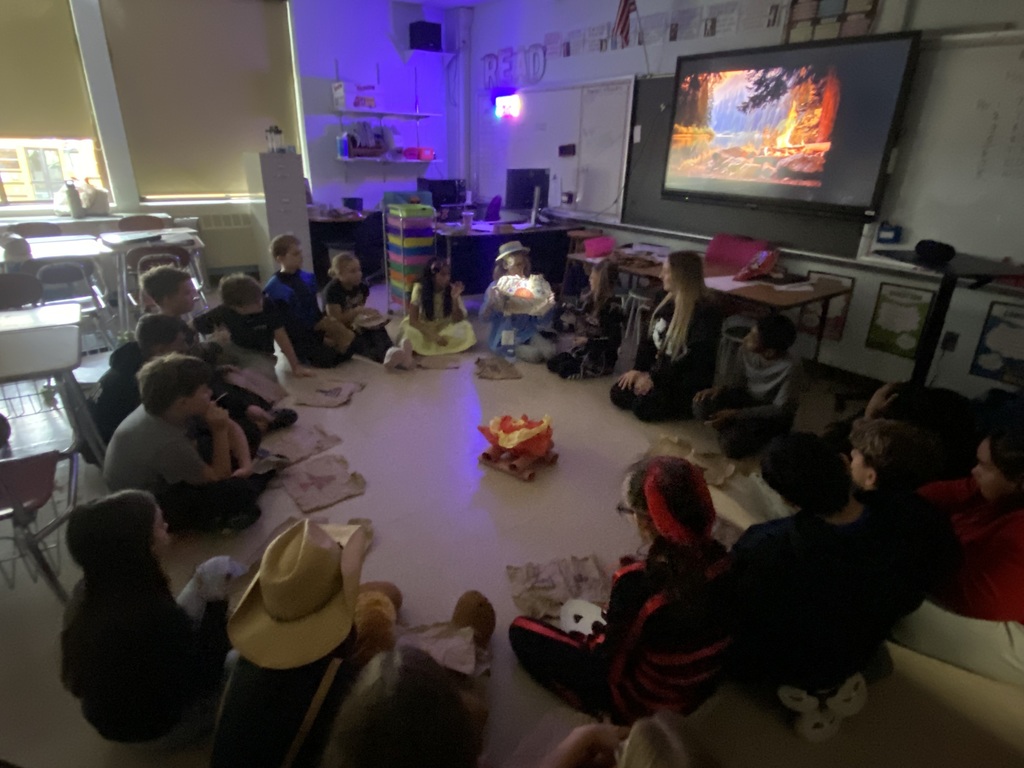
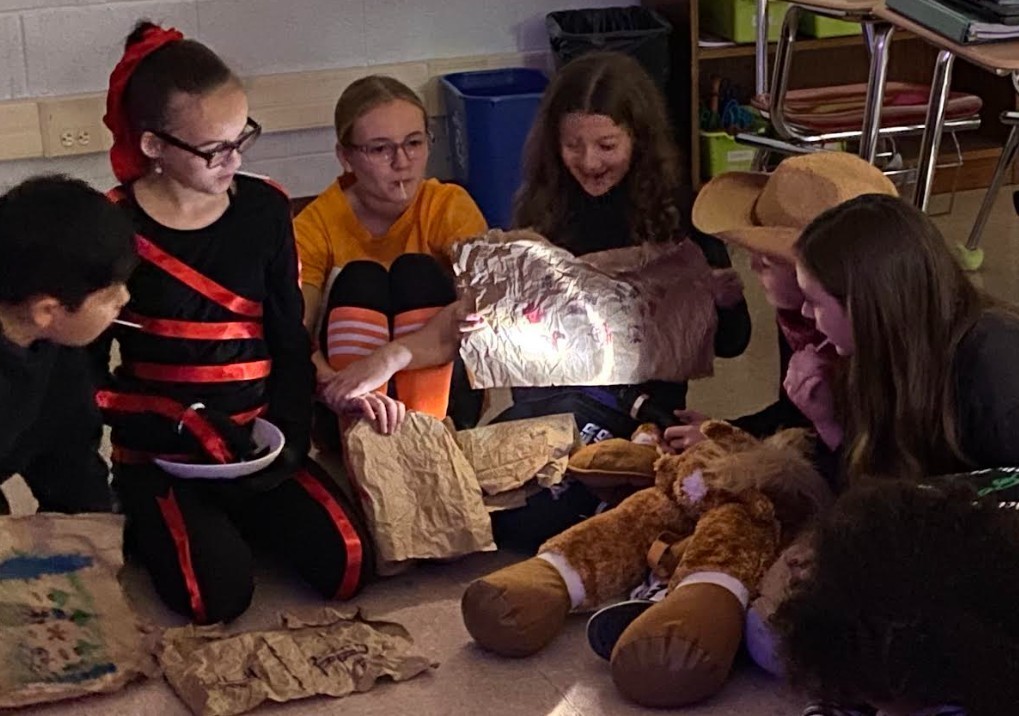
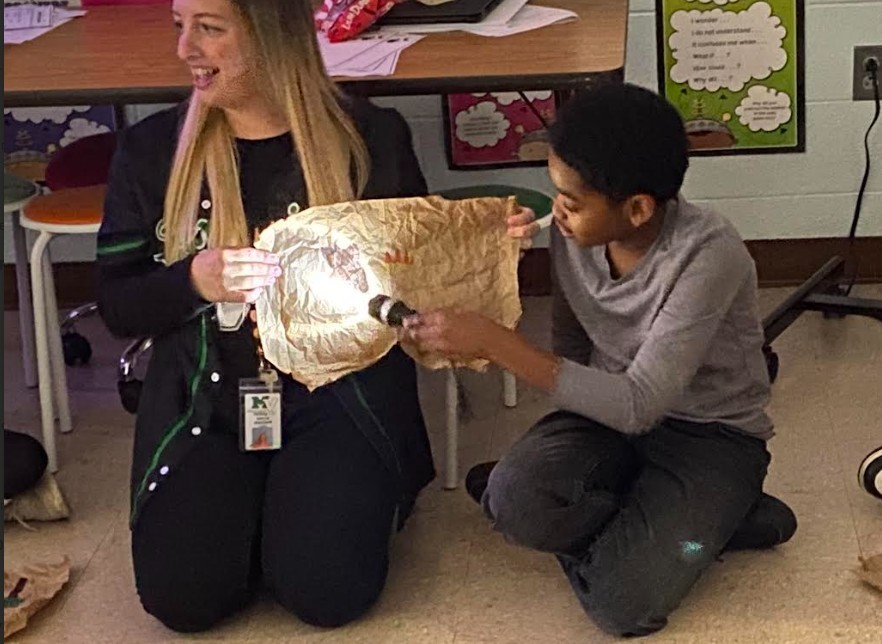
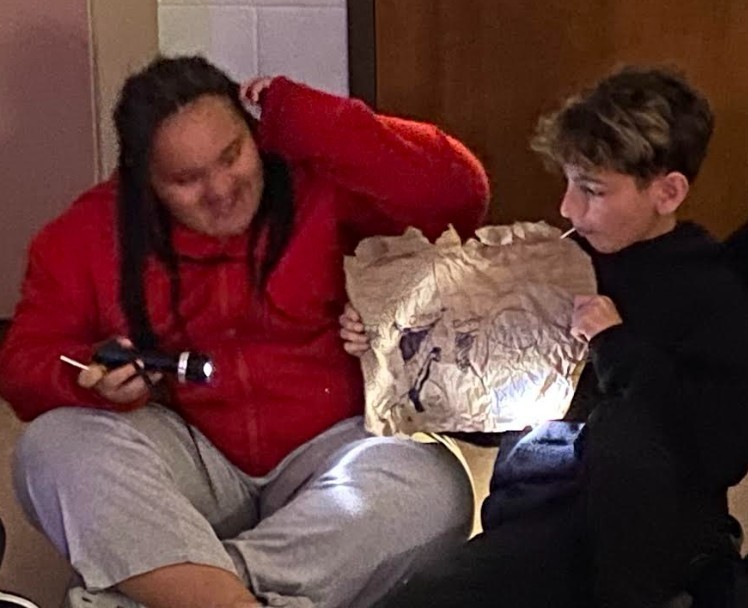
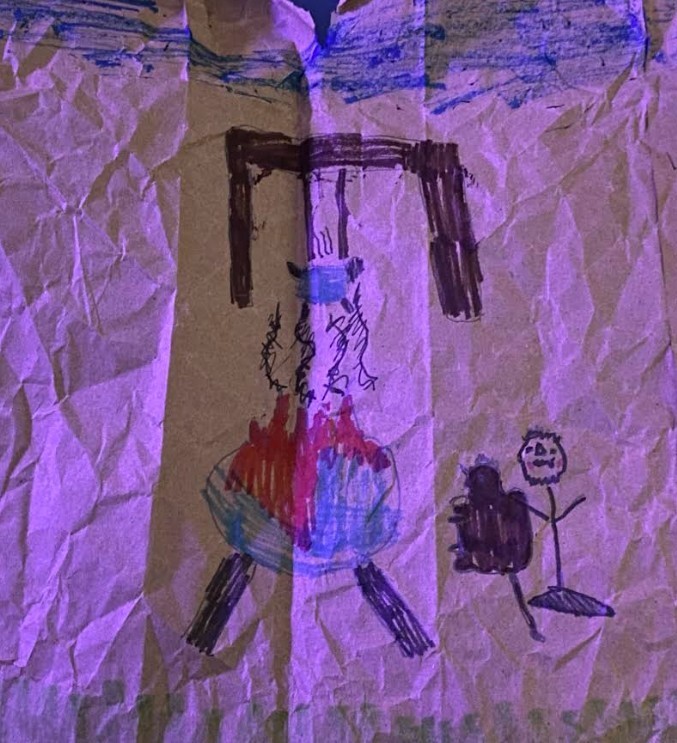
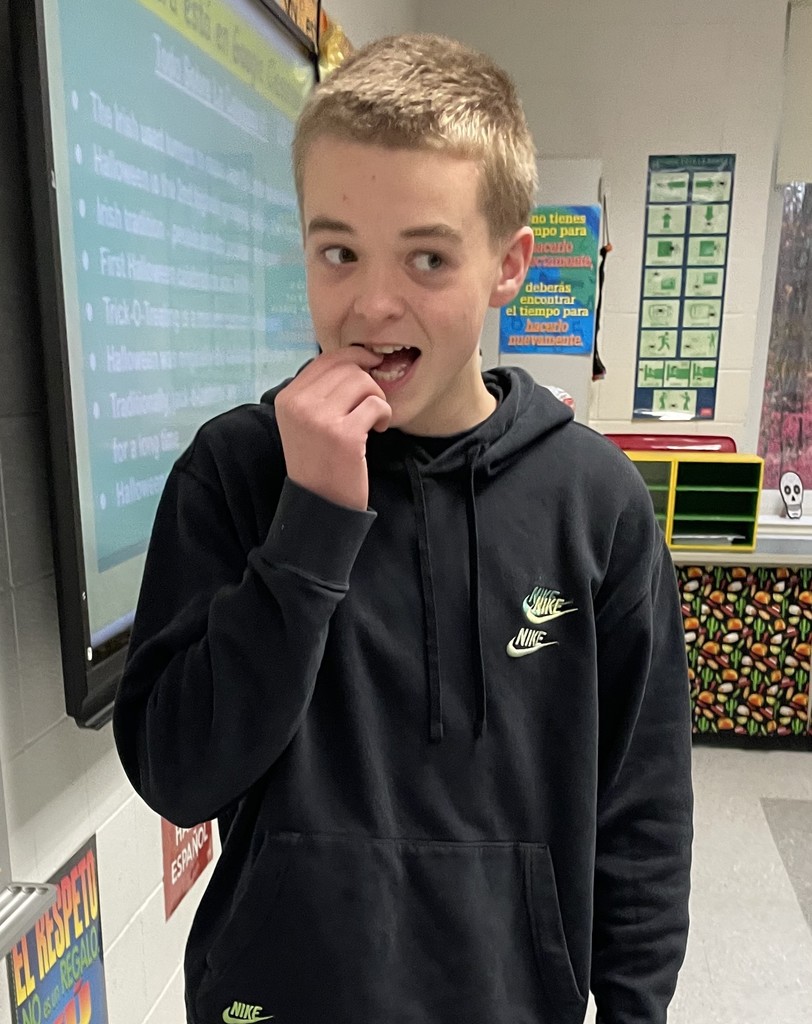
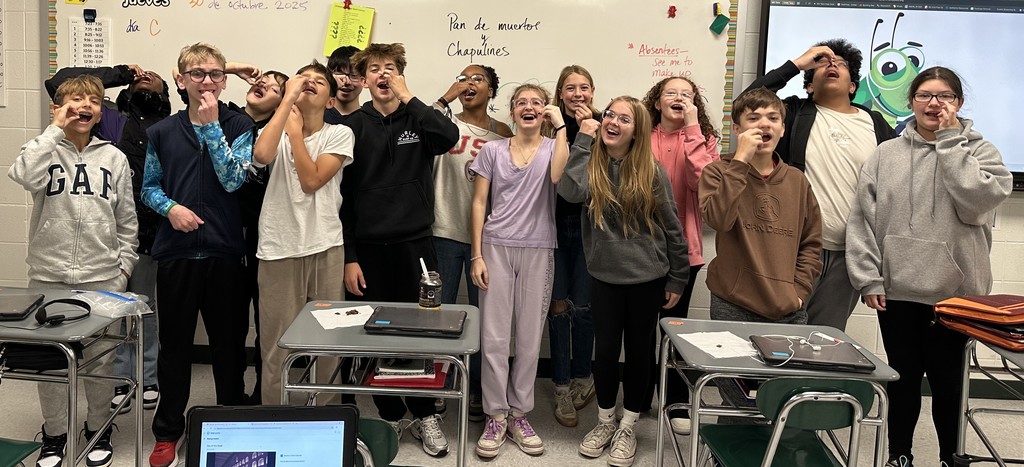
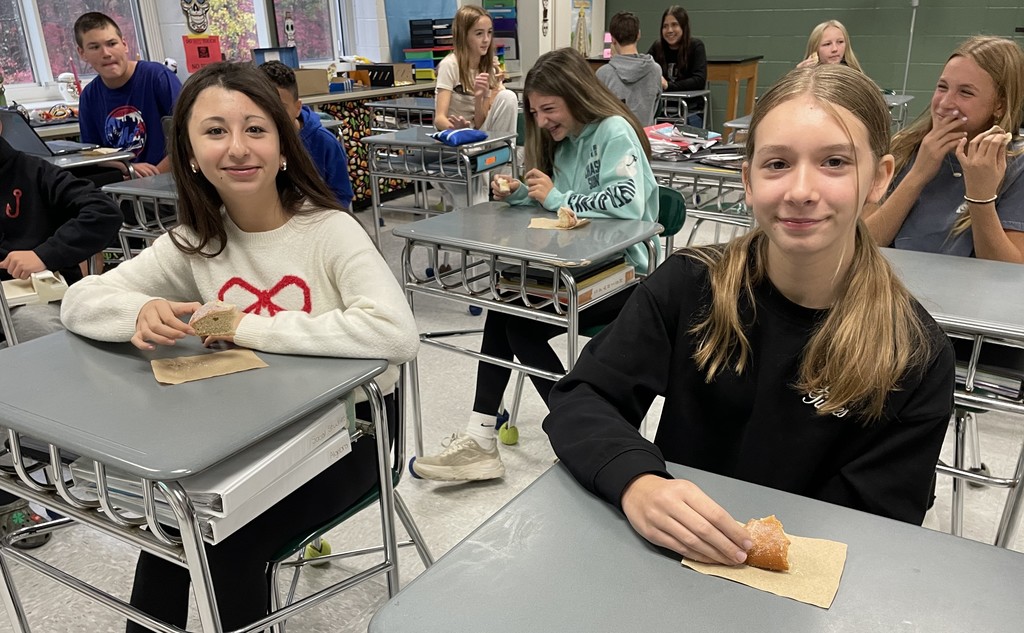
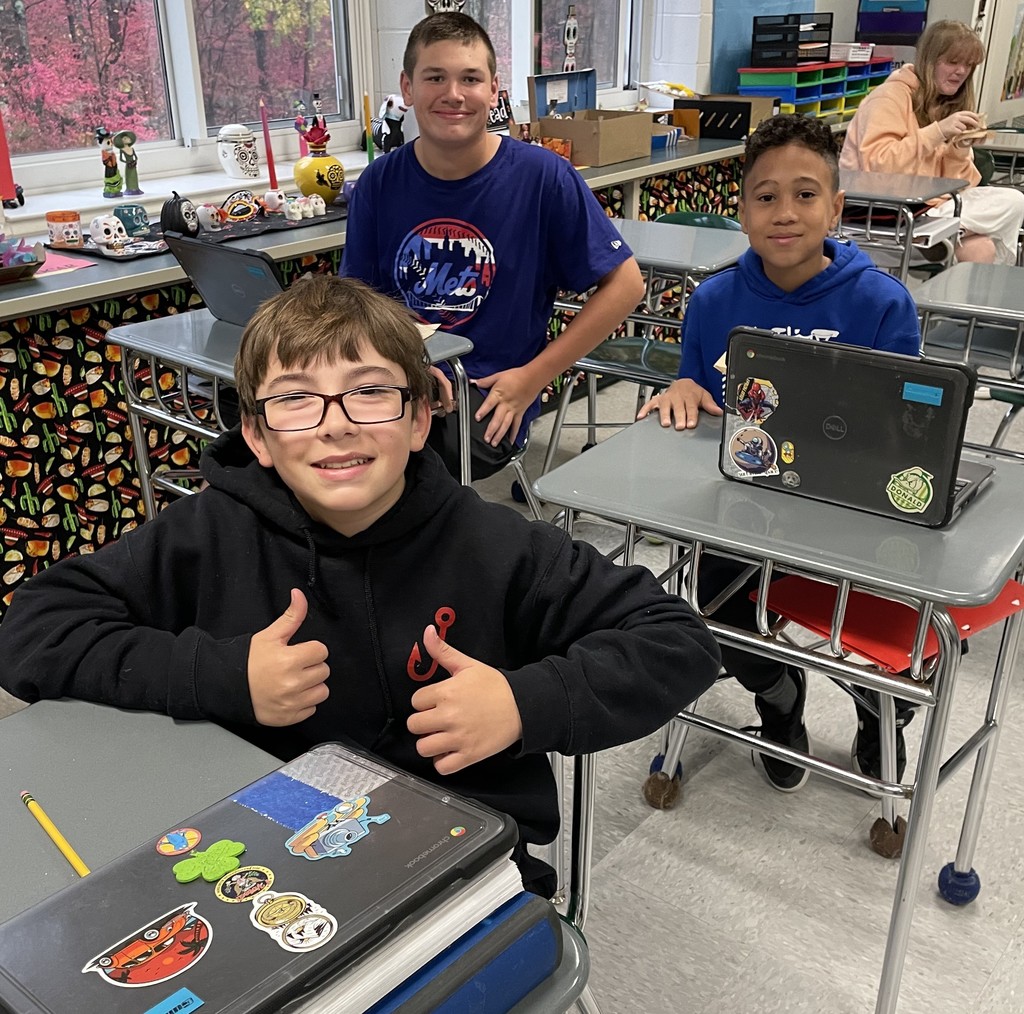
In addition to tying Spanish language instruction to the holiday, las maestras also wanted to engage students with important cultural content. (And, who wouldn’t be up for taking a nibble of grasshoppers?) Thank you to the Middle School PTO for making this celebration possible!
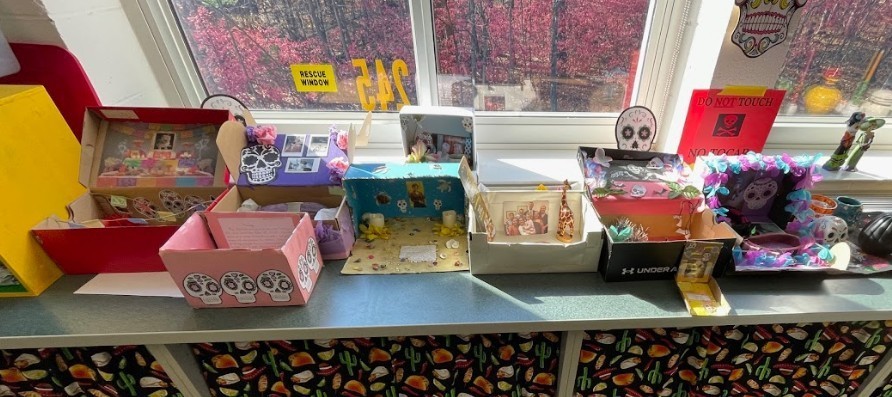
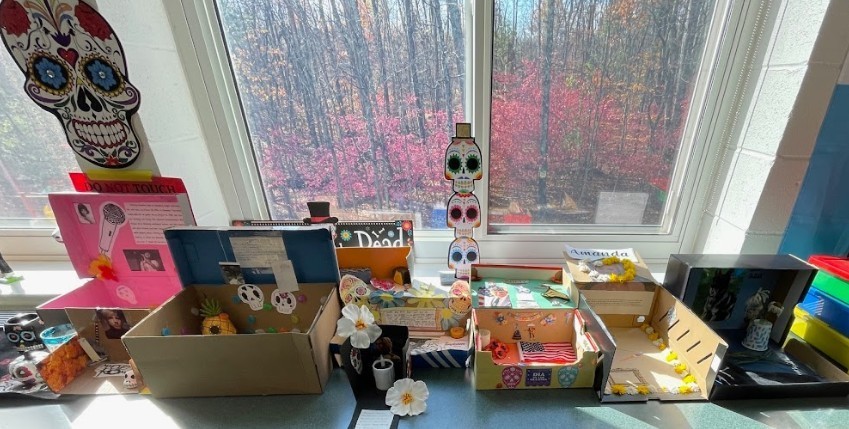
•Día de los Muertos is a multi-day Mexican holiday on Nov. 1 and 2 that celebrates and honors deceased loved ones by welcoming their spirits back for a reunion with the living. Families create altars with offerings like favorite foods and mementos, visit gravesites to clean and decorate them, and share memories and stories to celebrate the lives of those who have passed. The holiday is seen as a joyful celebration of life, not a time for mourning. The holiday is a meaningful way to engage students with cultural content, as it explores themes of life, death, family, and community.
•Pan de Muerto (Bread of the Dead) is a traditional sweet bread baked and eaten as an essential part of this holiday's traditions.
•During Día de los Muertos, chapulines are a traditional and common snack of roasted, seasoned grasshoppers that are a source of protein and considered a delicacy in Mexican cuisine. They are a symbol of the continuity of life and are prepared in regions like Oaxaca, where they are seasoned with lime, garlic, salt, and chiles, and can be served as a side, on tacos or with other dishes.
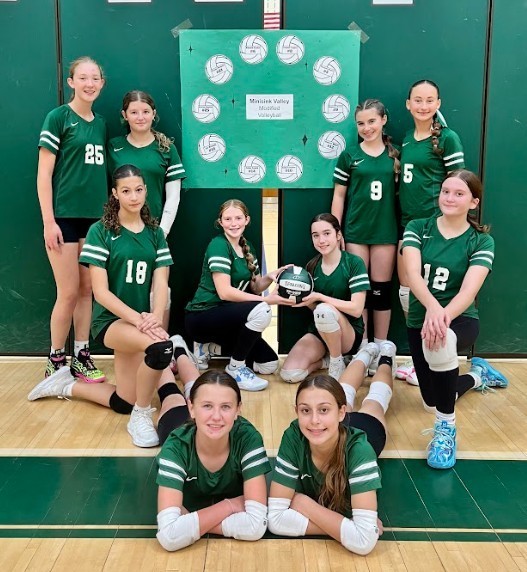
Modified Volleyball Head Coach Kelsie Doller is proud to share her team has grown a great deal during this past volleyball season! Well-done to all!
"Seeing their final game made me such a proud coach," she said. "Their serves were on point, they were hitting, blocking, and playing amazing defense. But more than that, they learned lessons that go far beyond the court like teamwork, communication, perseverance, and believing in themselves even when things get tough. Volleyball teaches responsibility, trust, and the power of showing up for each other. The future is bright both on and off the court for these ladies."
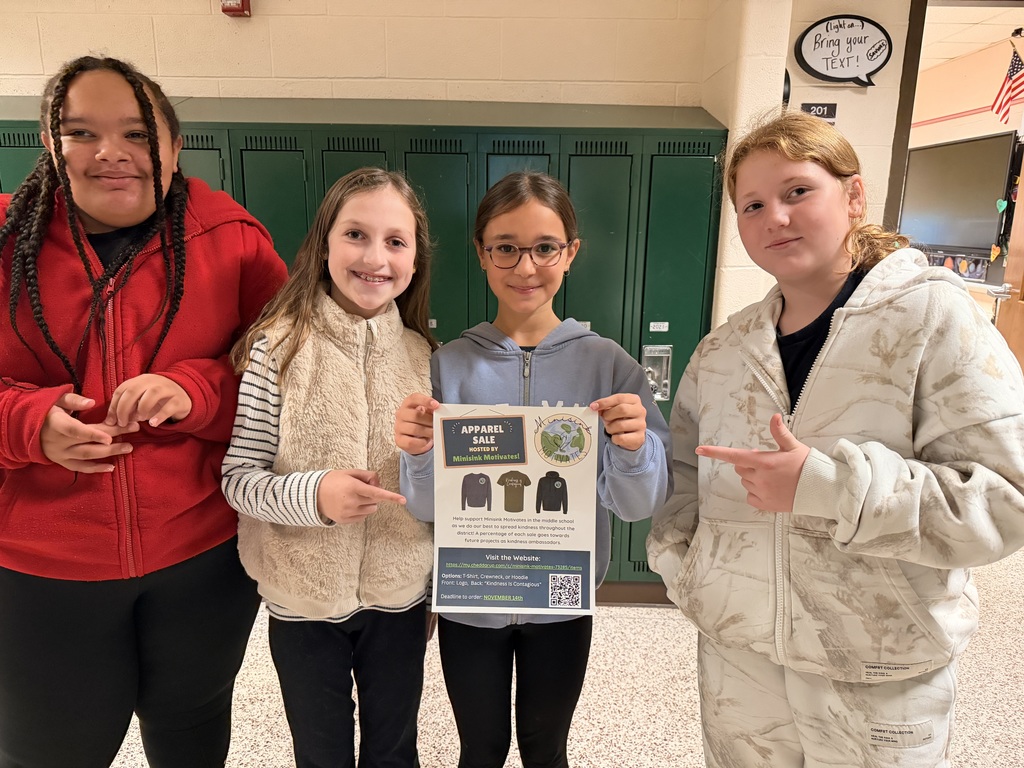
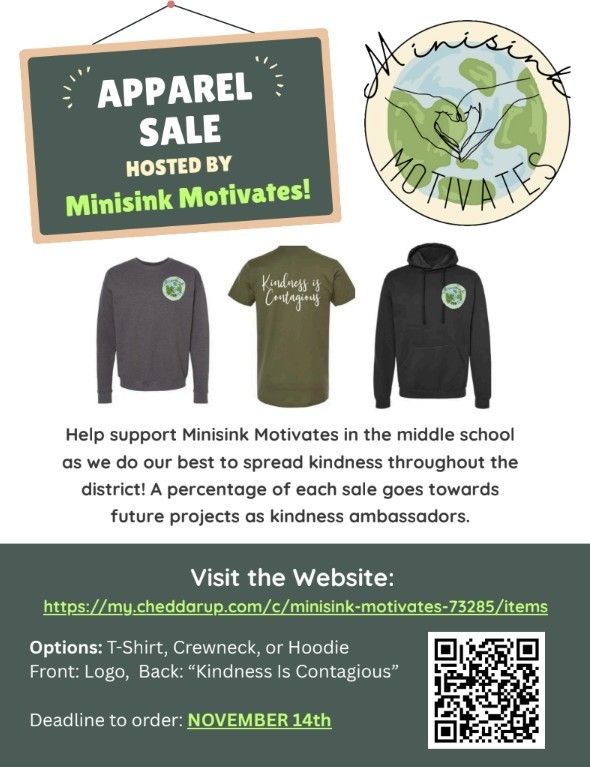
Please support the Middle School's Minisink Motivates Club and its mission of spreading kindness throughout the district via its Apparel Sale! Click on the QR code below!
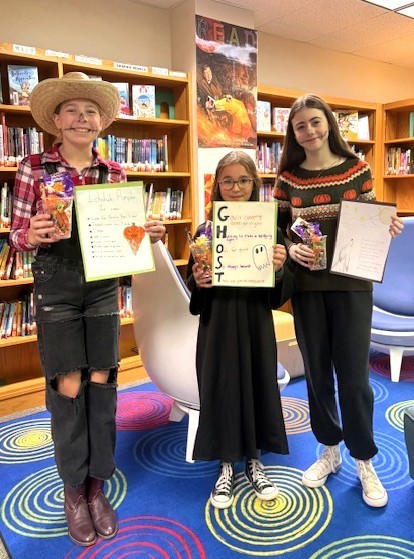
--- Most Halloween Spirit: Stacia Spongberg
--- Best Artistic Design: Adele Vernatter
--- Funniest: Anisten LaRock
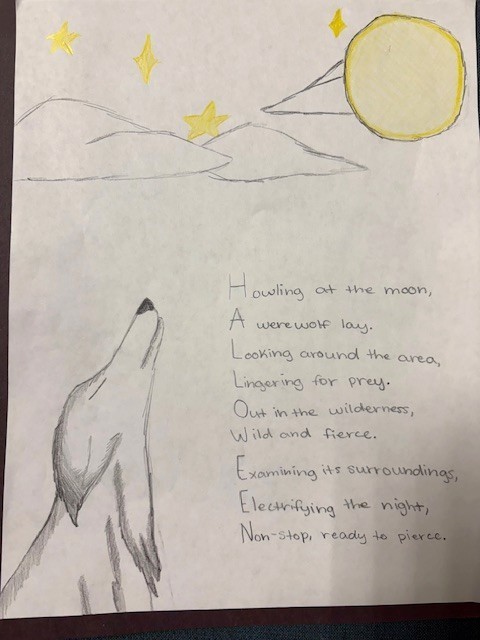
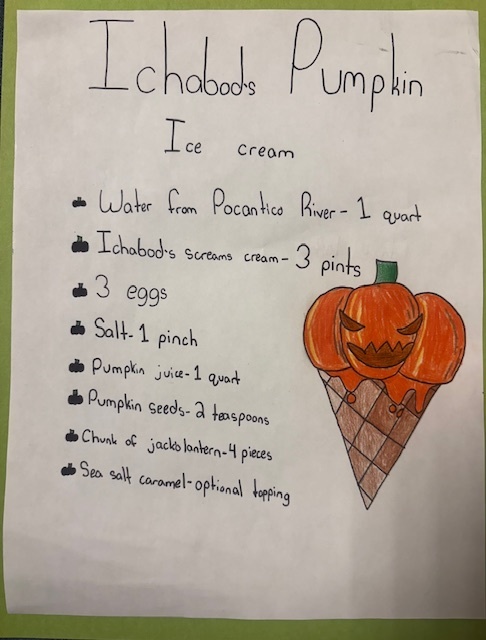
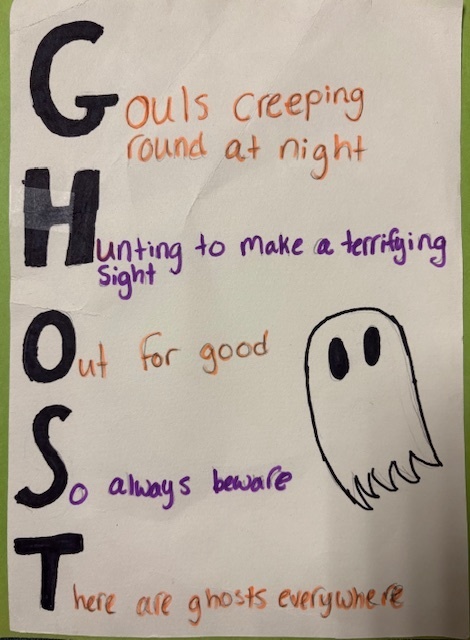
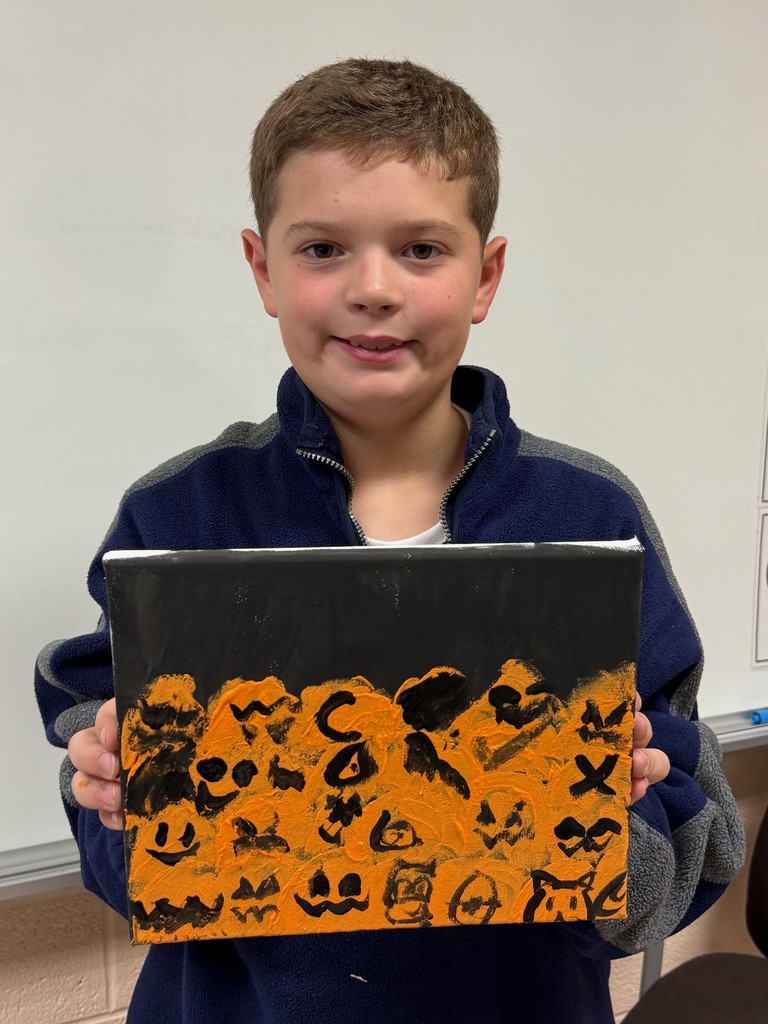
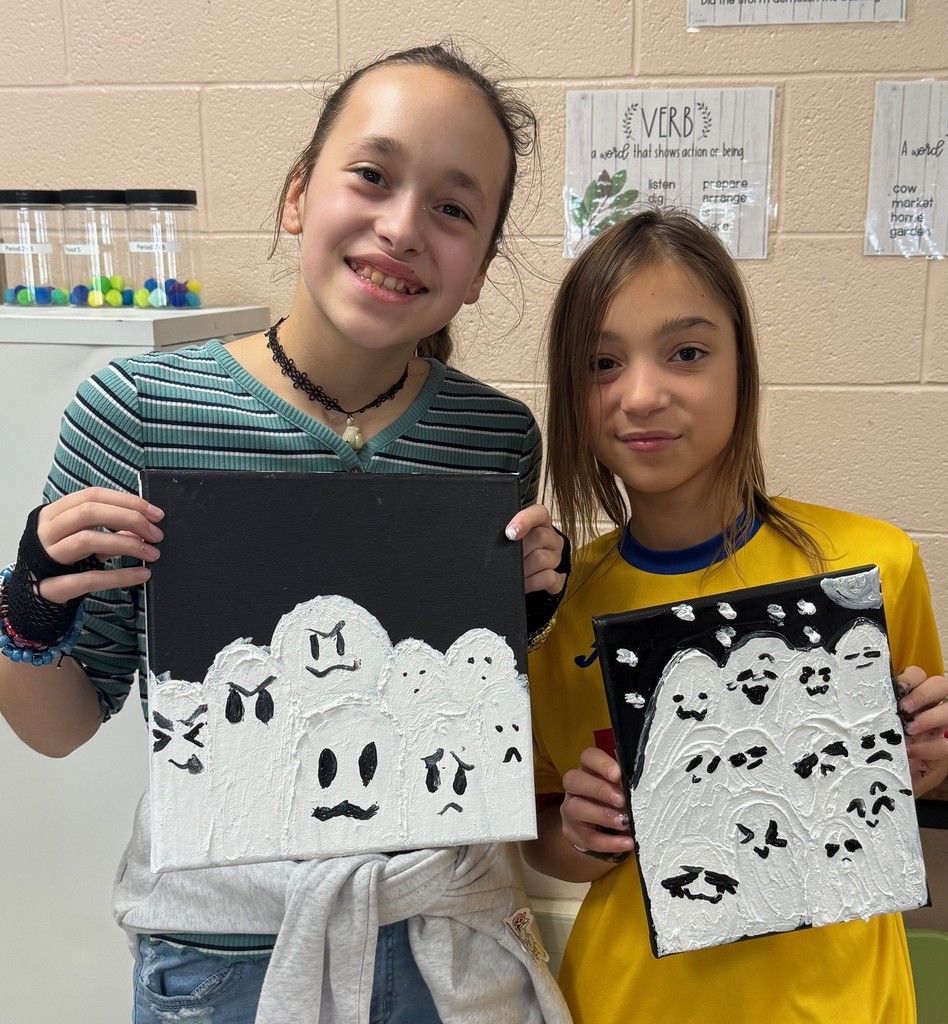
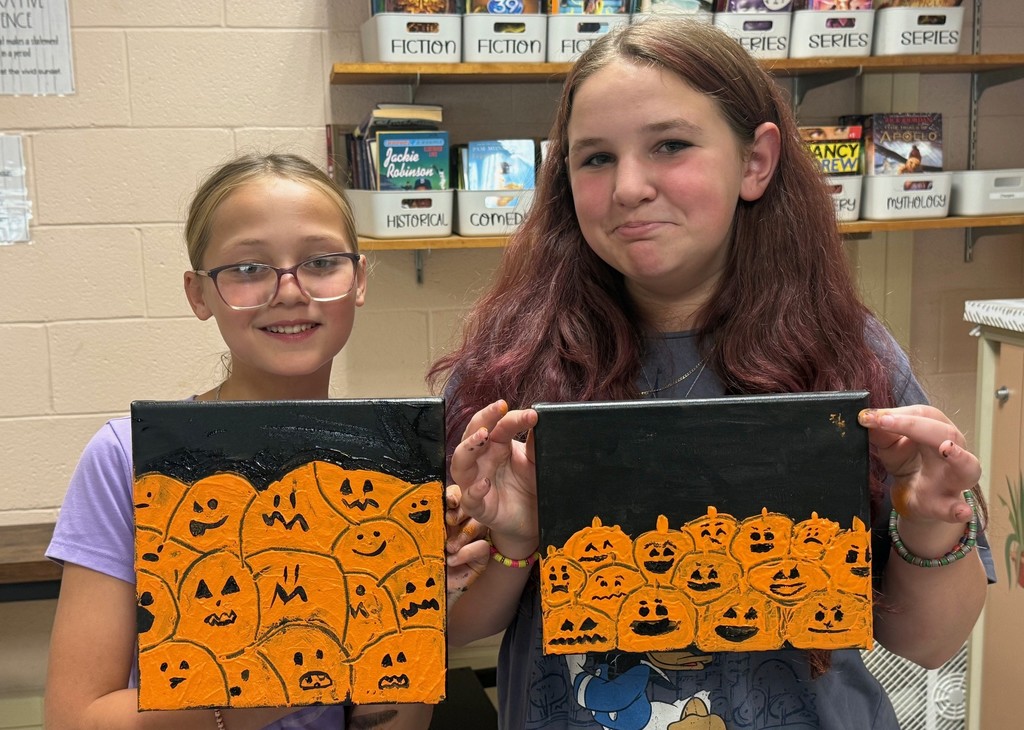
This year students were asked to either write a Halloween or fall-themed acrostic poem or come up with a cooky culinary creation!
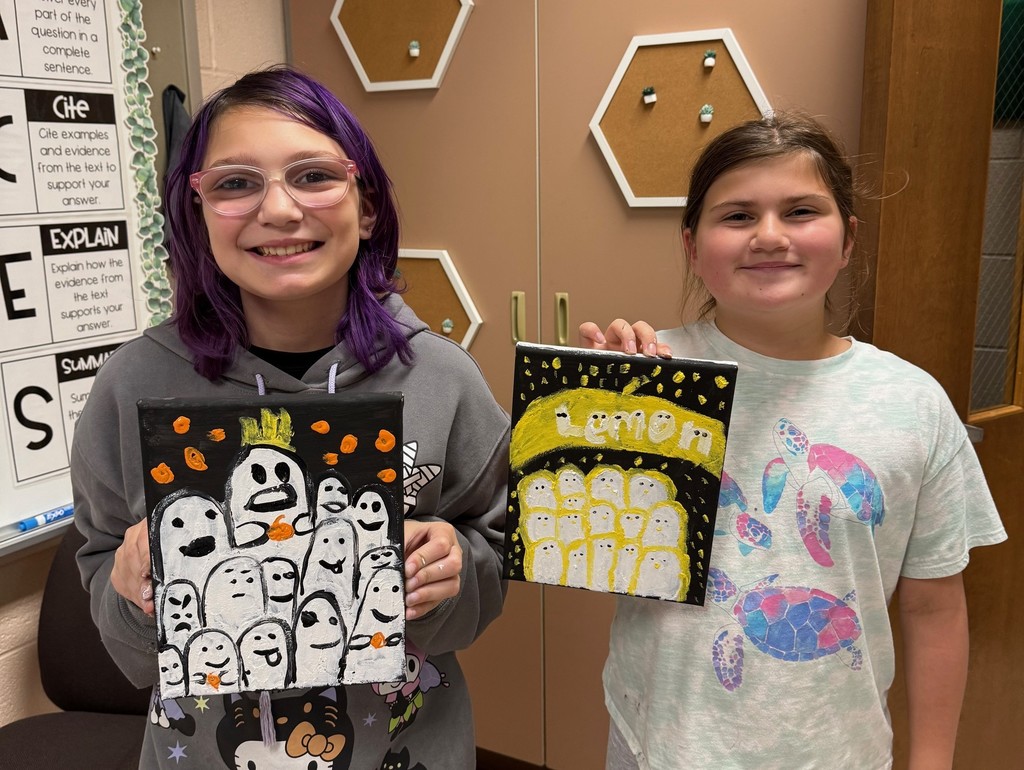
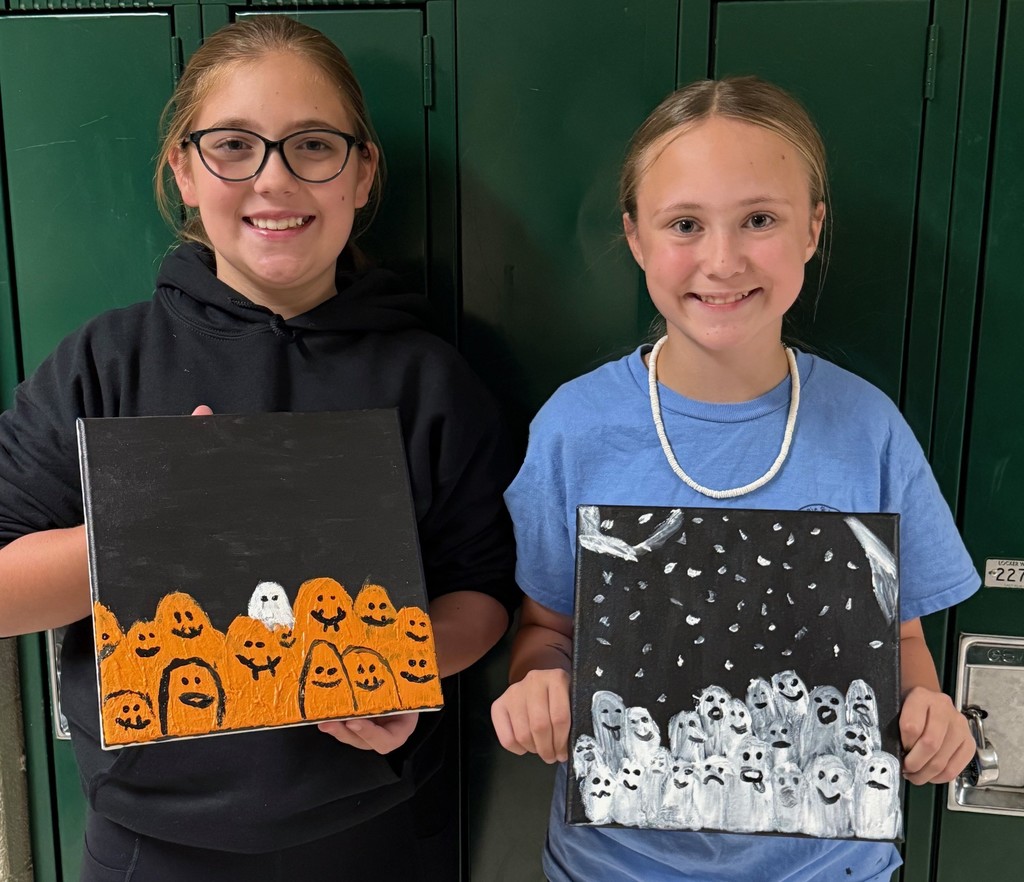
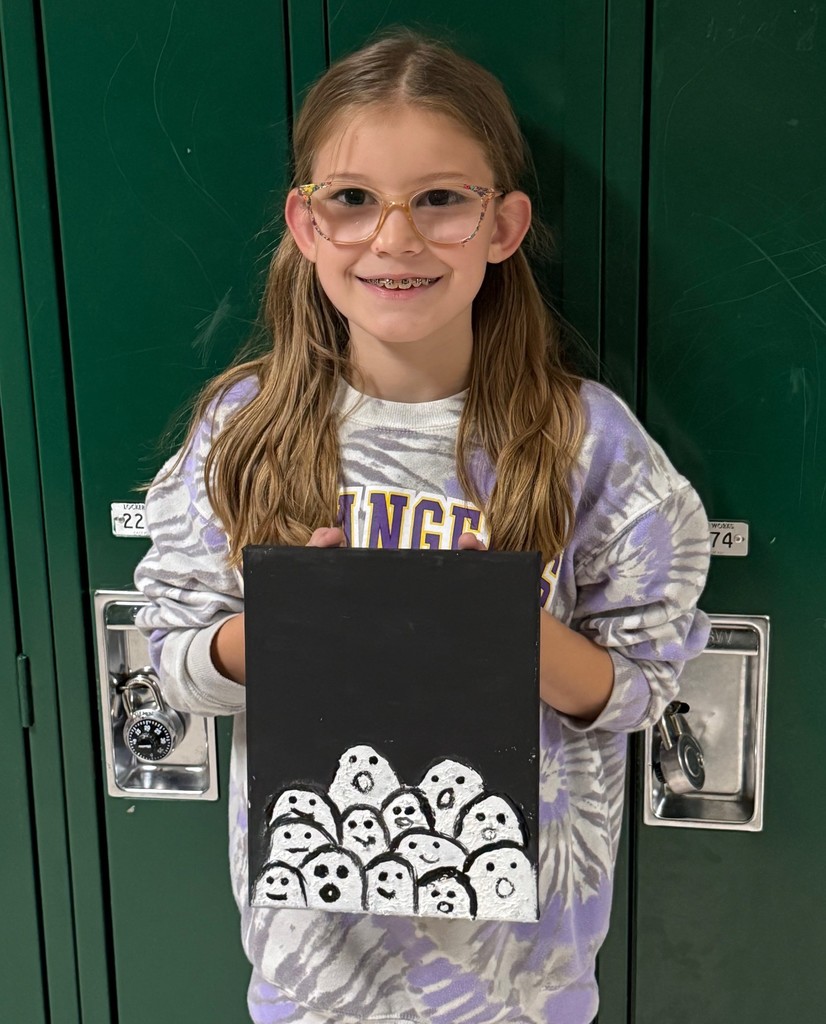
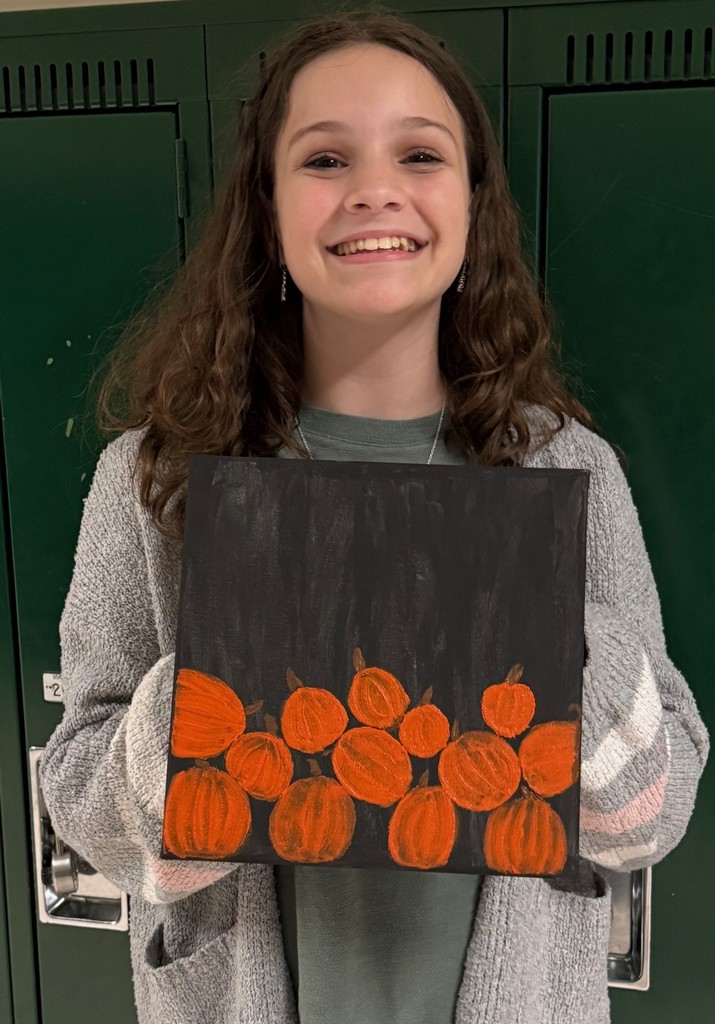
Oh là là!
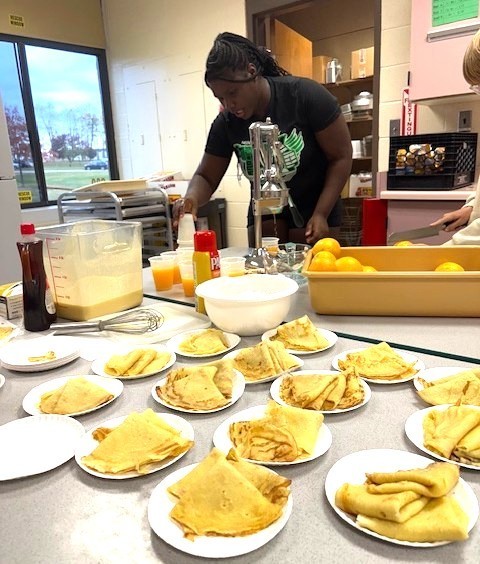
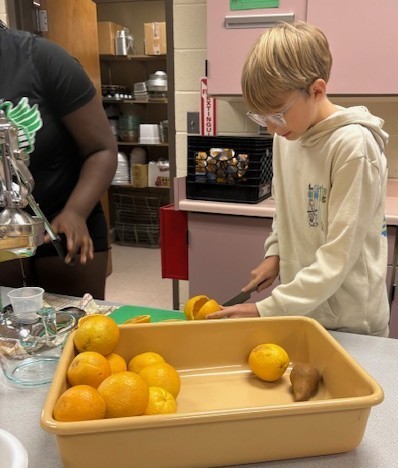
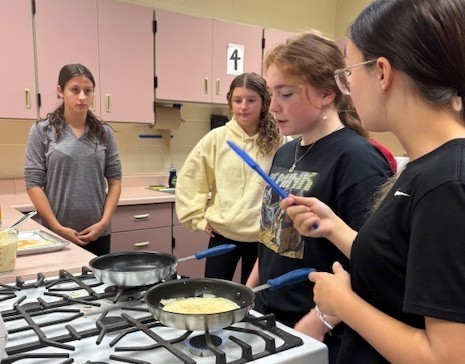
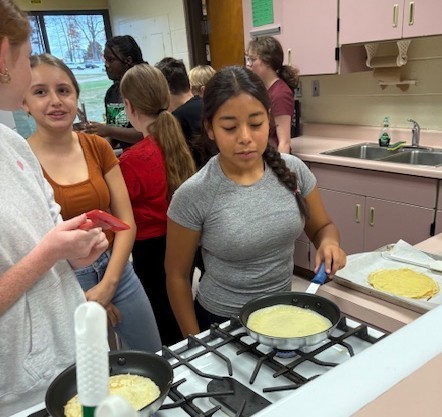
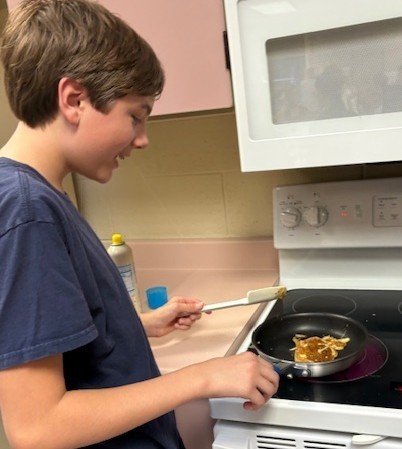
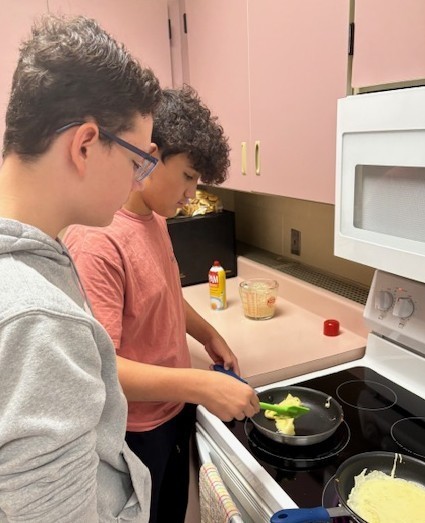
Middle School French class students visited their FACS class peers today, Oct. 29 for a culinary cultural experience: Making crêpes! What a creative interdisciplinary learning opportunity! Students made French crêpes from scratch, and along with freshly squeezed orange juice, had a wonderful mid-morning snack! Bravo à tous !
Crêpes originated in Brittany, France, around the 13th century, initially made with buckwheat flour and water. Over time, they evolved, with sweet versions made from wheat flour becoming popular in the 19th century, and crêpes becoming a staple street food in the 20th century. They are traditionally associated with the Christian holiday of Candlemas, or "La Chandeleur," on Feb. 2, and the word "crêpe" comes from the Latin for "curled."