
May the Fourth be with you!
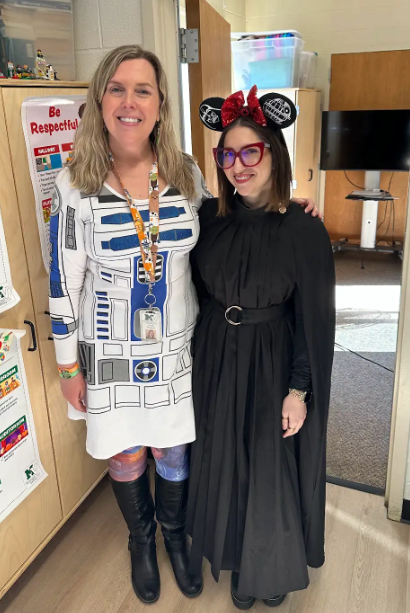
IS fourth-grade teacher Jenn Kemmerer and IS music teacher Deanna Feuerbach are bringing a galactic spark to their classrooms today, May 4, with their very clever Star Wars character attire! Their playful tribute comes from the famous line “May the Force be with you,” a phrase central to the Star Wars series’ mythology about an energy that connects all living things.
Fans cleverly turned it into “May the Fourth be with you,” transforming the date into a lighthearted celebration of imagination, storytelling and a galaxy far, far away, proving that even a school day can feel a little more epic!
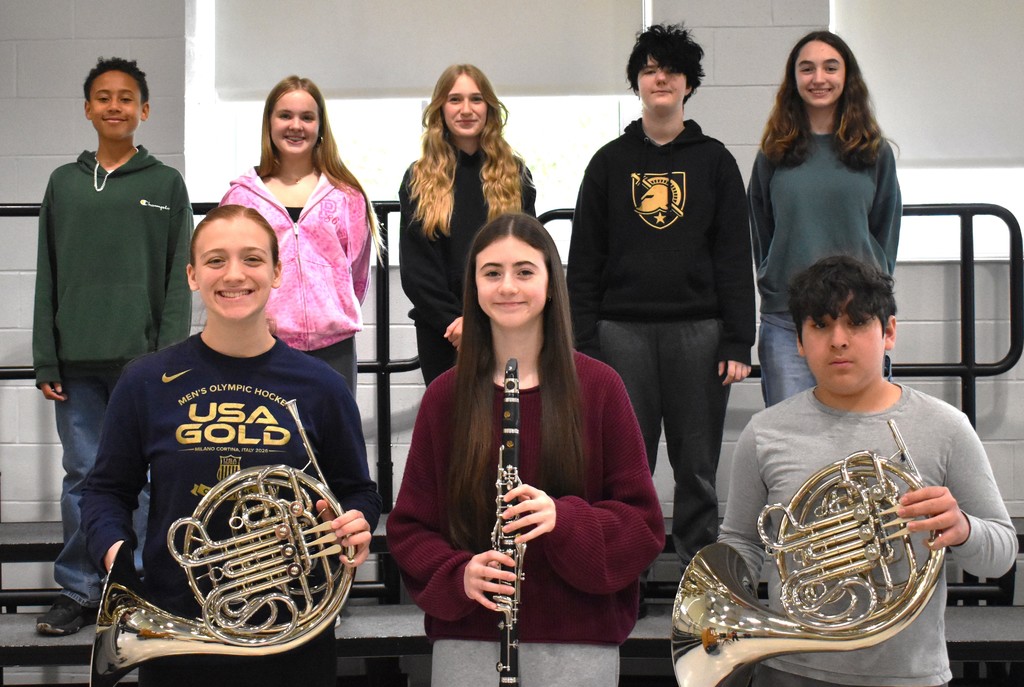
Congratulations to the eight outstanding Middle School students who proudly represented Minisink Valley with distinction at this past Friday and Saturday’s Orange County Music Educators Association (OCEMA) Junior High All-County Music Festival, hosted at Valley Central School!
These talented musicians and vocalists joined their peers as part of the “best of the best,” showcasing their dedication, passion and musical excellence at this truly special event. Bravo to all for an unforgettable performance!
Orchestra
--- Carson Murphy, Horn
Band
--- Adele Vernatter, Clarinet
--- Lauren Galligan, Horn
Chorus
--- Emily Reicherter, Soprano
--- Brianna Blumenberg, Alto
--- Aubrey Johnson, Alto
--- James Young, Alto
--- James West, Baritone
These talented musicians and vocalists joined their peers as part of the “best of the best,” showcasing their dedication, passion and musical excellence at this truly special event. Bravo to all for an unforgettable performance!
Orchestra
--- Carson Murphy, Horn
Band
--- Adele Vernatter, Clarinet
--- Lauren Galligan, Horn
Chorus
--- Emily Reicherter, Soprano
--- Brianna Blumenberg, Alto
--- Aubrey Johnson, Alto
--- James Young, Alto
--- James West, Baritone
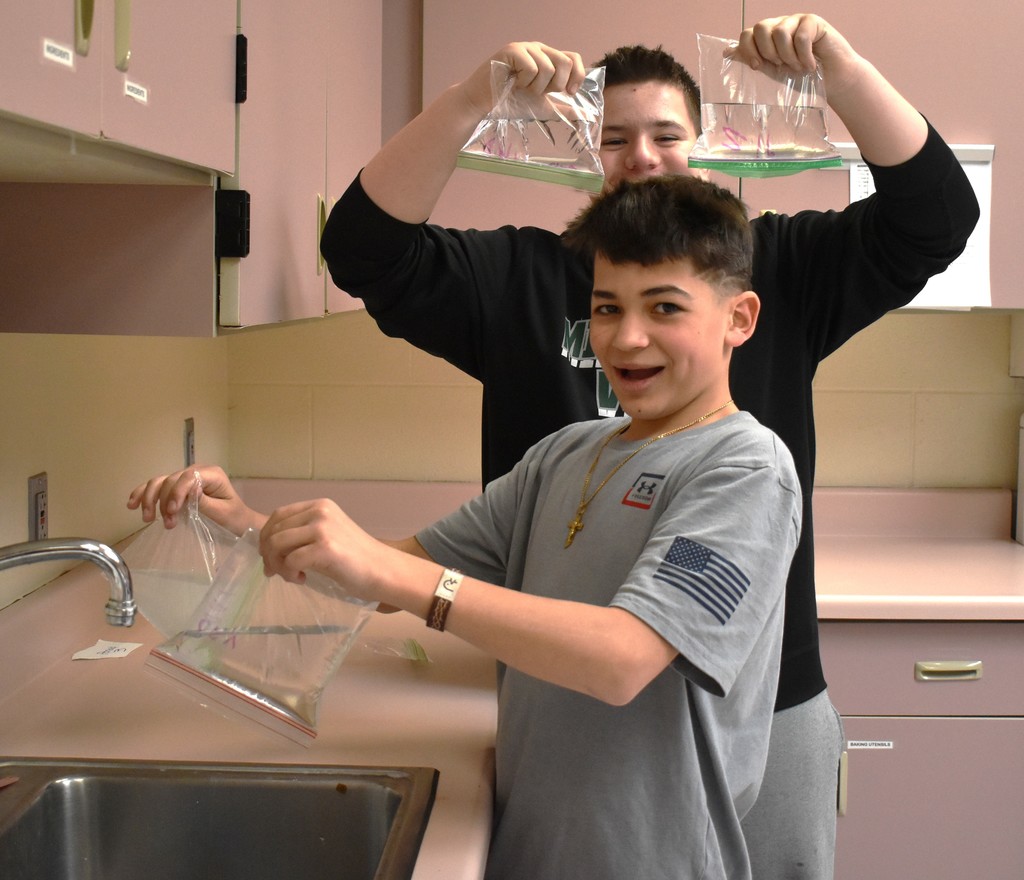
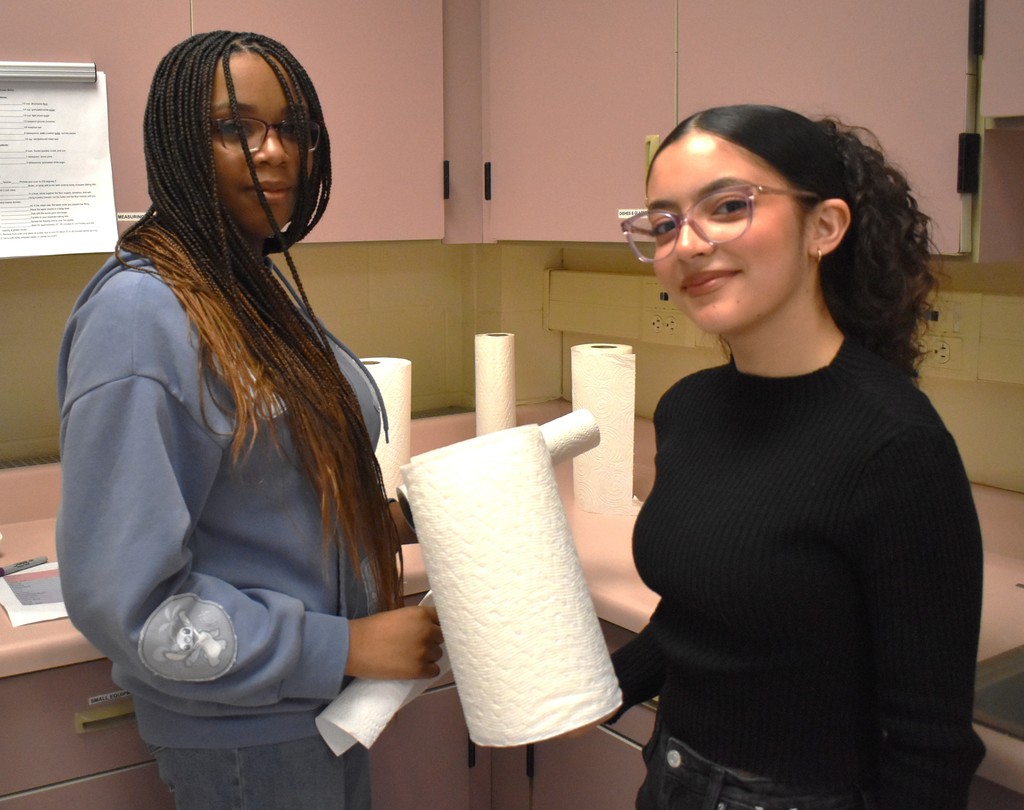
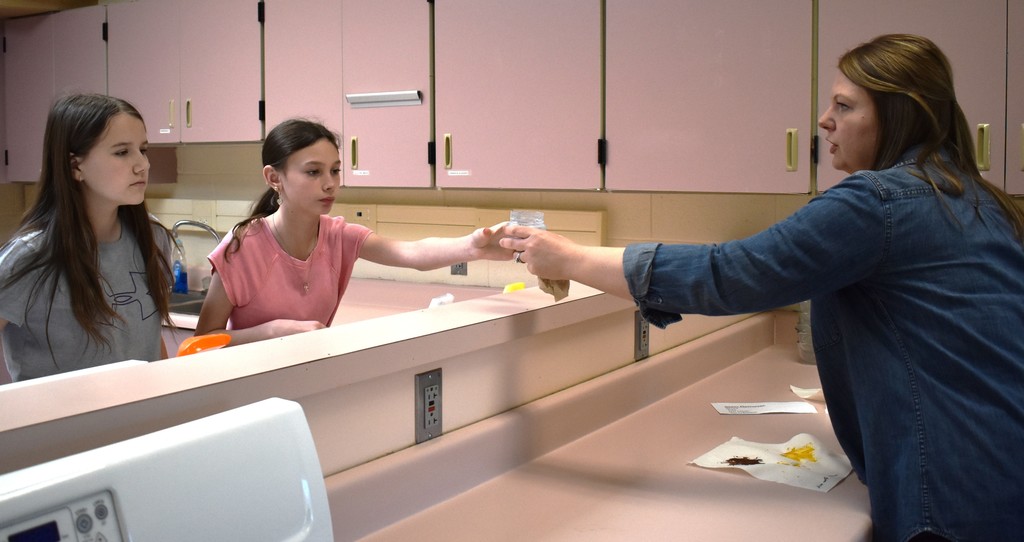
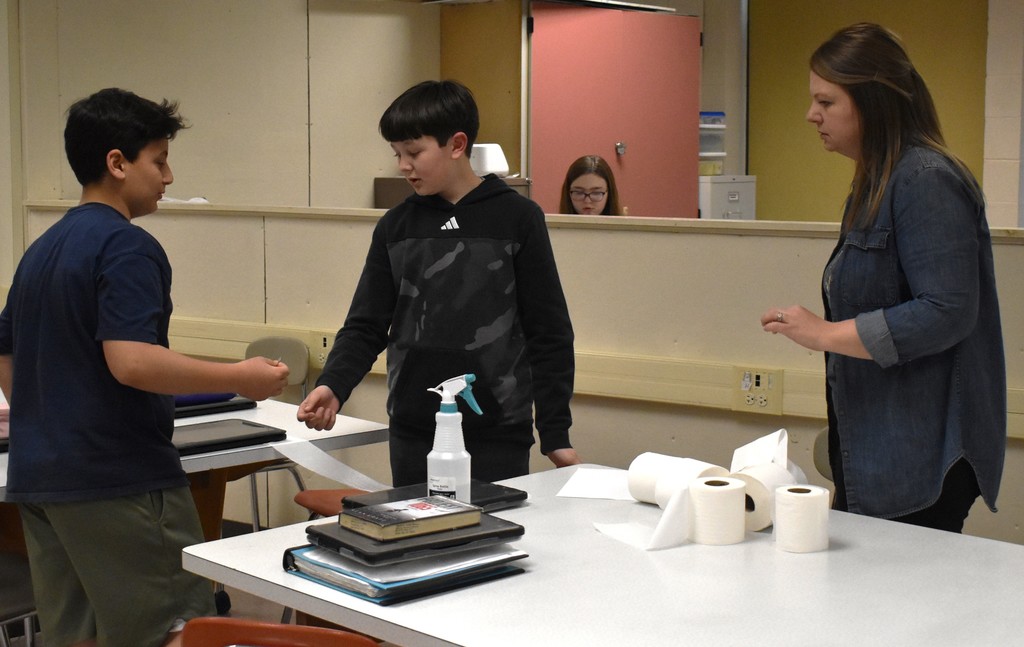
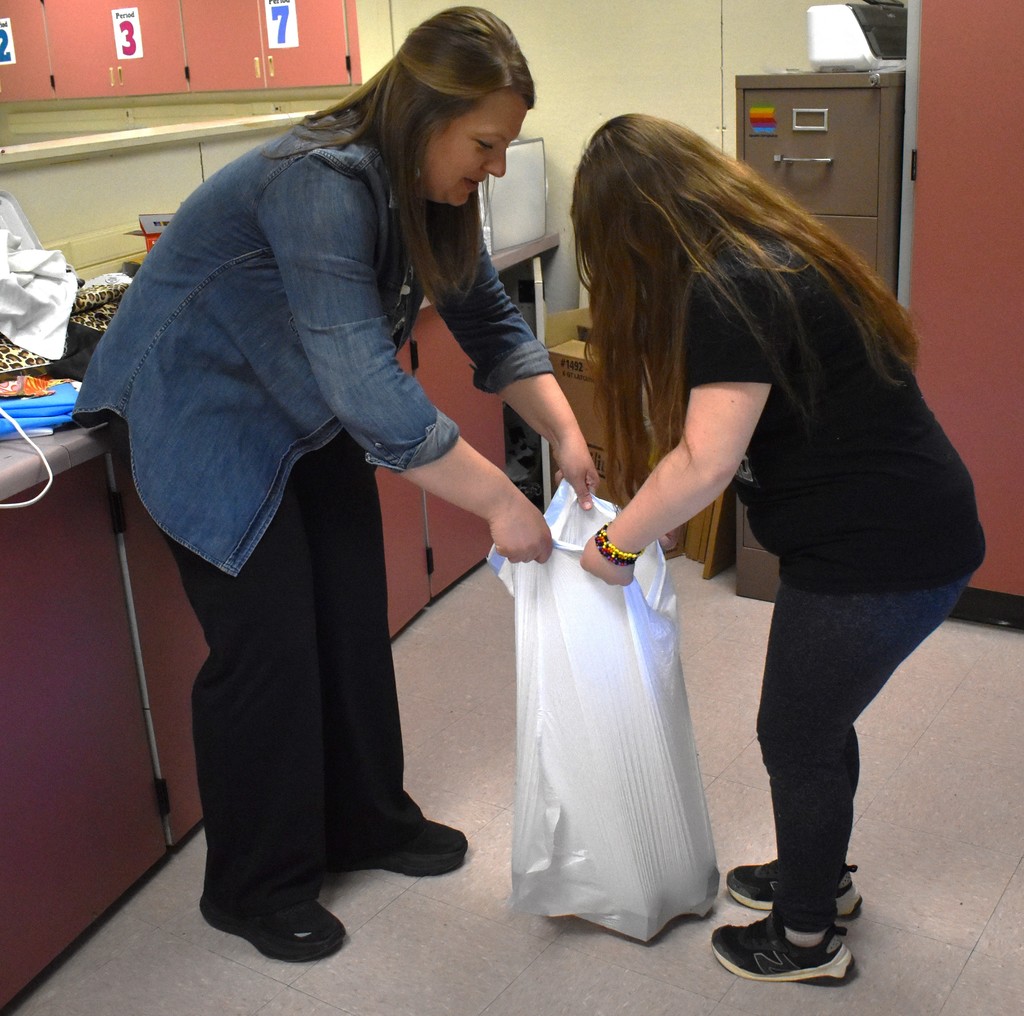
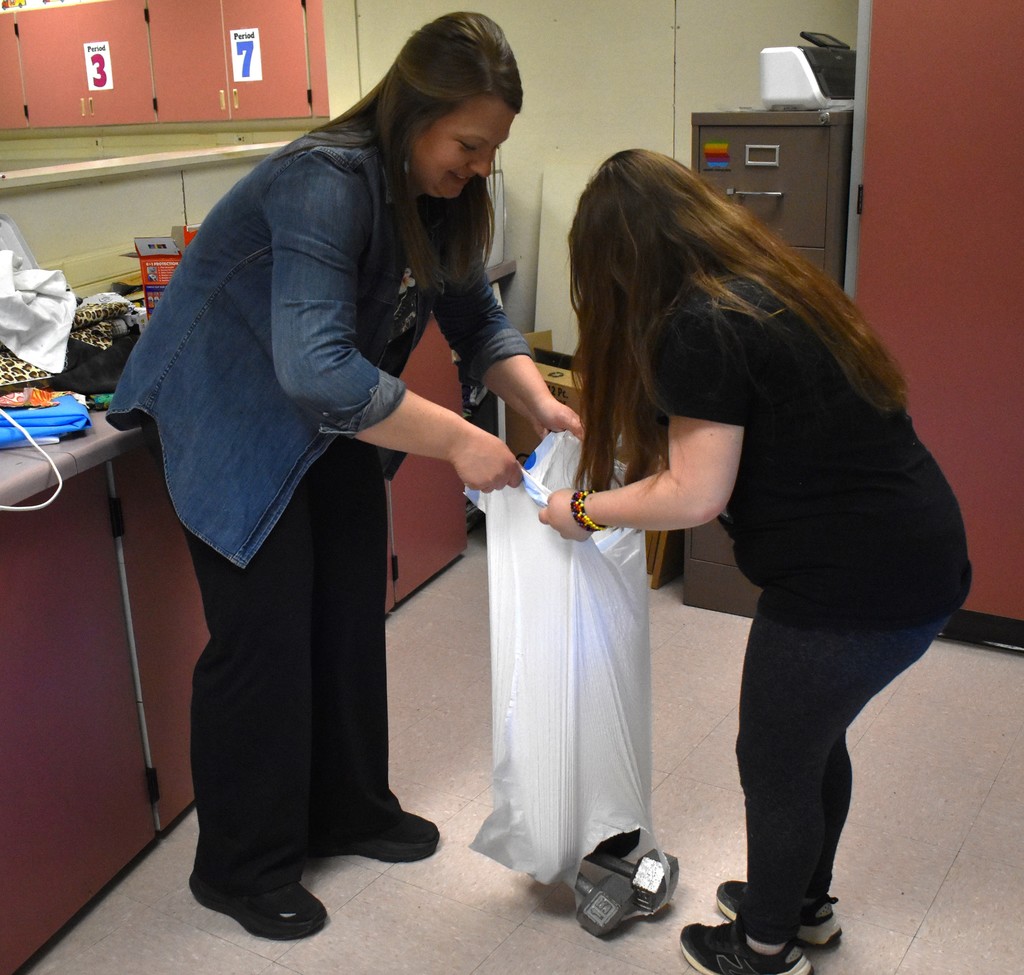
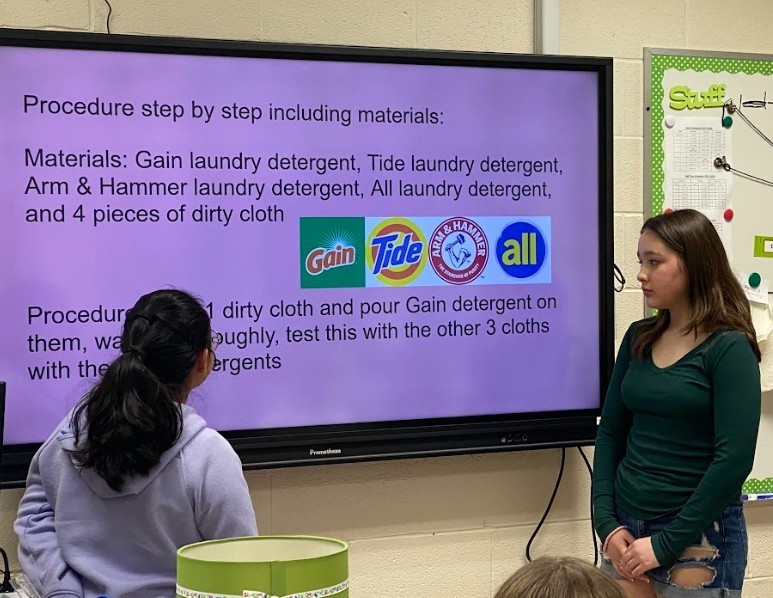
Bethany Ortiz’s seventh-grade FACS students are become expert product testers! Students were recently tasked with testing paper towels for absorbency and strength, toilet paper, dish soap, zipper bags, stain remover, laundry detergent trash bags and duct tape.
Students applied the scientific method, developed hypothesis and created a procedure for the experiment. They also collected the data, reached a conclusion based on the findings of their experiment and the cost comparison and eventually presented their results to the class.
Assignments like this are important because they help students actively use the scientific method instead of just memorizing it. By forming hypotheses, engaging in experiments, collecting data, and drawing conclusions, students gain a deeper understanding of how science works in real life. It also builds critical thinking skills, as they must evaluate product performance and compare costs to decide which items are the best value.
In addition, the assignment connects learning to everyday life, since students are testing products they actually use at home. This makes the lesson more engaging and practical. Plus, students further develop data analysis and communication skills when they present their results. Activities like this teach students how to think, make informed decisions, and apply what they learn beyond the classroom!
Students applied the scientific method, developed hypothesis and created a procedure for the experiment. They also collected the data, reached a conclusion based on the findings of their experiment and the cost comparison and eventually presented their results to the class.
Assignments like this are important because they help students actively use the scientific method instead of just memorizing it. By forming hypotheses, engaging in experiments, collecting data, and drawing conclusions, students gain a deeper understanding of how science works in real life. It also builds critical thinking skills, as they must evaluate product performance and compare costs to decide which items are the best value.
In addition, the assignment connects learning to everyday life, since students are testing products they actually use at home. This makes the lesson more engaging and practical. Plus, students further develop data analysis and communication skills when they present their results. Activities like this teach students how to think, make informed decisions, and apply what they learn beyond the classroom!
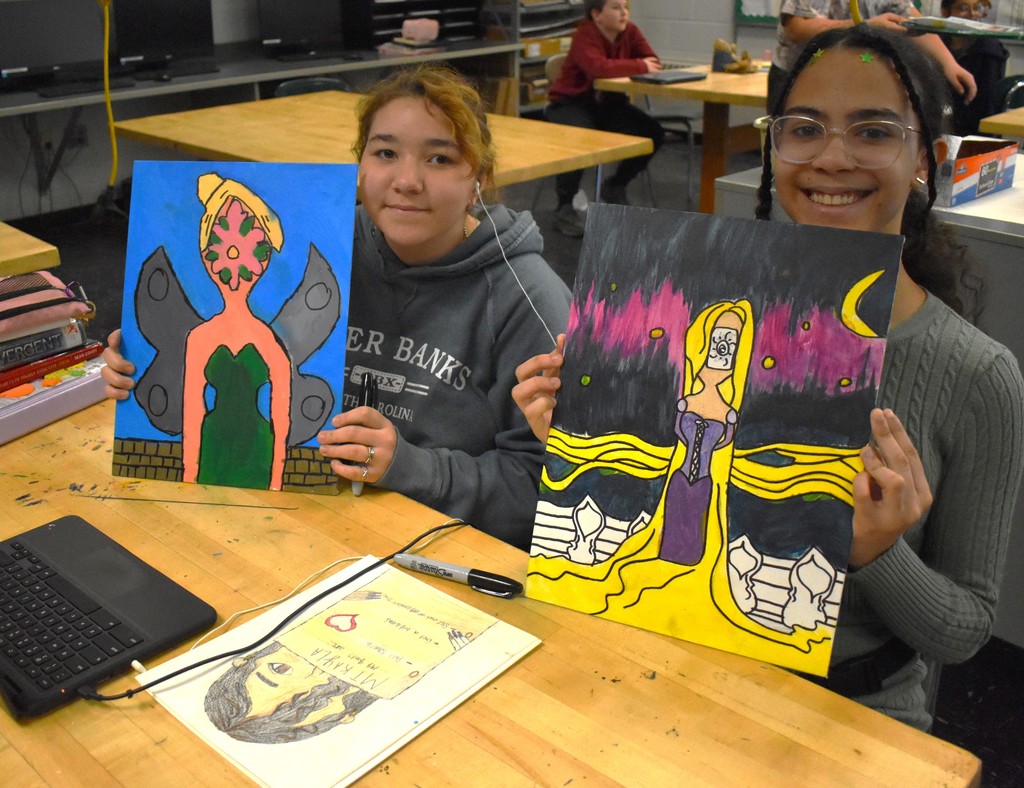
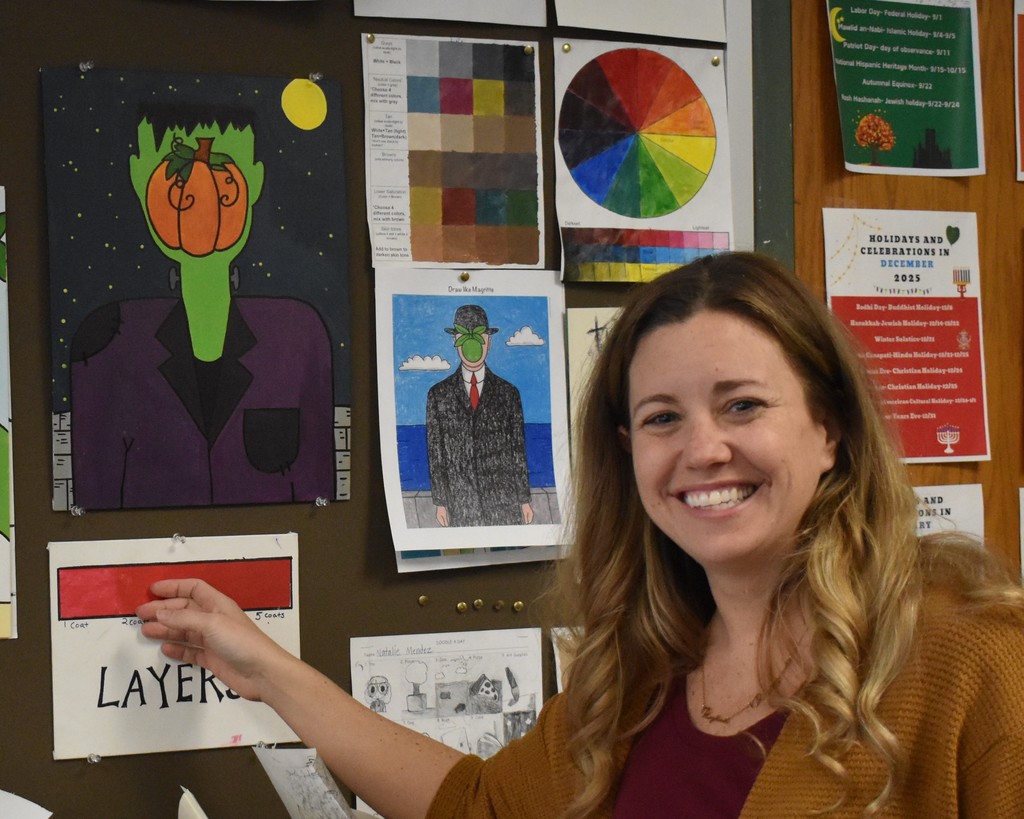
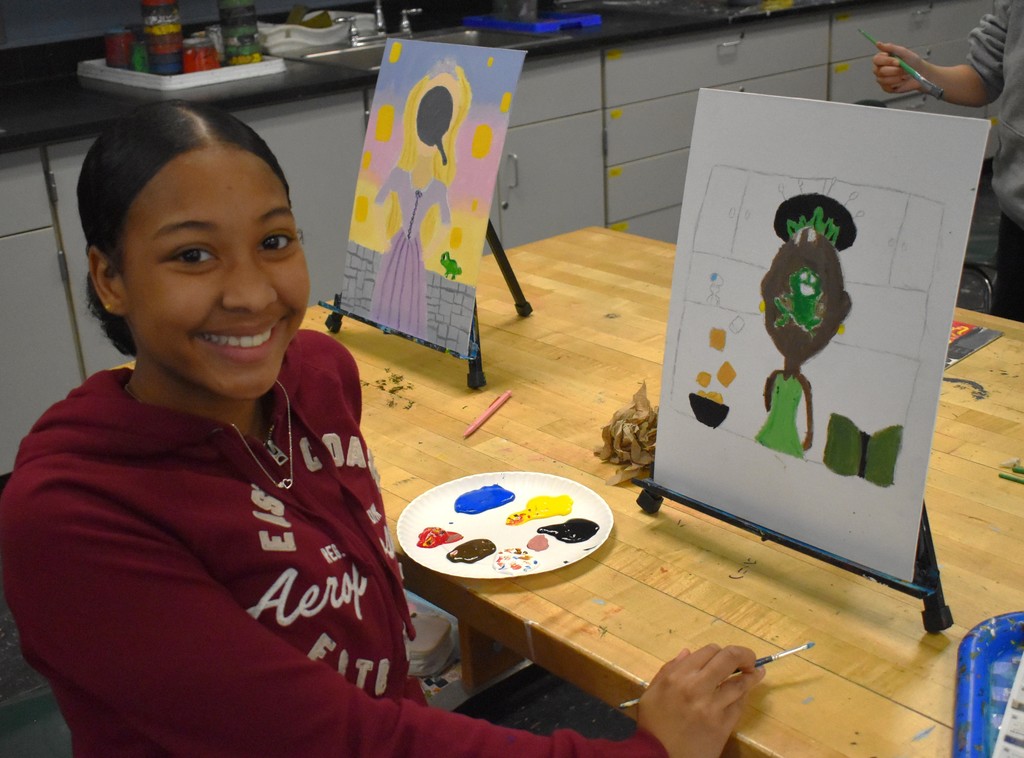
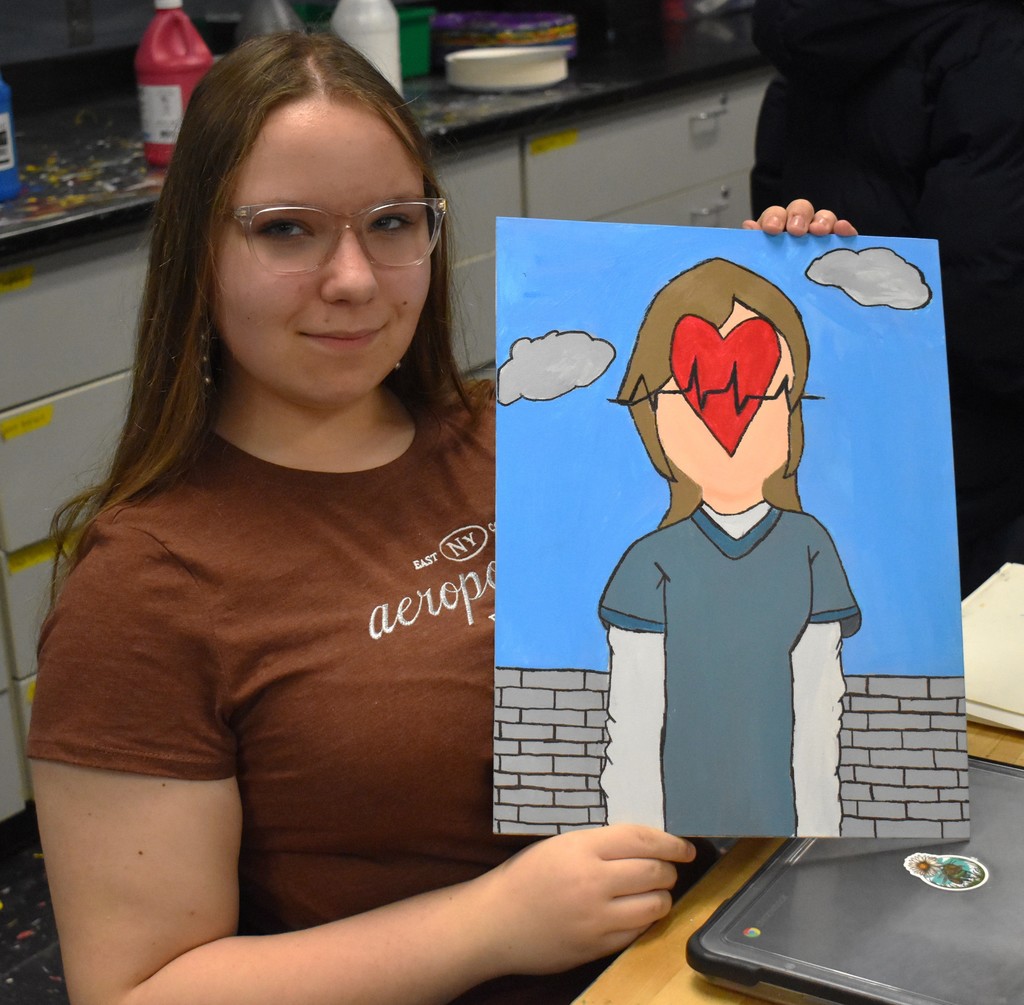
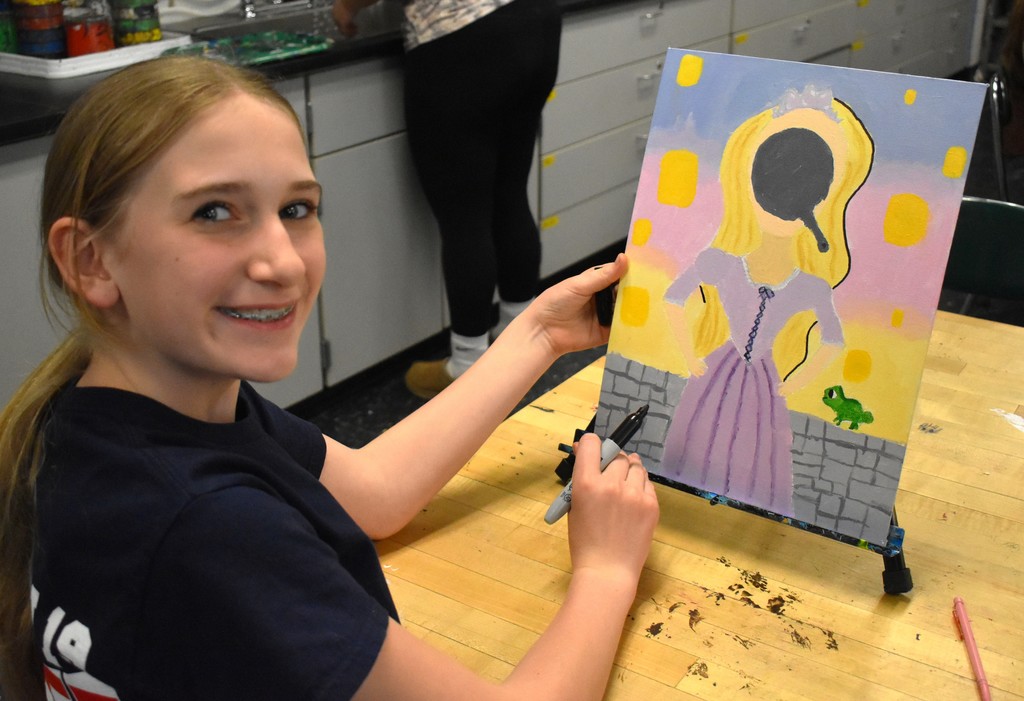
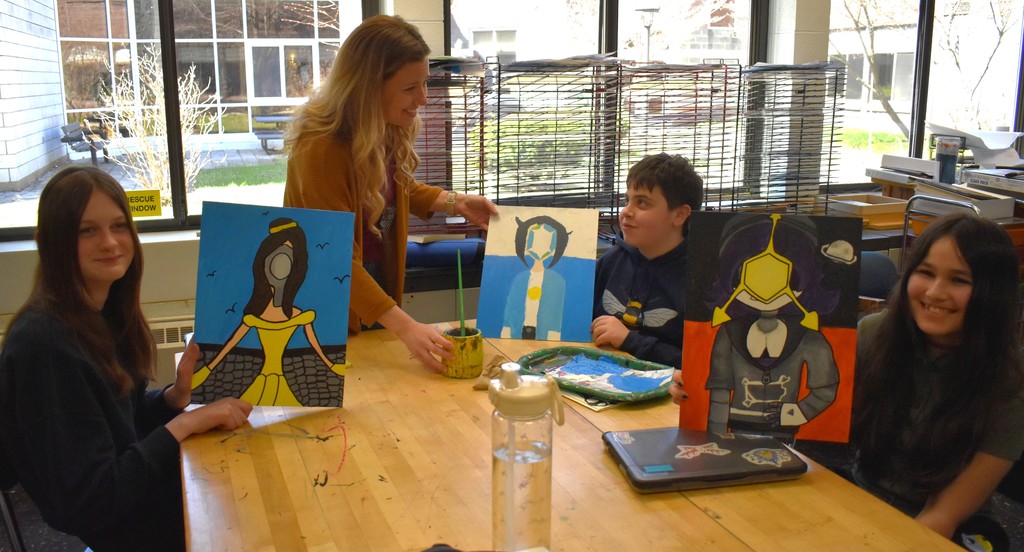
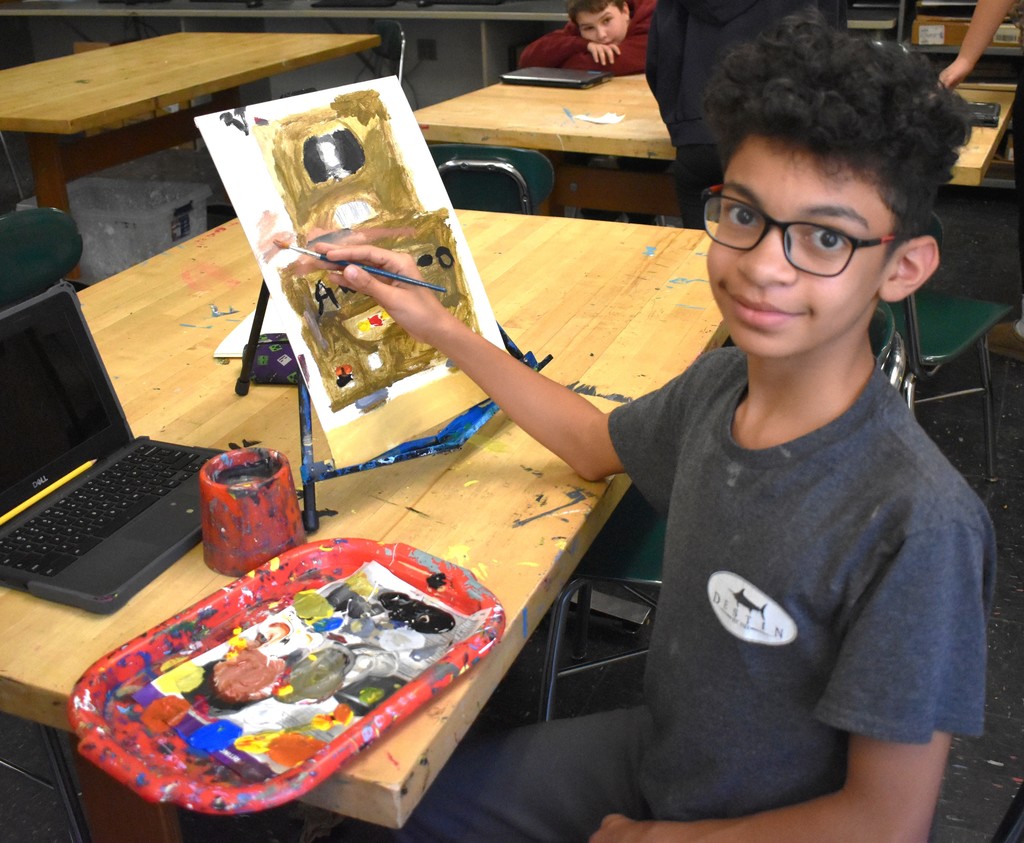
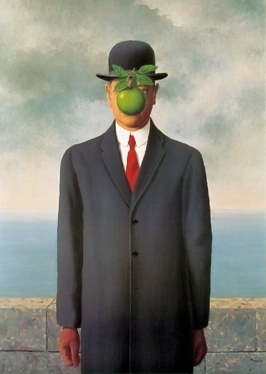
Kaylin Morran’s seventh-grade art students are learning about surrealism and parodies as an art form! Using Rene Magritte’s “The Son of Man” as their inspiration, students were tasked with replacing the man with a new character and the apple object to create mystery and conversation. Their work is exemplary! Take a look!
Magritte’s “The Son of Man” is an excellent artwork for teaching middle school students about surrealism because it presents the core ideas of the movement in a clear, accessible, and engaging way.
The painting shows an ordinary man in a suit whose face is mysteriously hidden behind a floating apple — an unexpected and dreamlike combination that immediately communicates the surrealist goal of disrupting reality. Because the image is simple, yet puzzling, students are asked to ask questions about meaning, identity, and symbolism, which encourages curiosity and critical thinking.
Magritte’s use of familiar objects in unusual contexts also helps students understand that surrealism doesn’t rely on fantasy creatures or complicated scenes; instead, it often transforms everyday items to create something imaginative and strange, making the style approachable for young artists. Additionally, themes such as identity and concealment resonate with middle schoolers, helping them connect personally with the artwork.
Surrealism in art is a style that mixes real, everyday things with strange, dreamlike, or unexpected elements to create images that feel magical, mysterious, or unreal.
Magritte’s “The Son of Man” is an excellent artwork for teaching middle school students about surrealism because it presents the core ideas of the movement in a clear, accessible, and engaging way.
The painting shows an ordinary man in a suit whose face is mysteriously hidden behind a floating apple — an unexpected and dreamlike combination that immediately communicates the surrealist goal of disrupting reality. Because the image is simple, yet puzzling, students are asked to ask questions about meaning, identity, and symbolism, which encourages curiosity and critical thinking.
Magritte’s use of familiar objects in unusual contexts also helps students understand that surrealism doesn’t rely on fantasy creatures or complicated scenes; instead, it often transforms everyday items to create something imaginative and strange, making the style approachable for young artists. Additionally, themes such as identity and concealment resonate with middle schoolers, helping them connect personally with the artwork.
Surrealism in art is a style that mixes real, everyday things with strange, dreamlike, or unexpected elements to create images that feel magical, mysterious, or unreal.
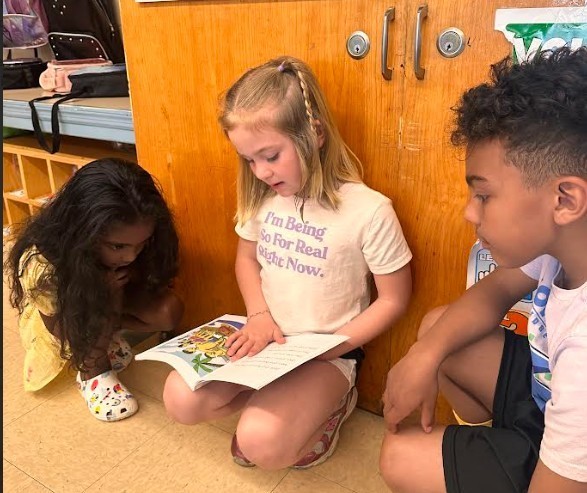
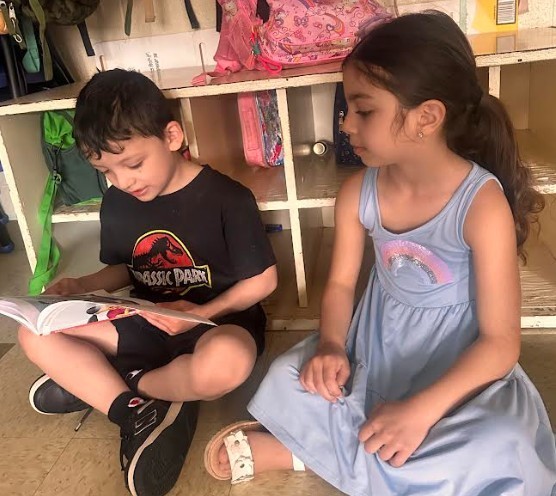
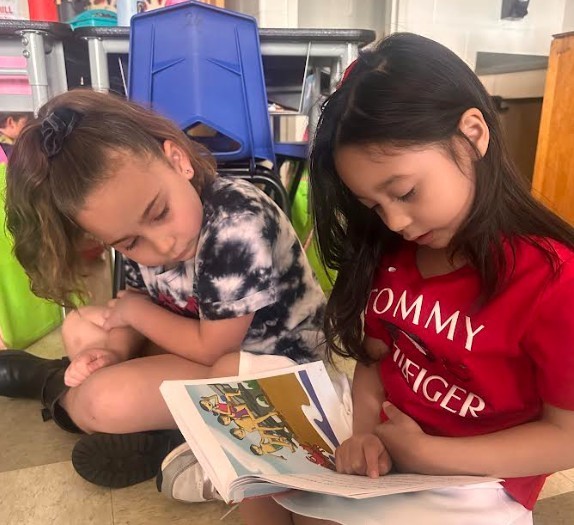
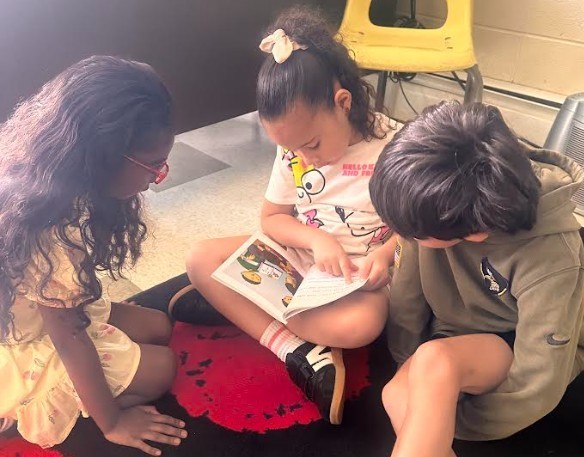
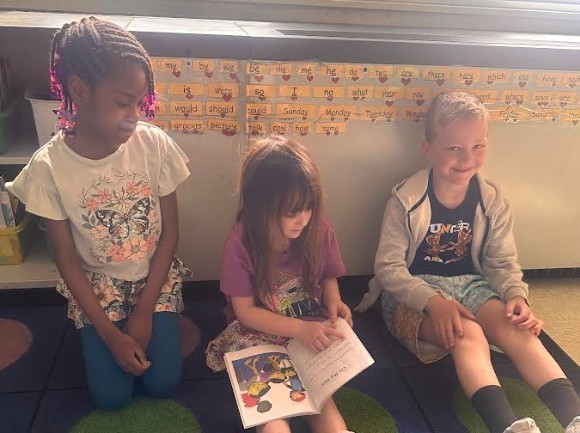
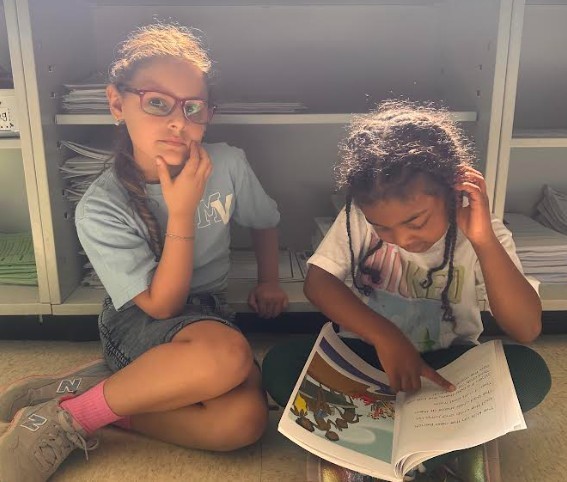
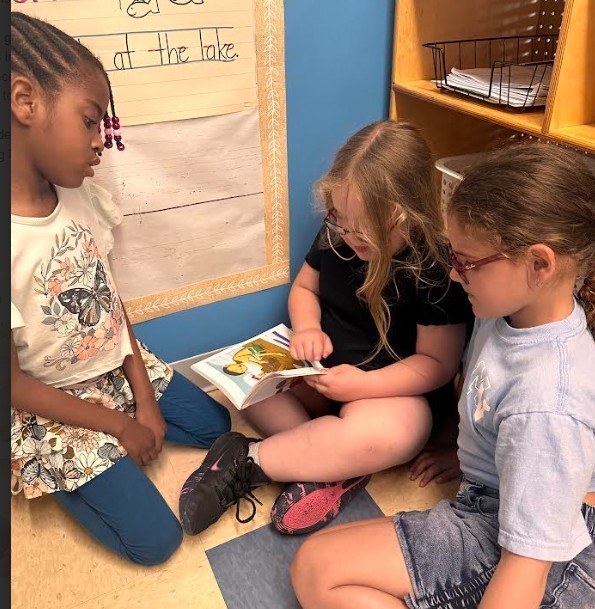
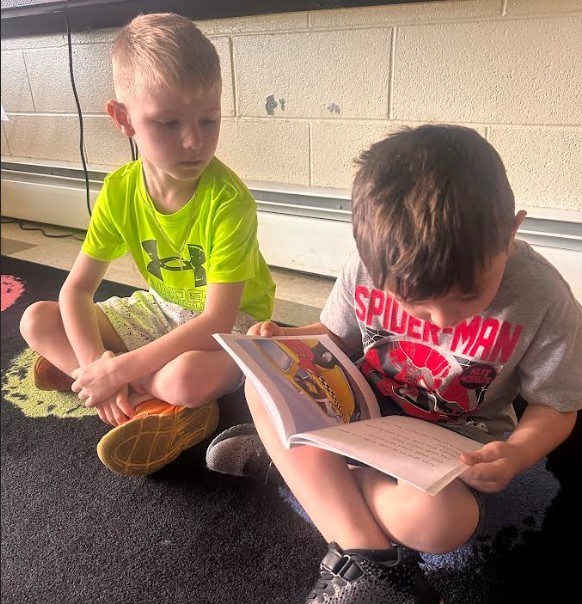
Rosamaria Acevedo’s ES kindergarteners took a big step forward in their literacy journey — with a short but meaningful recent “road trip” to Stephanie Hoffman’s first-grade classroom. It’s a great example of how collaboration within our school helps students grow!
Armed with their Kindergarten Readers, these young learners made their way to Mrs. Hoffman’s room for a cross-grade reading session. More than just story time, it was a chance to show off their developing oral reading fluency — and a reminder of just how far they’ve come.
“By stepping into a new environment, my kindergarteners stepped into leadership roles,” Mrs. Acevedo said. “It takes immense courage to read aloud to an older peer, and our students rose to the occasion with confidence. The session transformed the classroom into a hub of collaborative learning.”
There were many teachable moments for these kindergarteners. They were able to experience peer mentorship when the older first-graders acted as supportive "reading buddies." They saw the shared goal on focusing on the joy of storytelling and the mechanics of language. Plus, there was important social-emotional growth for everyone because building connections across grade levels fosters a stronger school community.
By practicing their oral reading fluency, students are applying the core tenets of the Science of Reading (SOR). Using the district’s CKLA/Amplify framework, these reading pairs focused on decoding accuracy (translating letter sounds into words in real-time); “automaticity” (building the speed and ease necessary for comprehension); and expression (learning how to use their voices to make the text come alive.)
“I am incredibly proud of both classes, my kindergarteners for their courage and growth, and Mrs. Hoffman’s first graders for their kindness and encouragement, offering real-time, gentle feedback that helped support and celebrate their younger peers, Mrs. Acevedo added. “This powerful experience reminded us that reading is not just a skill, but a bridge that brings our school community together.”
Armed with their Kindergarten Readers, these young learners made their way to Mrs. Hoffman’s room for a cross-grade reading session. More than just story time, it was a chance to show off their developing oral reading fluency — and a reminder of just how far they’ve come.
“By stepping into a new environment, my kindergarteners stepped into leadership roles,” Mrs. Acevedo said. “It takes immense courage to read aloud to an older peer, and our students rose to the occasion with confidence. The session transformed the classroom into a hub of collaborative learning.”
There were many teachable moments for these kindergarteners. They were able to experience peer mentorship when the older first-graders acted as supportive "reading buddies." They saw the shared goal on focusing on the joy of storytelling and the mechanics of language. Plus, there was important social-emotional growth for everyone because building connections across grade levels fosters a stronger school community.
By practicing their oral reading fluency, students are applying the core tenets of the Science of Reading (SOR). Using the district’s CKLA/Amplify framework, these reading pairs focused on decoding accuracy (translating letter sounds into words in real-time); “automaticity” (building the speed and ease necessary for comprehension); and expression (learning how to use their voices to make the text come alive.)
“I am incredibly proud of both classes, my kindergarteners for their courage and growth, and Mrs. Hoffman’s first graders for their kindness and encouragement, offering real-time, gentle feedback that helped support and celebrate their younger peers, Mrs. Acevedo added. “This powerful experience reminded us that reading is not just a skill, but a bridge that brings our school community together.”
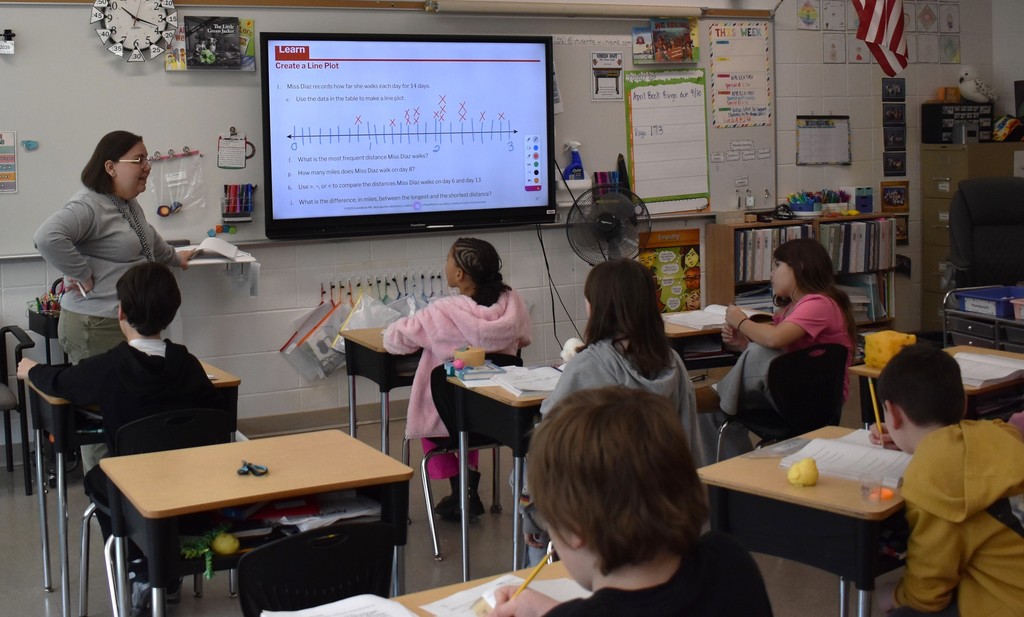
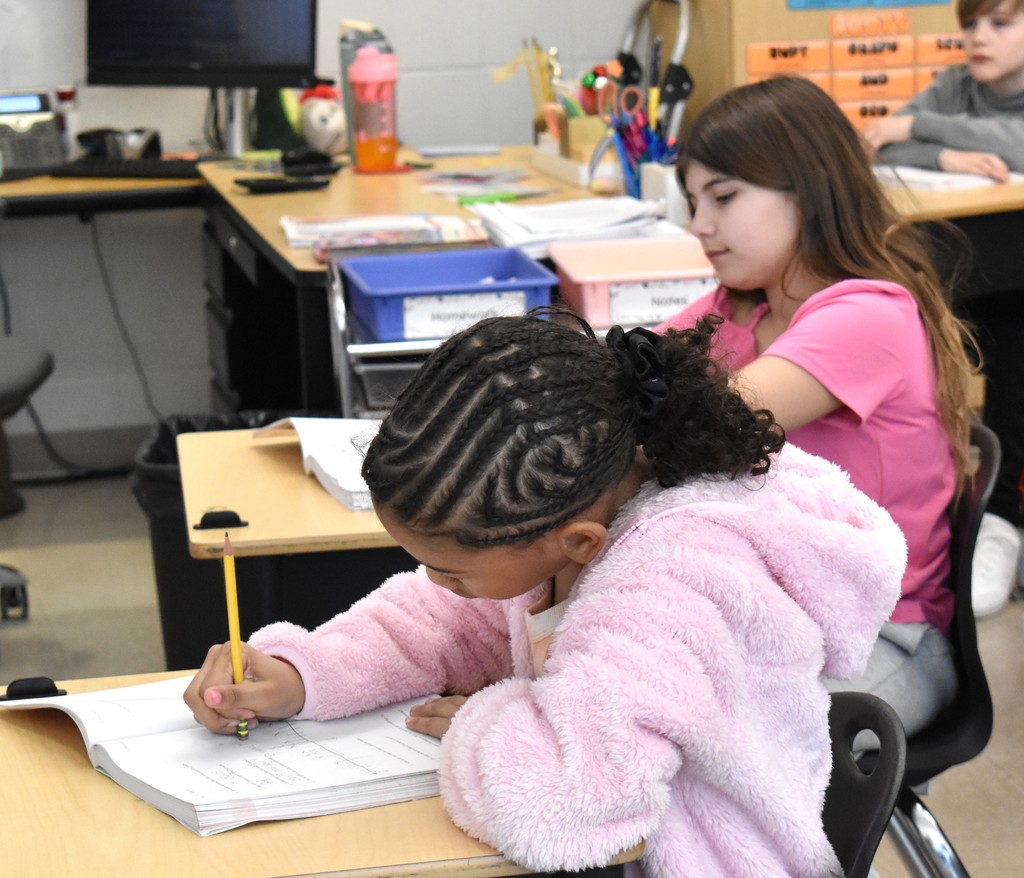
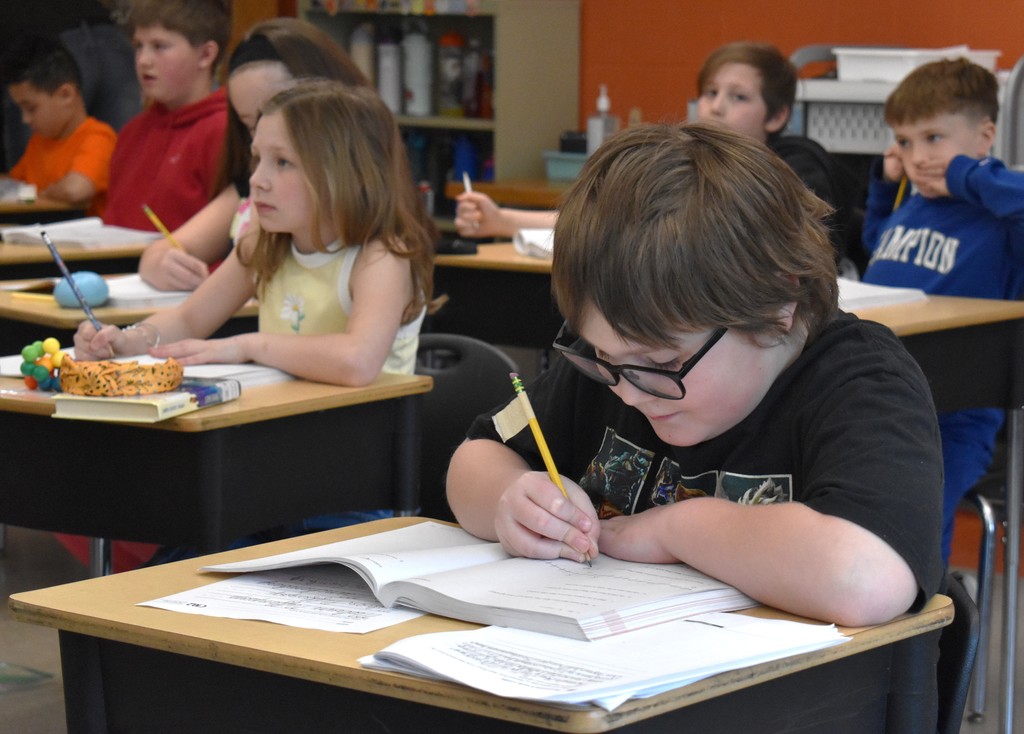
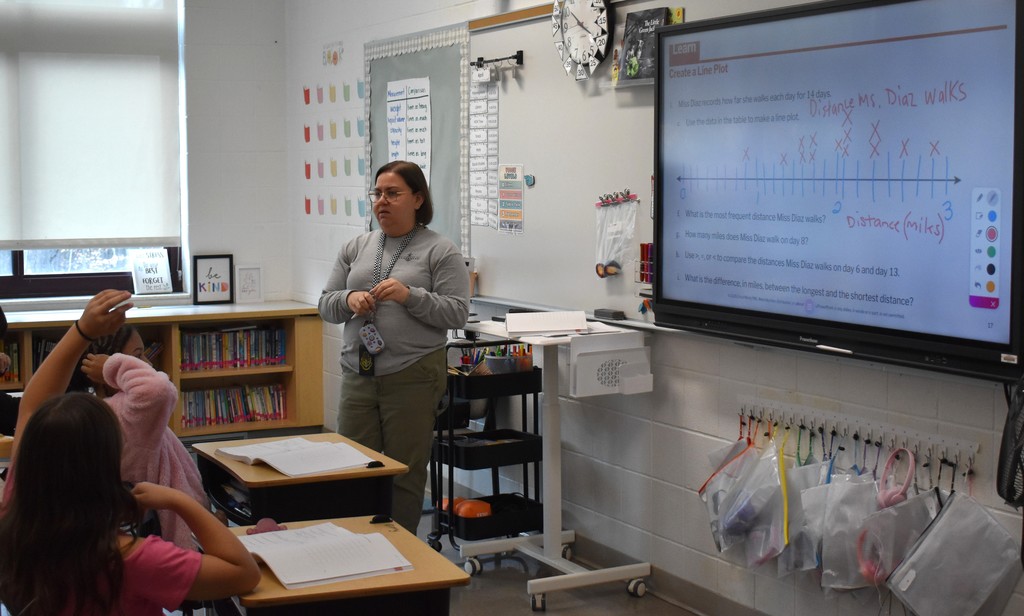
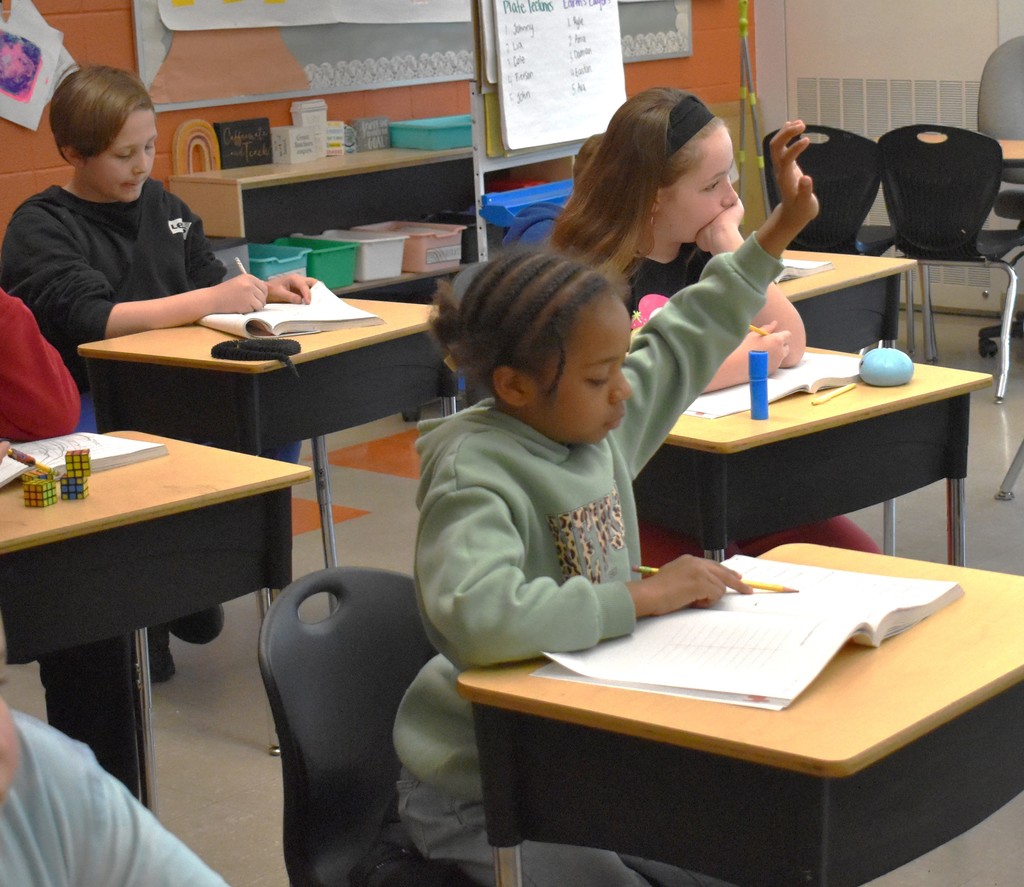
Like all district fourth-graders, Jenna Colman’s Otisville fourth-graders are learning about line plots!
Line plots utilize a data table that shows different information based on what was collected. Students recently completed a fraction unit where they placed fractions on a number line. In this recent lesson, one selection of data was collected based on the distance someone walked in miles over the course of a number of days. Some of that data was shown in fractions or mixed numbers. Using their knowledge of fractions on a number line, students analyzed the data to set their points on the number line and plotted all of their data on the number line.
A line plot is a simple type of graph that fourth graders use to show how often different values appear in a set of data. It is made by drawing a number line and placing X’s above each number to represent how many times that value occurs. Line plots help students organize information, compare values, and answer questions about the data. They’re especially useful for working with measurements and fractions while developing skills in reading and interpreting graphs.
Line plots utilize a data table that shows different information based on what was collected. Students recently completed a fraction unit where they placed fractions on a number line. In this recent lesson, one selection of data was collected based on the distance someone walked in miles over the course of a number of days. Some of that data was shown in fractions or mixed numbers. Using their knowledge of fractions on a number line, students analyzed the data to set their points on the number line and plotted all of their data on the number line.
A line plot is a simple type of graph that fourth graders use to show how often different values appear in a set of data. It is made by drawing a number line and placing X’s above each number to represent how many times that value occurs. Line plots help students organize information, compare values, and answer questions about the data. They’re especially useful for working with measurements and fractions while developing skills in reading and interpreting graphs.
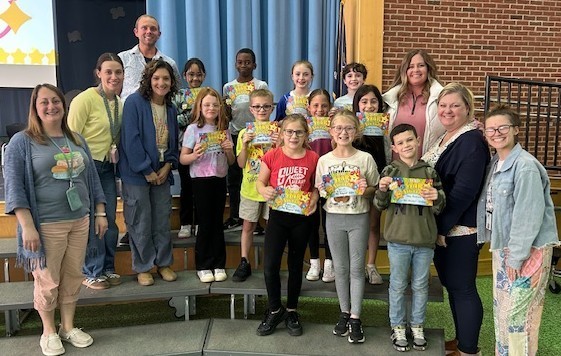
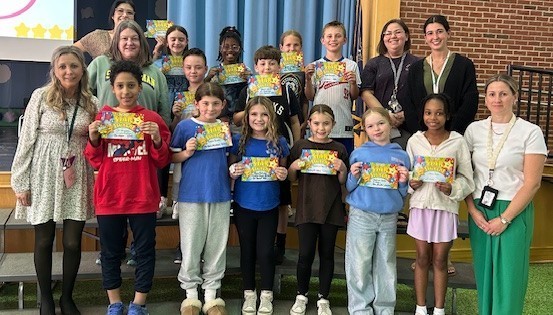
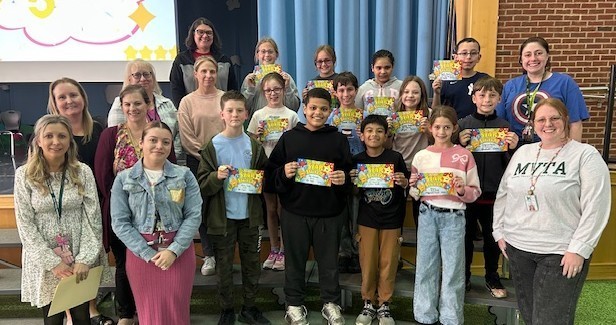
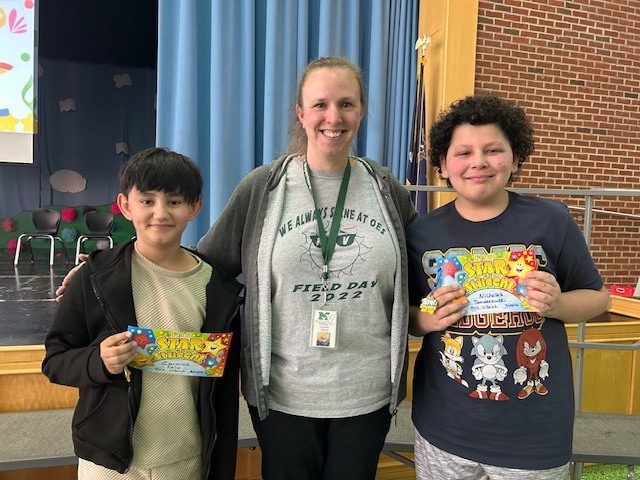
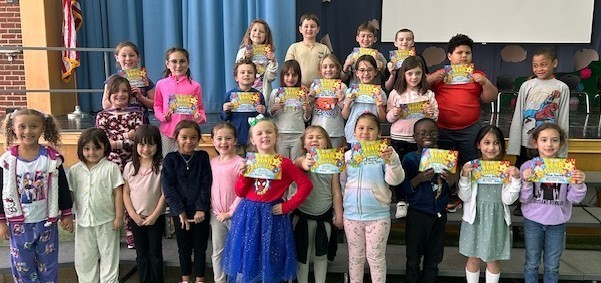
AMAZING! Congratulations to the Otisville Elementary students who have been recognized as PBIS-STAR students for Quarter 3!
We bet you'll recognize many faces!
Otisville's PBIS-STAR program focuses on creating and sustaining a positive school environment which embraces educationally sound methods that foster student character, safety, academic excellence and individual citizenship.
We bet you'll recognize many faces!
Otisville's PBIS-STAR program focuses on creating and sustaining a positive school environment which embraces educationally sound methods that foster student character, safety, academic excellence and individual citizenship.
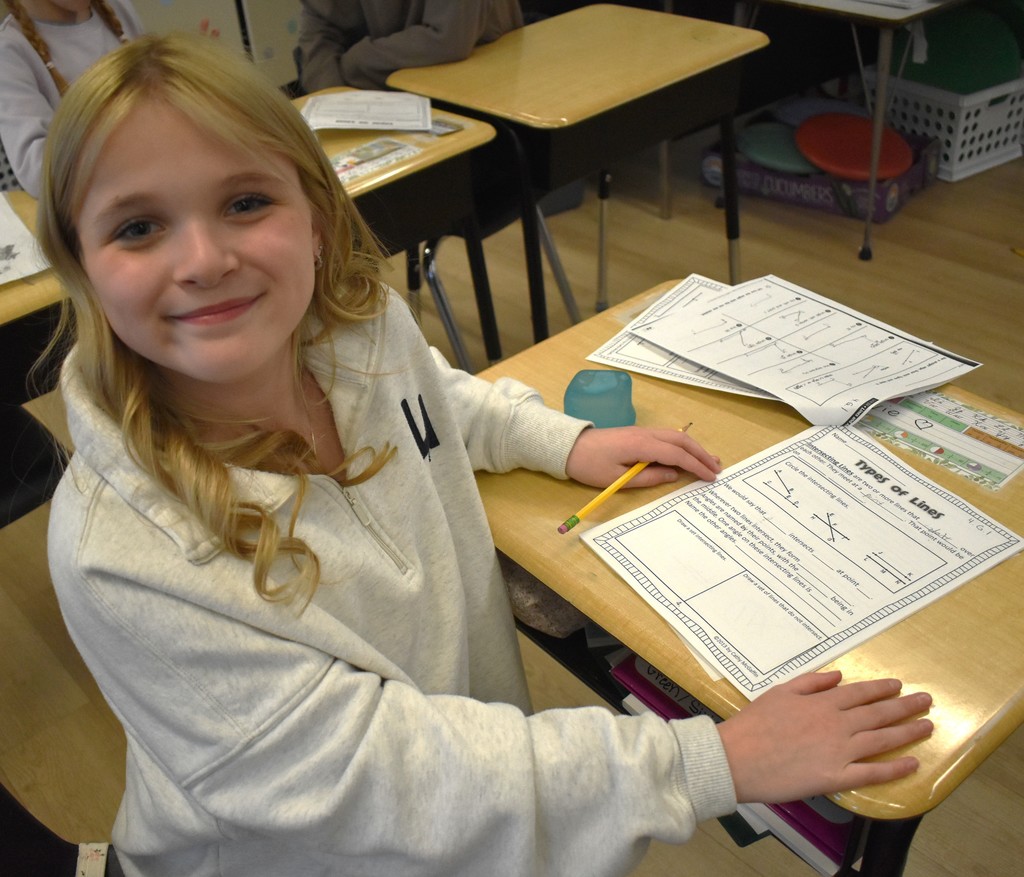
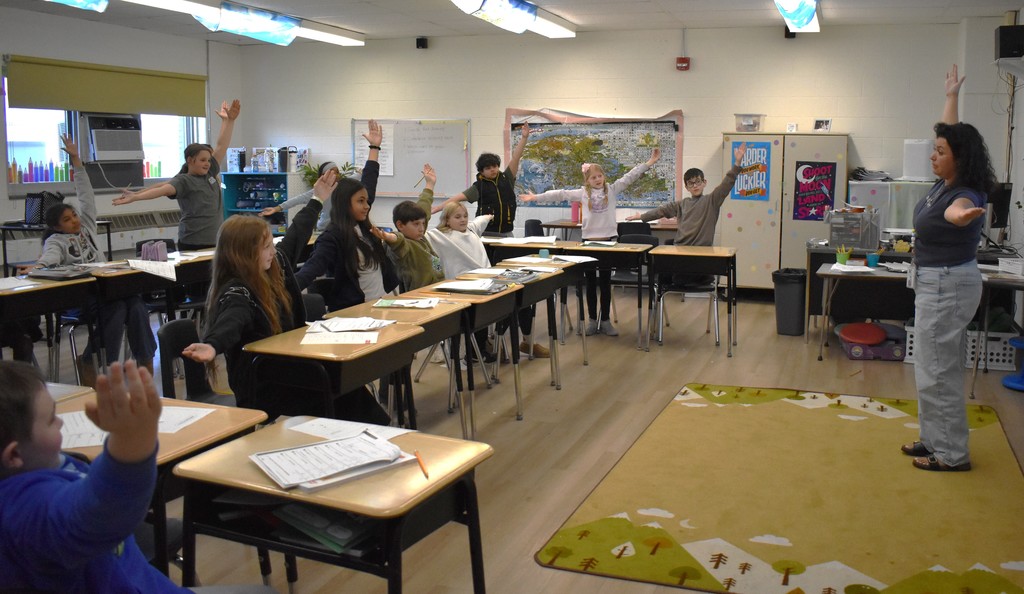
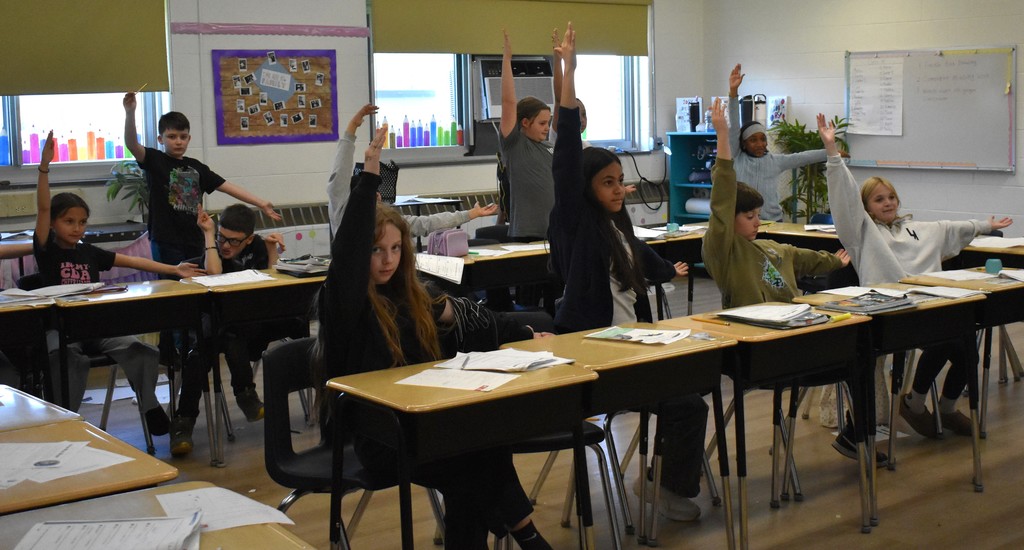
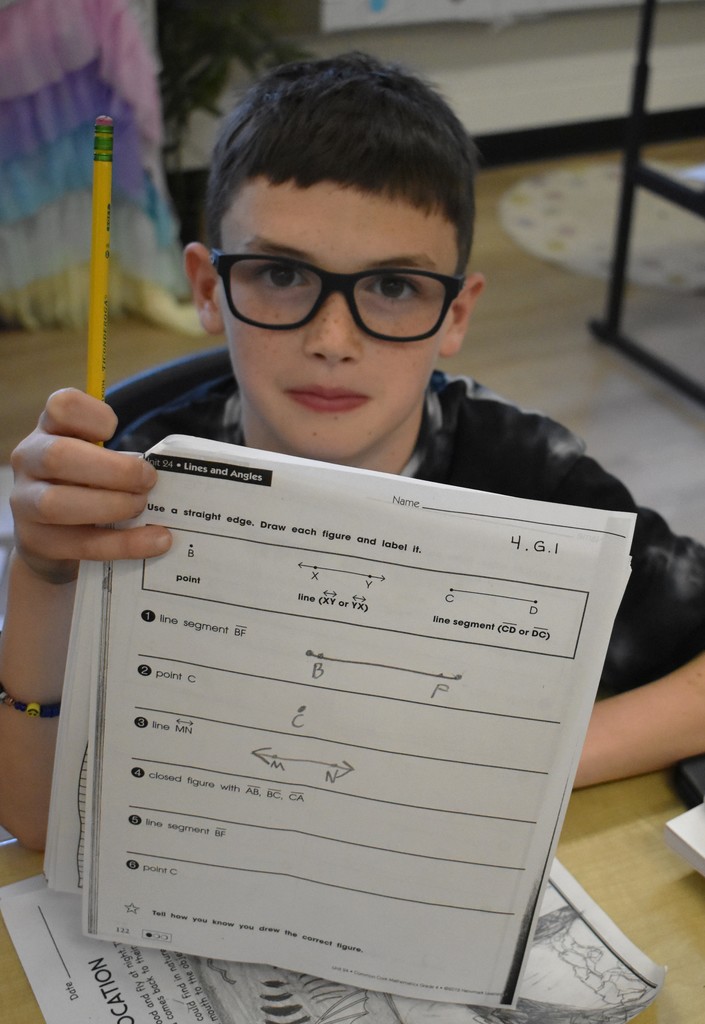
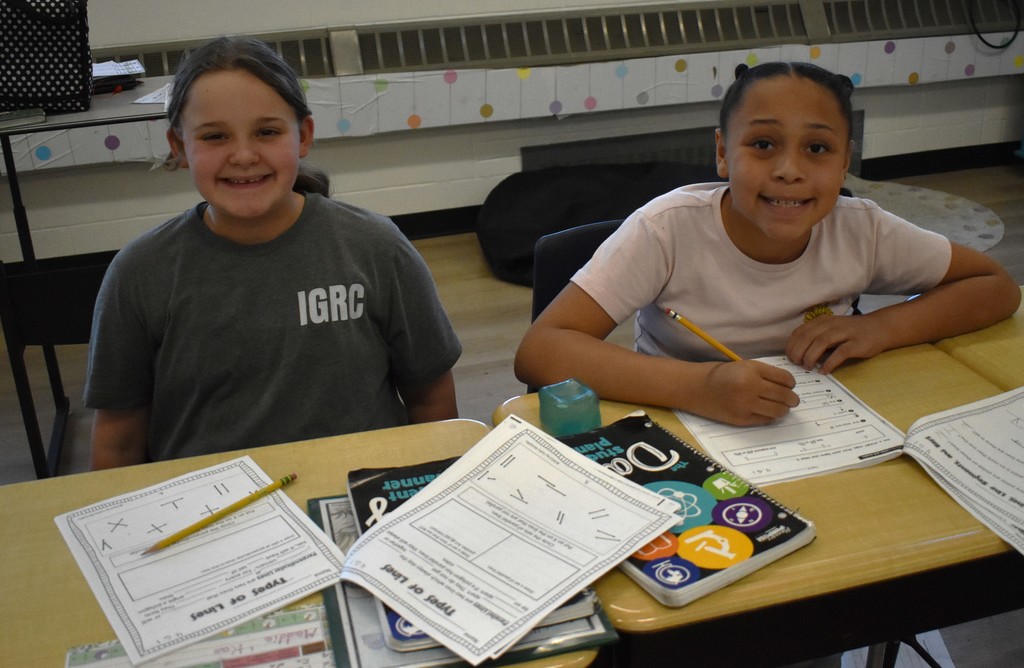
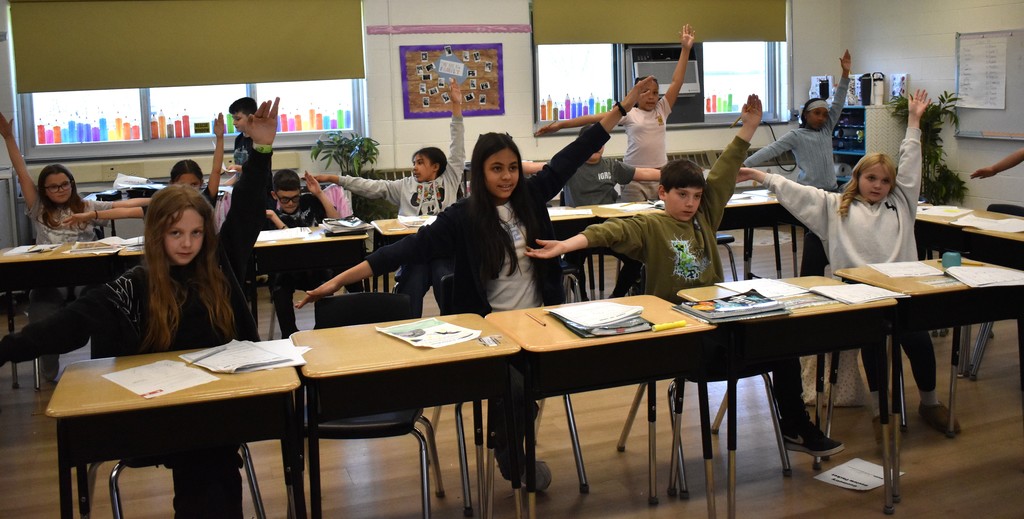
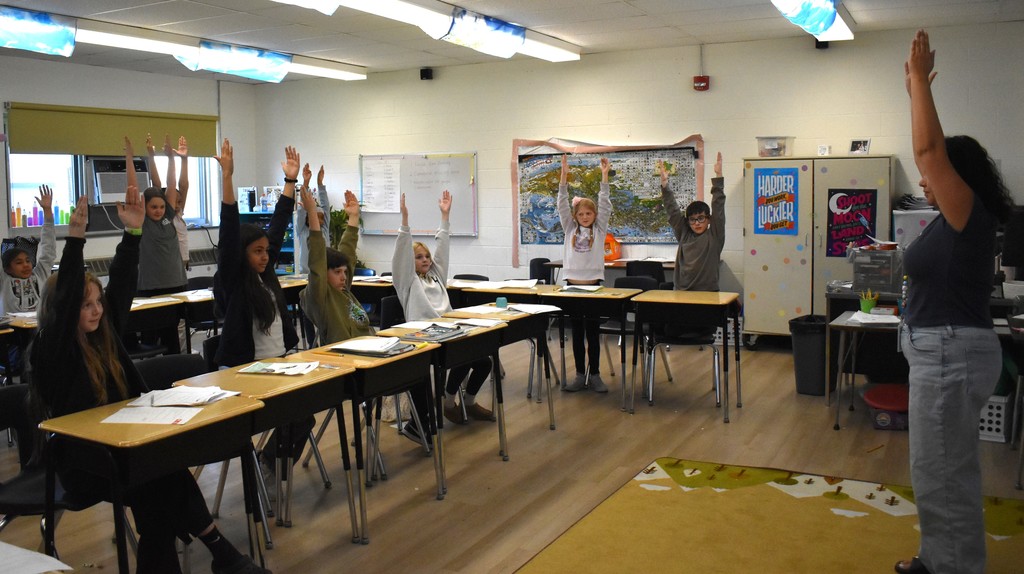
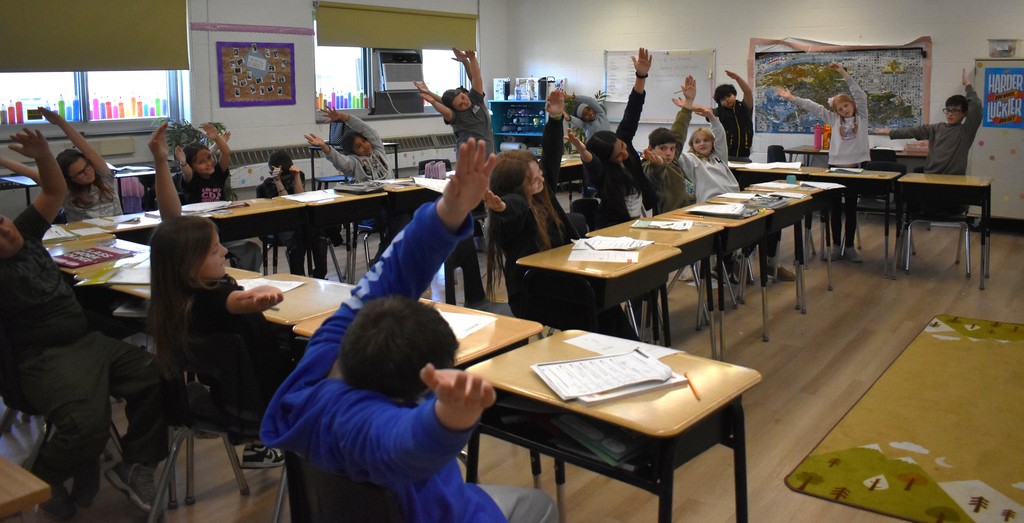
Elizabeth Sirico’s and Susan Green’s IS fourth-graders, like all district fourth-graders, are working on their growing knowledge of geometry during math lessons. This includes exploring different types of angles — acute, obtuse, right, and straight — as well as how parallel, intersecting and perpendicular lines connect to help understand these angles!
A fun part of the math work included using their arms to model and represent lines and angles to demonstrate their knowledge! Take a peek!
A fun part of the math work included using their arms to model and represent lines and angles to demonstrate their knowledge! Take a peek!
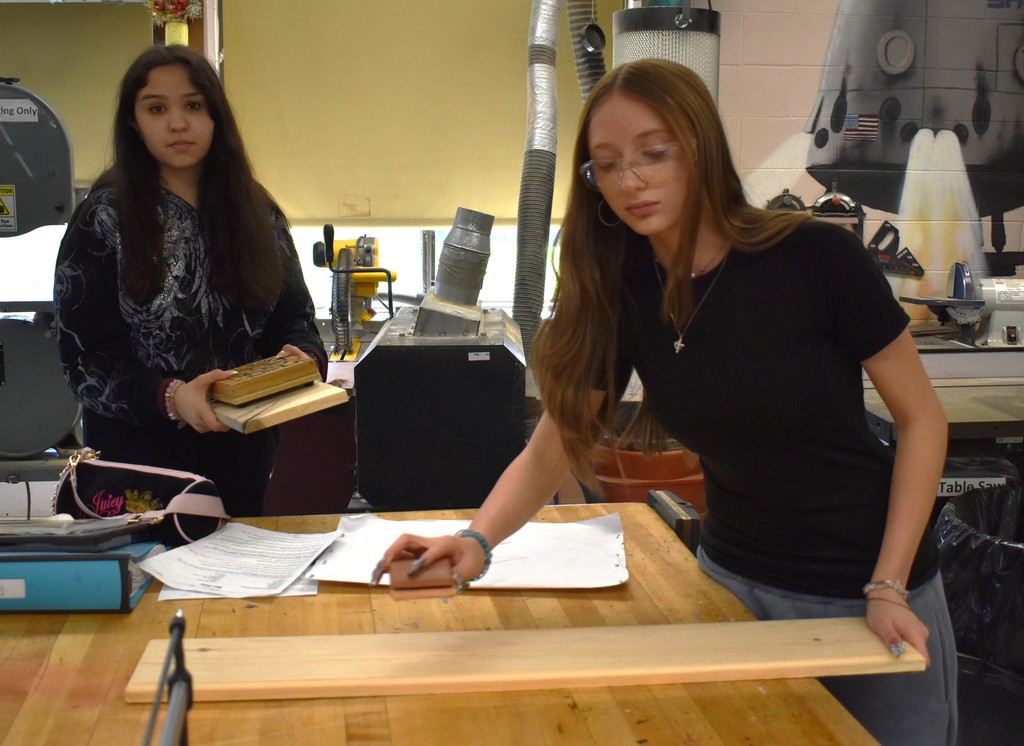
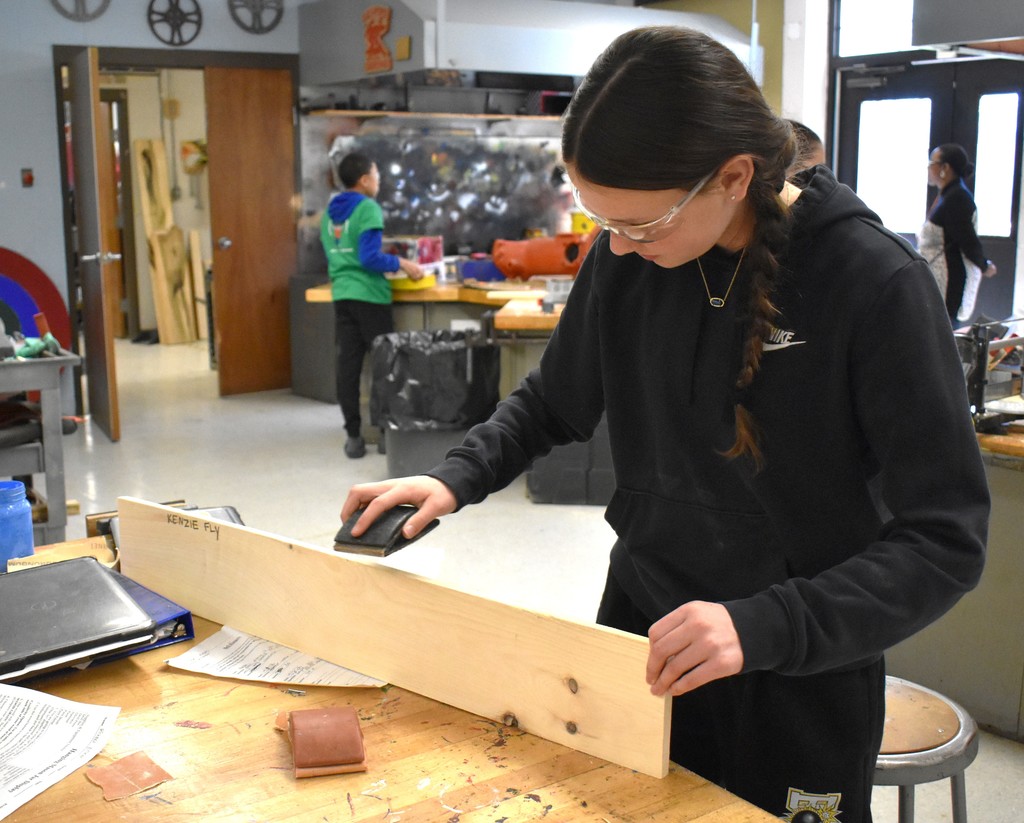
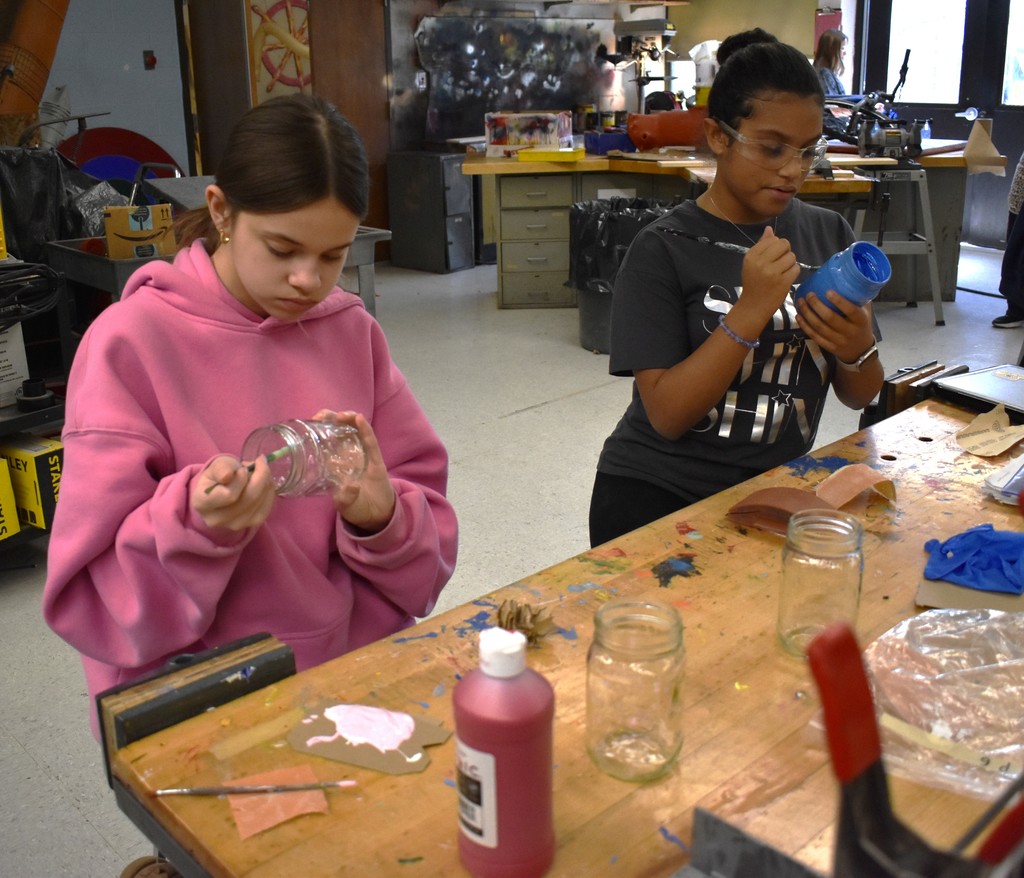
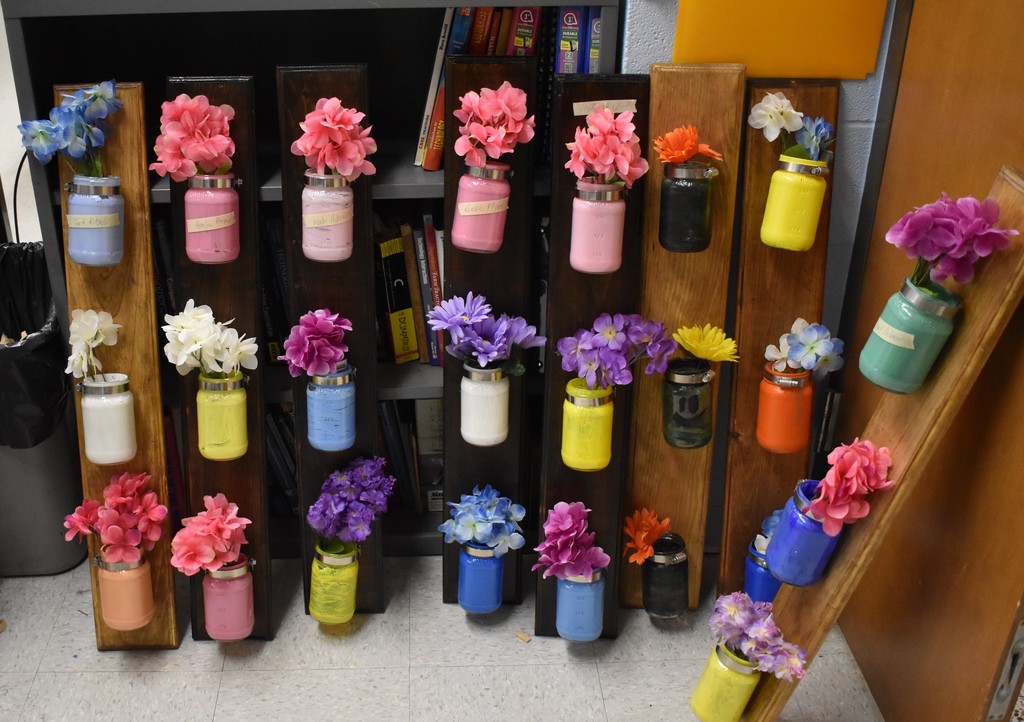
Shhh...we don't want to give anything away, but it's quite possible these are potential Mother's Day gifts being created by Jonathan Clemmons' eighth-grade technology students! Take a peek at their mason jar projects in progress!
Euge! Bene factum!
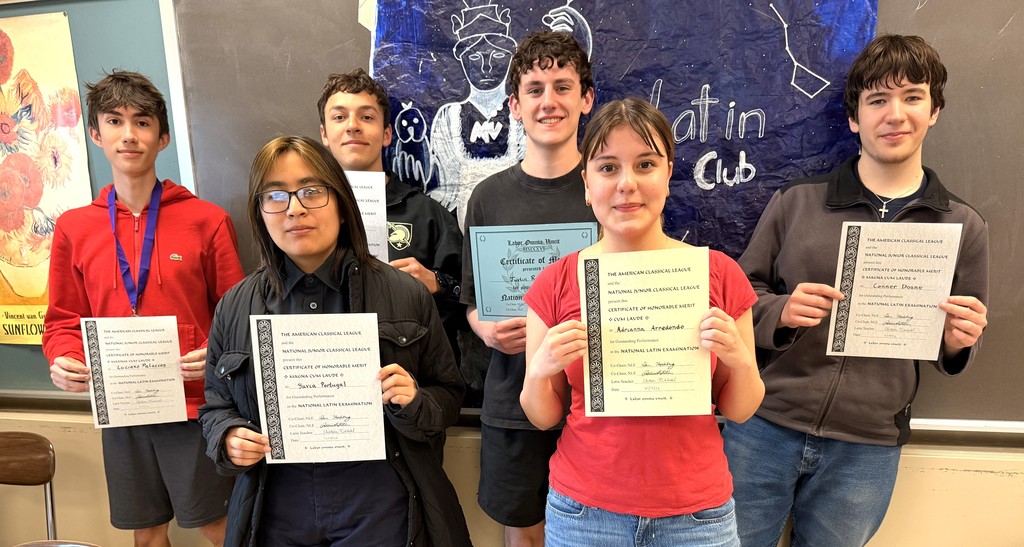
The High School’s Latin Club recently sat for the National Latin Examination administered by the American Classical League. The tests consist of 40 questions involving Roman culture and mythology, Latin grammar and Latin reading comprehension.
Seven Minisink students received awards for their performance on the “Introduction to Latin” exam: Luciano Palacios, Silver Maxima Cum Laude; Charlotte Curraba, Silver Maxima Cum Laude; James Arias, Magna Cum Laude; Conner Doane, Magna Cum Laude; Yuvia Portugal, Magna Cum Laude; Adrianna Arrendondo, Cum Laude; and Justin Roccabruna, Certificate of Merit.
The Latin Club offers students instruction in introductory Latin and no previous experience is necessary. Multi-year members will advance to study real Latin authors. The club also explores Greco-Roman history, art and mythology. At the end of the year, students have the chance to take the appropriate level of the National Latin Exam.
The High School’s Latin Club recently sat for the National Latin Examination administered by the American Classical League. The tests consist of 40 questions involving Roman culture and mythology, Latin grammar and Latin reading comprehension.
Seven Minisink students received awards for their performance on the “Introduction to Latin” exam: Luciano Palacios, Silver Maxima Cum Laude; Charlotte Curraba, Silver Maxima Cum Laude; James Arias, Magna Cum Laude; Conner Doane, Magna Cum Laude; Yuvia Portugal, Magna Cum Laude; Adrianna Arrendondo, Cum Laude; and Justin Roccabruna, Certificate of Merit.
The Latin Club offers students instruction in introductory Latin and no previous experience is necessary. Multi-year members will advance to study real Latin authors. The club also explores Greco-Roman history, art and mythology. At the end of the year, students have the chance to take the appropriate level of the National Latin Exam.
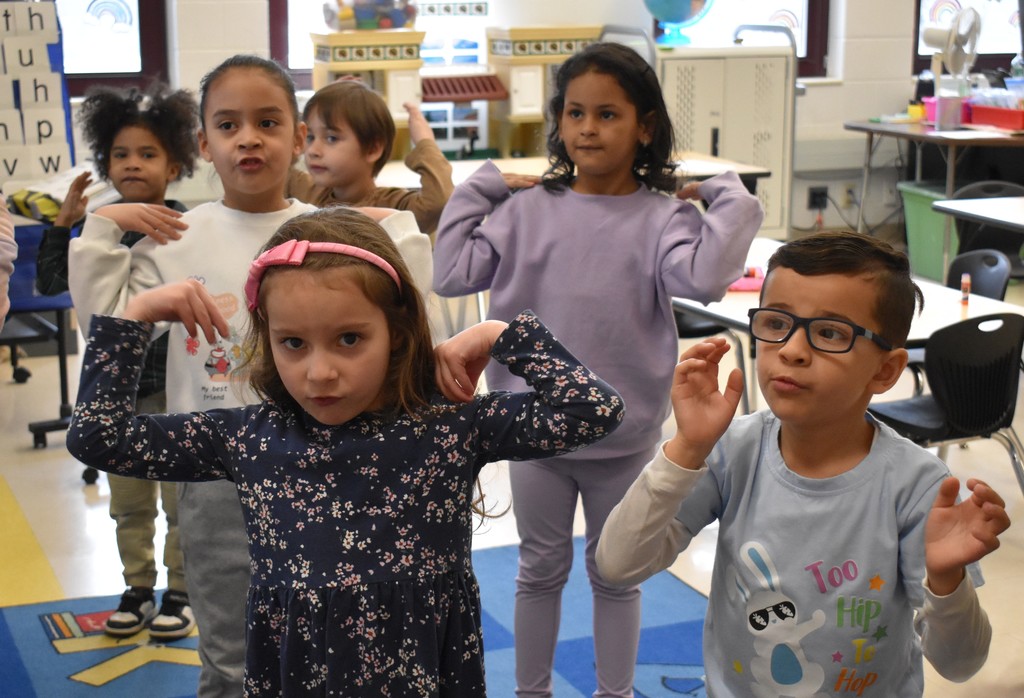
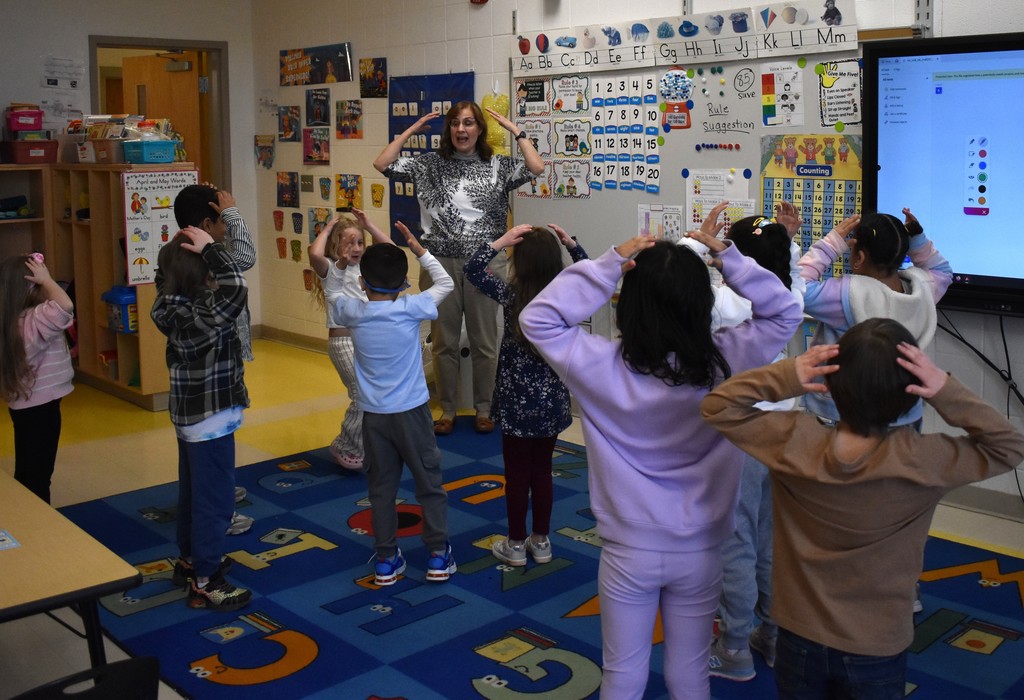
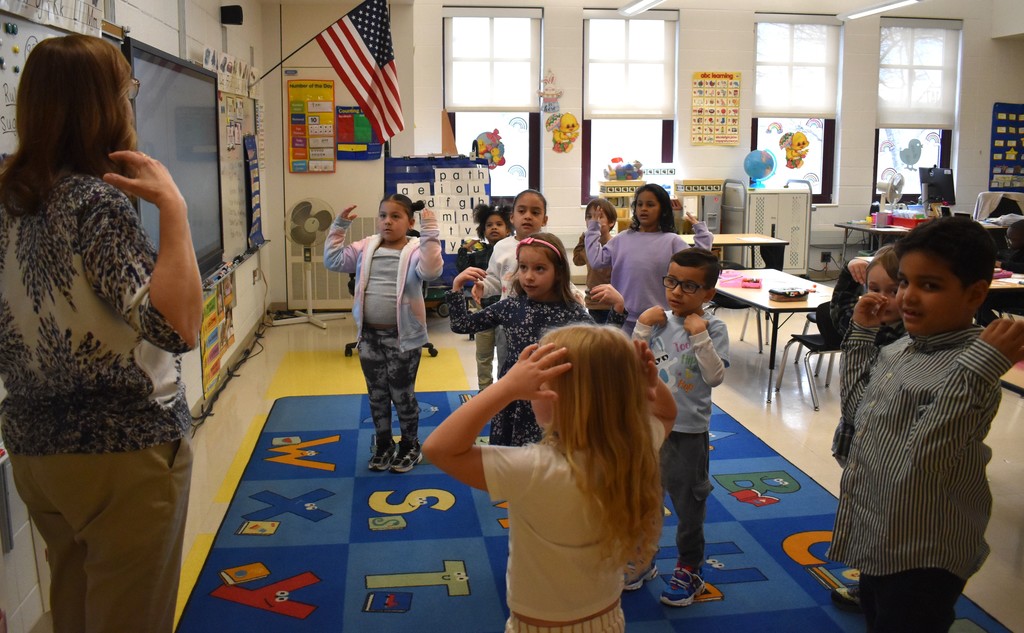
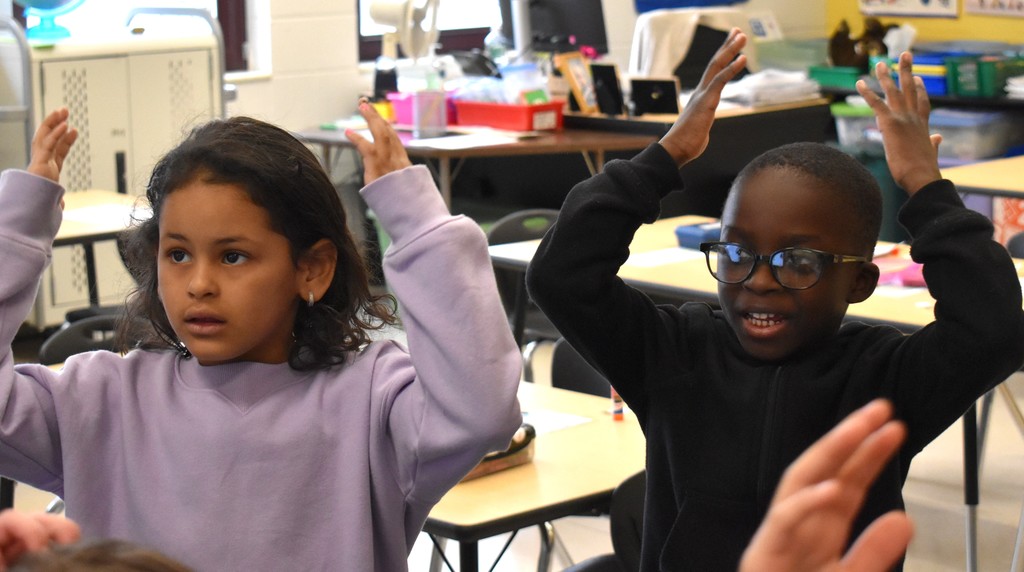
Do you know how to do to an alphabet chant? Elisabeth Harrison’s Otisville kindergarteners do! And they’re really, really good at it, too! (Plus, they’re just too cute!) Their chant has a terrific, rhythmic sound that’s a great learning tool for success!
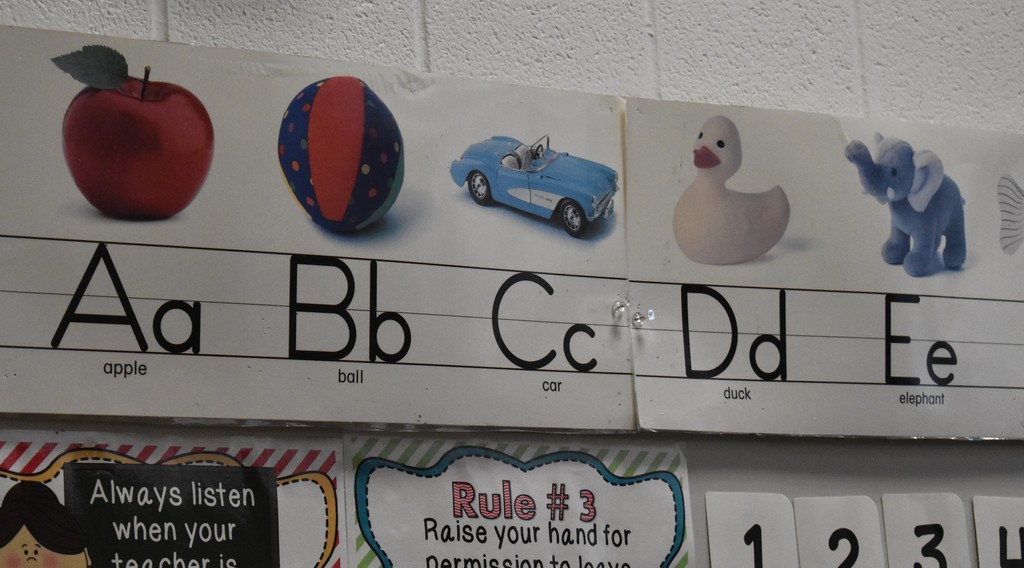
An alphabet chant in kindergarten is a rhythmic, alliterative rhyme used to teach letter names, sounds, and letter-sound correspondence. It usually combines a letter name, a keyword, a sound (e.g., "A-apple-/a/"), and hand motions, making it an engaging multisensory tool for recall.
An alphabet chant in kindergarten is a rhythmic, alliterative rhyme used to teach letter names, sounds, and letter-sound correspondence. It usually combines a letter name, a keyword, a sound (e.g., "A-apple-/a/"), and hand motions, making it an engaging multisensory tool for recall.
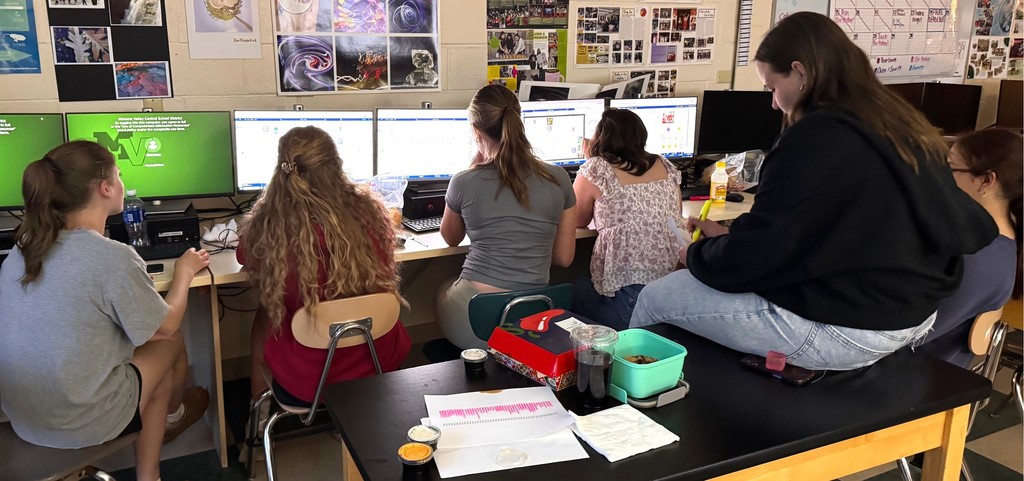
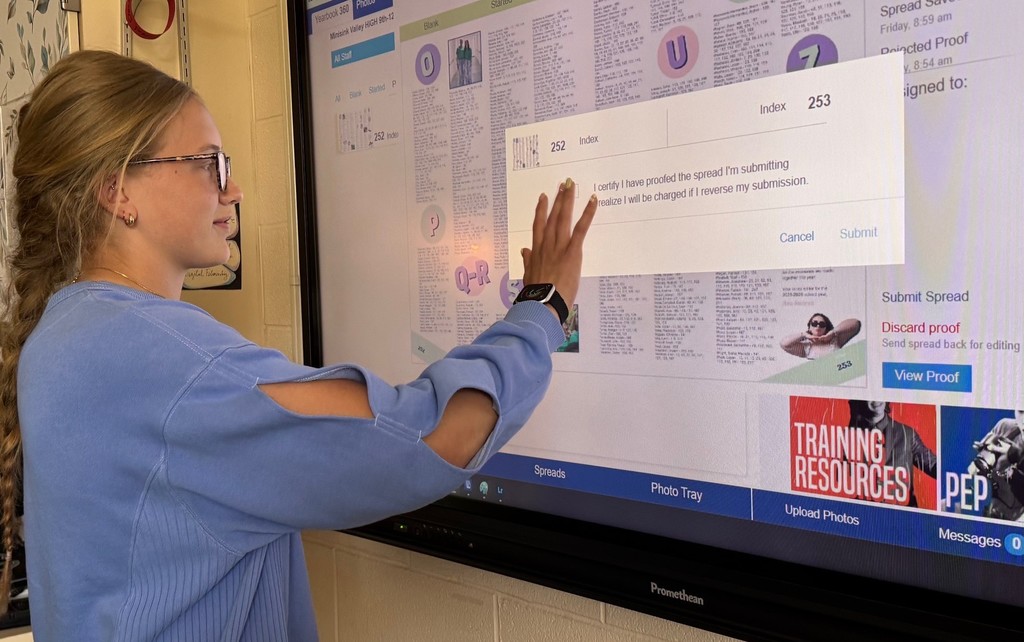
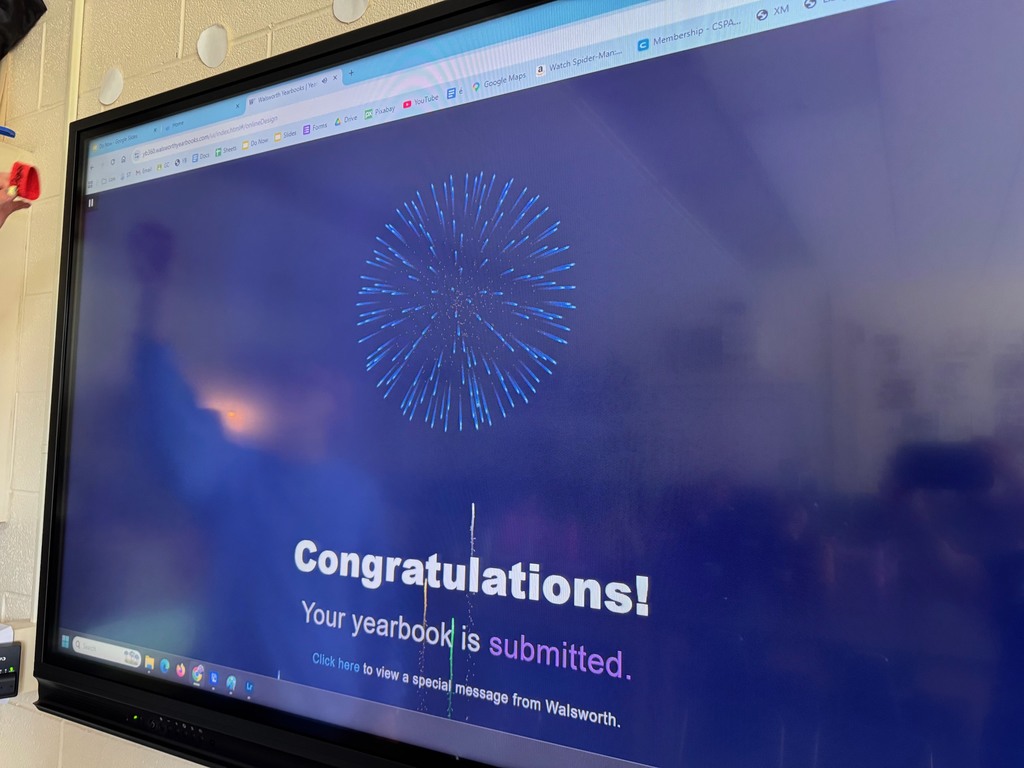
It’s the end of April and that means only one thing for the High School’s yearbook class: Final deadline!
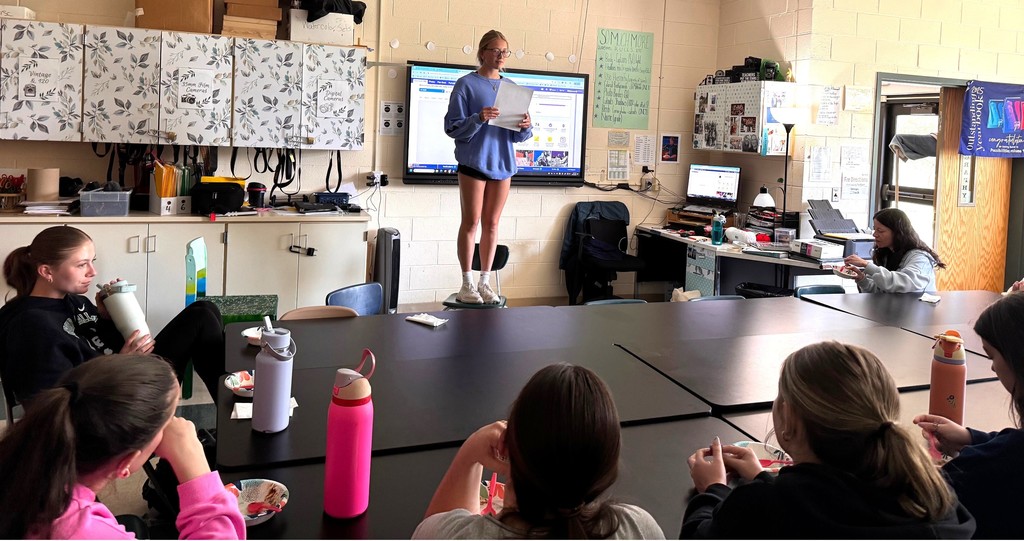
This past Friday, yearbook staff celebrated their last page submissions. Editor-in-chief Ella Michelitch, a four year member of the yearbook staff, read her letter to the readers aloud for the first time, which was inspired by this year’s theme, “So Much More,” and the opportunity the New York State cell phone policy gave her classmates to experience each day and connect with each other free of scrolling.
“Every year the staff starts with 256 blank pages and fills them with photos, quotes and stories created by students for students,” said Advisor Kat Hoolan. “The final deadline is always bittersweet. First, it’s the relief the massive project is complete which vibrates through the room. But this also means a goodbye to the seniors dedicated to creating Vale, Volume 63.”
Congratulations to the senior members of the yearbook staff for a job well-done! We can’t wait to see the yearbook!
Jack Blaikner
Ashlyn Burke
Kathryn Jones
Reilly Kain-Dickinson
Samatha Kassel
Siyassa Mathis
Ella Michelitch
Olivia Pollock
Brianna Soriano
This past Friday, yearbook staff celebrated their last page submissions. Editor-in-chief Ella Michelitch, a four year member of the yearbook staff, read her letter to the readers aloud for the first time, which was inspired by this year’s theme, “So Much More,” and the opportunity the New York State cell phone policy gave her classmates to experience each day and connect with each other free of scrolling.
“Every year the staff starts with 256 blank pages and fills them with photos, quotes and stories created by students for students,” said Advisor Kat Hoolan. “The final deadline is always bittersweet. First, it’s the relief the massive project is complete which vibrates through the room. But this also means a goodbye to the seniors dedicated to creating Vale, Volume 63.”
Congratulations to the senior members of the yearbook staff for a job well-done! We can’t wait to see the yearbook!
Jack Blaikner
Ashlyn Burke
Kathryn Jones
Reilly Kain-Dickinson
Samatha Kassel
Siyassa Mathis
Ella Michelitch
Olivia Pollock
Brianna Soriano
Congratulations to the 23 students representing the Middle School, the Intermediate School and Otisville Elementary this past weekend’s Orange County Music Educators Association (OCEMA) Elementary All-County Music Festival held at Monroe-Woodbury High School this past Friday and Saturday! These talented musicians and singers represented the district with honor and distinction!
Band:
Elizabeth Claus, Flute
Leah Galligan, Saxophone
James Karpinski, Trumpet
Adrien Kusztykiewicz, Horn
Dejana Rosa, Clarinet
Chorus:
Julianna Andrade, Alto
Isabelle Decker, Alto
Nicolas Ellert, Alto
Hanna Elman, Soprano
Kenzie Ferdula, Alto
Mariyah Fonrose, Soprano
Penelope Greenberg, Soprano
Helen Huchital, Alto
Everly Johnson, Alto
Carla Lajara, Alto
Jemma Marsala, Alto
Gracelynn Morse, Soprano
Jillian O'Sullivan, Soprano
Alaina Paredes, Soprano
Devin Paredes, Soprano
Jandi Romualdo, Soprano
Finley Rossi, Soprano
Emilee Vernatter, Alto
The Elementary All-County Music Festival brought together talented young musicians from across the county to perform in bands, choruses, and orchestras. It featured rigorous selection processes to showcase elite elementary school performers, overseen by the OCMEA.
Band:
Elizabeth Claus, Flute
Leah Galligan, Saxophone
James Karpinski, Trumpet
Adrien Kusztykiewicz, Horn
Dejana Rosa, Clarinet
Chorus:
Julianna Andrade, Alto
Isabelle Decker, Alto
Nicolas Ellert, Alto
Hanna Elman, Soprano
Kenzie Ferdula, Alto
Mariyah Fonrose, Soprano
Penelope Greenberg, Soprano
Helen Huchital, Alto
Everly Johnson, Alto
Carla Lajara, Alto
Jemma Marsala, Alto
Gracelynn Morse, Soprano
Jillian O'Sullivan, Soprano
Alaina Paredes, Soprano
Devin Paredes, Soprano
Jandi Romualdo, Soprano
Finley Rossi, Soprano
Emilee Vernatter, Alto
The Elementary All-County Music Festival brought together talented young musicians from across the county to perform in bands, choruses, and orchestras. It featured rigorous selection processes to showcase elite elementary school performers, overseen by the OCMEA.
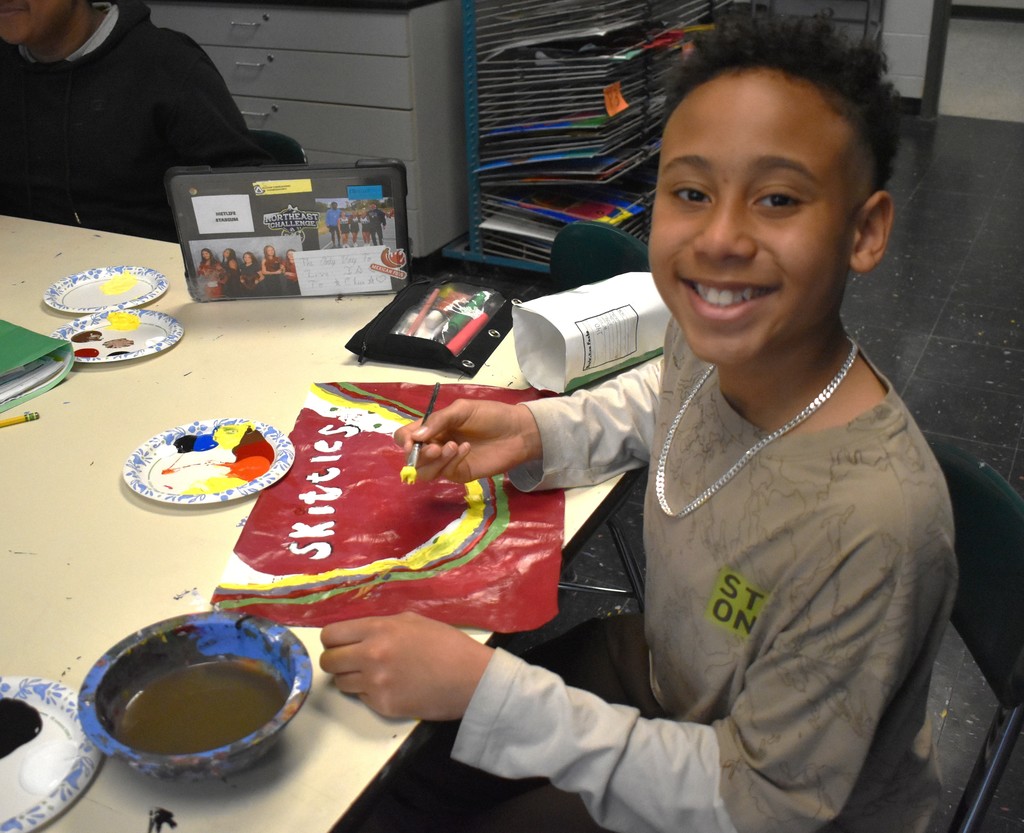
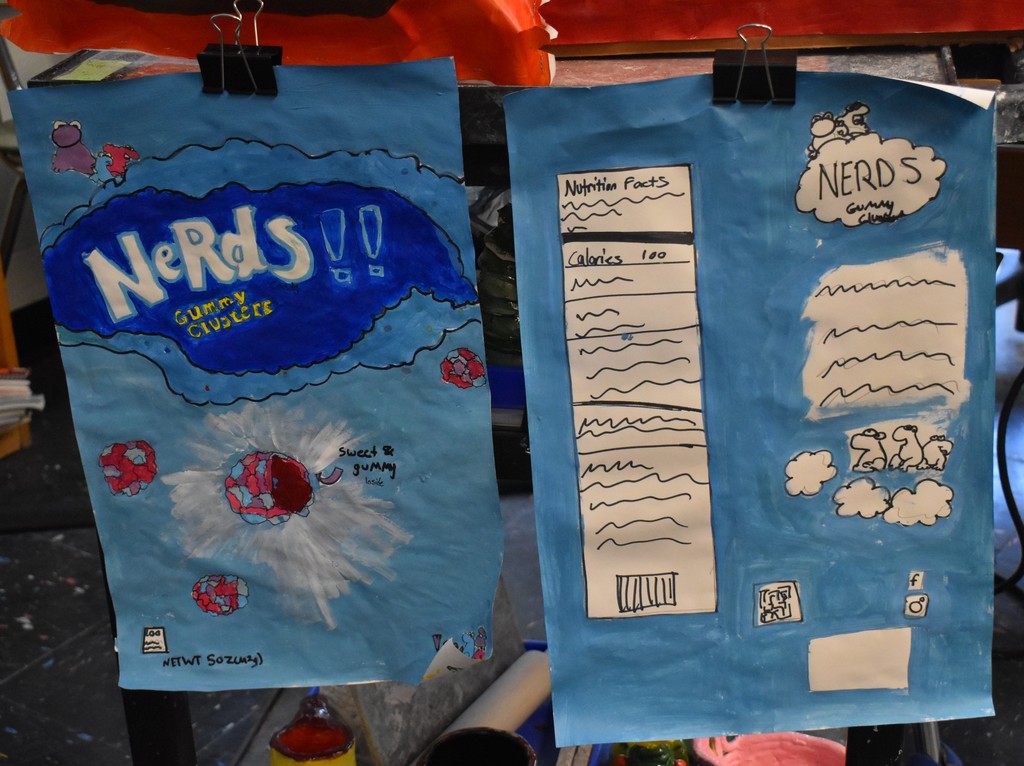
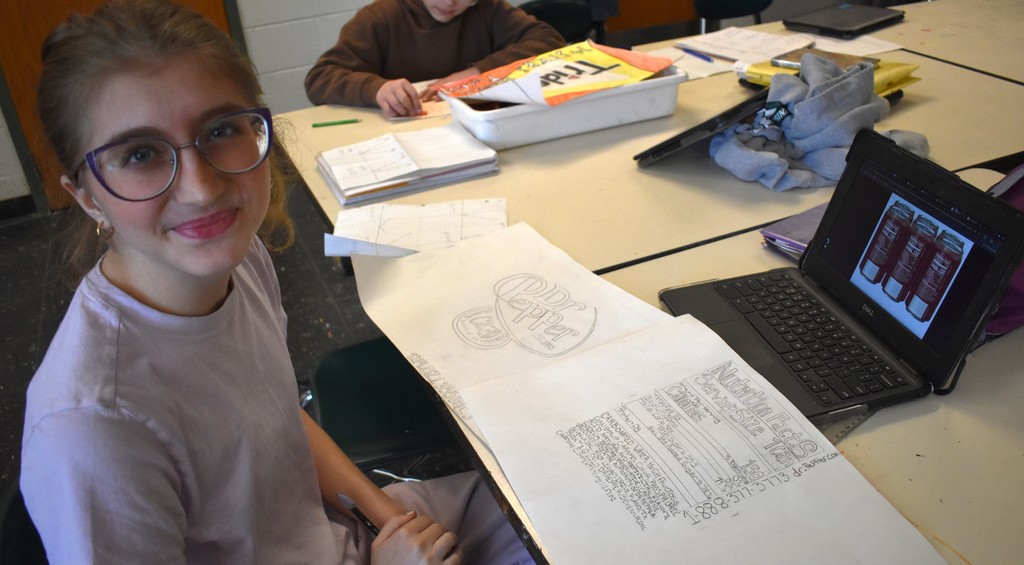
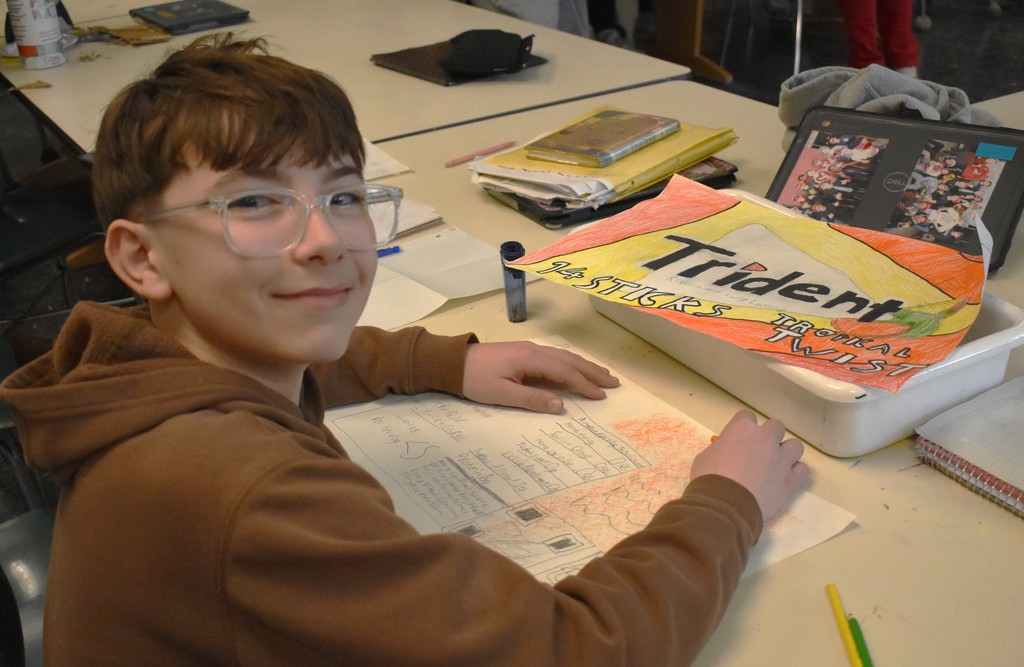
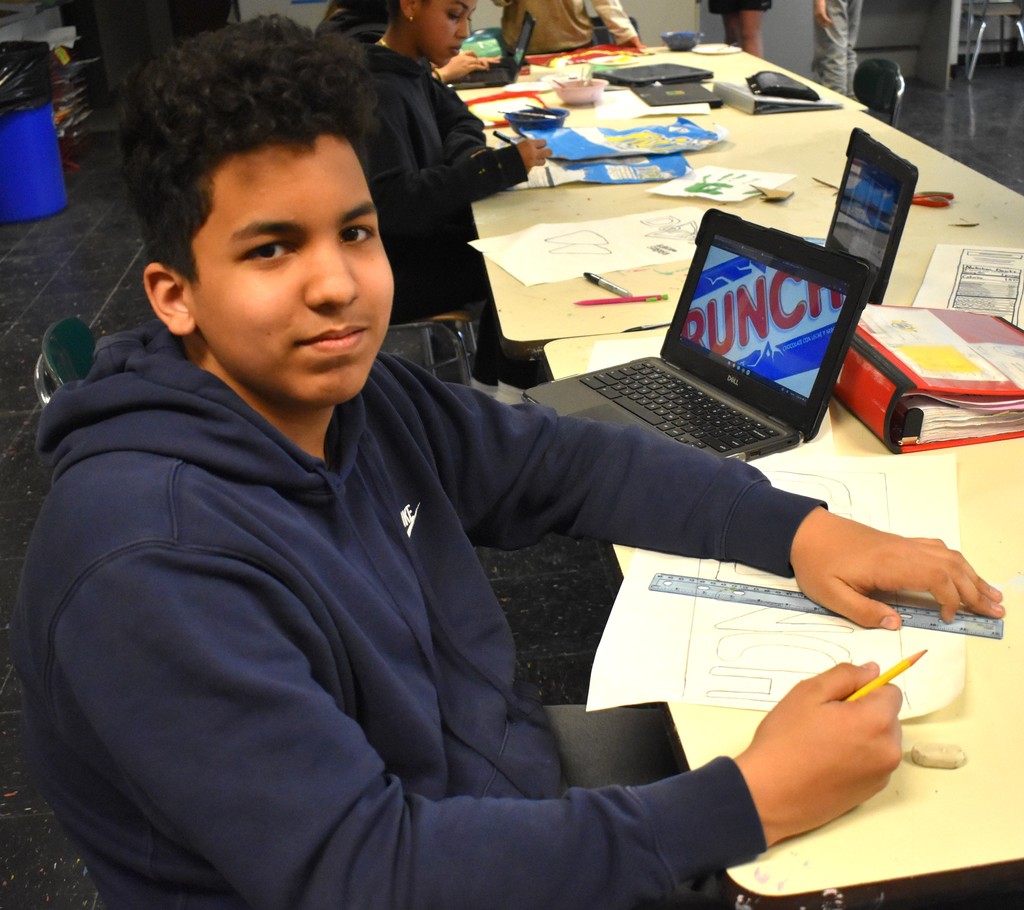
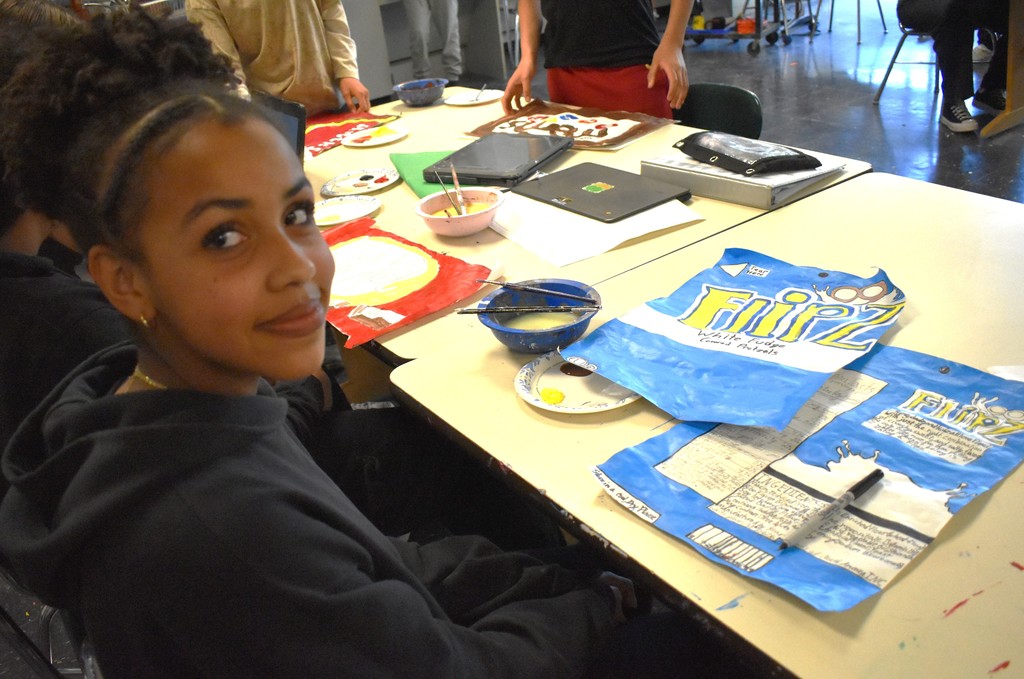
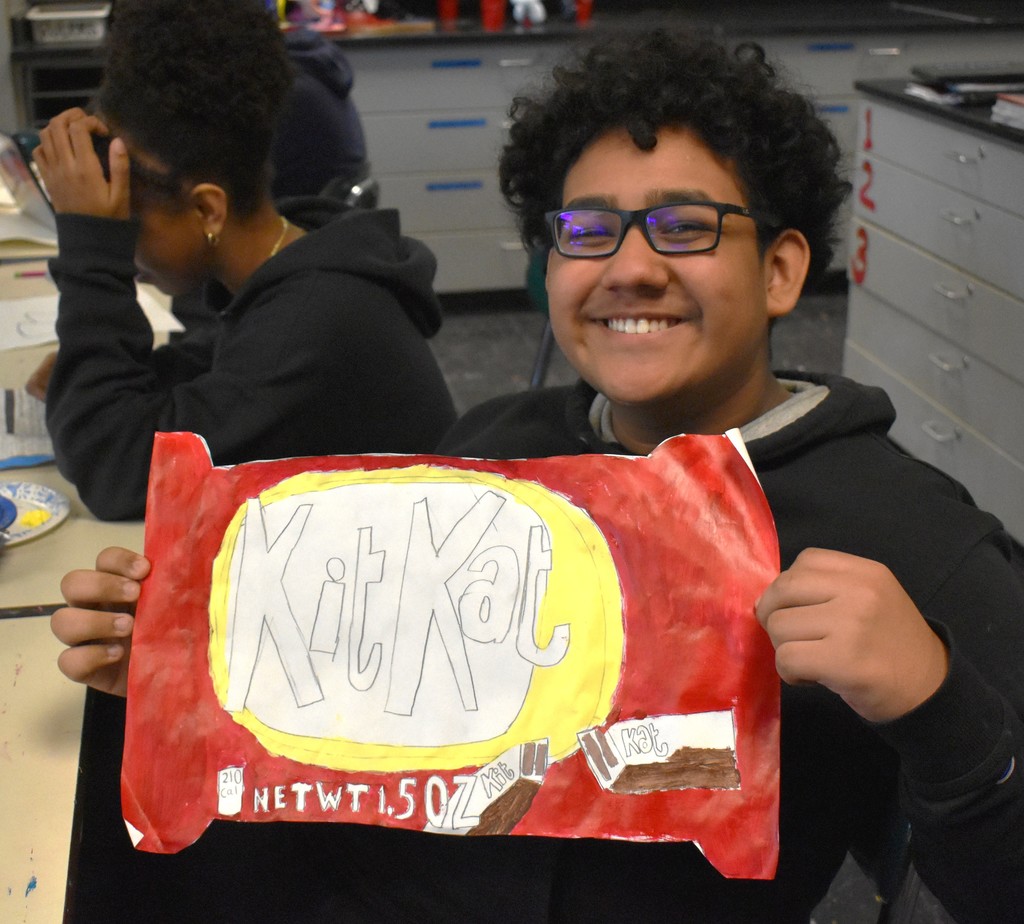
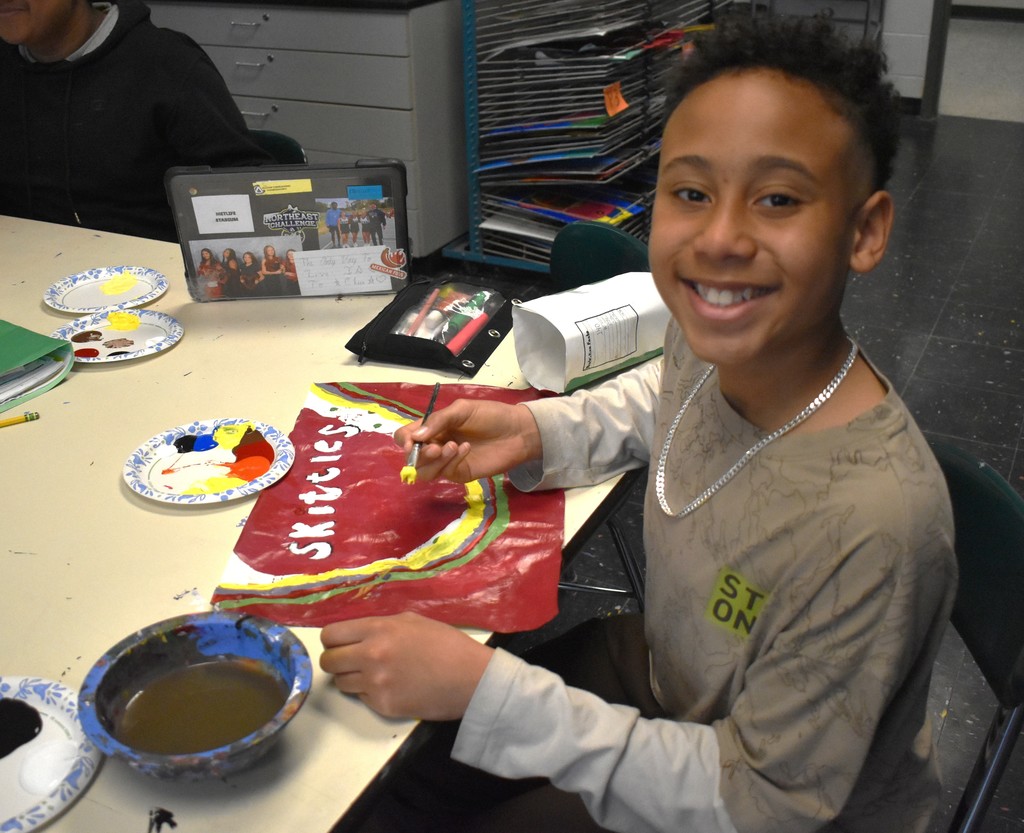
Brian Maione’s eighth-grade art students are diving into the world of Pop Art by designing bold, oversized sculptures inspired by the legendary Claes Oldenburg.
Each student selects a favorite snack — whether it’s candy, cookies, chips, or any treat that comes crinkling out of a bag. They begin by sketching their chosen snack, paying attention to dynamic composition, eye-catching layout, and strong overall design. Their final pieces are brought to life on 12x18 paper using vibrant acrylic paint and crisp Sharpie linework, giving every sculpture a striking Pop Art punch.
Claes Oldenburg, a Swedish-American icon of the Pop Art movement, became famous for reimagining everyday objects as monumental, playful sculptures. From giant hamburgers to towering tubes of lipstick—and his “Spoonbridge and Cherry”—Oldenburg’s work transforms the ordinary into the extraordinary. His imaginative style sets the perfect stage for students to explore scale, color, and creativity in their own snack-inspired masterpieces.
Each student selects a favorite snack — whether it’s candy, cookies, chips, or any treat that comes crinkling out of a bag. They begin by sketching their chosen snack, paying attention to dynamic composition, eye-catching layout, and strong overall design. Their final pieces are brought to life on 12x18 paper using vibrant acrylic paint and crisp Sharpie linework, giving every sculpture a striking Pop Art punch.
Claes Oldenburg, a Swedish-American icon of the Pop Art movement, became famous for reimagining everyday objects as monumental, playful sculptures. From giant hamburgers to towering tubes of lipstick—and his “Spoonbridge and Cherry”—Oldenburg’s work transforms the ordinary into the extraordinary. His imaginative style sets the perfect stage for students to explore scale, color, and creativity in their own snack-inspired masterpieces.
Big-time learning is happening in kindergarten!
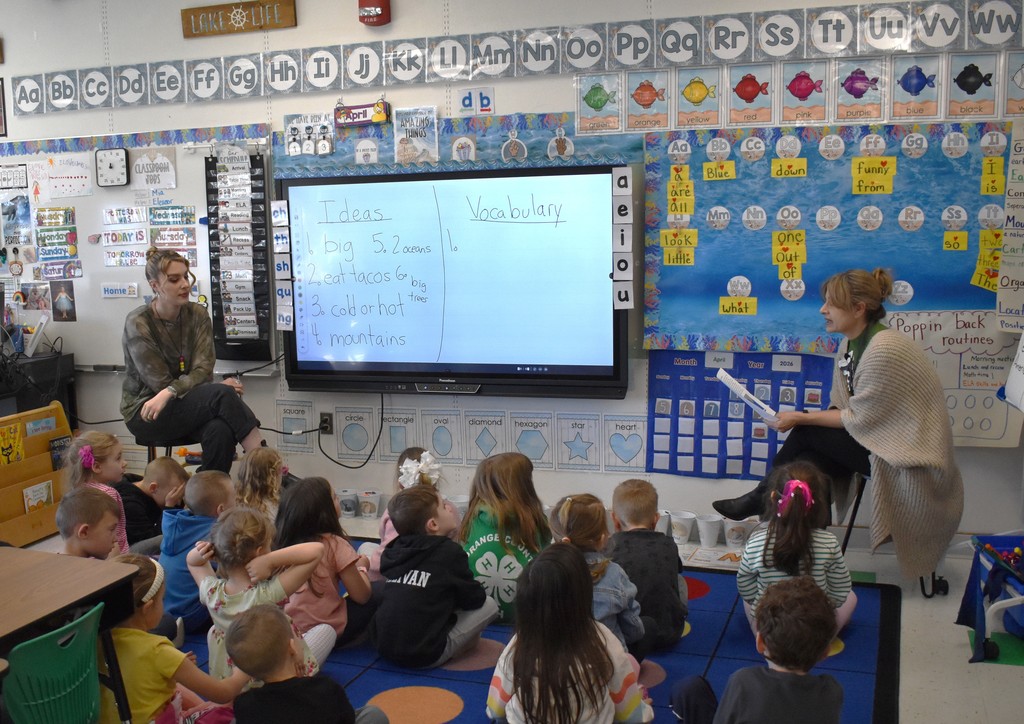
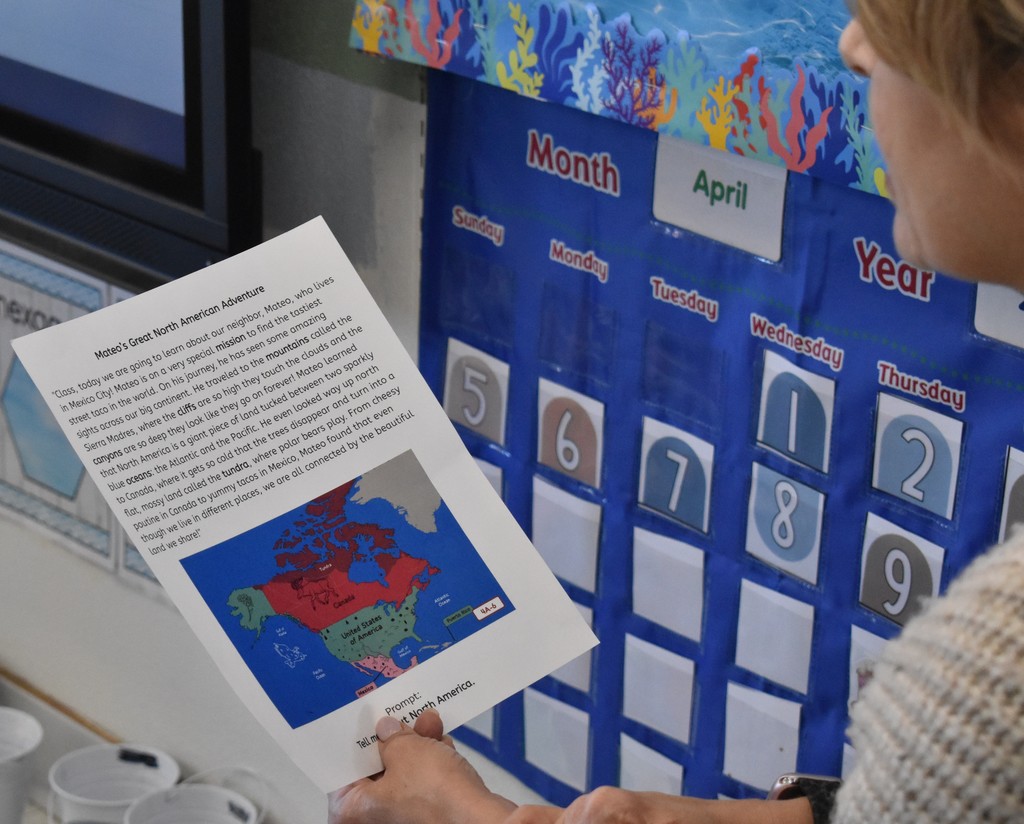
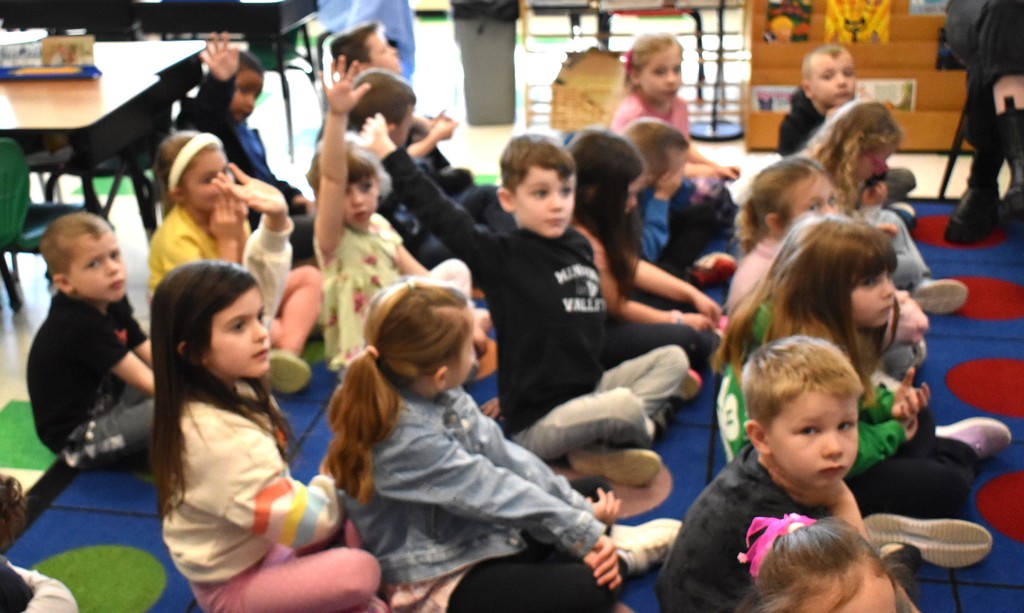
Like all district kindergarteners, Carmella Sill’s class is building strong writing skills through engaging, cross-curricular work. As part of their new Geography unit, students are learning about the continents, with a focus on North America, while using the POW writing strategy to plan and organize their ideas.
Students are also learning to write a gist statement—a short sentence that captures the main idea of what they’ve learned in their own words. This helps them focus on the most important information and express it clearly.
POW (Pick my idea, Organize my notes, Write and say more) is a simple, three-step strategy that supports young writers by breaking the process into manageable steps, making writing more approachable and less overwhelming.
In Mrs. Sill’s classroom, students are using POW to plan their gist statements about North America—combining content knowledge with essential writing skills in a meaningful way.
Like all district kindergarteners, Carmella Sill’s class is building strong writing skills through engaging, cross-curricular work. As part of their new Geography unit, students are learning about the continents, with a focus on North America, while using the POW writing strategy to plan and organize their ideas.
Students are also learning to write a gist statement—a short sentence that captures the main idea of what they’ve learned in their own words. This helps them focus on the most important information and express it clearly.
POW (Pick my idea, Organize my notes, Write and say more) is a simple, three-step strategy that supports young writers by breaking the process into manageable steps, making writing more approachable and less overwhelming.
In Mrs. Sill’s classroom, students are using POW to plan their gist statements about North America—combining content knowledge with essential writing skills in a meaningful way.
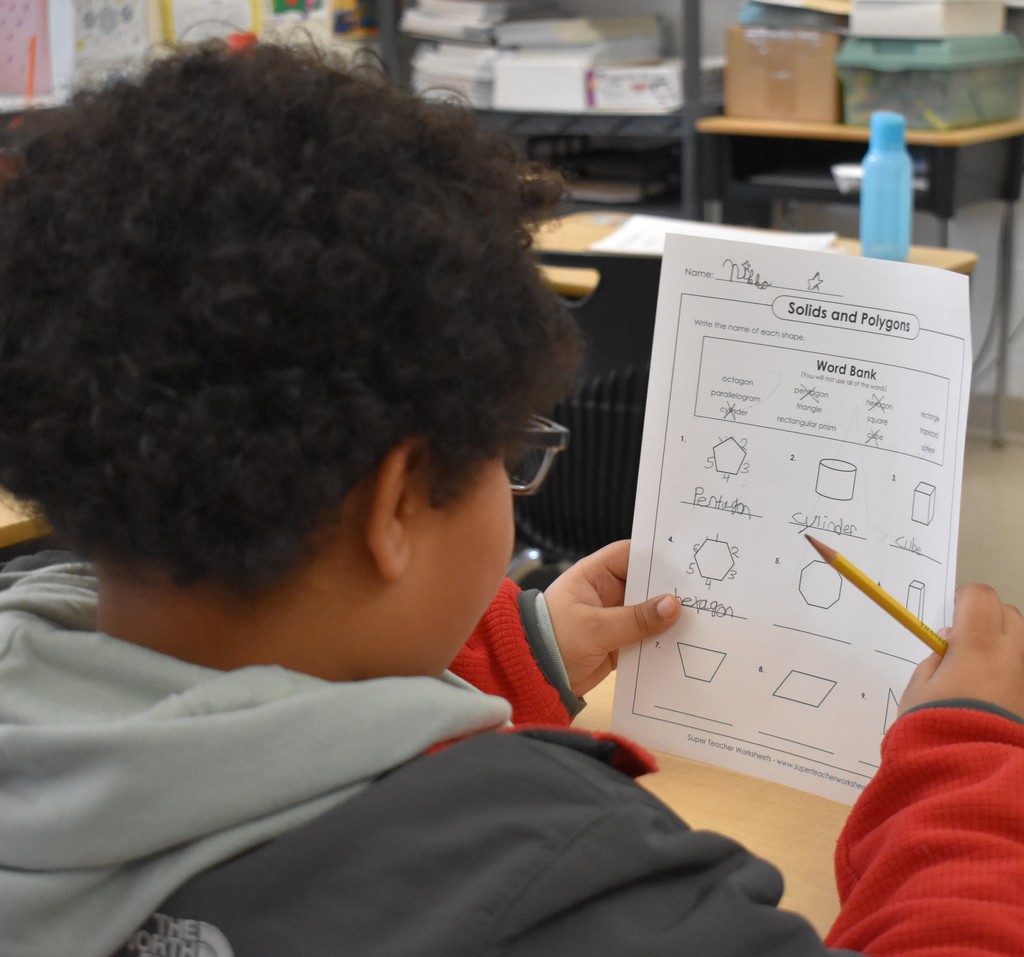
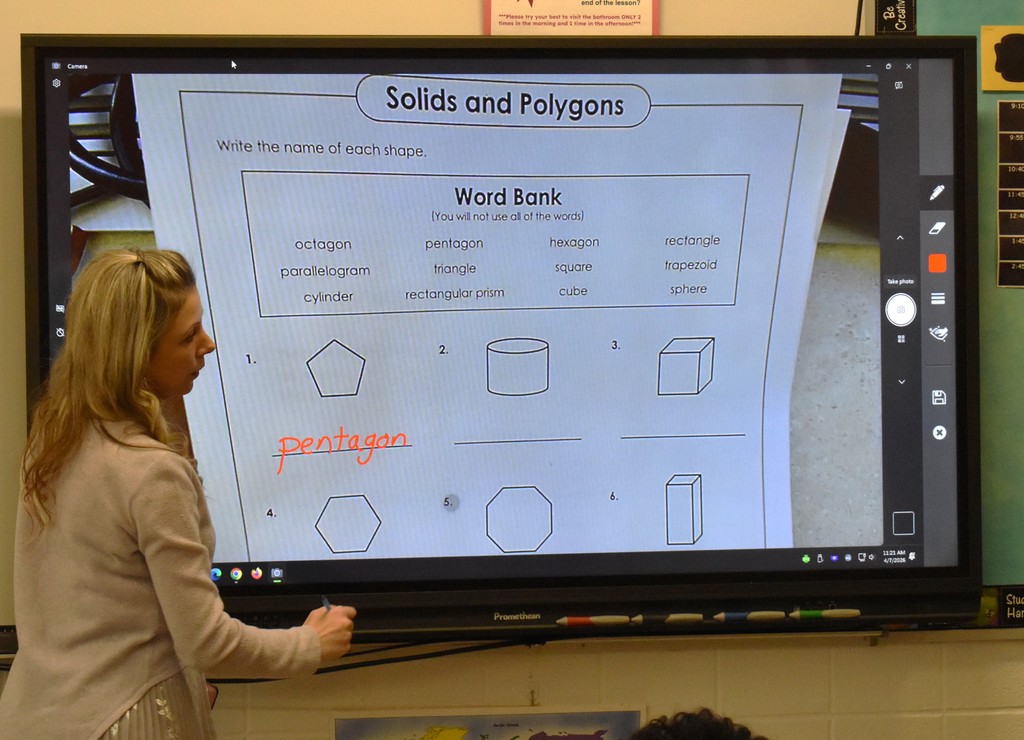
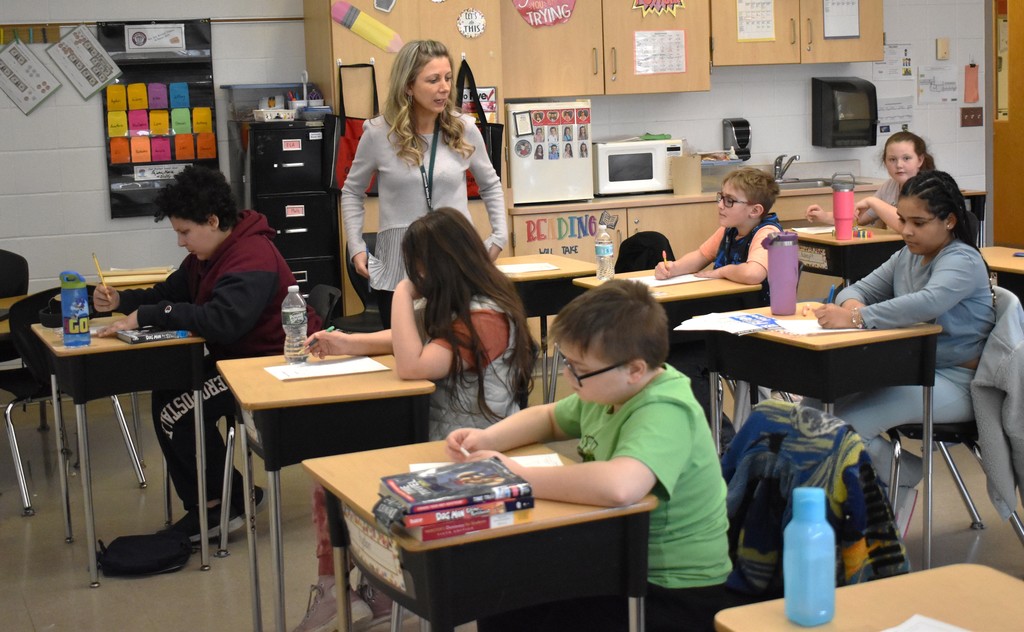
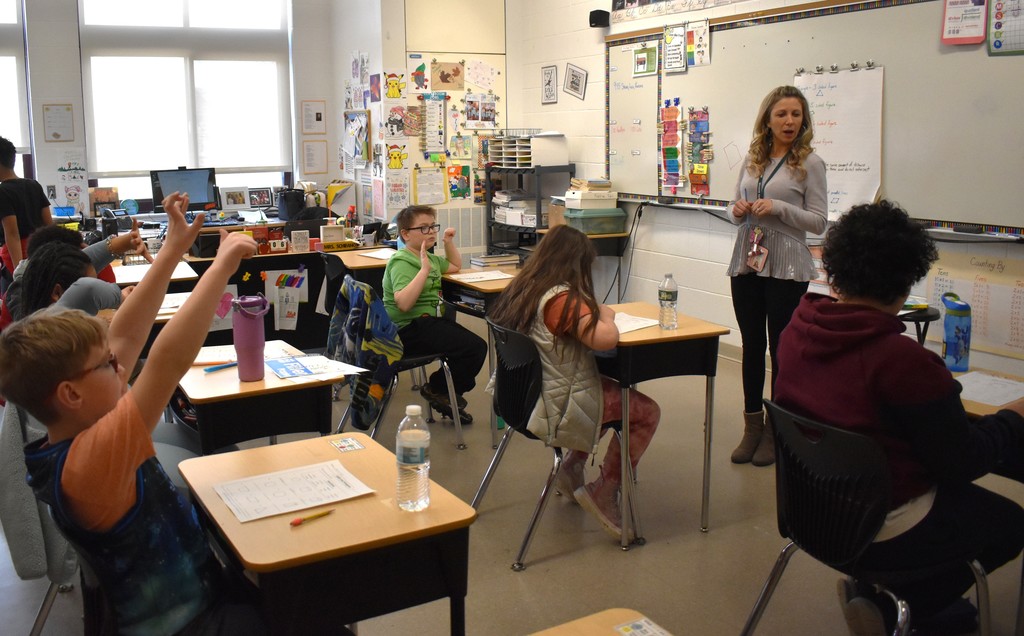
Debra Schifano’s Otisville fourth and fifth-graders are doing great work reviewing geometric figures!
Students were asked to identify figures based on attributes such as number of sides, equal measured sides, or specific features like the existence of parallel lines within the figure. They also had the opportunity to pair together with a partner and use pattern blocks to find composed polygons, which is a figure made up of smaller shapes within. WELL-DONE, everyone!
It's important for fourth and fifth graders to know geometric figures because this knowledge builds essential visual and spatial reasoning skills, strengthens mathematical vocabulary, and prepares them for more advanced concepts like area, perimeter, volume, and coordinate graphing. Understanding shapes also helps students connect math to the real world by recognizing geometry in buildings, art, nature and everyday objects. In addition, classifying and comparing geometric figures develops logical thinking and reasoning skills, which are valuable across all subjects.
Students were asked to identify figures based on attributes such as number of sides, equal measured sides, or specific features like the existence of parallel lines within the figure. They also had the opportunity to pair together with a partner and use pattern blocks to find composed polygons, which is a figure made up of smaller shapes within. WELL-DONE, everyone!
It's important for fourth and fifth graders to know geometric figures because this knowledge builds essential visual and spatial reasoning skills, strengthens mathematical vocabulary, and prepares them for more advanced concepts like area, perimeter, volume, and coordinate graphing. Understanding shapes also helps students connect math to the real world by recognizing geometry in buildings, art, nature and everyday objects. In addition, classifying and comparing geometric figures develops logical thinking and reasoning skills, which are valuable across all subjects.
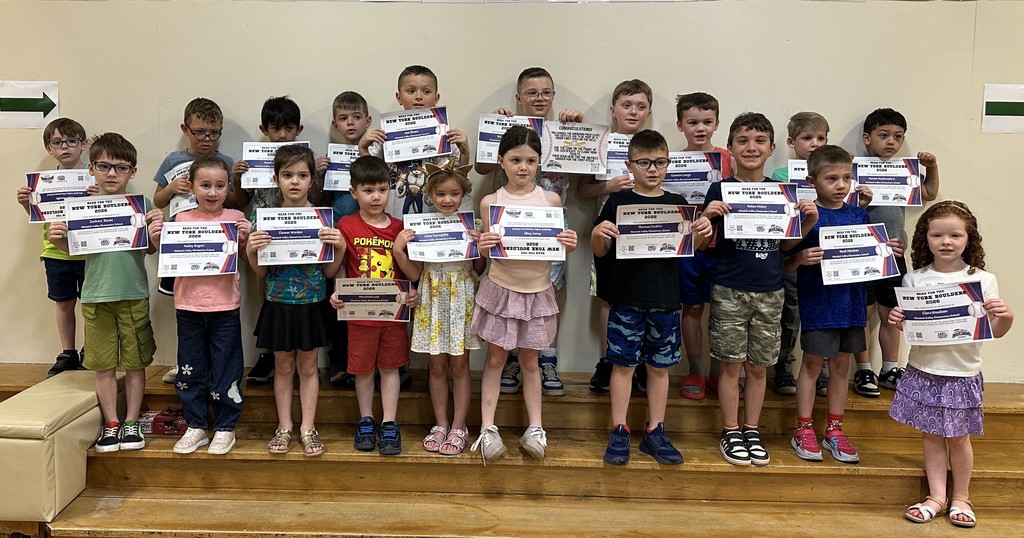
BRAVO and WELL DONE to the Elementary School students who knocked it out of the park by reading over 800 minutes as part of the New York Boulders Reading Challenge! To acknowledge their All-Star effort at the plate, each student will receive four tickets to an upcoming Boulders game — we know they’re going to have a grand slam of a time!
Students who stepped up to the plate and read between 400 and 800 minutes will receive two tickets, and they’re sure to have a winning day at the ballpark, too! In total, over 100 students joined the lineup for this reading challenge and collectively racked up an incredible 46,844 minutes — talk about an Elementary School team victory!
BUT! A very special congratulations goes to Wyatt Kessler, who absolutely crushed it with 1,309 minutes read — that’s a home run and then some! He has earned the title of the school’s “Home Run Reader.” In addition to receiving four tickets, Wyatt will get the ultimate big-league experience: He’s been invited to the field for the game he attends to throw out a ceremonial first pitch. What a major league moment!
Students who stepped up to the plate and read between 400 and 800 minutes will receive two tickets, and they’re sure to have a winning day at the ballpark, too! In total, over 100 students joined the lineup for this reading challenge and collectively racked up an incredible 46,844 minutes — talk about an Elementary School team victory!
BUT! A very special congratulations goes to Wyatt Kessler, who absolutely crushed it with 1,309 minutes read — that’s a home run and then some! He has earned the title of the school’s “Home Run Reader.” In addition to receiving four tickets, Wyatt will get the ultimate big-league experience: He’s been invited to the field for the game he attends to throw out a ceremonial first pitch. What a major league moment!
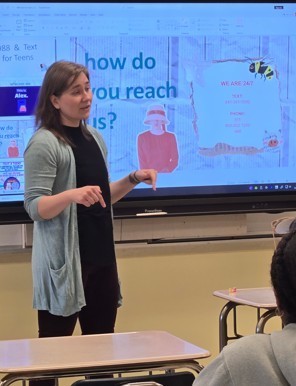
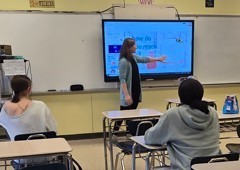
THANK YOU to Crisis Counselor Clare Redden of 988 Lifeline for presenting tremendously important information to students as part of the High School’s Mental Health Awareness Club’s “Two Weeks of Wellness" events last week.
It was a very powerful discussion and participants learned a lot. The biggest takeaway is that 988 Lifeline wants people to CALL if they’re in crisis. Crisis counselors are compassionate individuals who care about you!
Important reminders:
1. Anyone can call/text/chat no matter the reason. If you need a friend, they are there for you! They want to hear about your day! It does not need to be a crisis.
2. You can call them to talk about someone else that you are concerned about.
3. Crisis counselors completed a three month training which included taking calls with a mentor before being able to answer calls on their own.
4. Crisis counselors are based at the Orange County 911 Center in Goshen along with the 911 and 311 dispatchers. They all work closely together to ensure that the calls that come in are directed appropriately based on the needs.
5. They have a dress code and must wear black to keep distractions at a minimum.
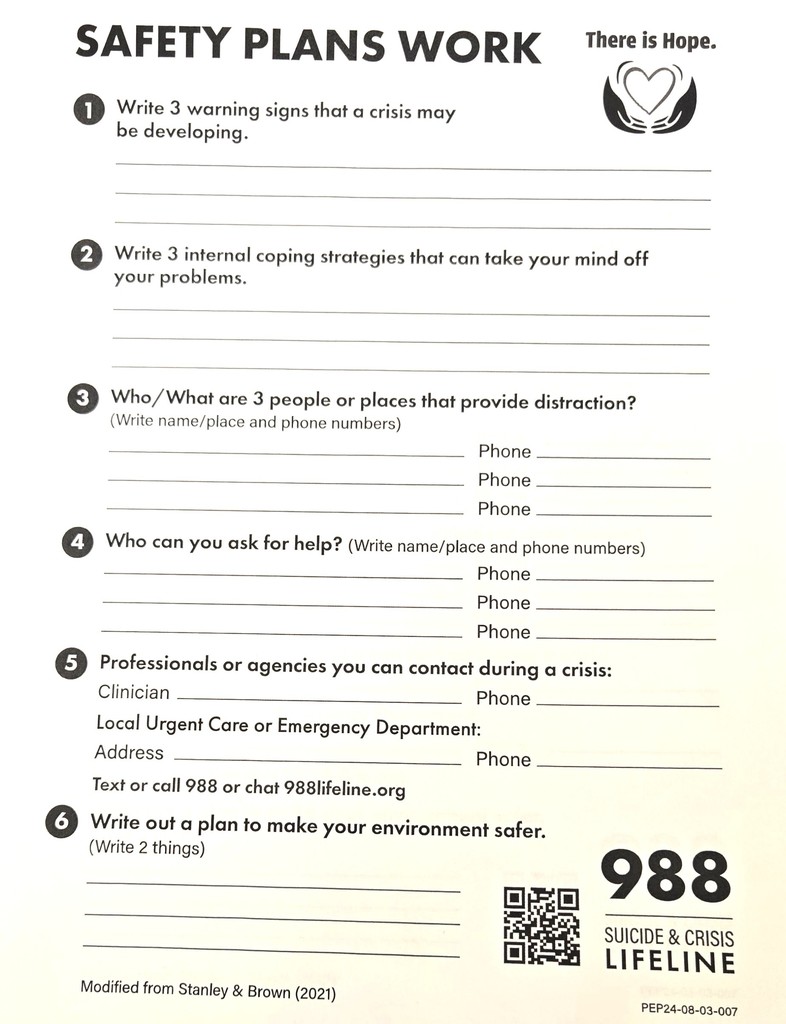
Ms. Redden discussed how important it is for students to have a Safety Plan. At the club’s upcoming meeting this week, members will be doing this. Be sure you have a Safety Plan, too!
It was a very powerful discussion and participants learned a lot. The biggest takeaway is that 988 Lifeline wants people to CALL if they’re in crisis. Crisis counselors are compassionate individuals who care about you!
Important reminders:
1. Anyone can call/text/chat no matter the reason. If you need a friend, they are there for you! They want to hear about your day! It does not need to be a crisis.
2. You can call them to talk about someone else that you are concerned about.
3. Crisis counselors completed a three month training which included taking calls with a mentor before being able to answer calls on their own.
4. Crisis counselors are based at the Orange County 911 Center in Goshen along with the 911 and 311 dispatchers. They all work closely together to ensure that the calls that come in are directed appropriately based on the needs.
5. They have a dress code and must wear black to keep distractions at a minimum.
Ms. Redden discussed how important it is for students to have a Safety Plan. At the club’s upcoming meeting this week, members will be doing this. Be sure you have a Safety Plan, too!
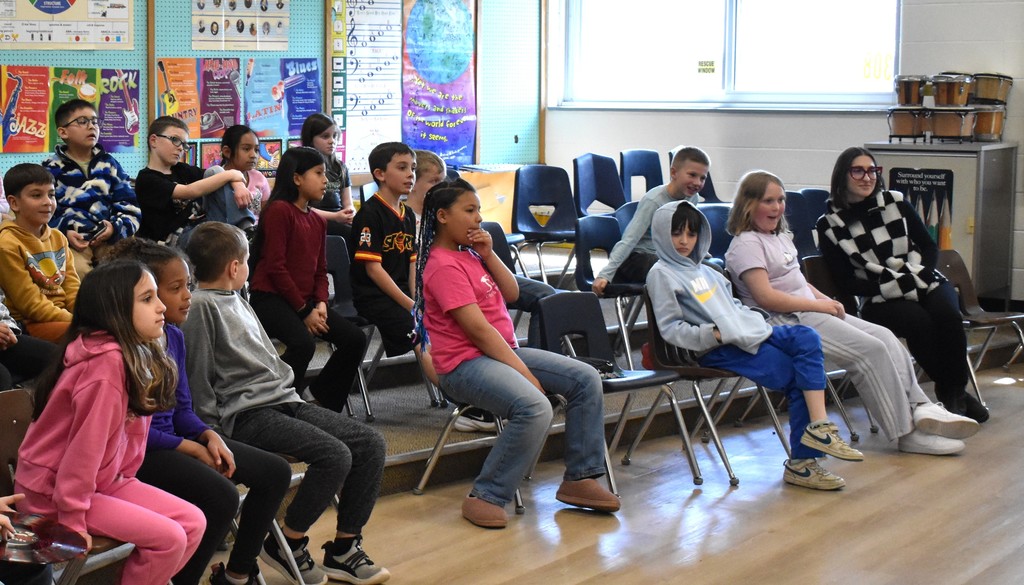
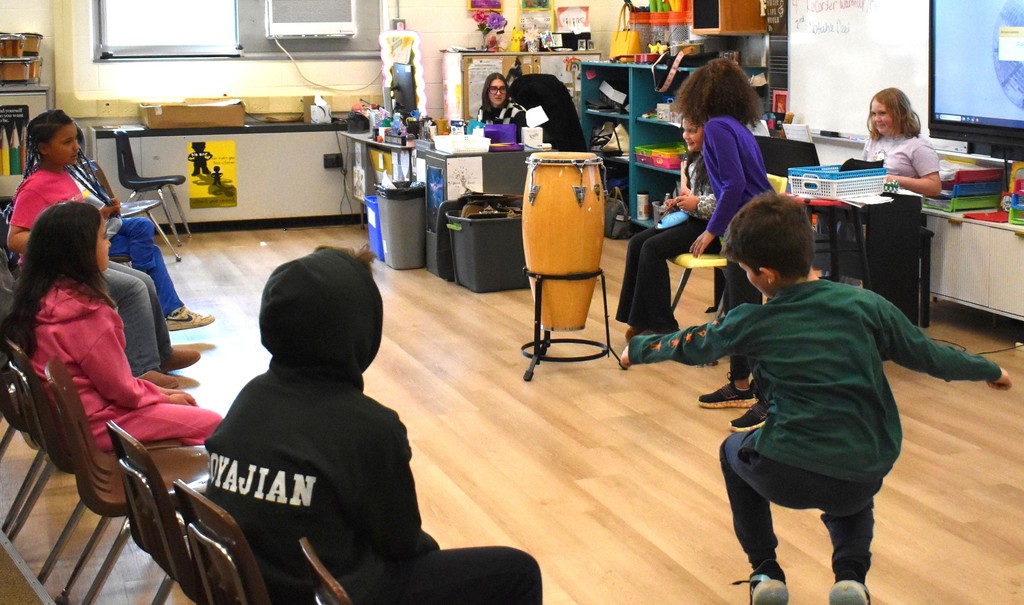
Did you know that learning how to be a great audience is a super important part of music class?
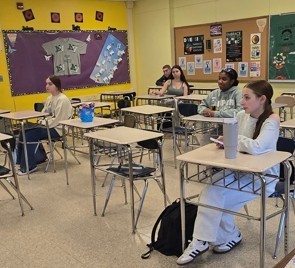
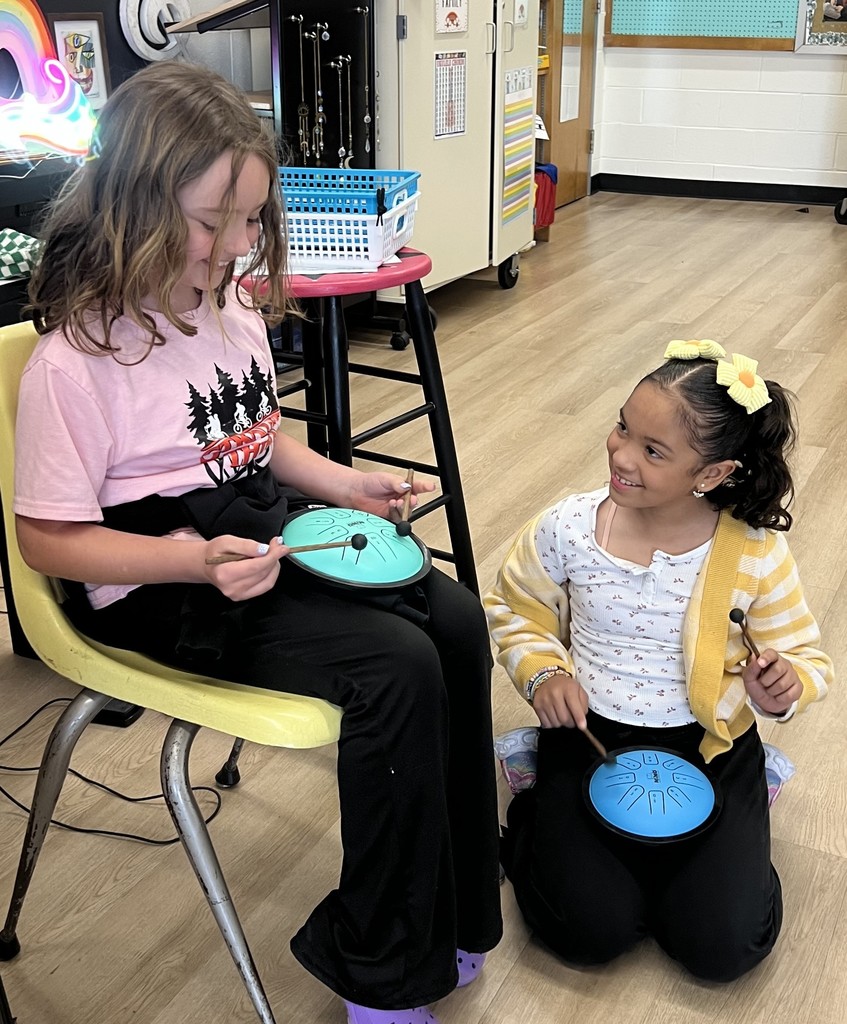
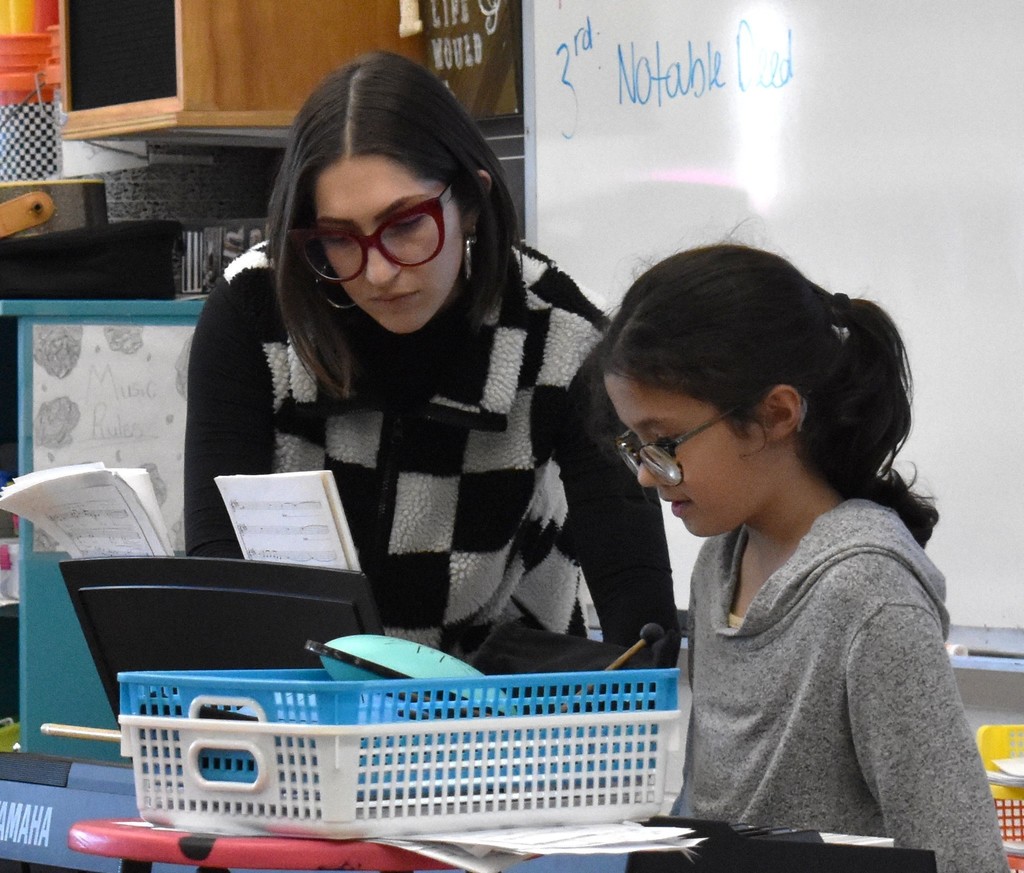
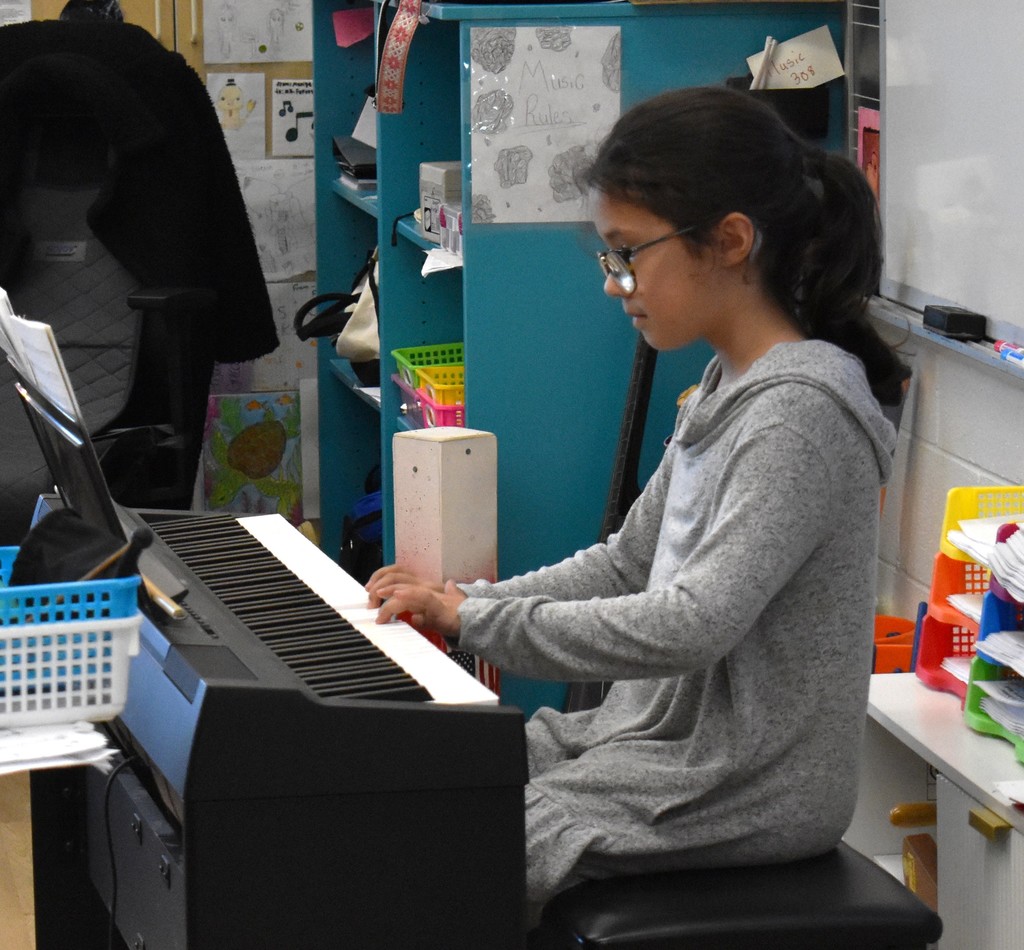
Deanna Feuerbach’s IS third-graders recently took turns performing for their peers, while their classmates practiced being respectful, attentive, and wonderfully supportive audience members. When it was their moment to perform, students could choose any instrument in the classroom to perform with! What a fun way to build confidence while also cheering one another on!
A big, thank you to the IS PTO for purchasing the new steel drums that now bring even more joy and rhythm to the classroom. We appreciate you!
Deanna Feuerbach’s IS third-graders recently took turns performing for their peers, while their classmates practiced being respectful, attentive, and wonderfully supportive audience members. When it was their moment to perform, students could choose any instrument in the classroom to perform with! What a fun way to build confidence while also cheering one another on!
A big, thank you to the IS PTO for purchasing the new steel drums that now bring even more joy and rhythm to the classroom. We appreciate you!
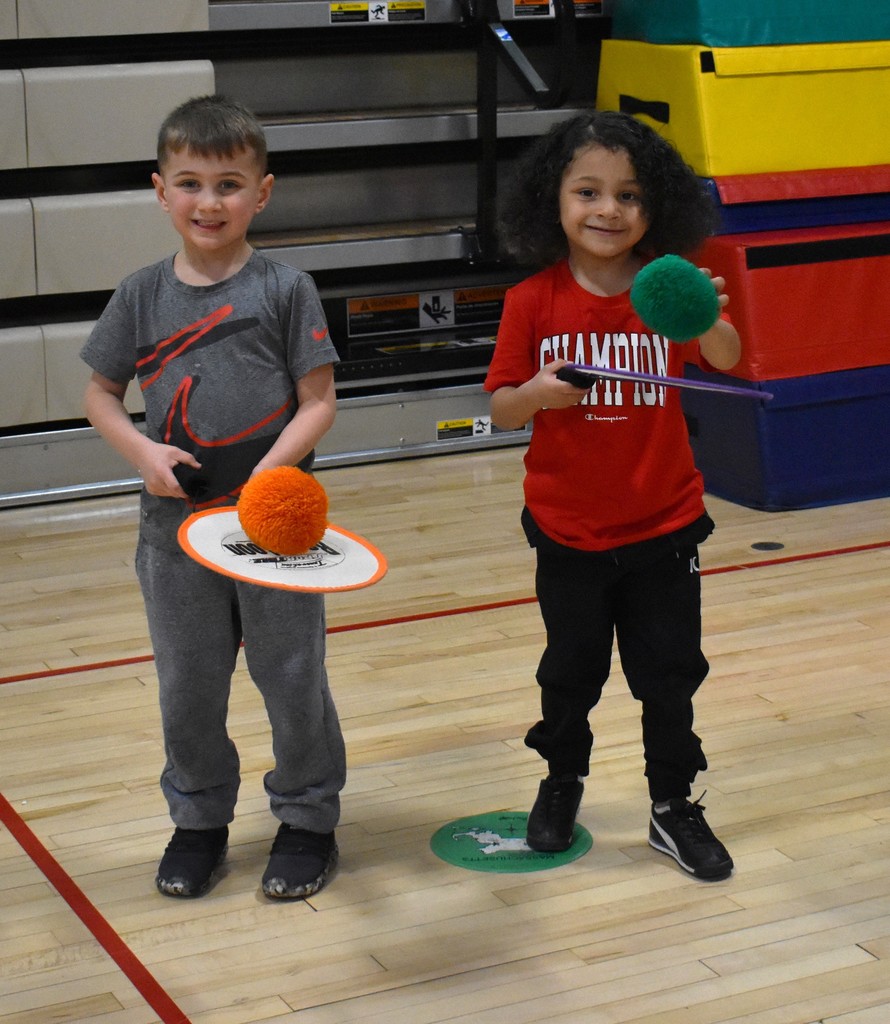
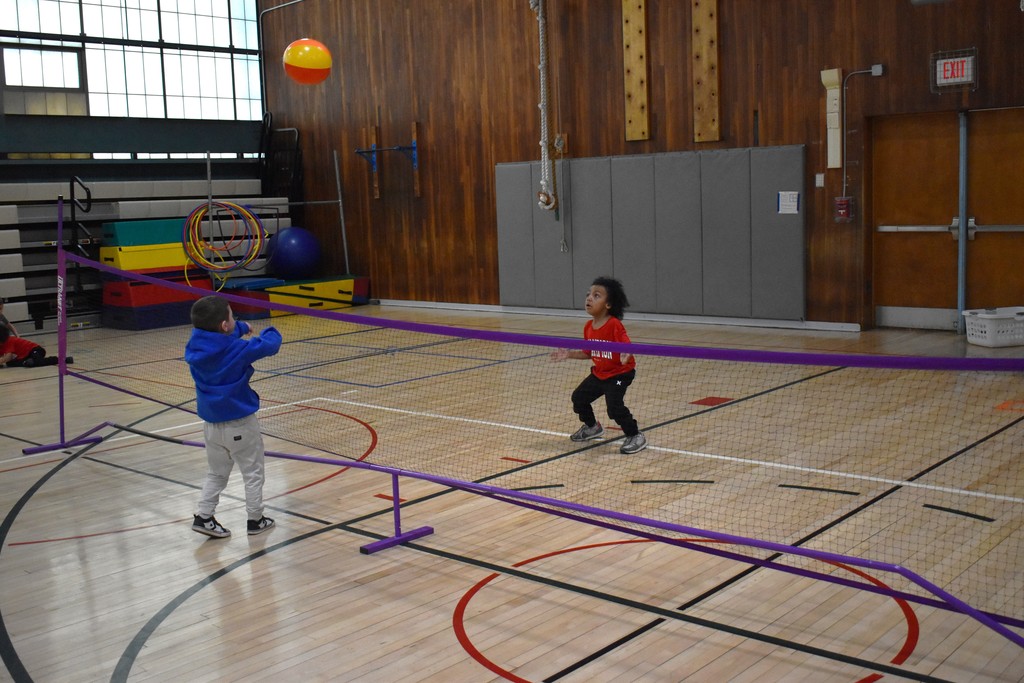
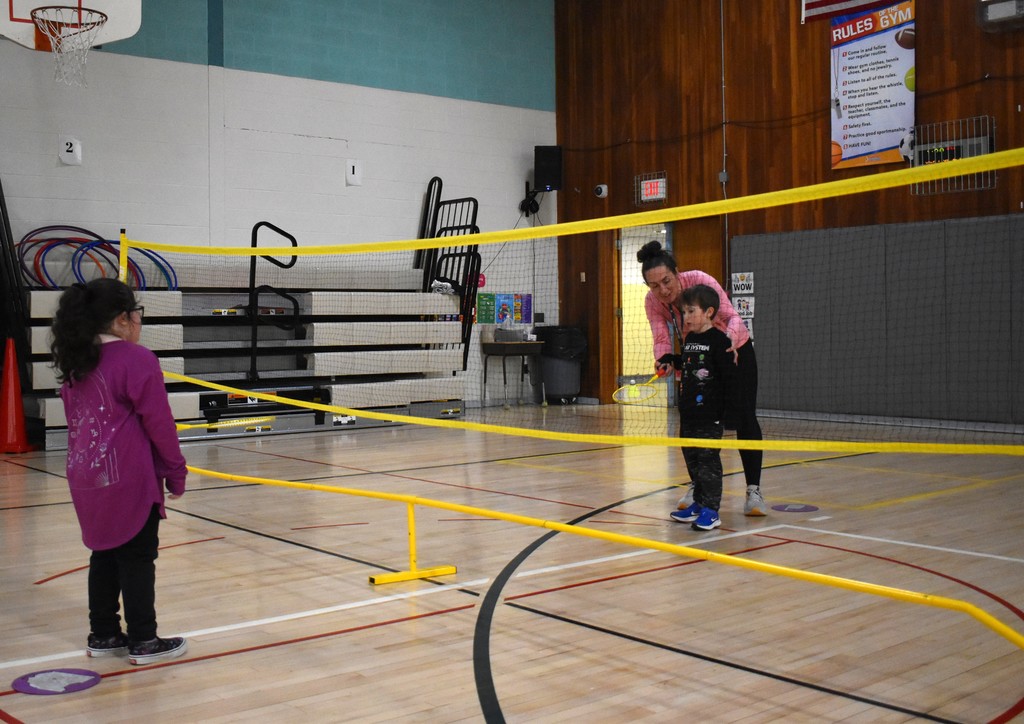
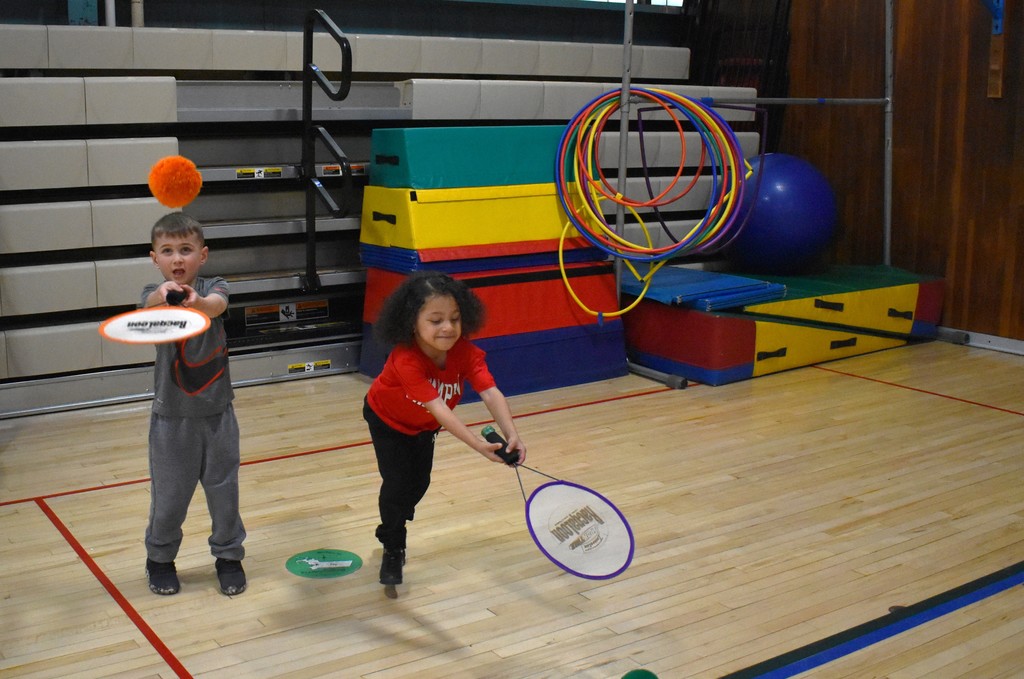
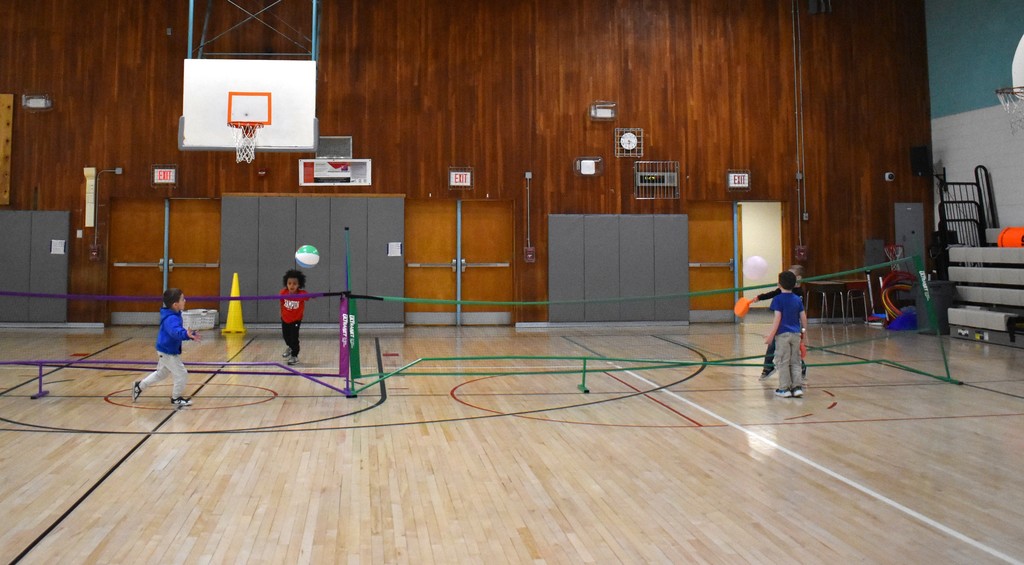
Leyla Johnson has been showing her ES kindergarten physical education students how to use implements in class! These include items like balls, beanbags, jump ropes, rackets or hoops.
There’s lots of important reasons why using implements are important for these little ones!
Implements help children develop manipulative skills such as throwing, catching, striking and kicking, which are among core motor skills.
Using items like balls or rackets requires children to track objects, time their movements, and adjust their body position—critical skills for both athletic and everyday tasks.
Using implements involves following directions, problem solving and understanding “cause and effect,” which support brain development.
Working with objects helps children understand where their body is in space and how to control their movements safely and effectively.
Mastering new equipment helps young children feel capable and proud, further develops social skills, helps prepare them for later physical education work….and is fun!
There’s lots of important reasons why using implements are important for these little ones!
Implements help children develop manipulative skills such as throwing, catching, striking and kicking, which are among core motor skills.
Using items like balls or rackets requires children to track objects, time their movements, and adjust their body position—critical skills for both athletic and everyday tasks.
Using implements involves following directions, problem solving and understanding “cause and effect,” which support brain development.
Working with objects helps children understand where their body is in space and how to control their movements safely and effectively.
Mastering new equipment helps young children feel capable and proud, further develops social skills, helps prepare them for later physical education work….and is fun!